
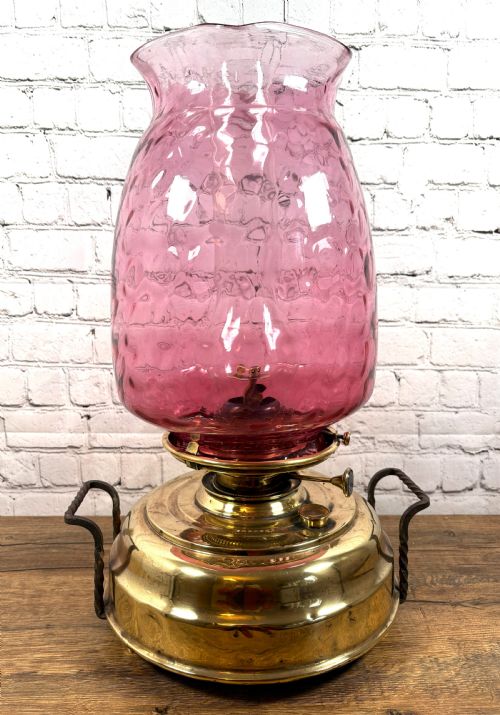


Brass Oil Burner Base
These brass oil burner base examples are sturdy metal foundations that held lamp fonts and illumination, offering collectors a solid piece of Victorian domestic history.
Brass Oil Burner Base
When searching for a brass oil burner base, collectors look at solid metal foundations designed to support fuel reservoirs and burners for domestic illumination. These objects originate predominantly from the Victorian and Edwardian eras, spanning the mid-nineteenth century to around nineteen hundred.
The versions most commonly met on this page include column designs, cottage table lamps, and pulpit oil lamps. Many examples incorporate materials alongside brass, such as cranberry glass, milk glass, and ceramics.
Makers produced these bases for tabletop and altar use, resulting in diverse heights and weighted forms. Their survival reflects a period when oil burning remained central to household lighting before widespread electricity.
How They Were Made
Manufacturers utilised cast and spun brass to construct the structural columns and weighted feet of these lamp bases. Iron and cast iron components frequently provided stability and internal weighting to prevent tipping.
Craftsmen combined metalworking with glassmaking, pairing metal columns with cranberry glass, satin glass, or milk glass fonts and shades. Ebonised ceramic elements also appear, adding textural contrast to the polished brass surfaces.
Listings on this page span the period from eighteen fifty to nineteen hundred, encompassing both Victorian and Edwardian design sensibilities.
What Varies in Quality
The distribution of weight and the thickness of the brass casting separate standard production from superior examples. Heavy, substantial metalwork provides better stability and longevity compared to lighter, thinner alternatives.
The integration of secondary materials dictates the refinement of the piece. Fine examples pair reeded brass columns with high-grade coloured or satin glass fonts rather than plain utilitarian components.
The Brass Oil Burner Base Glossary
- Brass
- An alloy of copper and zinc utilised for its bright appearance and durability in lamp construction. It forms the primary structural material for these bases.
- Cranberry glass
- A rich pinkish-red glass produced by adding gold chloride to the molten batch. It frequently appears in the shades and fonts associated with these brass bases.
- Reeded column
- A vertical architectural shaft decorated with parallel convex mouldings. This classical motif appears frequently on Victorian brass lamp shafts.
- Peg oil lamp
- A specialised lamp design featuring a lower spigot that fits directly into a separate base or holder. This configuration allowed the fuel font to be lifted independently.
- Milk glass
- An opaque white or translucent glass used for lamp fonts and shades. It provides a soft diffusion of light.
Brass Oil Burner Base: Frequently Asked Questions
What is a brass oil burner base?
It is the metal foundation and lower structure of a nineteenth-century oil lamp designed to support the fuel font and burner mechanism.
These objects are primarily constructed from brass, often paired with weighted iron internal components and decorative glass elements.
How do I date these lamp bases?
Dating relies on stylistic indicators such as reeded columns, aesthetic preferences of the Victorian and Edwardian periods, and associated materials like cranberry glass.
Most examples span the mid-nineteenth century through to the early twentieth century, reflecting the peak era of domestic oil lighting.
Were these bases used with glass shades?
Many examples were paired with decorative glass shades, including cranberry glass, satin glass, and terrestrial globe designs.
These glass elements filtered the light and contributed to the overall domestic ornamentation of the interior.
How should I clean brass lamp bases?
Maintenance involves gentle dusting and the careful preservation of any aged surface patination that has developed over the decades.
Harsh abrasive polishes can strip the historic finish and diminish the visual character of the metal.