




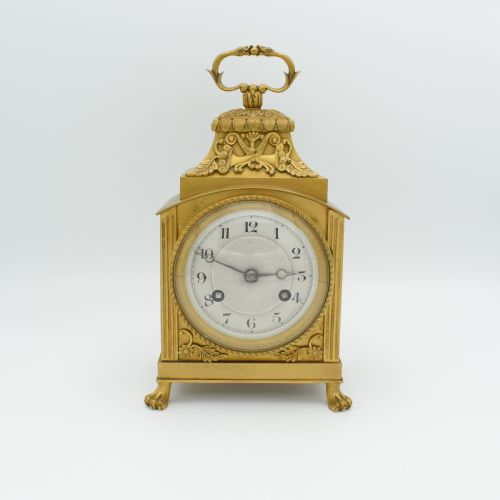

Antique Officer Clock
An antique officer clock is a portable timepiece of campaign or formal design, prized for dependable movement and robust housing.
Antique Officer Clock
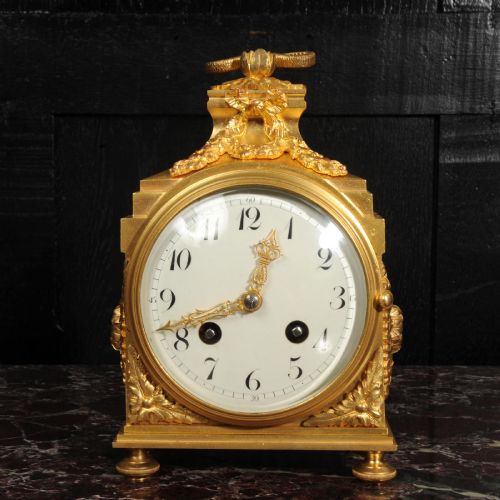
An antique officer clock combines precision engineering with travel-ready design, originating primarily in French workshops and British military contexts. These pieces span the Victorian era, the nineteenth century, and the interwar period, offering robust mechanisms built for transport.
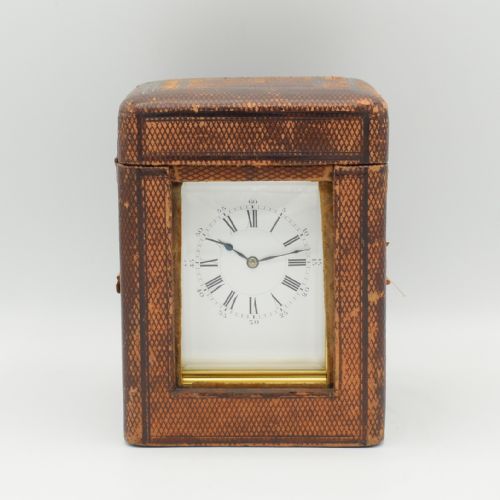
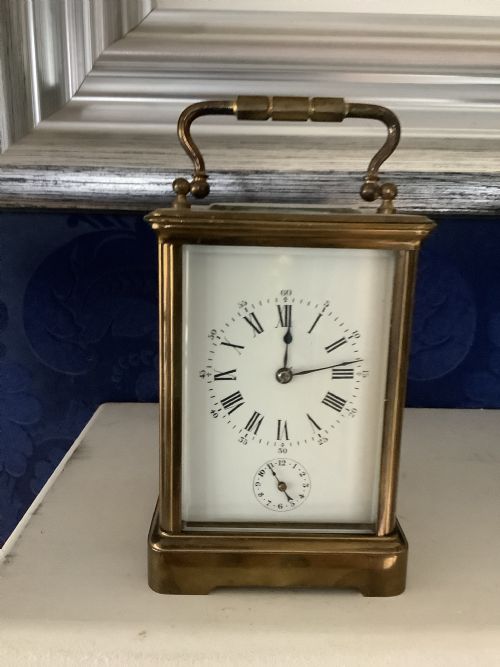
The carriage clock and the pendule d'officier form the core of this selection, frequently presented in brass, gilt bronze, or ormolu cases. Enamel dials and bevelled glass panels allow visibility of the escapement, uniting utility with decorative refinement.
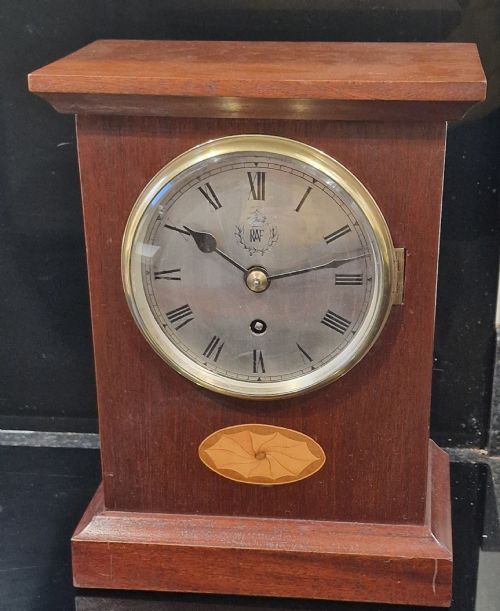
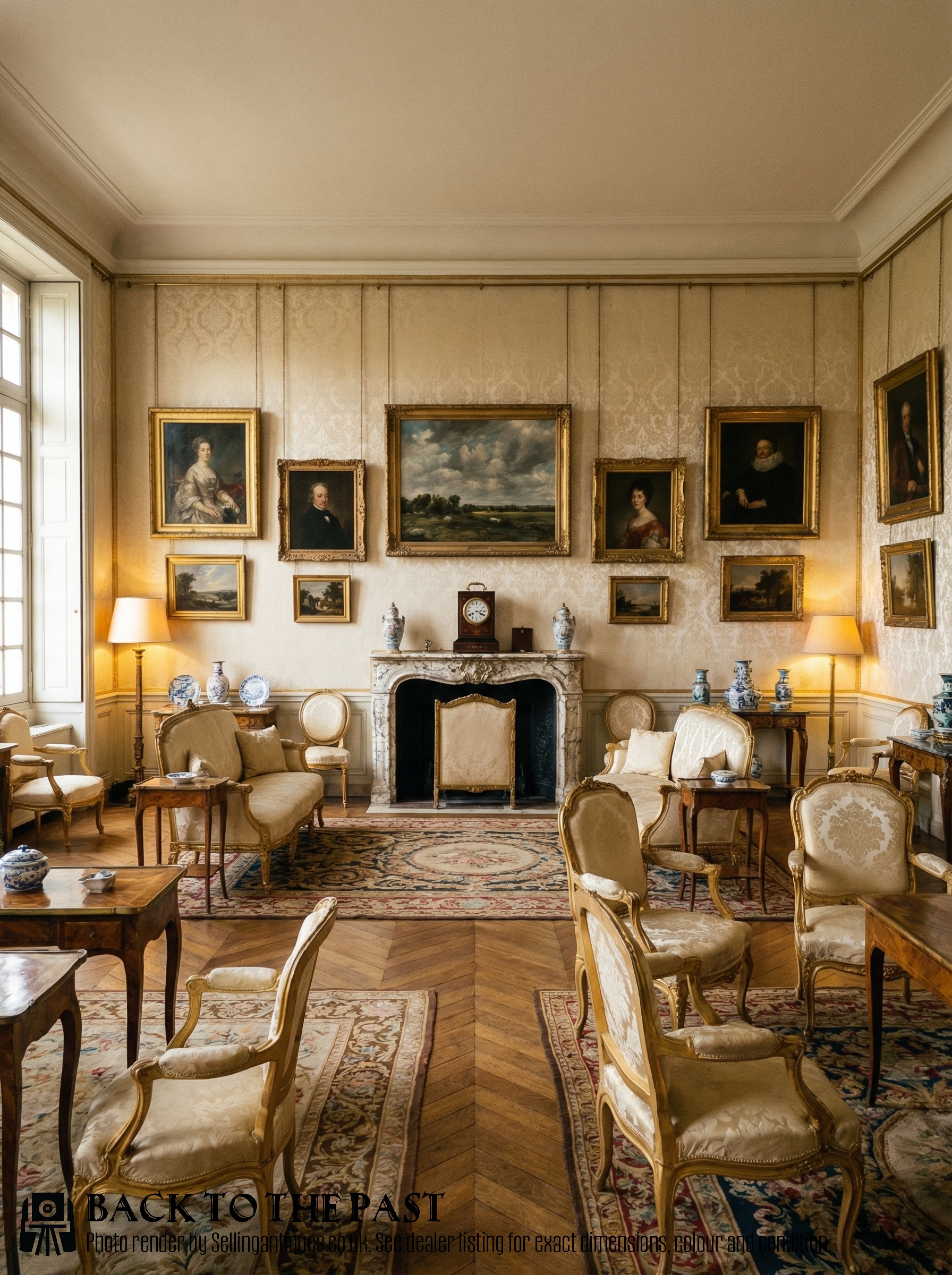
Military mess clocks also appear from later decades, reflecting specific service requirements. Such variations demonstrate how horology adapted from campaign utility to domestic mantelpiece display.
Materials and Construction
Maker workshops housed these movements within heavy brass, gilt bronze, or ormolu frames, fitted with thick bevelled glass panels to protect the delicate gear train during transit. Leather travel cases frequently accompanied these pieces to guard against field knocks.
Enamel dials carried Roman or Arabic numerals, paired with finely shaped steel hands. Movements utilised spring-driven escapements, often featuring striking trains, alarms, or quarter-chiming complications executed by skilled Parisian and British horologists.
Antique Officer Clock Retail Price Guide 2026
Typical asking prices for officer clock among the pieces listed under this phrase on Sellingantiques today, from the lower quarter to the upper quarter. They describe what is for sale here now, not the wider market.
Listings feature pieces spanning from the 1850s through the mid-20th century, encompassing French Empire, Victorian, and Art Deco military styles.
Judging Horological Quality
Distinction across these timepieces rests upon the sophistication of the movement and the crispness of the case casting. Complex mechanisms featuring grande sonnerie striking, calendar functions, or alarms elevate a piece above standard time-only examples.
Signatures on the backplate or dial from notable makers indicate superior workshop standards. The survival of original leather cases and mercury gilding further separates exceptional examples from standard production.
Henri Jacot·C. Detouche Paris·J. F. Bautte Et Cie·Leroy Paris·Le Roy et Fils·Bourdin Paris·Tiffany·Drocourt·E.J.Dent·Paul Garnier·J.W.BENSON·Dent·Joseph Soldano·Joseph Jessner
The Antique Officer Clock Glossary
- Pendule d'Officier
- A portable French clock form traditionally associated with military officers on campaign. These often feature distinctive handle mounts and robust architectural brass cases.
- Grande sonnerie
- A striking mechanism that sounds both the hours and the quarters automatically on each quarter-hour. It represents a high degree of watchmaking skill.
- Platform escapement
- The horizontal assembly containing the balance wheel and hairspring located visible at the top of the movement. It regulates the beat of a portable clock.
Antique Officer Clock: Frequently Asked Questions
Can I travel with a carriage clock?
While originally designed for transport, antique movements require careful handling and preferably their original leather travel cases to absorb vibration.
Secure the platform escapement lever if fitted, and keep the clock upright during transit to prevent damage to the pivots.
How do I set the time safely?
Move the minute hand slowly in a clockwise direction until reaching the correct hour. Avoid turning hands anti-clockwise on striking or repeating models.
Allow the strike train to finish its sequence fully if the clock sounds on the half-hour or quarter.
Why does my clock have an extra button on top?
Push-pieces mounted on the top case plate usually operate the alarm setting or activate the quarter-repeating mechanism. These allowed owners to check the time audibly in darkness.
Press them firmly but without excessive force to engage the strike hammers.