

Antique Office Document Storage
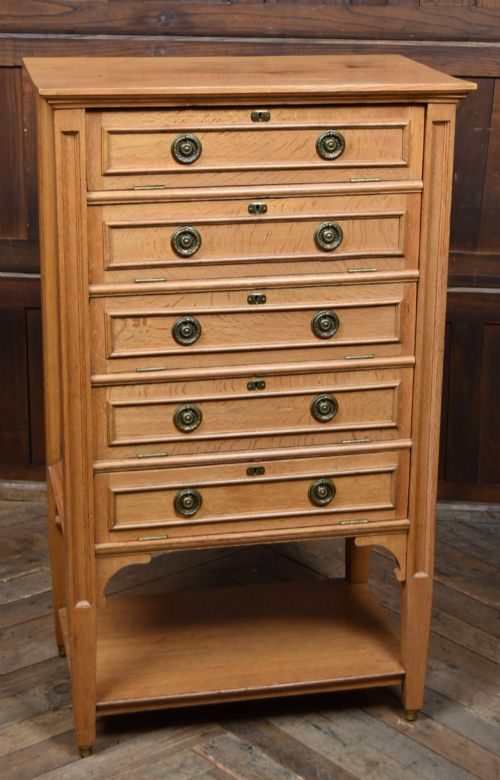
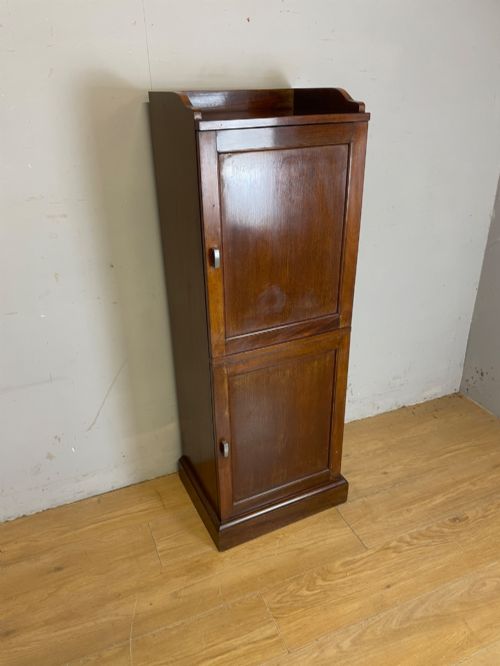
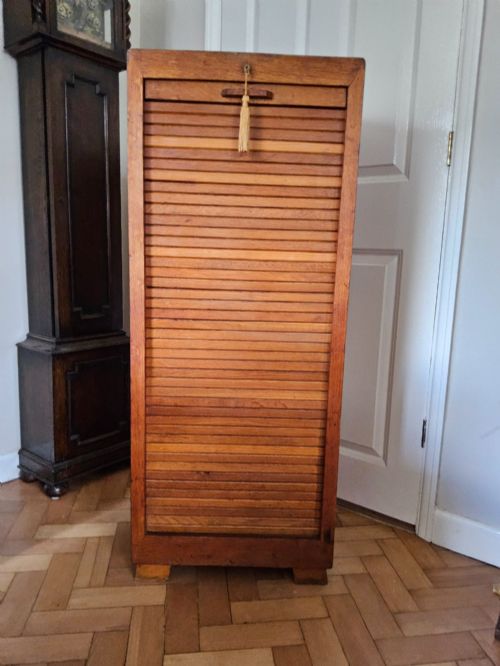
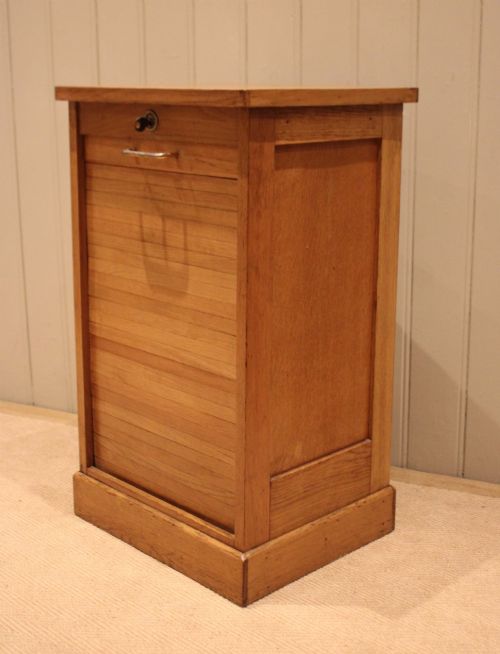
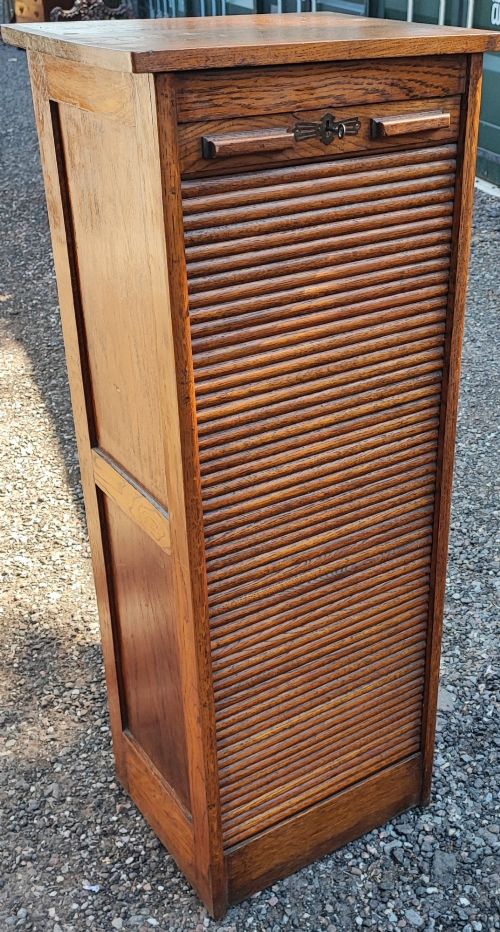
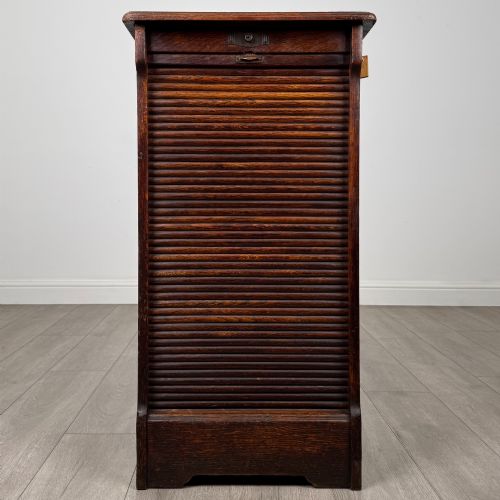
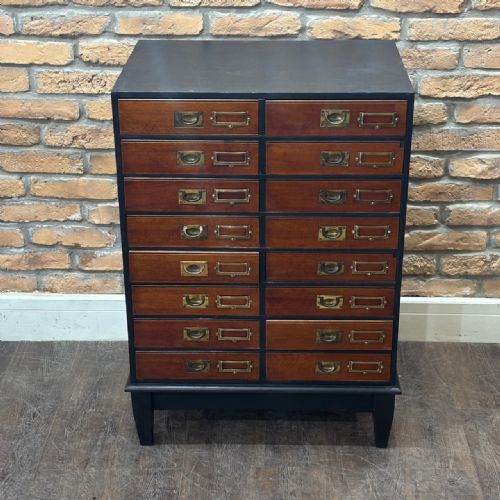
Antique office document storage pieces range from sturdy oak tambour cabinets to banks of mahogany drawers designed to keep papers orderly.
Antique Office Document Storage
When buyers search for antique office document storage, they encounter practical furnishings spanning the Victorian, Edwardian, and early twentieth-century periods.
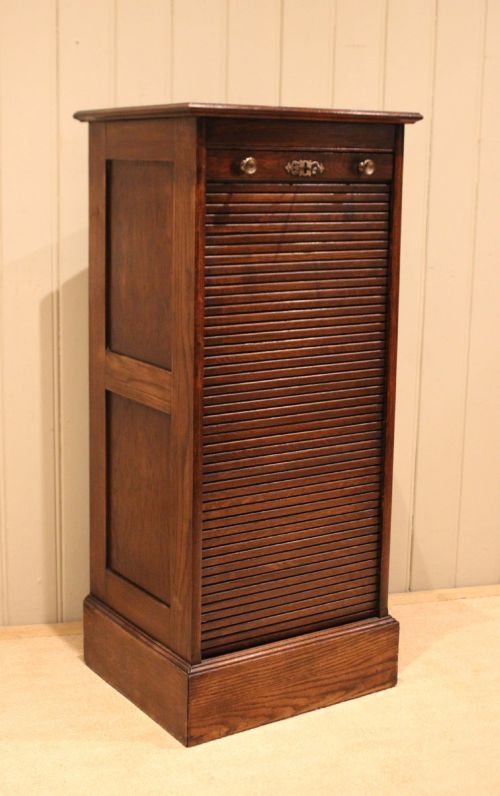
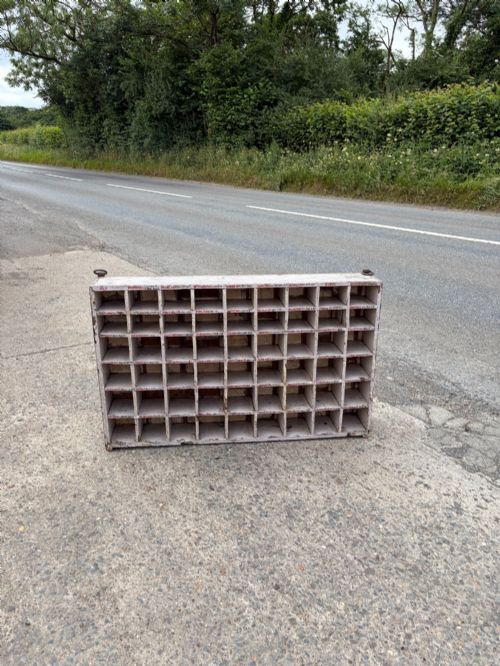
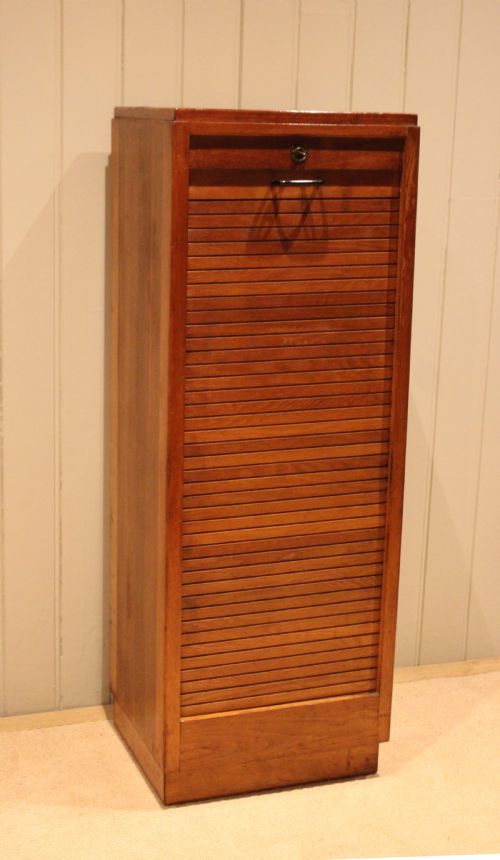
The most common forms on this page include oak tambour front filing cabinets, mahogany banks of drawers, and open pine pigeon holes.
Pieces originate from British workshops and French provincial sources, reflecting the administrative needs of past centuries.
Materials and construction
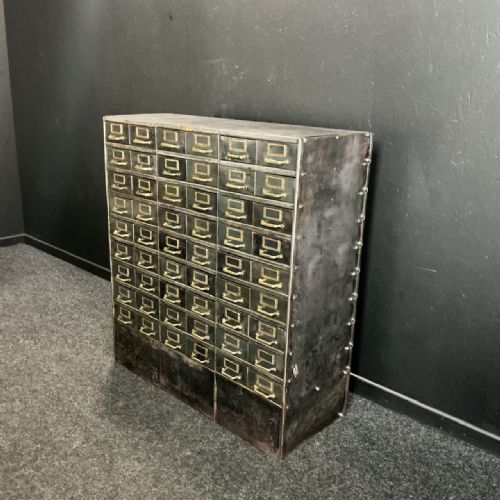
Cabinet makers built these storage units primarily using solid oak, mahogany, and pine, occasionally incorporating walnut, kingwood, and steel.
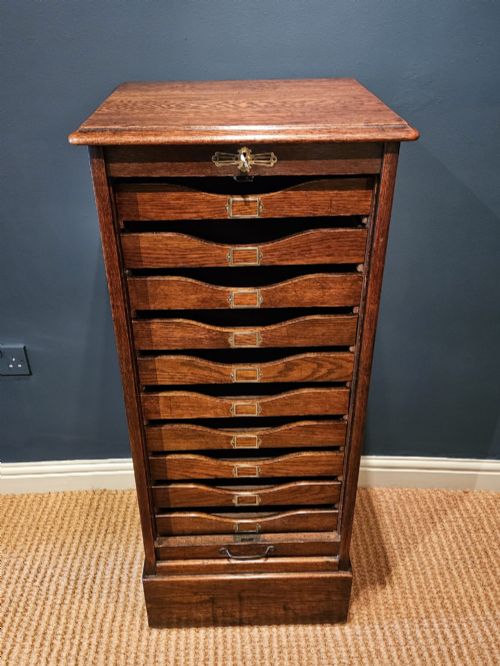
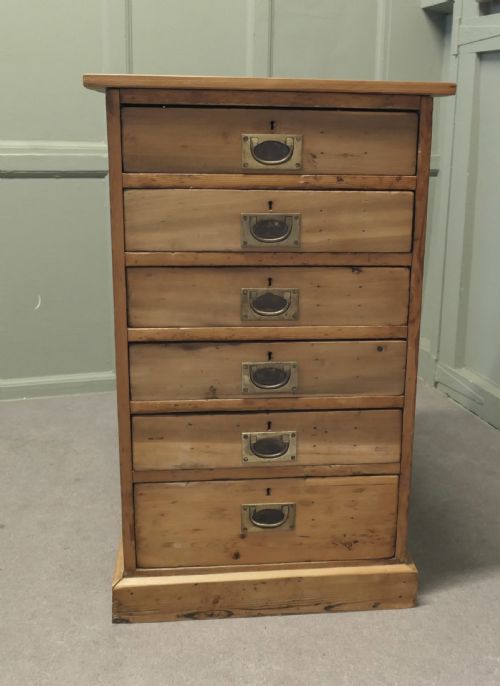
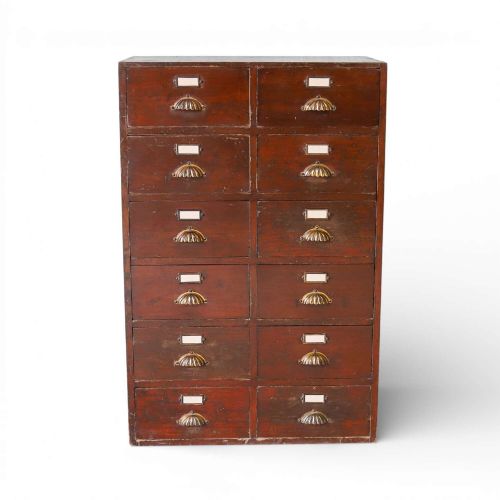
Functional hardware such as brass handles, original shell pulls, label holders, and ormolu mounts complete the construction.
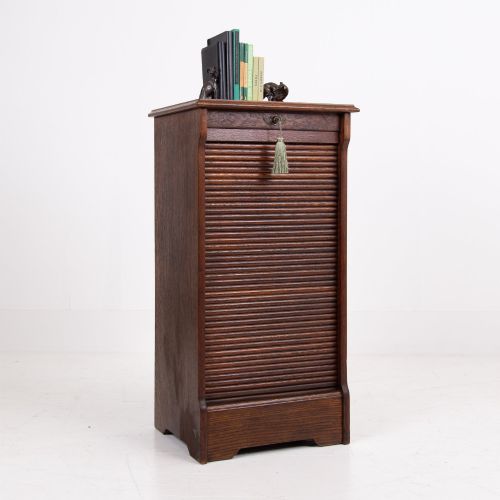
Slatted tambour doors utilise flexible wooden strips running in grooved tracks to conceal interior filing compartments.
Original brass label holders still contain faded paper tags bearing handwritten notes from clerks of a bygone era.
Assessing craftsmanship
Quality rests upon the selection of timber, such as figured mahogany or quarter-sawn oak, and the precision of the joinery.
Superior examples retain original hardware, functioning tambour mechanisms, and legible label holders rather than replacement parts.
Gillows·Amberg
The Antique Office Document Storage Glossary
- Tambour
- A flexible door made of narrow wooden slats glued to canvas backing, allowing it to slide smoothly around a curved track.
- Cartonnier
- A freestanding piece of furniture fitted with multiple compartments or drawers designed specifically for holding papers and documents.
- Pigeon holes
- A grid of small open compartments used for sorting letters and correspondence in an office or study.
- Shell pull
- A stamped or cast metal handle shaped like a half-shell, often incorporating a slot to hold a paper identification label.
Antique Office Document Storage: Frequently Asked Questions
How do tambour doors work?
Tambour doors operate via thin slats of wood fixed to a flexible canvas backing that slides along routed channels within the cabinet frame.
This mechanism allows the door to retract completely out of sight, providing unobstructed access to the interior filing shelves.
What are pigeon holes used for?
Pigeon holes serve to sort and organise loose correspondence, letters, and documents within a workspace before filing.
These open wooden compartments allow quick visibility and retrieval of papers during daily administrative tasks.
How do I date a filing cabinet?
Dating relies upon timber choices, construction methods, and characteristic hardware styles associated with Victorian and Edwardian periods.
Patent labels, such as those found on Amberg cabinets, provide specific production eras for comparison.
Are these cabinets suitable for modern paper?
Many vintage document storage pieces accommodate standard paper sizes within their drawers or vertical filing slots.
Measuring interior compartment dimensions ensures proper fit for contemporary folders and documents.