


Tall Filing Cabinet Drawers
Tall filing cabinet drawers organise papers and small objects within upright timber and metal frames, offering practical capacity with a compact footprint.
Tall Filing Cabinet Drawers
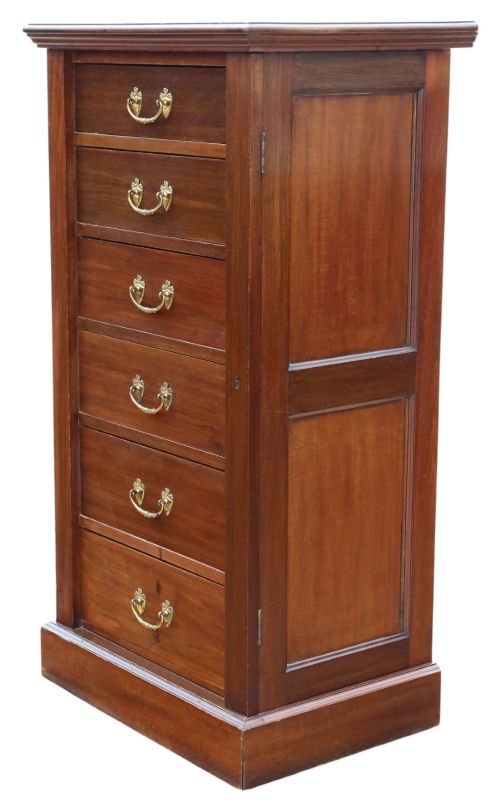
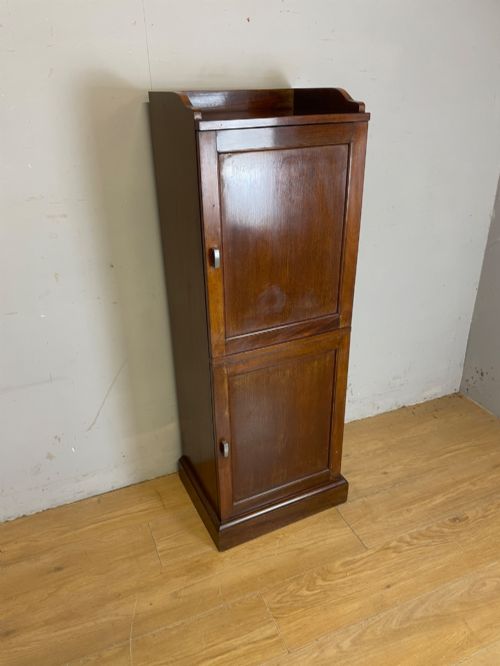
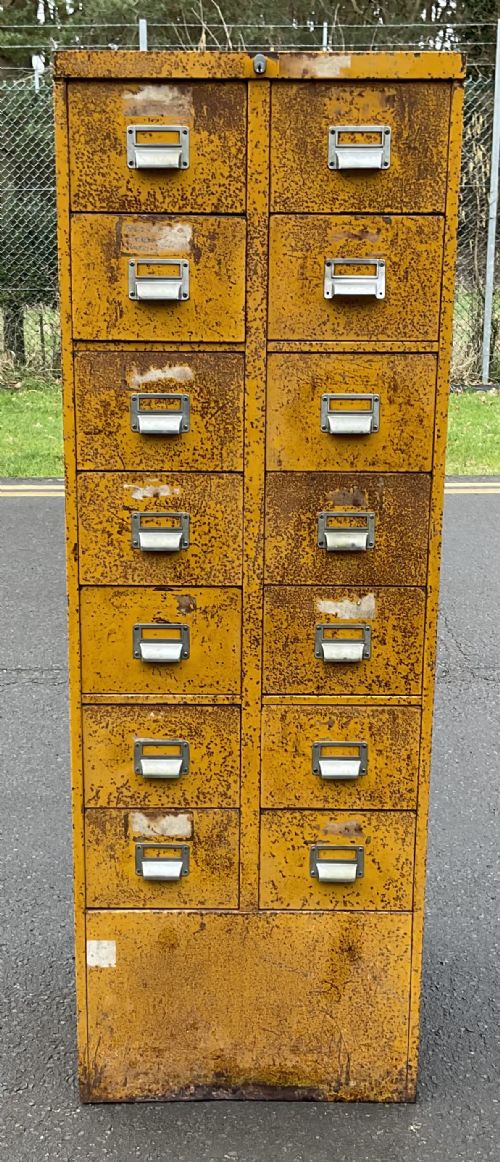
When you search for tall filing cabinet drawers, you encounter pieces designed for storage across various eras, primarily constructed as narrow upright chests and banks of small drawers. The selection includes Victorian and Edwardian examples alongside industrial metal units and specialised office furniture.
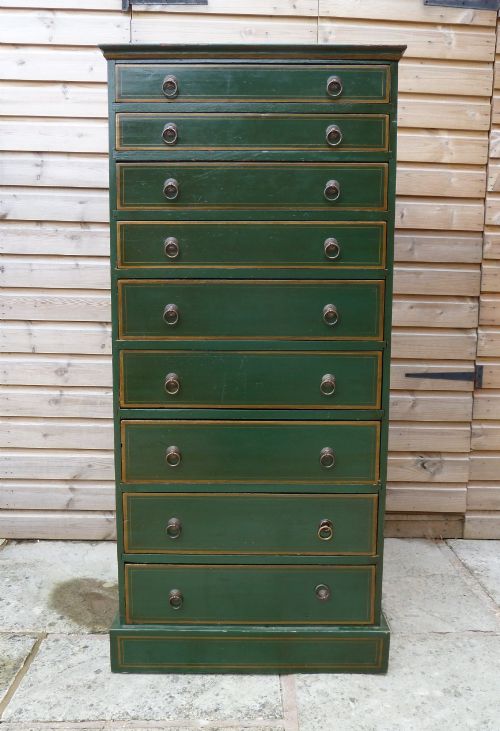
Forms range from traditional mahogany Wellington chests and music cabinets to banks of drawers intended for offices, watchmakers, and specialist archives. Oak, walnut, pine, and mahogany appear frequently alongside metal and leather-trimmed French cartonnier designs.
The periods represented span from the nineteenth century through the early twentieth century up to mid-century examples. Buyers find both domestic items adapted for paperwork and heavy-duty office storage solutions.
Materials and construction methods
Joinery methods reflect the functional purpose of the pieces, utilising sturdy drawer construction designed to withstand frequent use. Leather finds application on surfaces and specific filing compartments, particularly within French cartonnier styles.
Watchmakers required exceptionally steady hands and numerous tiny drawers to contain the miniature gears of ticking timepieces.
Assessing quality in tall filing cabinet drawers
The calibre of timber figure and the precision of the cabinetwork set examples apart, with figured walnut and solid mahogany occupying the upper tier. Superior pieces display thoughtful proportions, integrated locking bars on Wellington chests, and original brass hardware.
The integrity of the internal drawer construction and smooth operation of the runners indicate the standard of manufacture. Utility and industrial versions rely on robust utilitarian build quality rather than decorative cabinet-making.
Maple & Co·S & H Jewells of London
The Tall Filing Cabinet Drawers Glossary
- Wellington chest
- A tall, narrow chest of drawers secured by a hinged locking side pilaster that fastens over the drawer edges. This form originates from the nineteenth century.
- Cartonnier
- A set of freestanding or desktop upright pigeonholes or drawers designed for holding papers and documents. Originating in France, they often feature leather-bound drawer fronts.
- Bank of drawers
- A large assembly of numerous small drawers used for organising specific inventories such as watch parts, specimens, or documents. They utilise timber such as oak, walnut, or pine.
- Music cabinet
- An upright cabinet fitted with shallow drawers originally intended for sheet music storage. Edwardian examples often incorporate inlaid wood decoration.
Tall Filing Cabinet Drawers: Frequently Asked Questions
What is a Wellington chest?
A Wellington chest is a tall, narrow set of drawers featuring a locking side bar that secures the entire stack. This design provided security for private papers and valuables in nineteenth-century rooms.
They are commonly found in mahogany and walnut, making them a popular choice for compact vertical storage.
How do I choose the right wood?
Selecting a timber depends upon the intended interior setting and desired aesthetic. Mahogany and walnut offer traditional figured grains suited to domestic reception rooms.
Oak, pine, and metal options provide robust alternatives suited to studies, offices, or industrial interiors.
Are these cabinets suitable for modern files?
Many older narrow drawers accommodate modern papers by utilising the generous depth or width found in nineteenth and early twentieth-century banks of drawers. Specimen and watchmakers' drawers suit smaller stationery items and craft materials.
Measuring internal drawer dimensions ensures compatibility with specific paper sizes before purchase.
How do I date a filing cabinet?
Dating relies on observing construction techniques, materials, and stylistic cues such as Victorian brass hardware or Edwardian inlay work. Patent stamps and manufacturer labels inside the drawers also assist in establishing a period.
Industrial metal examples often point to early twentieth-century manufacturing shifts towards steel office furniture.