




Antique Office Bank Drawers
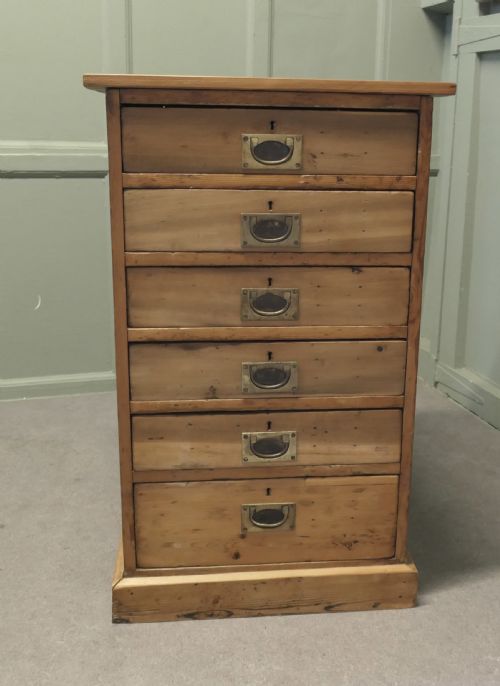
These antique office bank drawers bring practical storage and industrial character into modern rooms.
Antique Office Bank Drawers
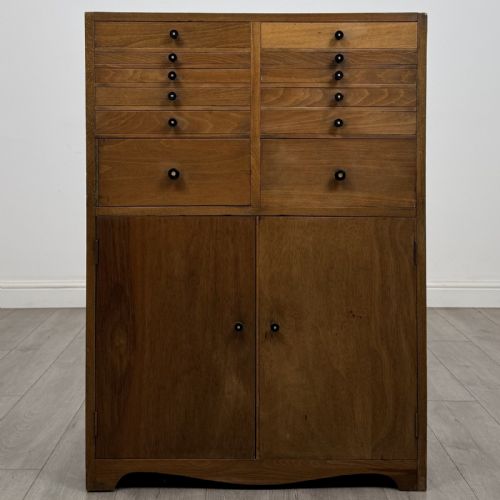
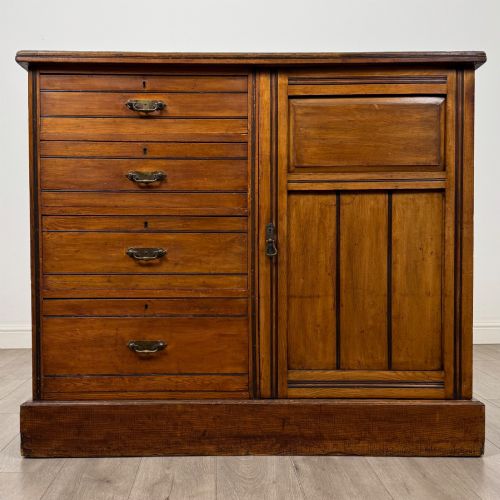
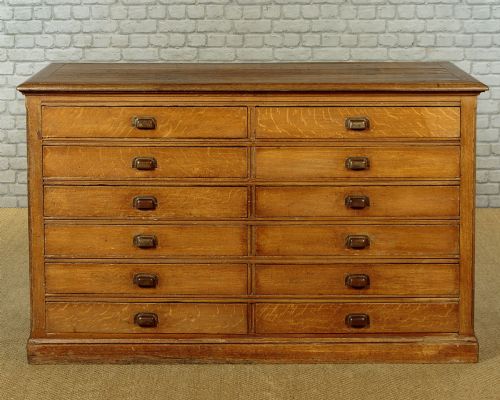
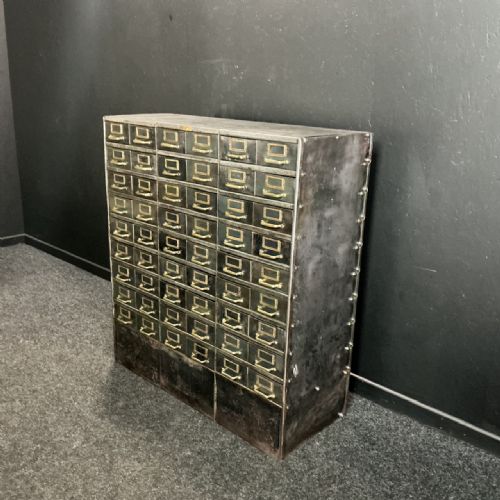
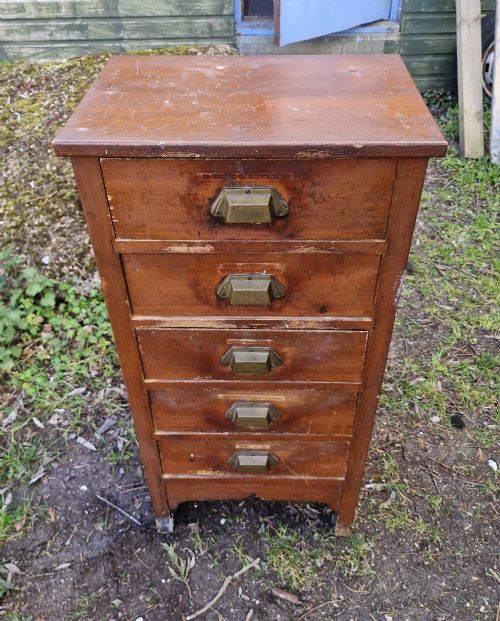
When you search for antique office bank drawers, you are looking at multi-drawer storage units designed for filing, sorting, and trade use during the nineteenth and twentieth centuries. These pieces range from compact five-drawer office cabinets to massive banks holding twelve or sixty-six drawers.
The versions most frequently met on this page date from the Edwardian era and the 1920s, constructed in oak, mahogany, walnut, and pine. You will encounter forms styled for workshops, offices, shops, and patent filing systems.
Originating as functional furniture for banks, businesses, and haberdashers, these cabinets now serve as practical storage solutions in contemporary homes and studies. Their varied scales accommodate everything from small papers to larger collections.
How they were made
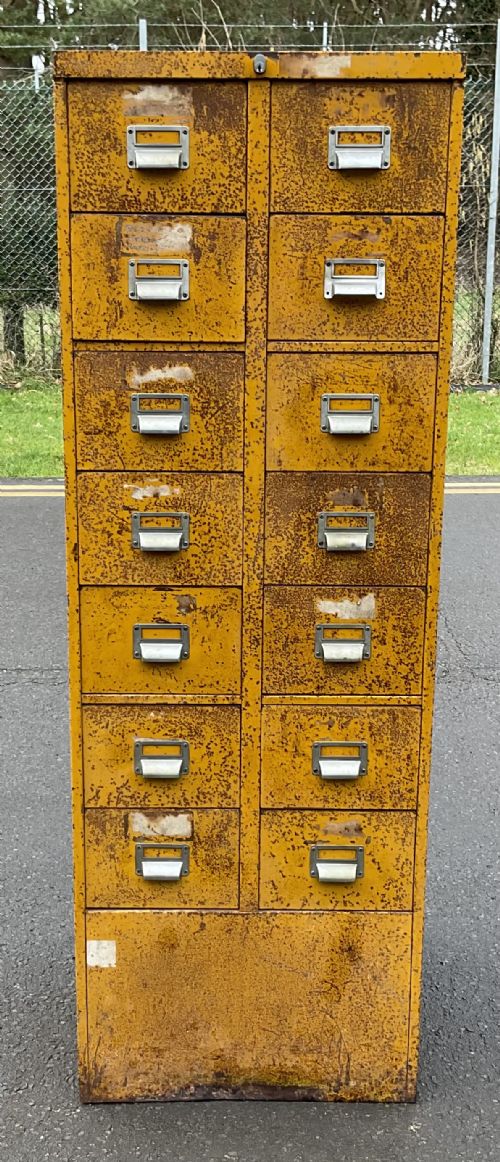
Cabinetmakers utilised hardwoods such as mahogany, oak, and walnut, alongside utilitarian pine and steel elements, building sturdy frames to withstand heavy daily use in offices and shops. Drawer construction relies on traditional joinery designed to support repeated pulling and sliding.
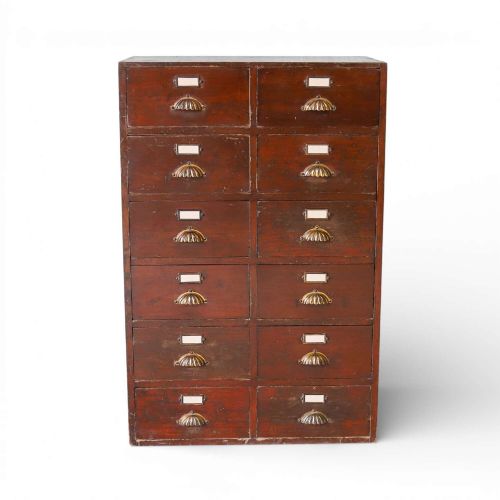
Metal components play a vital role, with brass handles, shell pulls, and label holders fitted to the front of each drawer for easy identification. Iron and steel reinforcement appears on industrial examples and patent filing mechanisms.
Antique Office Bank Drawers Retail Price Guide 2026
Typical asking prices for office bank drawers among the pieces listed under this phrase on Sellingantiques today, from the lower quarter to the upper quarter. They describe what is for sale here now, not the wider market.
Listings feature pieces spanning from the nineteenth century through the 1960s, constructed in oak, mahogany, walnut, pine, steel, and iron.
What varies in quality
The distinction between ordinary utility storage and finer cabinetmaking lies in the timber selection and the integrity of the original hardware. Fine examples feature polished walnut or figured mahogany matched with crisp brass shell pulls and intact label holders.
Proportion and scale also separate standard office pieces from bespoke shop chests or patent cabinets. Units retaining their complete set of matching handles and smooth-running drawers represent the higher tier of surviving pieces.
The Antique Office Bank Drawers Glossary
- Shell pull
- A stamped or cast metal handle shaped like an inverted scallop shell, commonly found on Edwardian office furniture. It often incorporates a slot for a paper label holder.
- Bank of drawers
- A multi-tiered cabinetry form containing numerous small drawers arranged in vertical and horizontal rows. These units were originally built for commercial, banking, or filing purposes.
- Haberdashery cabinet
- A specialised shop display unit featuring many shallow drawers with glass fronts or wooden pulls. They were utilised for storing small drapery items and ribbons.
- Patent letter file
- An indexed filing system enclosed within a wooden cabinet, designed to organise correspondence securely. Examples often feature mechanical locking bars or proprietary indexing mechanisms.
- Graduated drawers
- A series of drawers arranged vertically within a chest, decreasing in depth from bottom to top. This arrangement provides varied storage capacities within a single footprint.
Antique Office Bank Drawers: Frequently Asked Questions
What were bank drawers originally used for?
These cabinets served offices, banks, and mercantile shops for sorting documents, ledgers, and small goods. Their numerous compartments kept paperwork organised before modern filing systems.
Businesses relied on these heavy units for daily record keeping and secure document storage.
How do I clean wooden office drawers?
Dust the surfaces regularly with a soft, dry cloth to protect the polished wood and metal hardware. Avoid harsh chemical cleaners that can strip aged finishes.
Apply occasional wax appropriate for antique timber to nourish the grain and maintain the protective sheen.
Are these drawers suitable for modern paper?
Many historical drawer banks accommodate standard modern stationery, though older filing cabinets were built for specific historical paper sizes. Standard office documents fit comfortably in larger formats.
Check the internal dimensions of individual drawers if you plan to store contemporary A4 paper.
How do I identify an Edwardian cabinet?
Edwardian pieces typically date from around 1900 to 1910, often utilising walnut, mahogany, or oak with refined proportions. They frequently feature distinctive brass hardware and label holders.
Construction details and prevailing aesthetic styles of the period help distinguish them from later industrial utility pieces.