
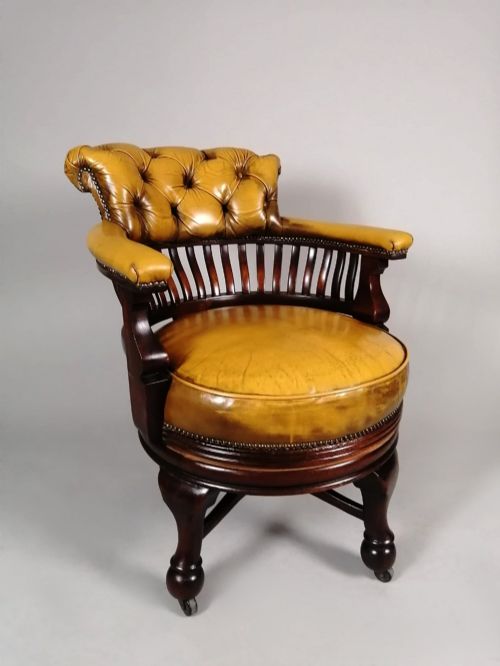
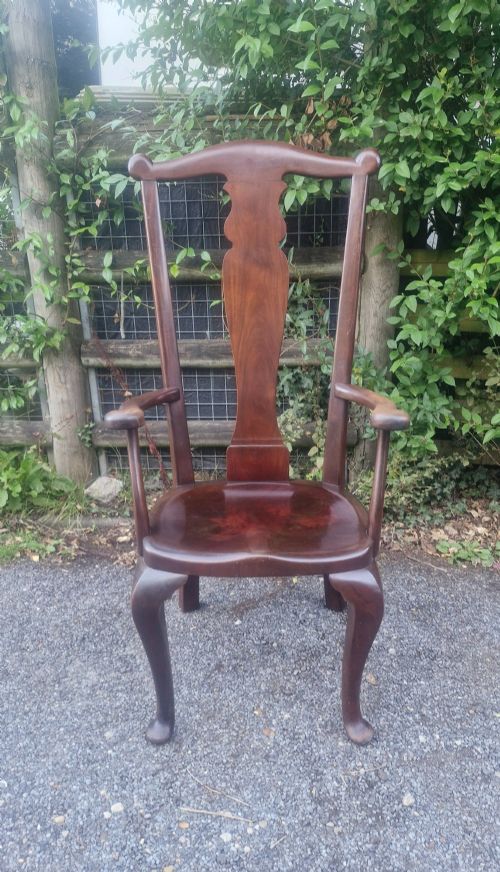
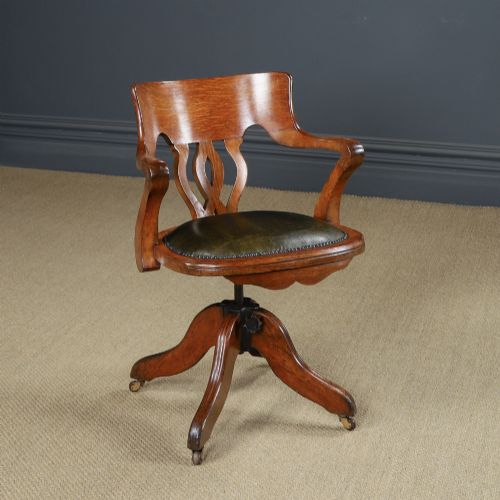
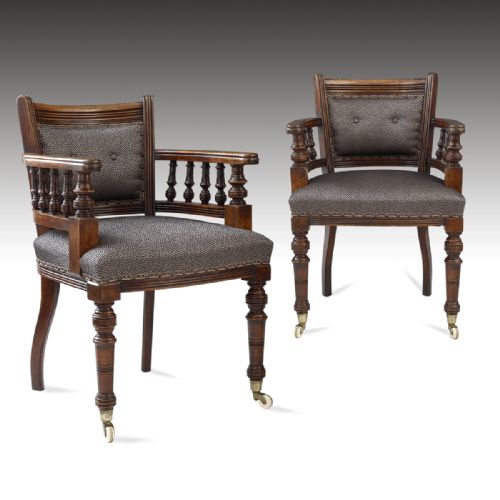
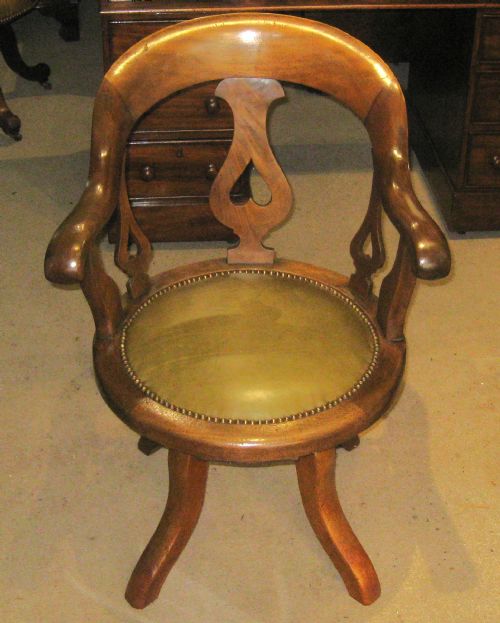
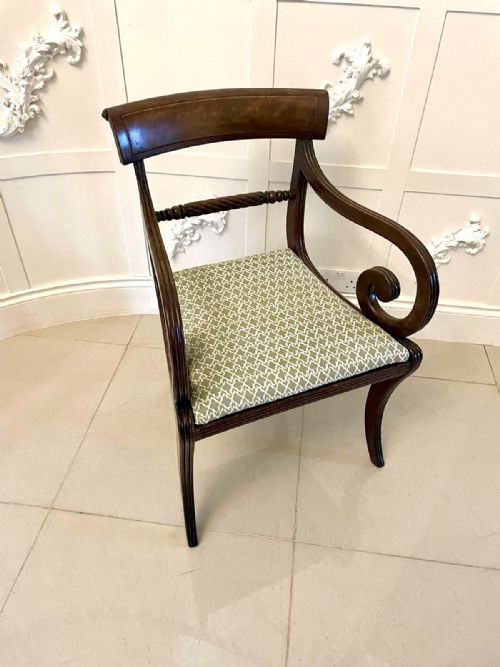
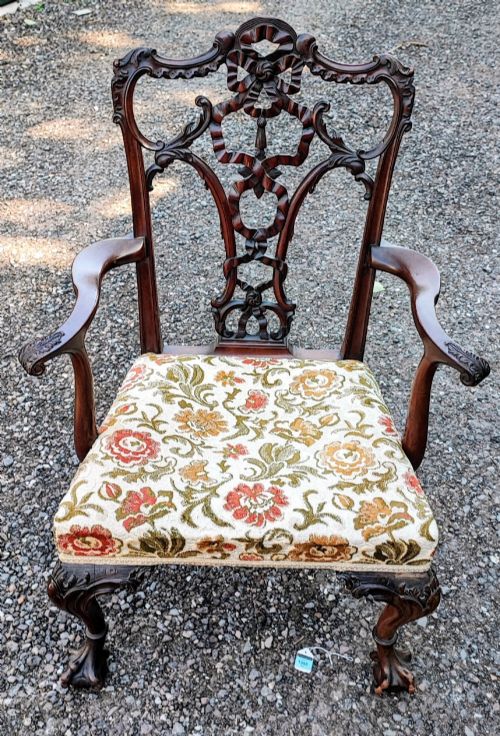
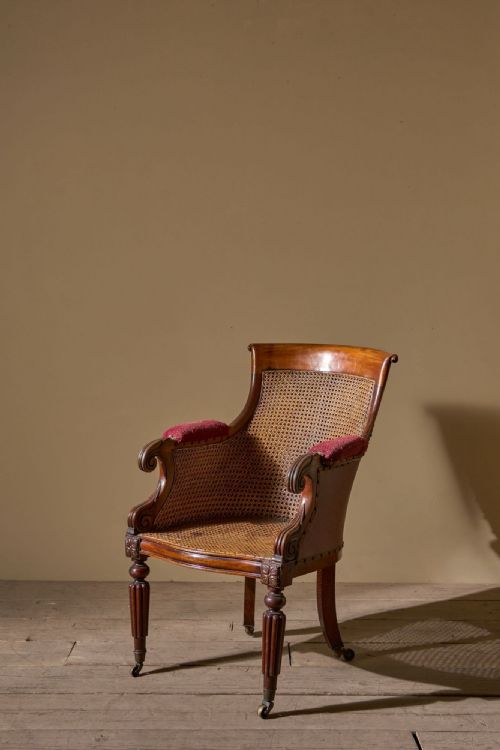
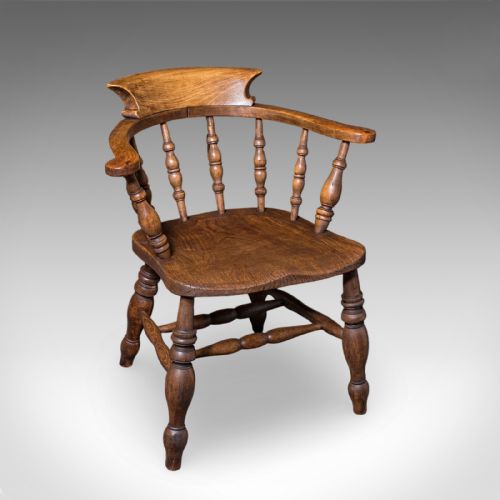
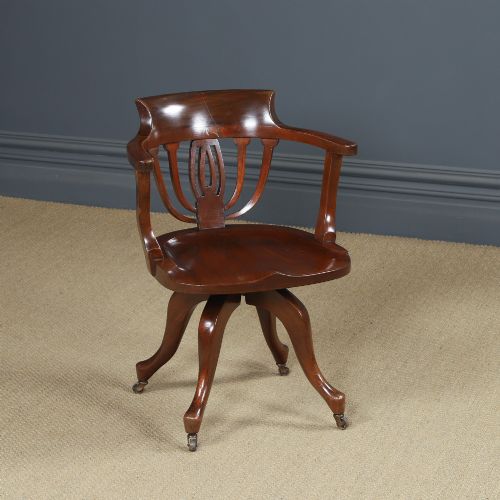
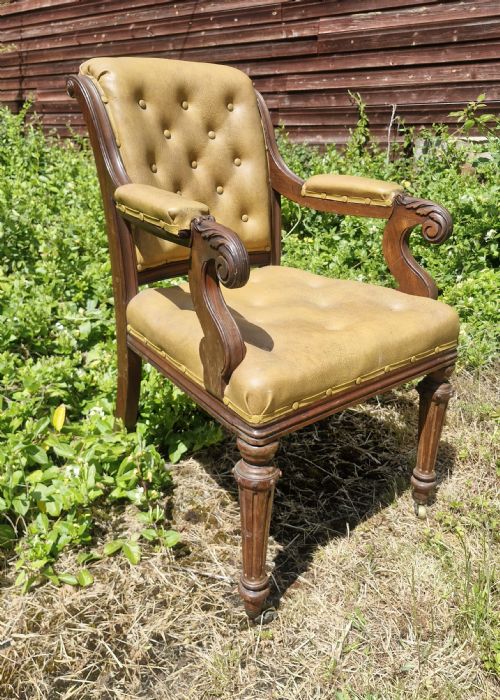


Antique Office Arm Chair
An antique office arm chair brings historic joinery and traditional desk work seating into modern studies.
Antique Office Arm Chair
An antique office arm chair provides supportive seating designed for working at a desk, combining historical periods from the Georgian era through to the 1920s. Buyers searching this phrase encounter swivel mechanisms, library seating, and stationary desk armchairs.
Originating from domestic libraries, country houses, and early commercial offices, these chairs bridge the gap between formal dining carvers and dedicated workspace seating. Their robust construction reflects the heavy daily use they were originally built to endure.
Materials and Construction Methods
Mahogany and oak form the primary structural timbers across these listings, supplemented by walnut, beech, ash, and rosewood. Craftsmen selected these hardwoods for their structural strength and ability to accept detailed carving or smooth turning.
Upholstery materials such as leather, velvet, and fabric appear frequently on seats and backrests, secured with brass tacks. Swivel versions incorporate iron and brass spindle mechanisms to allow rotational movement and adjustable height.
Periods represented across the inventory include the Regency era, Victorian decades, Edwardian period, and the 1920s.
Distinctions in Quality and Craftsmanship
The standard of timber selection and joinery marks the difference between utilitarian seating and high-grade workshop production. Finely figured mahogany, tight grain in oak, and clean hand-carving indicate superior original commission.
The complexity and durability of the mechanical swivel and height-adjustment apparatus also divide examples. Robust iron or brass revolving hardware that operates smoothly demonstrates higher manufacturing grade than simpler fixed or replacement joints.
Bell Barn Furniture·William Birchcraft
The Antique Office Arm Chair Glossary
- Revolving desk chair
- A seat fitted with a central spindle and base allowing the upper portion to turn. These often feature adjustable height mechanisms utilising wooden threads or iron screws.
- Captain's chair
- A sturdy wooden armchair with a low, rounded back rail supported by spindles. They frequently feature saddle-shaped wooden seats designed for prolonged sitting.
- Carver
- An armchair designed in the same style as a set of dining or office side chairs, traditionally placed at the head of a table or utilised at a desk.
- Bow back
- A backrest formed from a single continuous bent piece of timber curved in an arc around the rear supports. This technique provides ergonomic support around the user's lower back.
- Sabre leg
- A chair leg that curves outward in a concave shape resembling a cavalry sabre. This profile originates from the Regency period and offers stability without heavy stretchers.
Antique Office Arm Chair: Frequently Asked Questions
How do I identify a revolving desk chair?
Look underneath the wooden seat for an iron spider mechanism, a central vertical spindle, or a threaded screw column. These components permit the upper chair body to rotate.
Many period examples also feature four-legged wooden star bases fitted with small castors for mobility across office floors.
Are these chairs comfortable for daily computer work?
Most antique office arm chairs offer supportive wooden or upholstered backrests and wide arm rests suited for upright desk tasks. Their fixed or swivelling posture encourages an upright working position.
Seat heights on older models can be lower than modern ergonomic standards, so verifying dimensions against your desk is recommended.
How do I distinguish Edwardian models from Victorian ones?
Victorian office chairs frequently utilise dense mahogany or walnut with darker finishes, deep buttoned leather, and heavier carved details. They span periods from the mid-nineteenth century onward.
Edwardian pieces often feature lighter oak or beech frames, simpler turned spindles, and stamped leather work dating around the turn of the twentieth century.
Can I use an antique office arm chair with a modern desk?
These chairs pair effectively with contemporary desks, provided the clearance beneath the desk surface accommodates the chair's arms. Standard arm heights on older models can vary significantly.
Measuring the height from the floor to the top of the chair arms ensures the piece slides neatly underneath your workspace.