
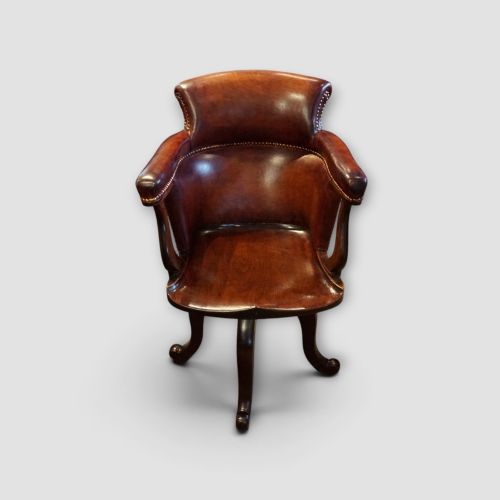
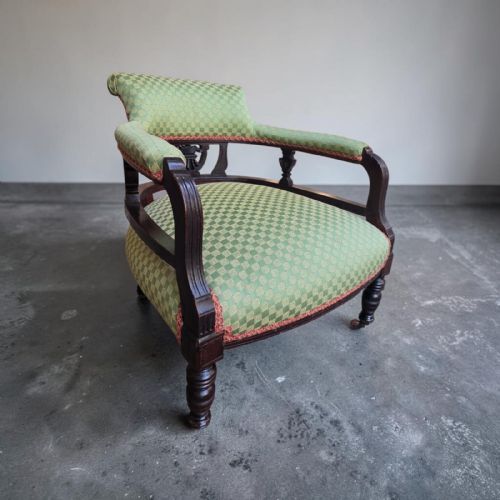
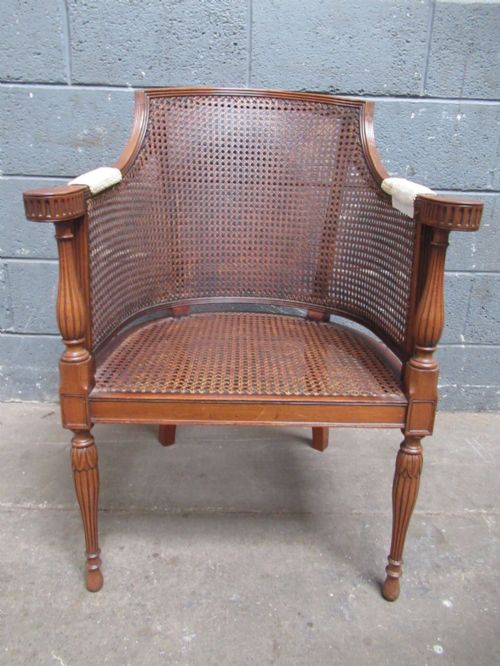
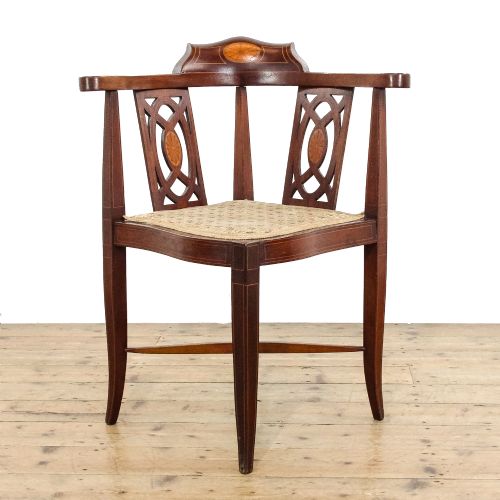


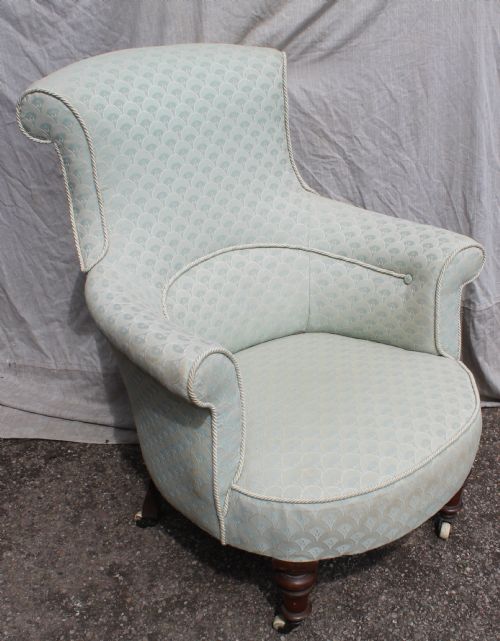
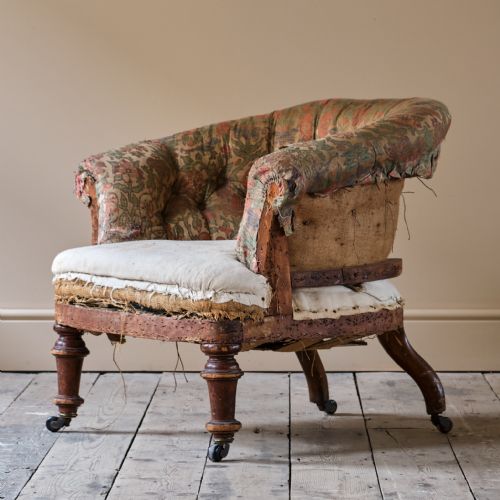
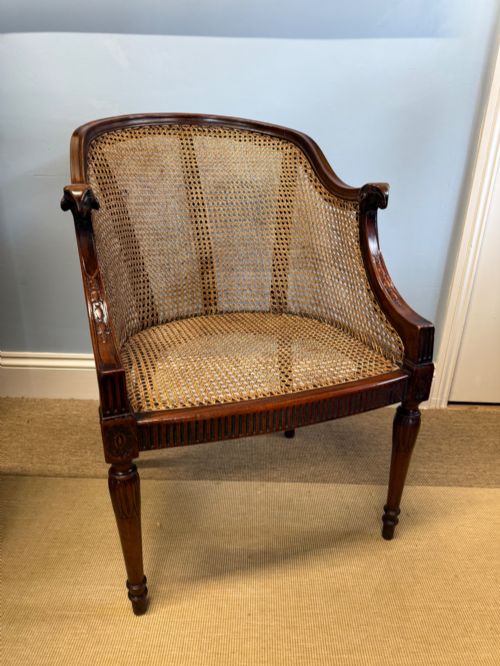
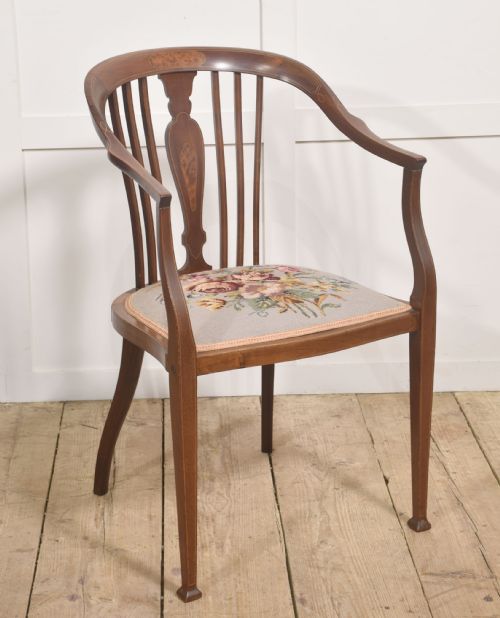

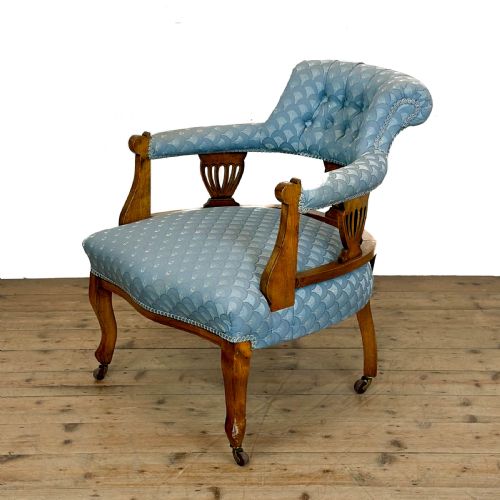
Edwardian Mahogany Tub Chair
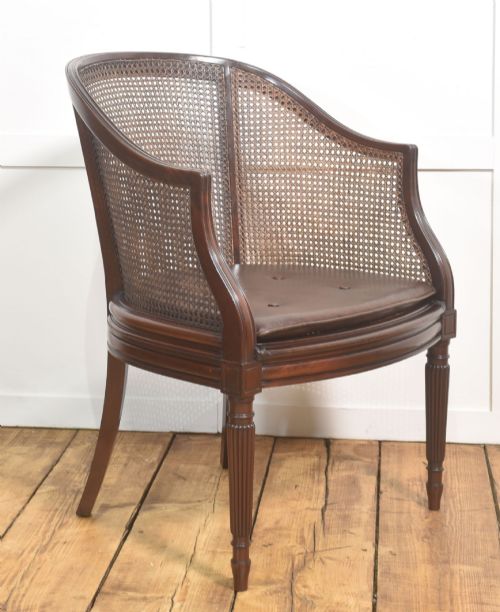
When you select an edwardian mahogany tub chair, you choose a curved, enveloping seat designed for elegance and comfort.
Edwardian Mahogany Tub Chair
An edwardian mahogany tub chair combines a rounded, semi-circular backrest with a sturdy wooden frame, serving as a versatile seat for parlours, studies and bedrooms.
The version most commonly encountered on this page originates from the early twentieth century, frequently featuring delicate satinwood inlay or caned panels alongside the characteristic curved frame.
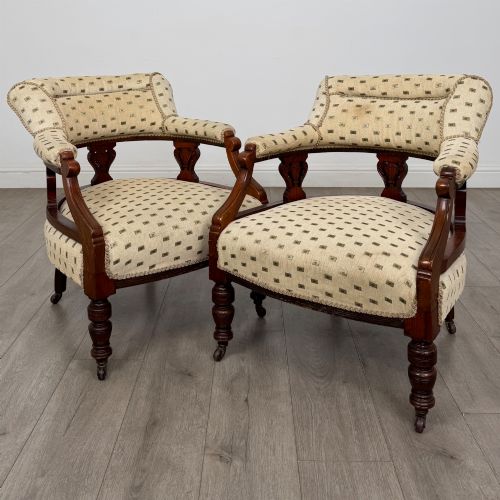
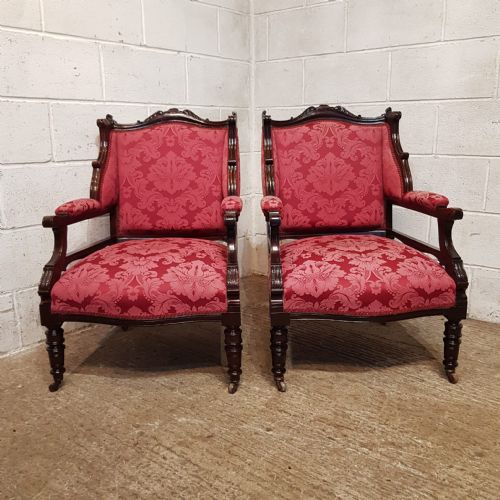
While primarily associated with the Edwardian period, similar seating styles span from the late Victorian era into the early decades of the twentieth century, appearing as desk chairs, corner chairs and salon seating.
How They Were Made
Cabinetmakers constructed the foundational frames using solid mahogany, often bending the timber with heat to achieve the continuous curved profile of the tub back.
Surface enrichment relied on contrasting satinwood inlay, marquetry details, or finely woven cane panels fitted into the wooden framework.
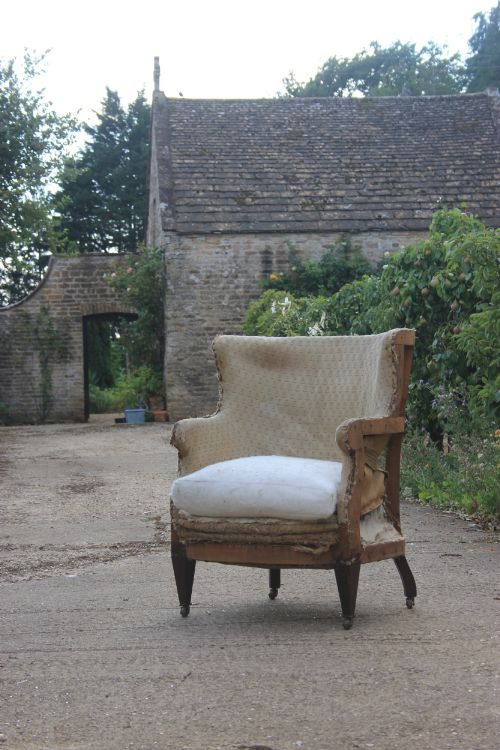
Seating comfort was established through traditional upholstery techniques, wrapping springs and stuffing in durable fabrics, supple leather or velvet.
Listings feature mahogany, cane, leather, and satinwood across Victorian, Edwardian, and Regency periods.
What Varies in Quality
The distinction between standard and superior pieces rests upon the precision of the joinery and the fluidity of the curved wooden frame.
Refinement in decorative elements, such as intricate marquetry, finely detailed satinwood inlay and tautly woven cane work, elevates an ordinary chair into a distinguished example.
The choice of original covering material, whether hand-tooled leather or quality velvet, combined with the integrity of the underlying structure, defines the enduring standard of the piece.
Maple And Co·Harrods London
The Edwardian Mahogany Tub Chair Glossary
- Tub chair
- An armchair featuring a continuous, curved backrest that drops down to form low arms, resembling the shape of a deep tub. This design offers a cozy and supportive seating experience.
- Bergère
- An enclosed armchair with a wooden frame where the sides and back are typically filled with cane work. It frequently includes a loose upholstered seat cushion.
- Satinwood
- A durable, yellowish timber native to India and Ceylon, prized for its lustrous grain. It is often utilised for contrasting stringing and inlay on mahogany furniture.
- Marquetry
- The art of applying decorative pieces of veneer to a structure to form intricate patterns. Craftsmen use varied timbers to create pictorial or geometric designs on tabletops and chair backs.
- Caning
- A weaving technique employing split rattan cane to create openwork panels on chair backs and seats. It provides a lightweight yet resilient surface.
Edwardian Mahogany Tub Chair: Frequently Asked Questions
Where should I place an edwardian mahogany tub chair?
These versatile chairs suit corners of a drawing room, as a desk companion in a study, or beside a fireplace where the curved back offers snug support.
Their compact footprint allows them to fit comfortably into bedroom seating areas without dominating the floor space.
How do I care for leather and mahogany?
Keep the mahogany frame polished with natural beeswax and avoid placing it near direct heat sources that might dry out the timber.
Nourish leather upholstery with a suitable conditioner periodically to maintain suppleness and prevent cracking over time.
Can I use an edwardian mahogany tub chair daily?
Most surviving examples are structurally robust enough for regular sitting, provided the joints remain tight and the internal webbing is sound.
Lighter salon or corner variations are best suited for occasional use rather than heavy lounging.
How do I distinguish Edwardian from Victorian chairs?
Edwardian versions typically display lighter proportions, brighter mahogany tones, and refined satinwood inlay reflecting a neoclassical revival.
Victorian predecessors tend to be heavier in build, featuring darker finishes, button-tufted upholstery, and denser ornamentation.