


Antique Octagonal Dish
An antique octagonal dish brings eight-sided symmetry to the table, formed in porcelain, pottery, or metal across centuries of design.
Antique Octagonal Dish
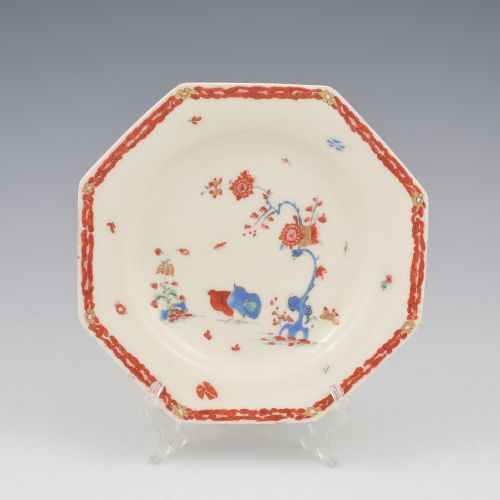
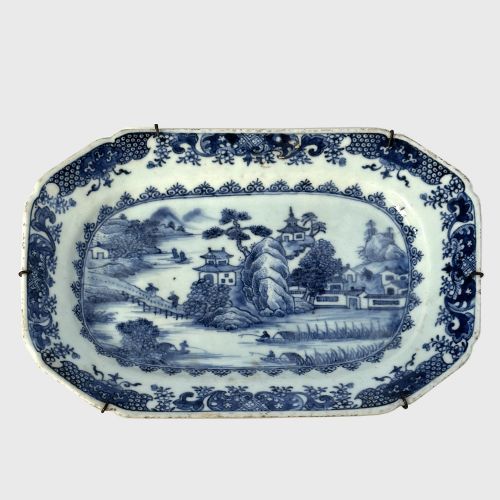
When you search for an antique octagonal dish, you encounter serving vessels, platters, and plates shaped with eight distinct sides rather than the usual circle or square. These geometric forms emerge from eighteenth-century porcelain workshops and extend through nineteenth-century earthenwares into twentieth-century decorative pieces.
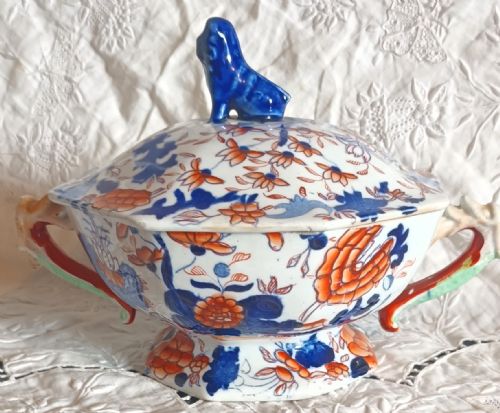
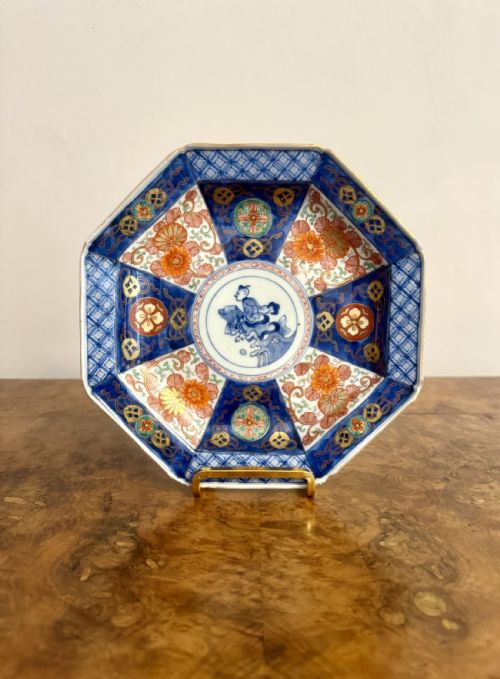
The versions most commonly met on this page include Chinese export porcelain, English blue and white earthenware, and Japanese Imari plates. Makers utilised the eight-sided format to display painted cobalt scenes, hand-coloured transfer prints, and intricate enamels.
Beyond dining tables, these pieces served as decorative cabinet plates, vegetable tureens, and specialist salt cellars. The geometry provides a stable footprint while adding architectural definition to tableware collections.
How they were made
Potters shaped these pieces using hard-paste porcelain, soft-paste porcelain, and refined earthenware, often building them on specialised moulds to maintain the sharp angles of the eight-sided rim. Once formed, decorators applied cobalt underglazes, hand-painted enamels, and gold leaf before firing the ceramic in high-temperature kilns.
Metal variations involve silver plating, brass, and Old Sheffield Plate, where artisans hammered, cast, or rolled metals into serving trays and dishes. Enamel work and cobalt glass liners frequently supplemented these metallic pieces during later periods.
Ducks and dragons occasionally share shelf space, appearing across eighteenth-century Bow porcelain plates and twentieth-century lustre bowls alike.
What varies in quality
The refinement of the body paste and the crispness of the eight-sided moulding separate standard utility wares from collector pieces. Early porcelain bodies show superior translucency and precise geometric edges, whereas lesser examples display warping or thick, heavy potting.
Hand-painted precision dictates visual worth, distinguishing fluid brushwork in Imari patterns or armorial details from repetitive transfer printing. The preservation of surface gilding, enamel saturation, and glaze smoothness further marks the distinction between ordinary and exceptional examples.
Mason's·Brameld & Co.·Helena Wolfsohn·Royal Vienna·Wedgwood
The Antique Octagonal Dish Glossary
- Imari
- A style of Japanese export porcelain featuring deep cobalt blue, iron red, and gold ornamentation. This palette dominated trade wares during various historic periods.
- Ironstone
- A durable type of British earthenware patented in the nineteenth century to imitate porcelain strength. It frequently forms heavy dinner services and serving platters.
- Delftware
- Tin-glazed earthenware produced in England and the Netherlands, known for absorbing cobalt blue pigments into a milky white surface. Pieces often display hand-painted oriental motifs.
- Lustre glaze
- A metallic ceramic finish that reflects iridescent colours under light. Wedgwood utilised this technique extensively on decorative bowls during the early twentieth century.
- Alms dish
- A metal or ceramic basin historically used for collecting charitable donations in churches. Welsh examples appear frequently in brass or pewter.
Antique Octagonal Dish: Frequently Asked Questions
How do I date an antique octagonal dish?
Dating relies on examining the material composition, kiln marks, and decorative style recorded on the piece. Porcelain bodies from the eighteenth century differ significantly in weight and translucency from twentieth-century earthenware.
Secondary clues include transfer-printed factory marks, pattern names, and the specific palette of enamel colours used by the decorator.
Can I use these dishes for serving food?
Many of these pieces were originally created as meat plates, platters, and tureens for dining use. Robust ironstone and heavy porcelain items tolerate careful handling during modern meals.
Fragile soft-paste porcelain, early enamels, and silver-plated pieces with delicate glass liners deserve careful preservation rather than daily dining service.
What is the difference between porcelain and earthenware dishes?
Porcelain is fired at high temperatures using kaolin clay, resulting in a vitreous, non-porous body that often transmits light through thin sections. Earthenware is fired at lower temperatures, producing a heavier, opaque ceramic body.
Earthenware pieces often require a tin or lead glaze to achieve an impermeable surface for holding food and liquids.
How should I display an octagonal dish safely?
Wall mounting requires specialist plate hangers with rubber-coated grips that distribute pressure evenly across the eight rim sections. Alternatively, sturdy wire display stands support the flat base securely on cabinet shelves.
Keep pieces away from direct sunlight to preserve vulnerable enamel colours and gold leaf highlights.