

Antique Oak Throne
When you search for an antique oak throne, you encounter imposing high-back seats built to project authority, heritage, and domestic grandeur.
Antique Oak Throne
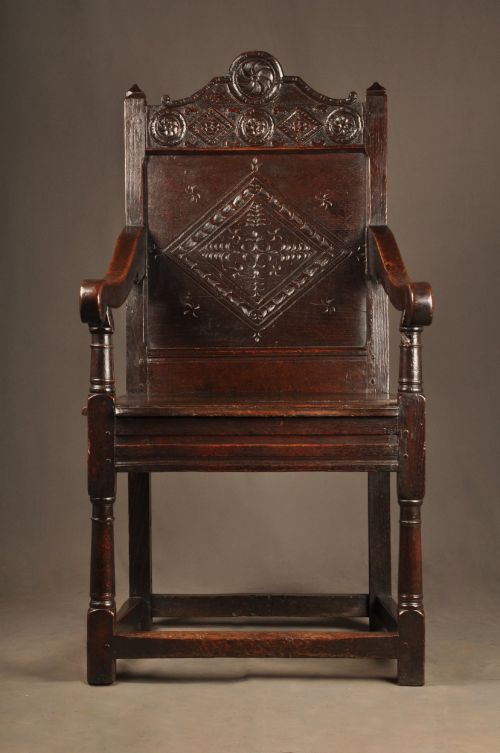
An antique oak throne represents a heavy, high-backed seating form designed historically for heads of households, masters of guilds, or ceremonial use. Buyers searching this phrase look for substantial wooden framing, architectural presence, and deep historical resonance.
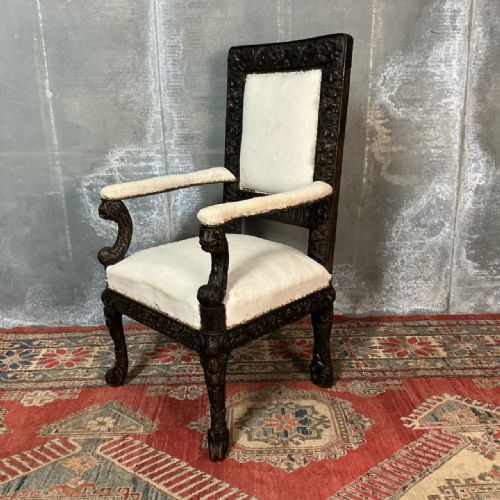
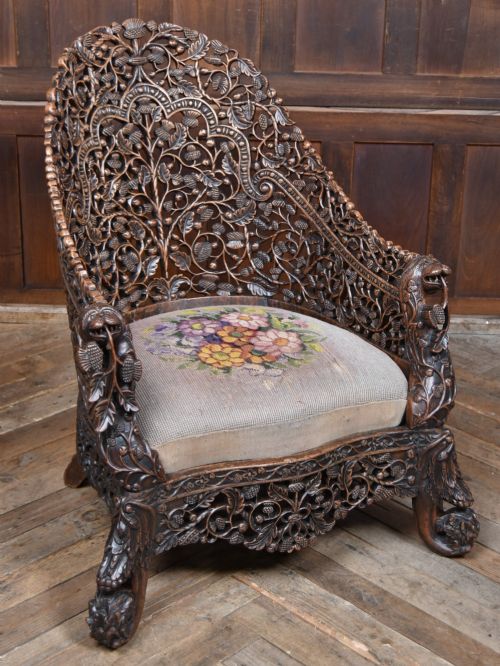
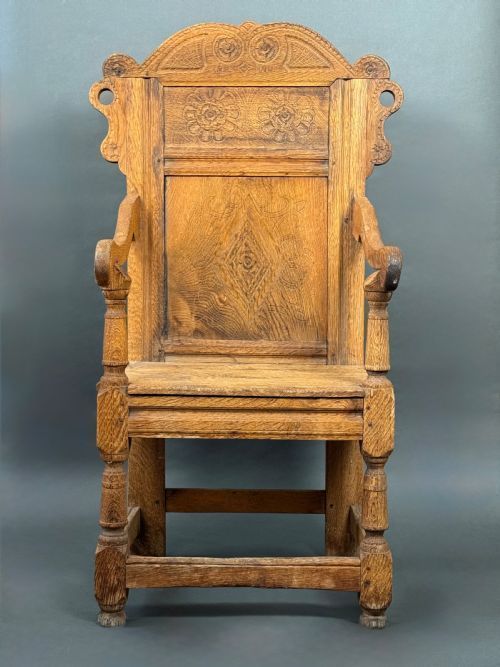
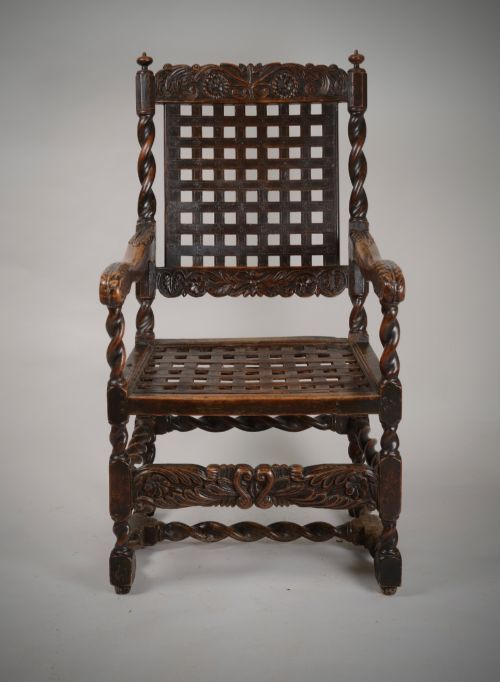
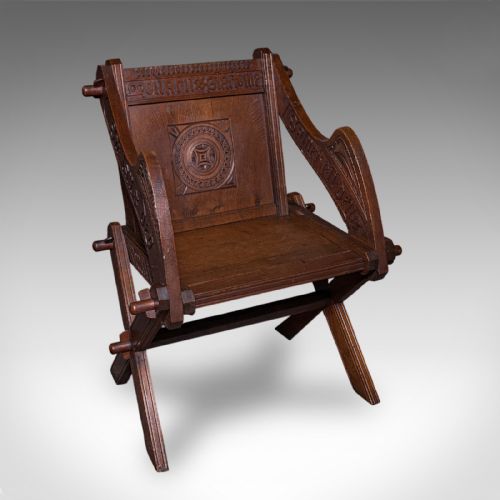
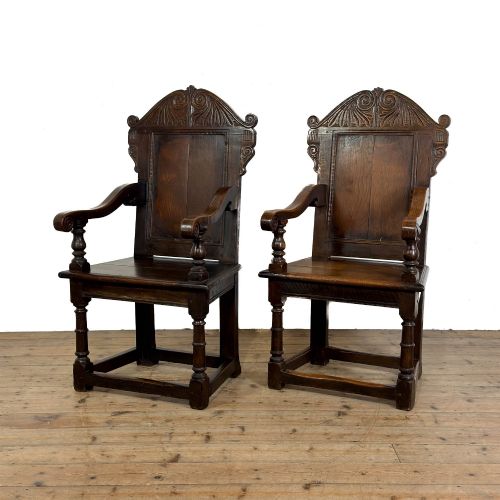
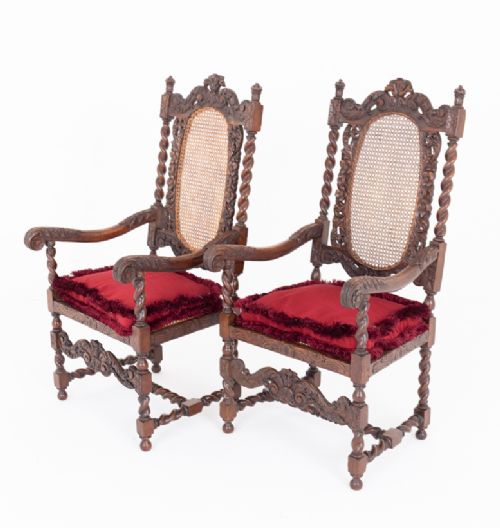
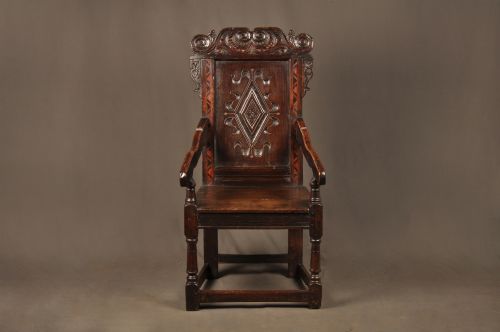
The versions most frequently met on this page include 19th-century revival pieces modelled after 17th-century wainscot styles, alongside genuine early examples from the 17th century. These chairs often incorporate high panelled backs, solid armrests, and extensive carved ornamentation.
Regional variations appear across the selection, ranging from Scottish and Welsh workshops to English and continental European makers. Forms extend from formal wainscot chairs to chapel seats and domestic hall chairs adapted for dramatic effect.
How they were made
Joinery forms the backbone of these pieces, utilising traditional mortise and tenon joints secured with wooden pegs to handle the substantial weight of solid timber. Carpenters relied on quarter-sawn oak, which yielded durable boards with distinctive medullary ray patterns.
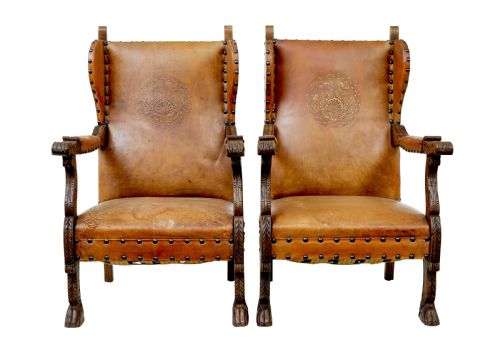
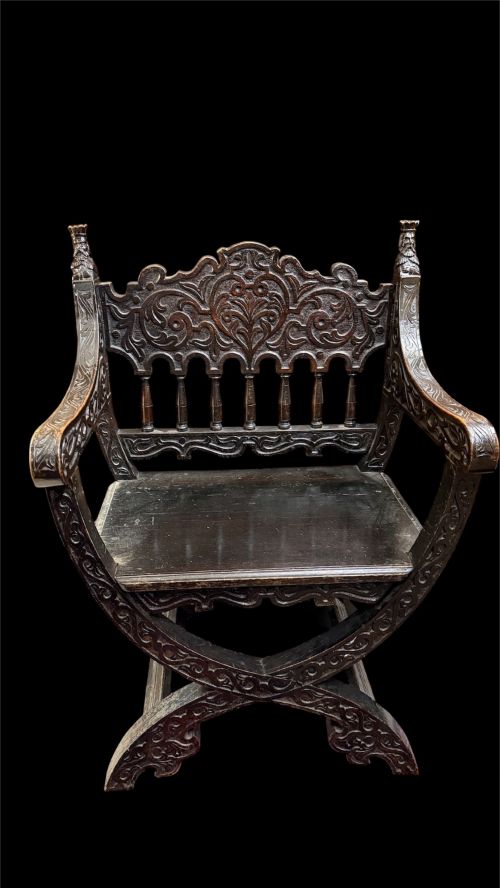
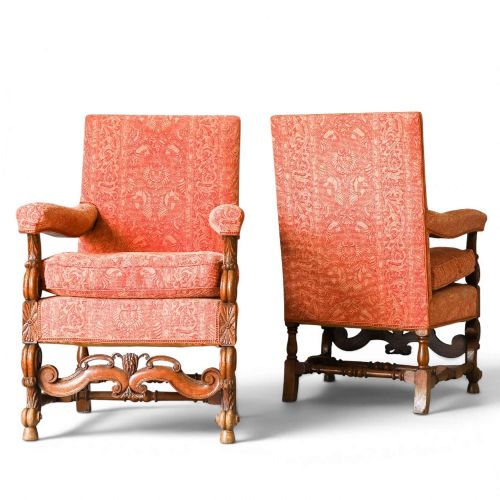
Carving and panel construction define the surface enrichment, executed entirely by hand using gouges and chisels to produce strapwork, linenfold, or figural motifs. Leather, velvet, and tapestry inserts frequently provide padded seating surfaces, fastened with brass studs to the wooden framework.
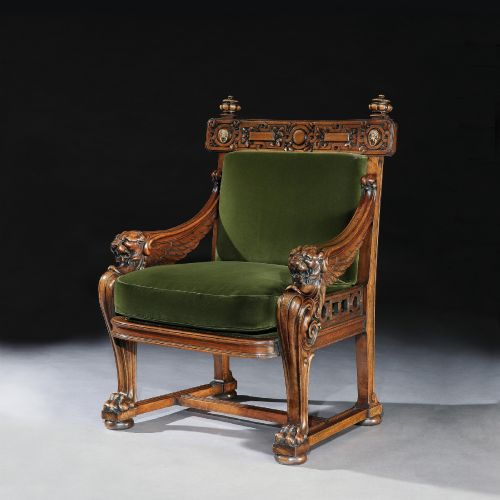
Several listings feature fierce carved lions whose permanent snarls have guarded drafty hallways for over a century.
What varies in quality
The depth and crispness of the hand-carved detail separate ordinary utility seating from exceptional masterworks. Sharp relief work on crest rails and arm terminals indicates a skilled hand, whereas softened or muddy carving points to hurried production.
Timber selection and structural integrity dictate longevity, with tight growth rings and heavy gauge framing representing superior standards. Original surfaces and patination achieved through centuries of handling command greater appreciation than stripped or heavily restored timber.
Leonard Wyburd·Liberty and Company·Thomas Hope
The Antique Oak Throne Glossary
- Wainscot
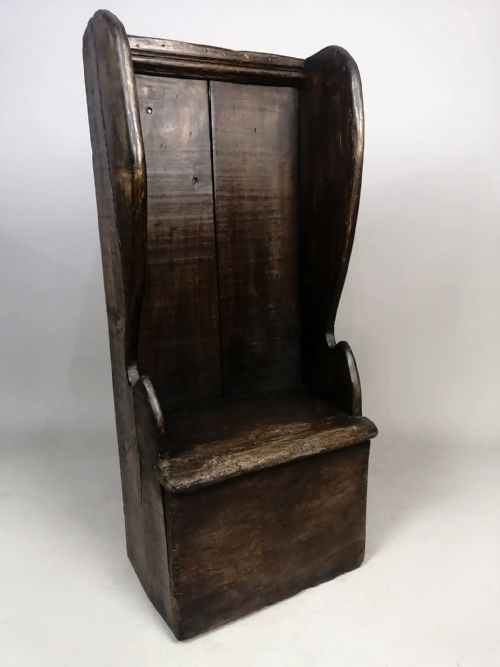
- A heavy wooden armchair constructed with panelled backboards and solid sides, typical of 17th-century domestic interiors. This form served as the primary precursor to later revival throne chairs.
- Barley twist
- A turned wooden furniture leg or stretcher shaped in a spiral twist resembling a rope. This decorative turning technique became widespread during the 17th century.
- Monopodia
- A carved furniture support taking the form of a single animal leg, often ending in a lion paw. This classical motif appears frequently on 19th-century revival armchairs.
- Strapwork
- A decorative carving motif resembling flat interlaced bands or leather straps, commonly found on Elizabethan and Jacobean panels. It adds geometric texture to the upper backrests.
- Caquetoire
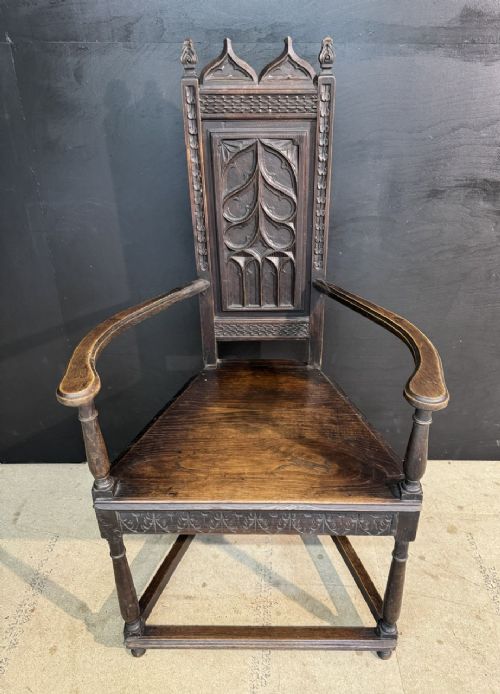
- A light, high-backed conversation chair with a trapezoidal seat designed to accommodate wide Renaissance garments. These pieces originated in France during the 16th century.
Antique Oak Throne: Frequently Asked Questions
What distinguishes an authentic 17th-century throne from a 19th-century revival?
Authentic 17th-century pieces display genuine tool marks, pegged joinery showing irregular hand-cut dimensions, and deep patination accumulated over centuries of use. Revival copies made in the Victorian era often use standardised machine-sawn components and mimic older styles with decorative symmetry.
Examination of the underside and interior joints usually reveals the true age of the timber and construction methods. Older chairs exhibit shrinkage cracks and wear patterns consistent with early domestic or civic environments.
How were heavy oak thrones used in historic homes?
These imposing seats were positioned at the head of a dining table or beside the hearth to signify the status of the head of the household. They provided shelter from cold drafts through their high wooden backs and solid panelled arms.
Over later centuries, similar chairs found places in hallways, libraries, and institutional settings where visitors needed to be greeted with formal authority.
How do I care for antique leather and oak?
Oak timber requires stable indoor humidity away from direct heat sources to prevent the wood from splitting or warping over time. Feeding the surface with appropriate wax maintains the natural lustre of the grain.
Upholstered leather panels benefit from gentle cleaning and occasional conditioning to keep the material supple. Avoid harsh chemical cleaners that can strip historic finishes.
Where should I place a large throne chair in a modern interior?
These substantial seats function best as anchor pieces in spacious entryways, studies, or living rooms where their architectural presence can be appreciated. Pairing them with simpler modern furnishings allows the historic carving to stand out.
Ensure the floor structure can support the considerable weight of solid oak framing before positioning the chair permanently.