
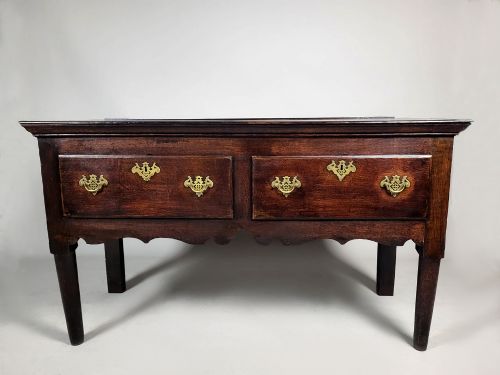
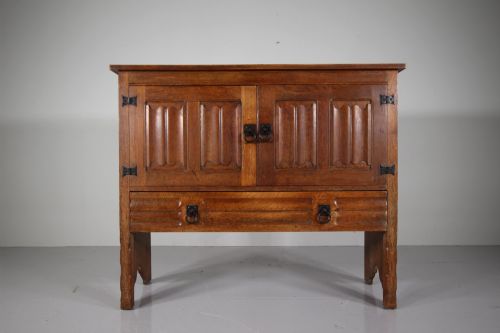
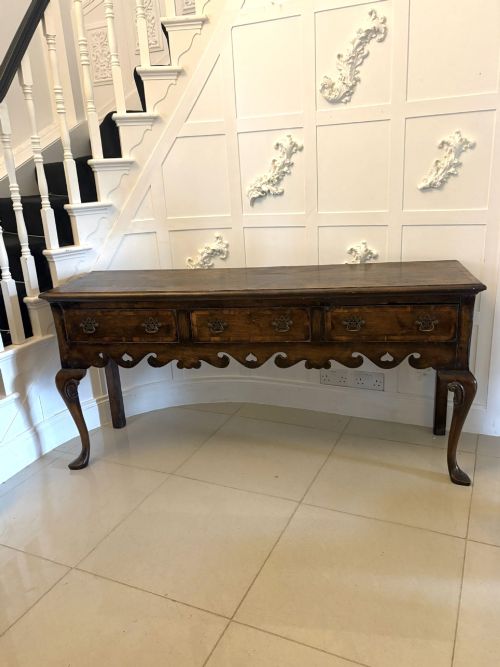
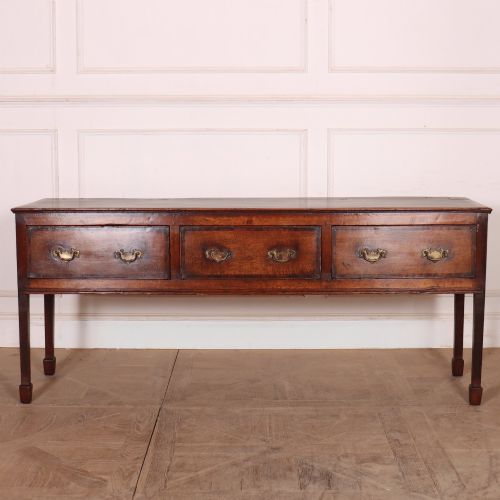

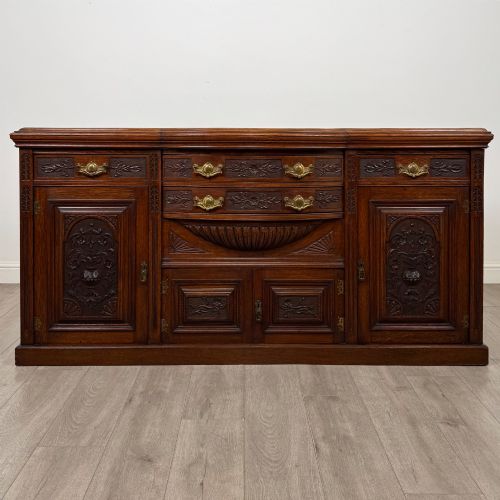
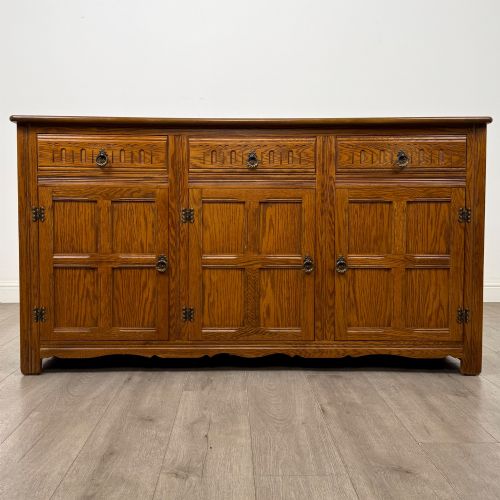
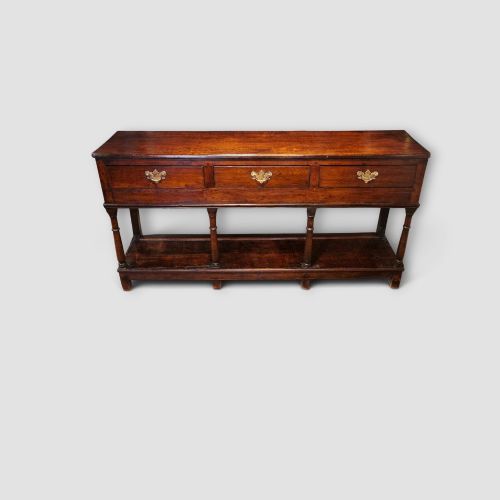
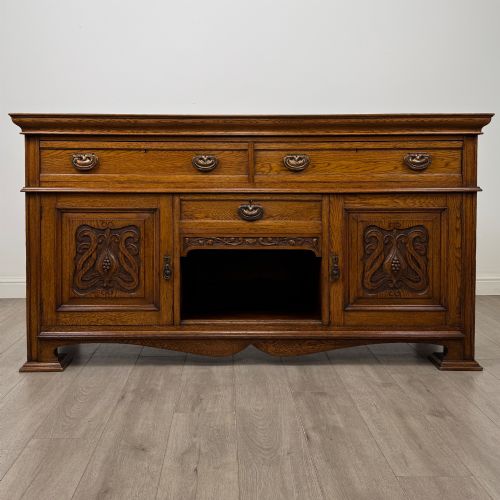
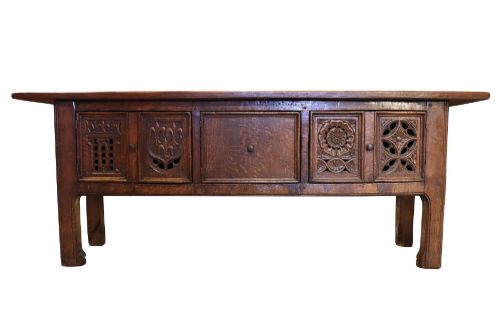
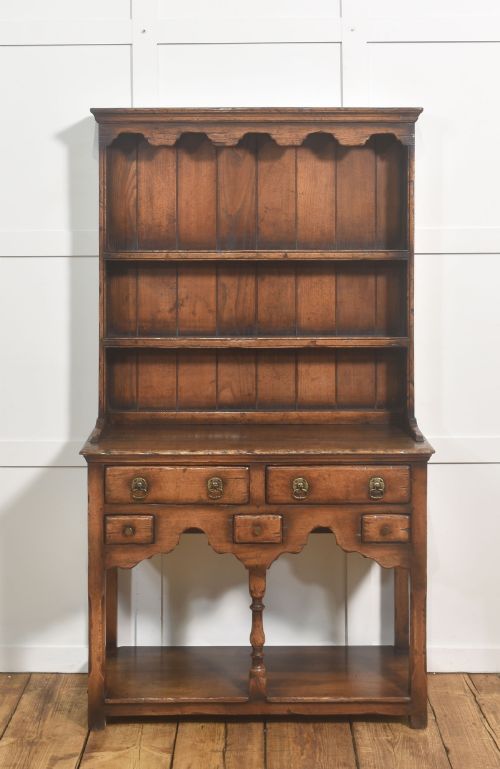
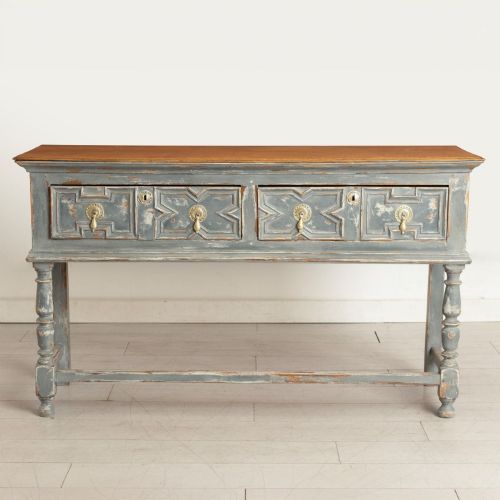
Antique Oak Sideboard Base
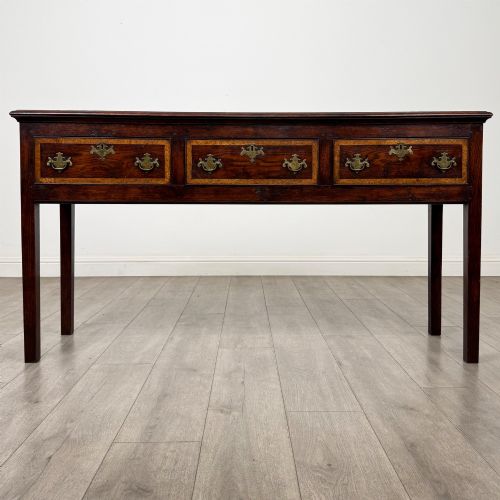
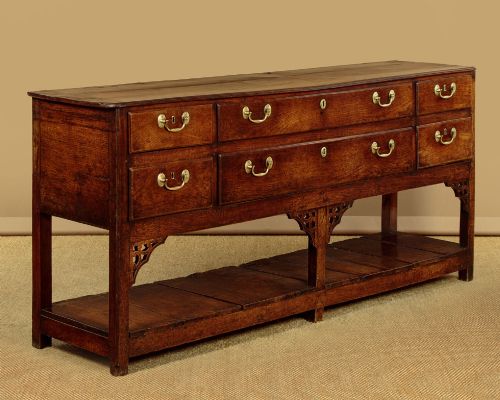
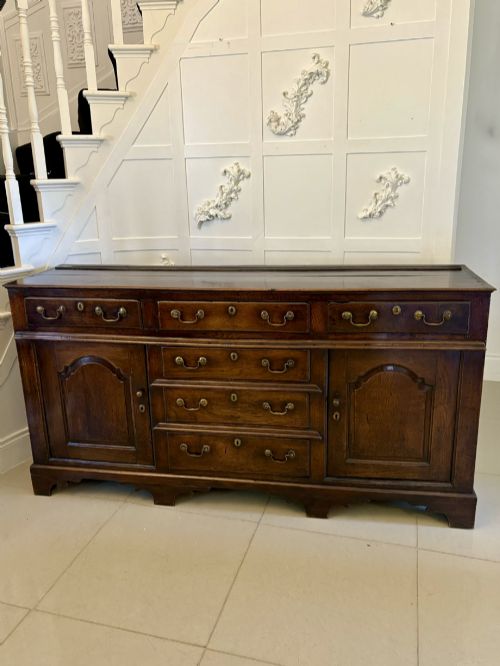
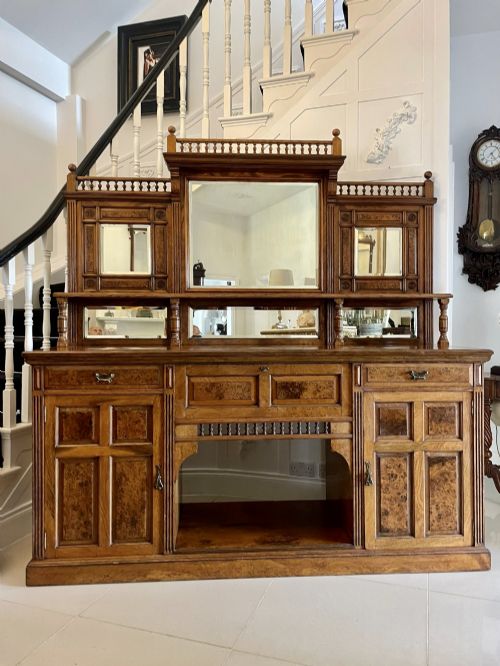
An antique oak sideboard base provides generous surface space and storage while anchoring a room with centuries of timber character.
Antique Oak Sideboard Base
The search for an antique oak sideboard base leads directly to sturdy utilitarian furniture designed for serving and storage, spanning centuries of domestic life. These items frequently intersect with categories such as dresser bases, low dressers, and serving tables.
Pieces from the 18th century and the Georgian period appear regularly, alongside later Edwardian interpretations and revival styles. Many examples feature open potboards beneath the main surface, while others incorporate banks of drawers or lower cupboards.
Regional variations emerge across English and Welsh pieces, showing differences in proportion and drawer configuration. Collectors encounter both rustic country pieces and refined urban examples adapted for modern dining rooms.
Materials and Construction
Constructed predominantly from solid oak, these pieces frequently incorporate secondary timbers like fruitwood or deal in secondary framing and drawer linings. Joinery techniques relied heavily on pegged mortise and tenon joints to ensure long-term stability.
Hardware details typically involve brass drop handles, backplates, and iron hinges that show hand-finished qualities. Surface finishes range from waxed patinated timber to historic paint layers and occasional polished pollard oak veneers.
Some Welsh pieces carry centuries of gravy stains in their potboards, proving they worked hard for their supper.
Assessing Quality and Merit
Quality rests upon the integrity of the timber, the depth of the natural patina accumulated over generations, and the crispness of any hand-carved detailing. Superior examples retain their original boards, brassware, and structural framing without extensive timber replacement.
Proportion and balance distinguish finer pieces from standard utility items, particularly in the relationship between drawer depths and leg height. Regional vernacular pieces display distinct local characteristics that elevate their interest to specialists.
Peter Waals
The Antique Oak Sideboard Base Glossary
- Potboard
- An open lower shelf beneath a dresser base or sideboard used originally for displaying pewter or storing heavy kitchen pottery.
- Dresser base
- The lower portion of a traditional kitchen or dining dresser, functioning independently as a sideboard or serving table.
- Geometric moulded
- A decorative front featuring raised mouldings arranged in symmetrical geometric patterns, popular during the 17th and early 18th centuries.
- Enfilade
- A long sideboard or cabinet with three or more doors, commonly associated with continental European dining furniture.
- Pollard oak
- Timber taken from trees that have been pollarded, producing tightly knotted, highly figured grain patterns utilised for decorative veneer.
Antique Oak Sideboard Base: Frequently Asked Questions
What is an antique oak sideboard base?
An antique oak sideboard base is a sturdy low cabinet or table designed for storage and serving, originating primarily from domestic kitchens and dining rooms of past centuries.
These pieces typically feature a flat top surface above drawers, cupboards, or an open lower shelf known as a potboard.
How were these sideboards used originally?
Historically, these items served as practical work surfaces for food preparation and storage areas for serving dishes, cutlery, and provisions.
In wealthier households, they functioned more formally as serving tables for displaying silver and dining ceramics during meals.
How do I fit one into a modern home?
An antique oak sideboard base works exceptionally well in contemporary dining rooms, hallways, or living spaces as a media console or storage unit.
The deep timber tones and ample surface space provide both practical utility and a grounding architectural presence.
How can I tell the period of a sideboard?
Dating relies on examining construction methods, drawer linings, handle types, and stylistic indicators such as leg shapes and moulding profiles.
Early pieces display hand-cut joinery and pegged joints, whereas later revival items often utilise machine-sawn timber and standardised hardware.