


Antique Oak Coal Bin
An antique oak coal bin is a sturdy hearthside receptacle that keeps fuel close to the fire while adding functional craftsmanship to a room.
Antique Oak Coal Bin
An antique oak coal bin serves as a practical hearthside container designed to hold solid fuel such as coal, peat, or logs near the fireplace. When you search for an antique oak coal bin, you encounter domestic items spanning the Georgian, Victorian, and Edwardian eras, as well as the 18th century and 19th century.
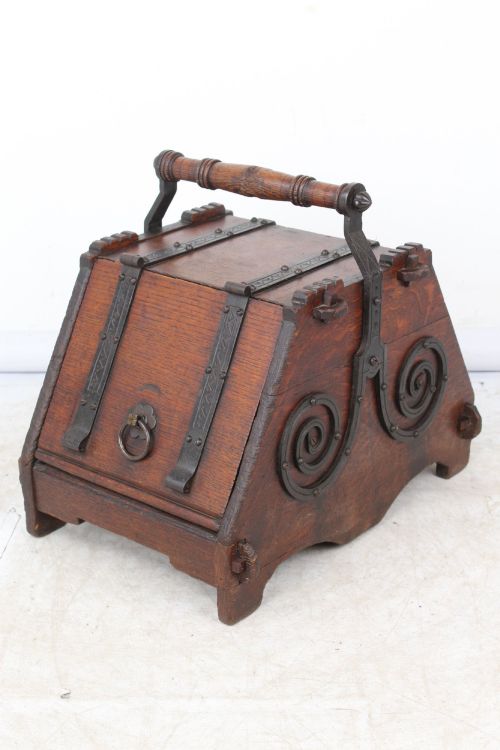
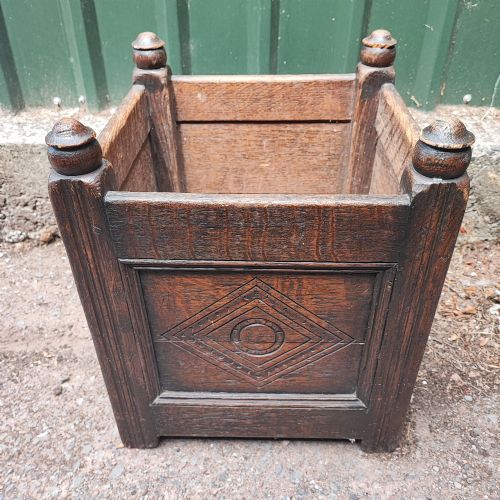
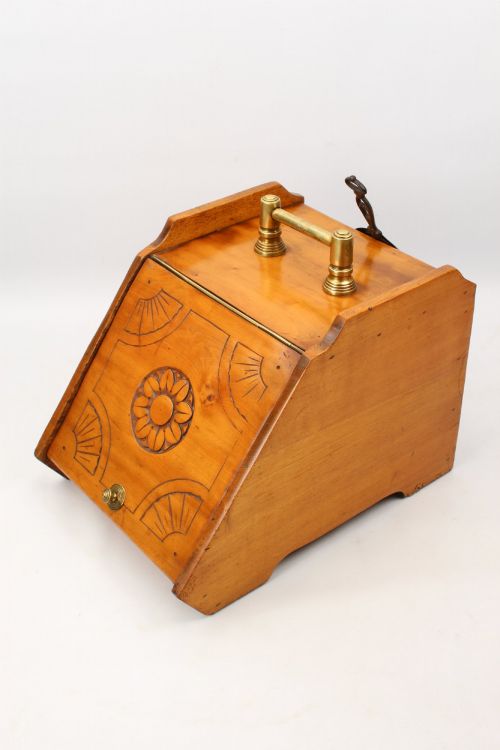
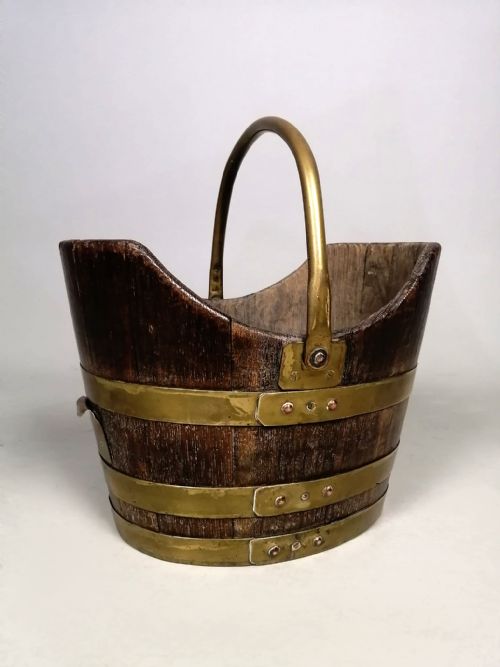
The selections on this page range from simple country log boxes and coopered buckets to elaborate purdoniums fitted with brass handles, drop fronts, and original metal liners. Regional variations include Scottish coopered peat buckets and English traditional designs featuring carved woodwork or metal mounts.
How they were made
Maker construction relies heavily on solid timber joined with metal reinforcement, utilising oak planks alongside brass, copper, iron, and wrought iron bands or hinges. Many examples employ cooperage techniques with staves bound by metal hoops, while others utilise panelled cabinetry with carved fronts.
Fitted interiors often incorporate removable metal liners or coal buckets alongside matching accessories such as shovels. Decorative accents range from polished brass mounts and copper panels to carved detailing typical of the Gothic Revival and Arts and Crafts styles.
Some Victorian coal scuttles arrive equipped with their original companion shovels tucked quietly away, ready for a fire that went out a century ago.
What varies in quality
Quality depends on the integrity of the timber selection and the retention of original internal components, such as metal liners and companion shovels. Pieces fashioned from pollard oak or featuring detailed carving by makers like Christopher Dresser command attention for their design ambition.
The refinement of the metalwork, including heavy brass bands, drop handles, and secure hinges, distinguishes utilitarian hearth storage from finer parlour furnishings. Original hardware and sound coopered construction indicate superior domestic manufacture.
The Antique Oak Coal Bin Glossary
- Purdonium
- A specialised coal box featuring a sloping front drop-down door designed to make shovelling fuel easier. It often includes an interior metal liner and a compartment for a coal shovel.
- Coopered
- A construction method where curved wooden staves are joined side by side and bound with metal hoops, traditionally used for buckets and casks.
- Coal Hod
- A deep bucket or container traditionally used for carrying coal to the fireplace. These often feature an angled mouth and a sturdy handle for tipping.
- Gothic Revival
- An architectural and decorative style popular in the nineteenth century that mimics medieval forms, often seen in pointed arches and heavy carved detail.
- Arts and Crafts
- A design movement valuing traditional craftsmanship, visible construction, and simple forms, frequently incorporating hand-worked copper or brass panels.
Antique Oak Coal Bin: Frequently Asked Questions
What is a purdonium?
A purdonium is an enclosed coal box fitted with a hinged drop-front that allows easy access to the fuel inside.
Most examples include a removable metal liner and a slot for a small shovel.
How do I date an oak coal bin?
Dating relies on stylistic clues, construction methods, and hardware from periods such as the Georgian, Victorian, and Edwardian eras.
Earlier pieces from the eighteenth century often feature simple coopered bodies, while later Victorian and Edwardian examples incorporate drop fronts and decorative brass mounts.
Are original liners common?
Original metal liners do survive in many pieces, protecting the timber from moisture and coal dust.
Their presence adds authenticity and completeness to fireside storage items.
Can these bins hold logs instead of coal?
Many of these containers double as log boxes or fire buckets suitable for storing firewood beside the hearth.
Open log baskets and lidded bins accommodate larger logs just as effectively as smaller fuel.