

Antique Oak Cabinet Drawers
When you search for antique oak cabinet drawers, you are looking at sturdy storage pieces built to last centuries.
Antique Oak Cabinet Drawers
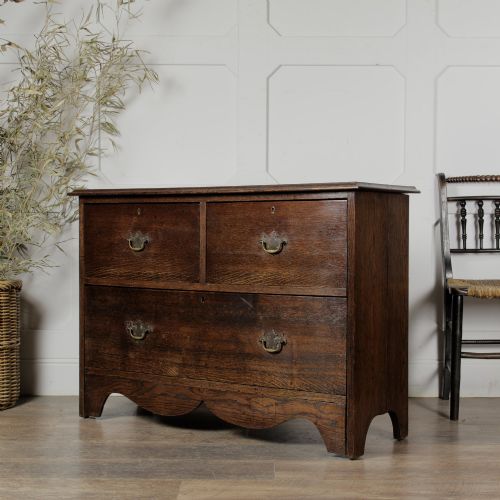
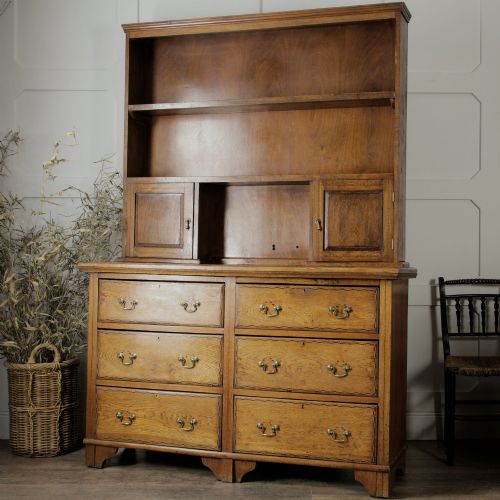
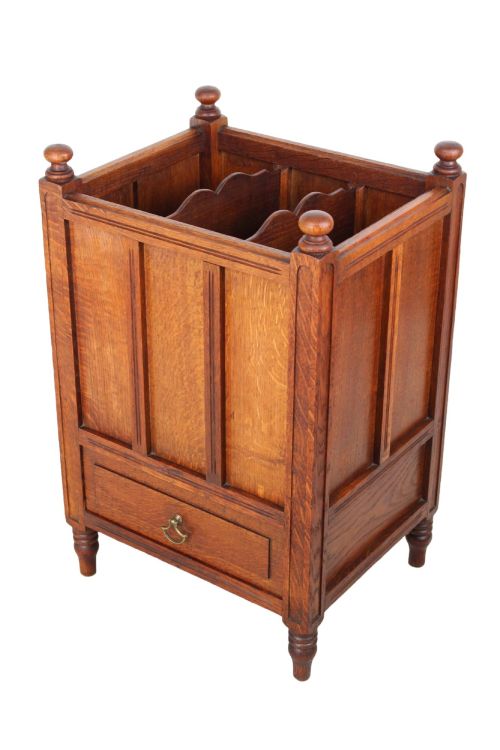
The phrase antique oak cabinet drawers covers a broad group of wooden storage items, from simple chests and filing cabinets to complex bureaus and dressers. Most examples you will encounter date from the eighteenth century through the Edwardian period and the 1930s.
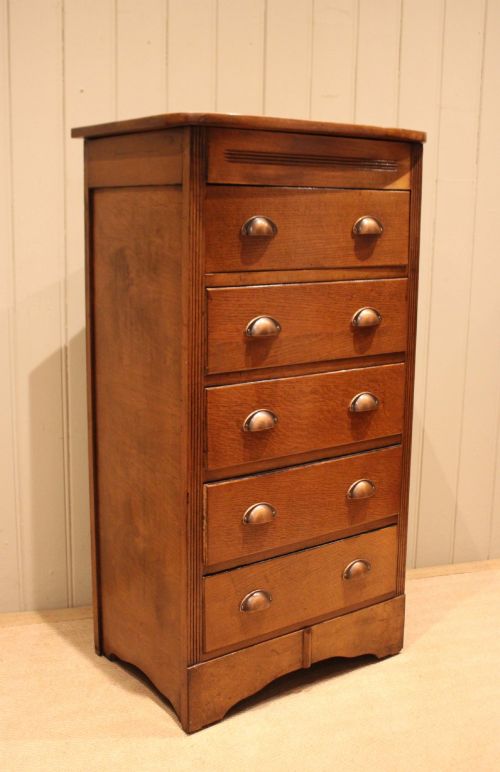
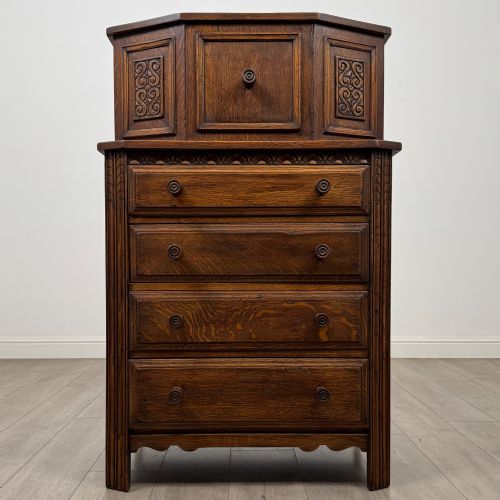
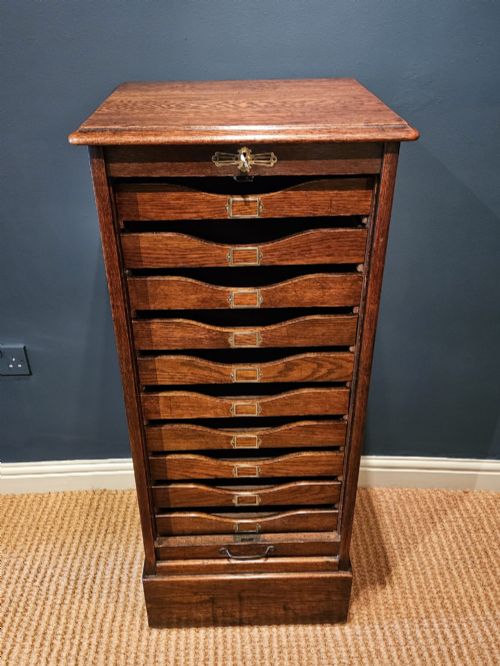
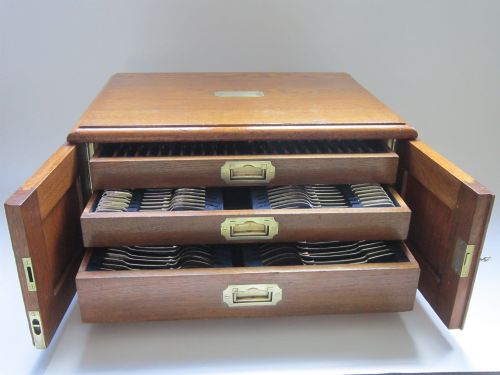
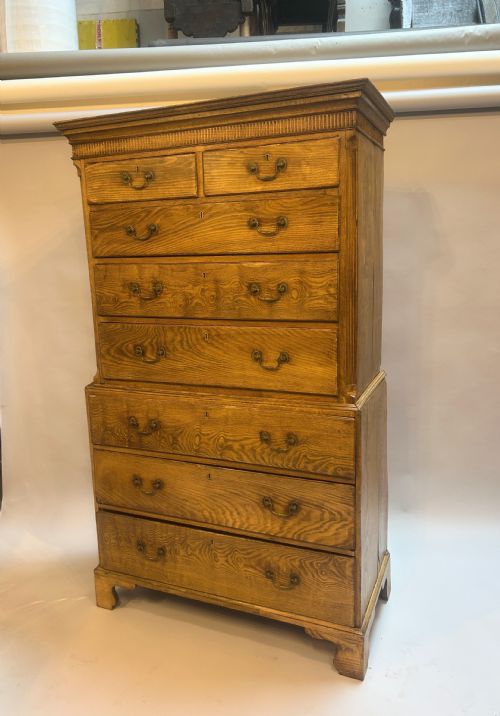
The selection ranges from tall upright chests and tambour-front filing systems to low cupboards and specialised banks of drawers. Form follows function closely in these pieces, designed originally for offices, bedrooms, and libraries.
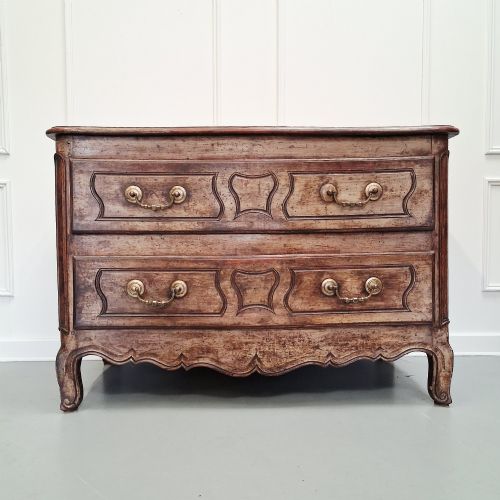
Origin and period dictate the exact silhouette, with Georgian pieces showing clean proportions while Edwardian and later 1930s items often incorporate practical multi-drawer layouts or sliding fronts.
Materials and Construction Methods
Solid oak provides the primary structural timber across these items, supplemented occasionally by ash or accented with brass, iron, and glass hardware. Cabinetmakers utilised traditional joinery techniques to frame panels and house multiple drawers securely.
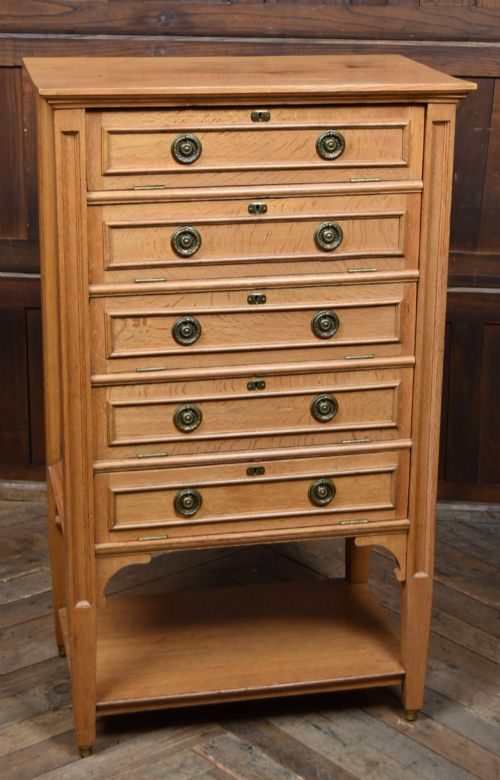
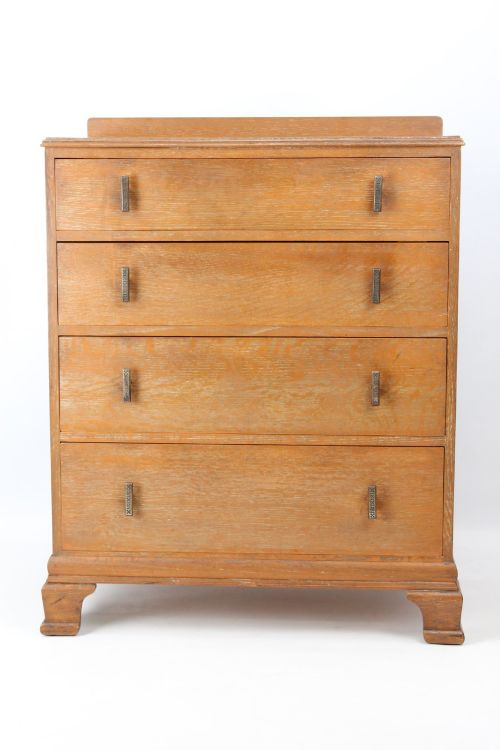
Surfaces receive varied treatments, spanning from natural waxed finishes and honey-toned polishes to bleached oak and limed treatments seen on later twentieth-century items. Metal handles, chrome fixtures, and leaded glass elements add functional detail to the timber framework.
Listings feature oak storage pieces spanning the Georgian, Victorian, and Edwardian eras, alongside 1920s and 1930s designs utilising brass and glass.
Assessing Quality and Craftsmanship
Quality shows in the selection of the timber grain and the precision of the drawer construction, where tight joints and smooth operation distinguish superior examples. Better pieces maintain original hardware and balanced proportions without relying on later alterations.
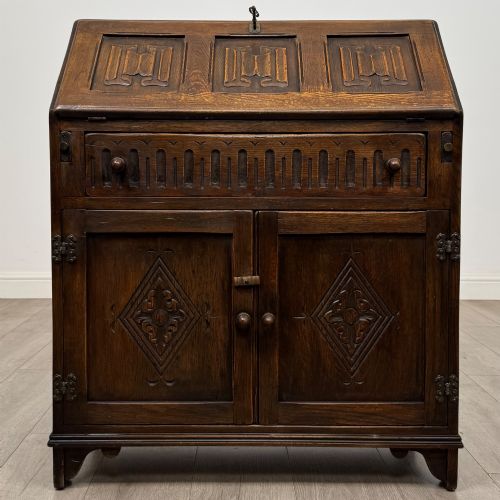
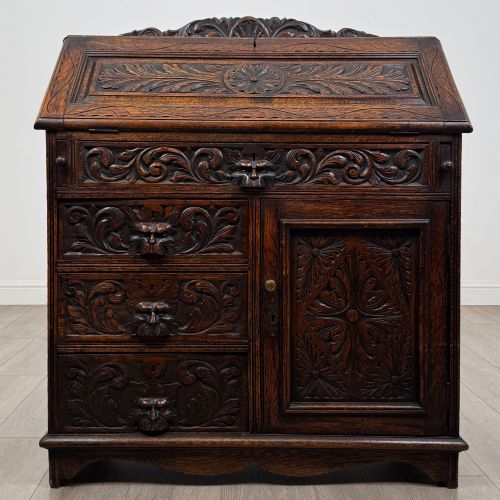
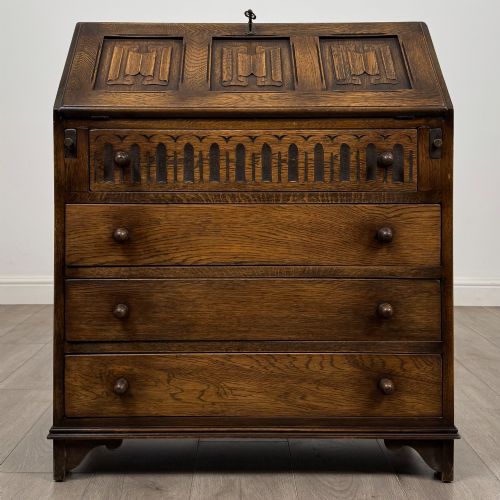
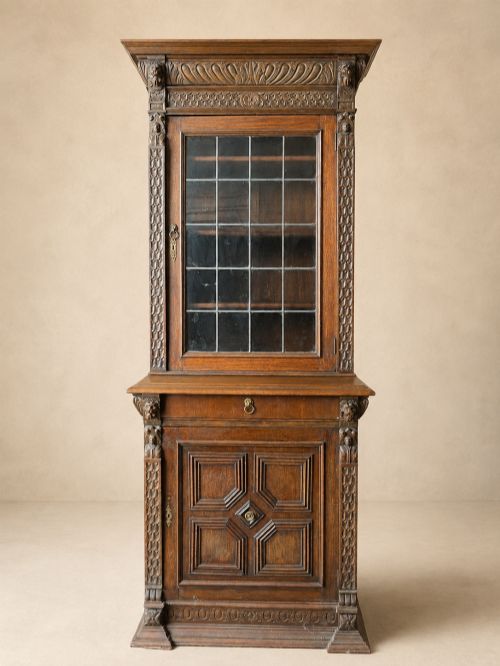
Finer items exhibit careful carving, such as linenfold panels or detailed mouldings, executed cleanly into the solid oak rather than applied as cheap decoration. The integrity of the backboards, drawer linings, and internal framing separates standard utility items from high-grade cabinetwork.
Dudley & Co
The Antique Oak Cabinet Drawers Glossary
- Linenfold
- A style of wood carving that mimics folded fabric or linen, frequently seen on panels of Edwardian and earlier oak furniture.
- Tambour
- A flexible shutter door made of narrow vertical strips of wood glued to canvas, allowing it to slide smoothly around a curved track on filing cabinets.
- Bureau
- A desk featuring a sloping hinged writing flap that opens to reveal small drawers and pigeonholes inside.
- Chest on Stand
- A two-part form consisting of a main drawer chest elevated on an open frame or low table base, common in eighteenth-century designs.
- Wellington Chest
- A tall, narrow chest of drawers secured by a hinged locking side-bar that fastens with a key.
Antique Oak Cabinet Drawers: Frequently Asked Questions
What is a tambour front cabinet?
A tambour front cabinet uses a flexible sliding door made from narrow wooden slats attached to a canvas backing. This mechanism rolls smoothly around a track to conceal internal drawers or shelves.
Such designs became popular for office furniture and filing systems because the sliding shutter saves exterior space compared to traditional swinging doors.
How do I date an oak chest?
Dating an oak chest involves looking at the construction of the drawers, the type of hinges, and the overall style of the hardware and carving. Eighteenth-century pieces often feature hand-cut dovetails and pegged framing, while Edwardian and 1930s examples show machine-cut precision and different handle designs.
Secondary woods inside the drawers and the finish of the timber also offer clues to the era of manufacture.
Where were these cabinets used?
These cabinets served multiple environments, from domestic bedrooms and hallways to commercial offices and libraries. Specialised filing cabinets and banks of drawers were built for paperwork, while chests and dressers furnished domestic living spaces.
Their sturdy oak construction made them suitable for daily heavy use in professional and residential settings alike.
How do I care for antique oak?
Antique oak benefits from stable indoor environments away from direct heat sources and extreme humidity fluctuations. Regular dusting with a soft cloth keeps the surface clean.
Applying a traditional beeswax polish periodically helps nourish the timber and maintains the natural lustre of the wood without sealing it in modern synthetic finishes.