

Antique Nightstand Chest
An antique nightstand chest provides compact bedside storage, uniting practical drawer or cupboard space with period cabinet-making from the Georgian, Victorian and Art Deco eras.
Antique Nightstand Chest
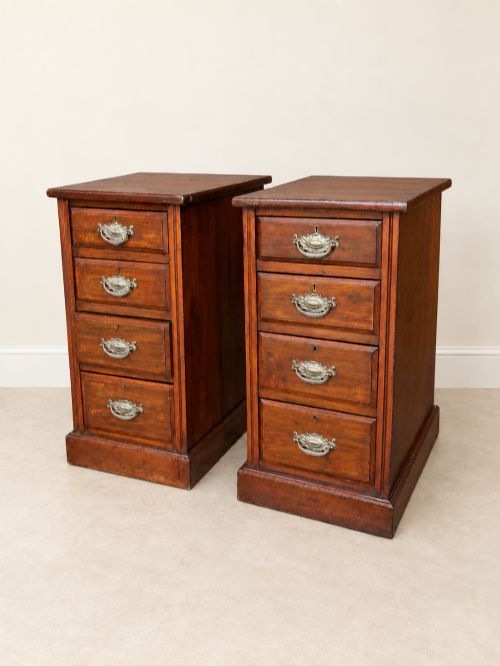
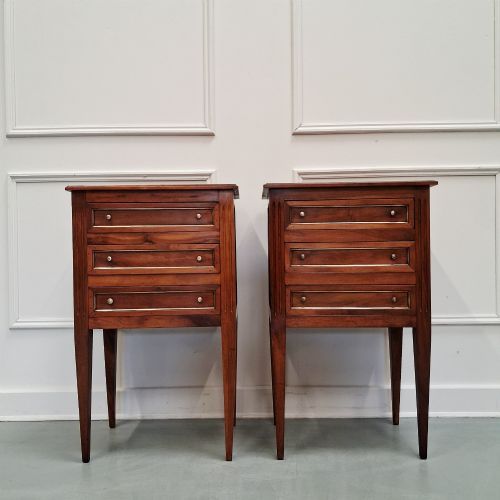
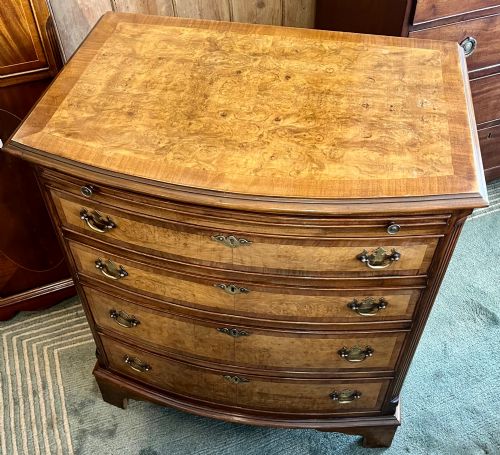
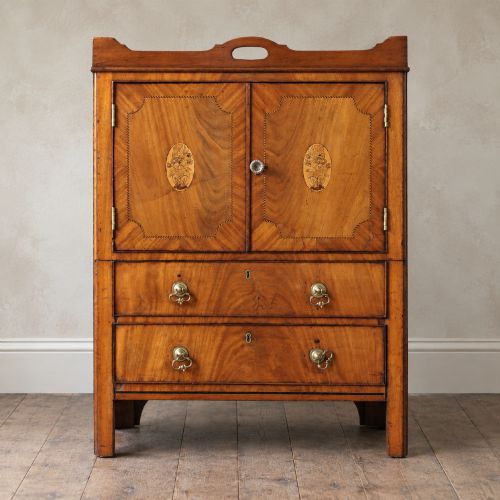
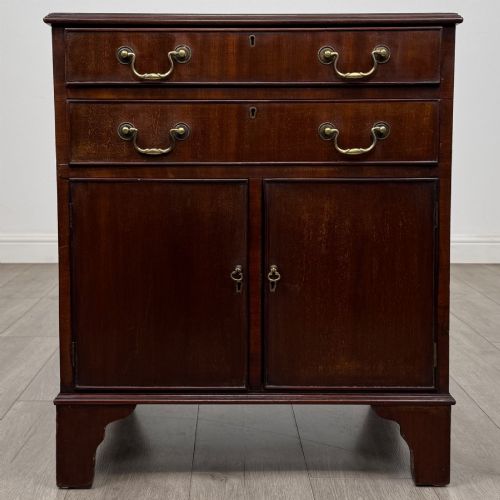
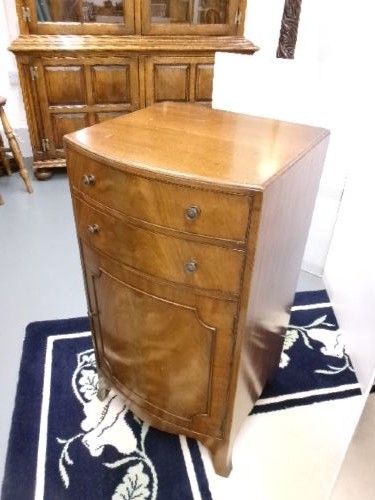
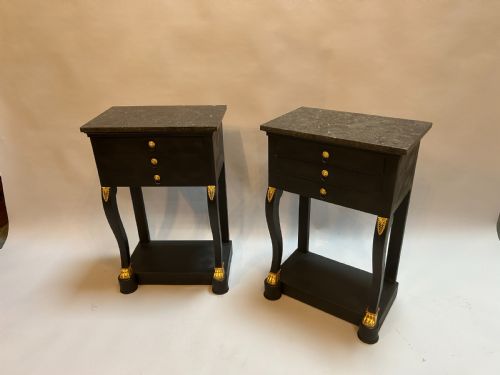
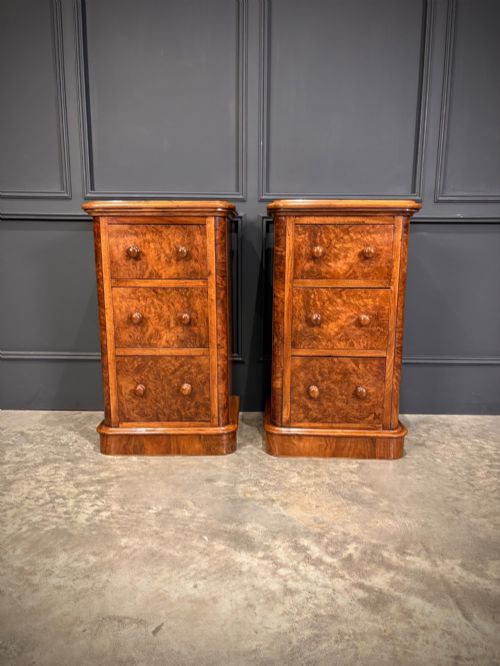
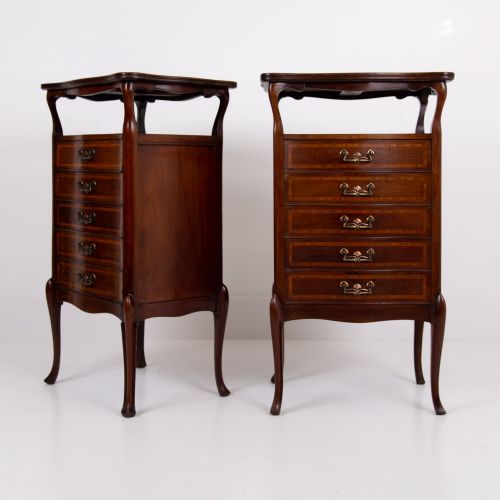
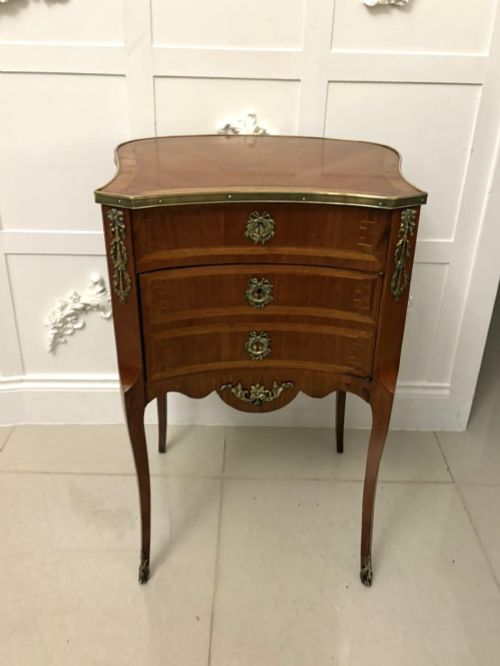
An antique nightstand chest serves as a compact bedside companion, combining small-scale cabinetry with functional drawers or cupboards. When exploring antique nightstand chest selections, buyers encounter varied forms including miniature chests of drawers, enclosed bedside cabinets, and open-shelf tables.
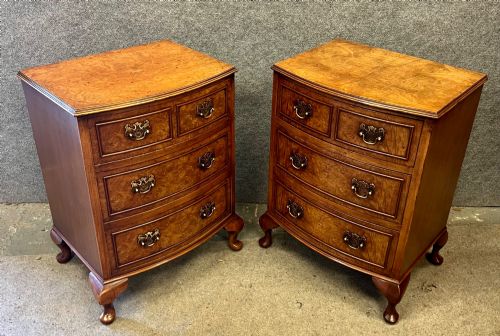
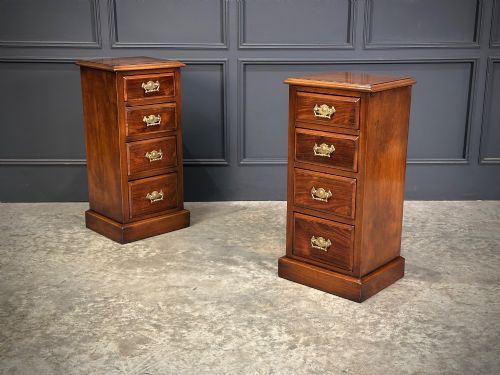
The pieces on this page span several centuries, with prominent representation from Victorian mahogany designs, Georgian proportions, and streamlined Art Deco walnut examples. Many survive as matched pairs, though single cabinets and commodes adapted for modern bedroom use also appear regularly.
Materials and Construction Methods
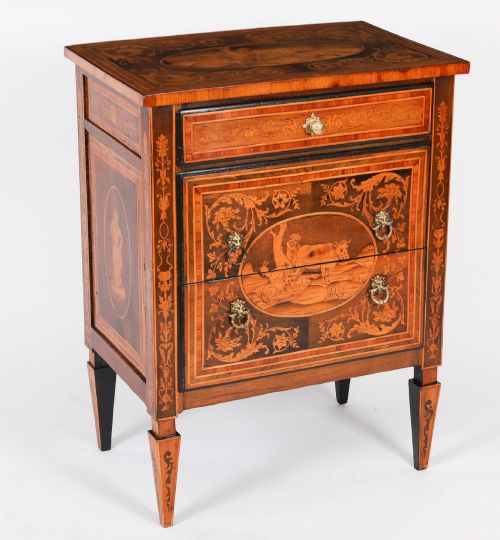
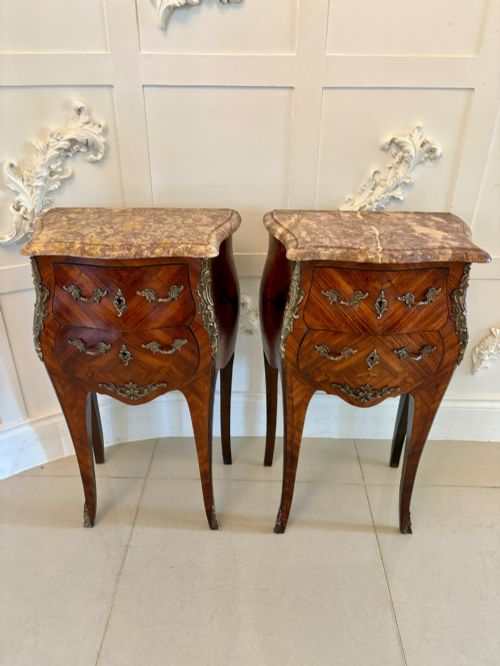
Cabinet-makers relied on robust timbers such as mahogany, walnut, oak, and ash, frequently utilising decorative veneers like burr walnut and kingwood on primary surfaces. Marquetry inlay, brass hardware, and inset marble tops add textural contrast to French and English variations.
Joinery techniques reflect traditional workshop standards of the nineteenth and early twentieth centuries, employing solid carcases, dovetailed drawer construction, and hand-waxed finishes to protect the timber.
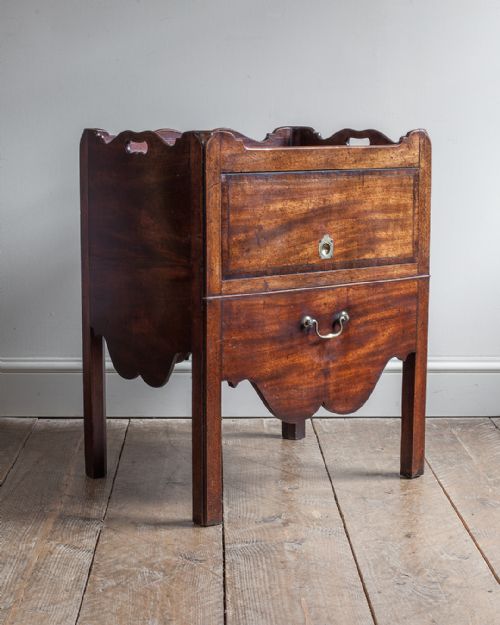
Several eighteenth-century oak and elm chests began life as close stools before finding peaceful retirement as bedside tables.
Evaluating Cabinet Quality
Distinction across the range lies in the selection of figured timbers, such as flame mahogany or burr walnut, and the precision of inlaid marquetry work. Superior examples exhibit harmonious proportions, clean drawer movement, and original brass fittings.
Condition and originality dictate standing, with untouched period surfaces and matching pairs holding greater appeal than heavily restored or altered carcases.
Warings Liverpool·Gill & Reigate
The Antique Nightstand Chest Glossary
- Commode
- A low cabinet or chest of drawers, often referencing French styling and marble-topped bedside pieces. They provide enclosed storage beside a bed.
- Marquetry
- Decorative veneer work arranged in geometric or floral patterns using contrasting timbers. This technique enhances the visual depth of cabinet doors and drawer fronts.
- Close Stool
- An eighteenth-century form designed as a small cabinet enclosing a chamber pot. Many survive converted into standard bedside chests.
- Serpentine
- A gently curved furniture front featuring a convex centre flanked by concave sides. This shaping demands advanced woodworking skill.
- Burr Walnut
- Timber taken from the abnormal growth of a walnut tree, yielding highly figured grain patterns. It was prized for luxury cabinet facades.
Antique Nightstand Chest: Frequently Asked Questions
Are antique nightstands usually sold in pairs?
Many listings feature matched pairs, particularly from the Victorian and Art Deco periods, designed to flank a larger bedstead symmetrically.
Single pieces also appear frequently, offering character as standalone accent tables or mismatched bedside storage in smaller bedrooms.
How do I distinguish between Georgian and Victorian styles?
Georgian pieces tend to display restrained classical proportions, rectilinear mahogany carcases, and simple bracket feet. Victorian examples often incorporate heavier timber dimensions, flame mahogany veneers, and more elaborate turned or plinth bases.
Revival pieces from later decades frequently blend these historic traits.
What is the difference between a nightstand and a commode?
Historically, a commode refers to a low decorative cabinet with doors or drawers, while a nightstand focuses strictly on bedside utility.
In antique terminology, French-influenced pieces with marble tops are often catalogued as commodes even when utilised as bedside chests.
Can I use an antique nightstand for modern storage?
These cabinets suit modern living well, offering discrete drawer space for books, reading glasses, and lighting accessories. Their compact footprints allow them to fit easily beside contemporary bed heights while introducing historic timber warmth.