


Antique Nested Tea Tables
These antique nested tea tables offer a clever space-saving solution for serving tea or displaying ornaments without cluttering the room.
Antique Nested Tea Tables
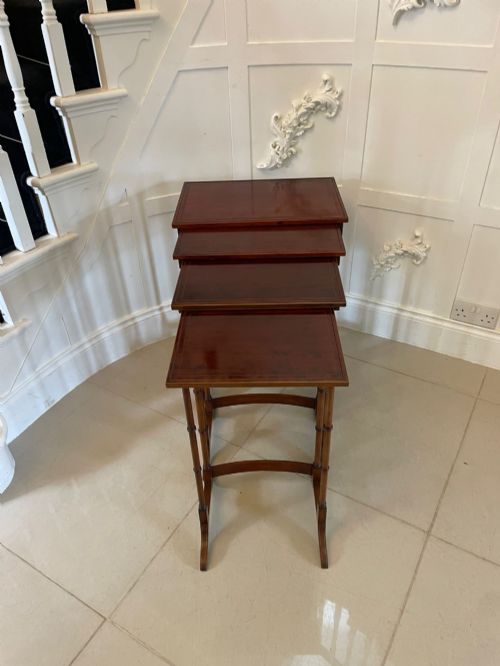
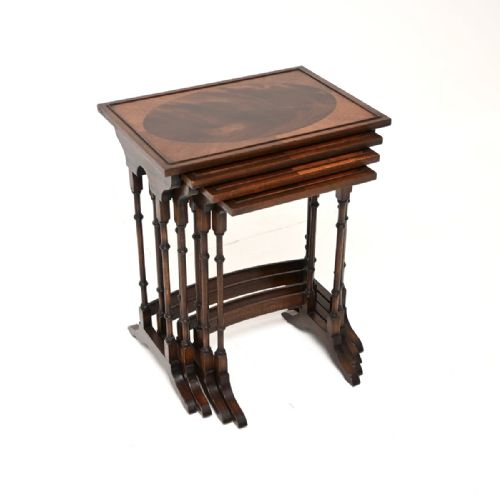
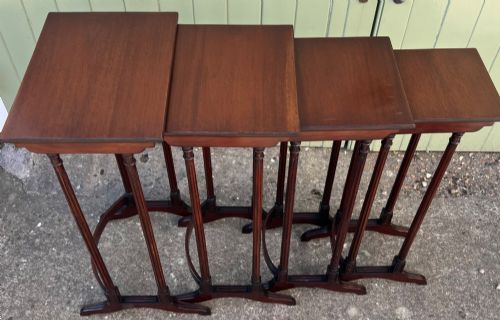
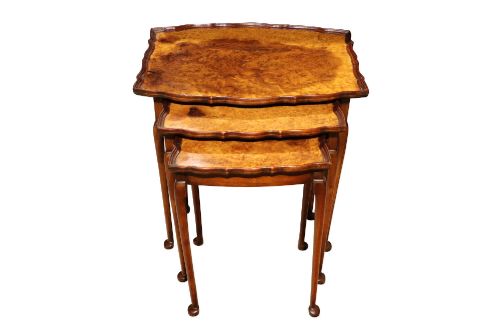
When you search for antique nested tea tables, you are looking at sets of graduating occasional tables designed to slide neatly beneath one another when not in use. The most common versions encountered on this page are Edwardian and Victorian iterations, frequently fashioned from mahogany or burr walnut.
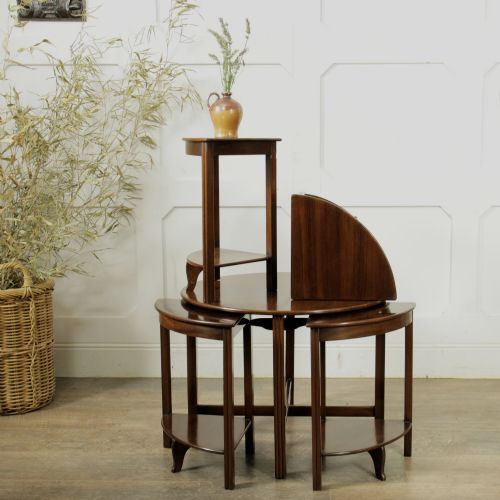
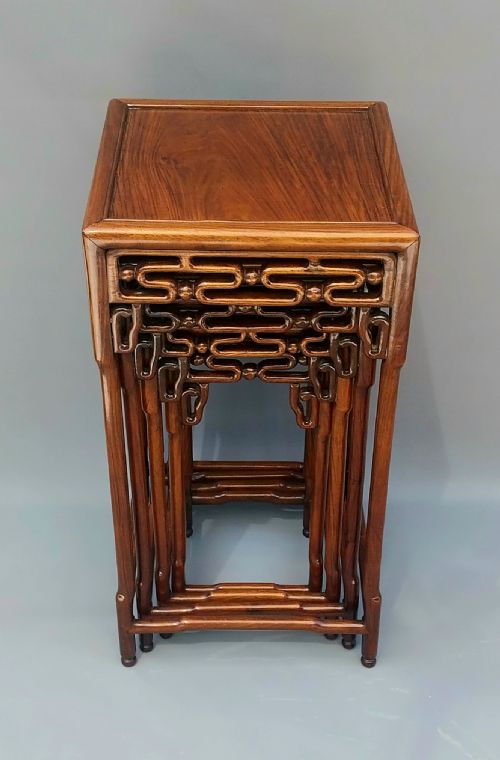
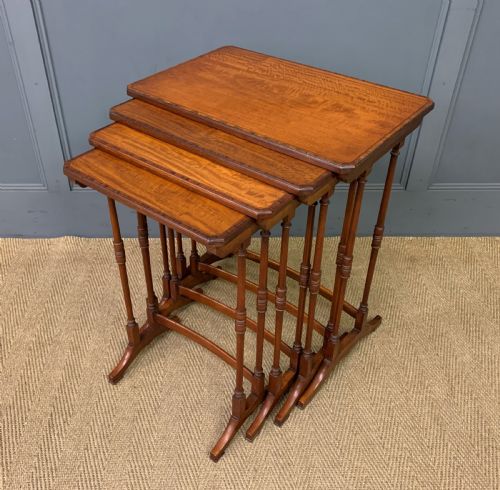
The form typically comprises three or four tables, known historically as a quartetto, though occasional five-table circular sets and paired coffee table formats also appear. These pieces originate from British workshops as well as Chinese and Anglo-Indian makers, reflecting diverse aesthetic traditions in domestic furniture.
Edwardian and late nineteenth-century examples dominate the selection, often featuring delicate inlay work, satinwood banding, or rich lacquer decoration. They serve equally as practical occasional surfaces and decorative focal points within a traditional interior scheme.
Distinguishing quality across the range
The refinement of the timber selection and the crispness of any inlay or carved detail mark the difference between standard production and superior pieces. Finer examples display meticulously matched wood veneers and tight, precise joints that maintain stability across all individual tables.
Proportion and weight distribution also dictate quality, as superior tables slide together with uniform clearances and minimal friction. The sophistication of the decorative scheme, whether hand-painted lacquer or subtle boxwood stringing, further elevates the stature of the set.
Listings feature mahogany, burr walnut, satinwood, and hongmu across Victorian, Edwardian, and nineteenth-century periods.
Maison Baguès
The Antique Nested Tea Tables Glossary
- Quartetto
- A set of four graduating occasional tables designed to nest together. This term appears frequently in nineteenth-century and Edwardian trade descriptions.
- Inlay
- A decorative technique where contrasting woods or materials are inserted into recessed cavities on the surface. Boxwood and satinwood are common choices for linear stringing.
- Hongmu
- A traditional Chinese term for dense hardwoods, often translated as red wood. It encompasses durable timbers like rosewood utilised in nineteenth-century export furniture.
- Veneer
- A thin layer of figured wood applied over a secondary timber base. Burr walnut veneers provide complex, swirling grain patterns on table tops.
- Chinoiserie
- European decorative style reflecting Chinese artistic motifs. Applied finishes include hand-painted lacquer scenes on dark grounds.
Antique Nested Tea Tables: Frequently Asked Questions
What is a quartetto nest of tables?
A quartetto is a matched set of four tables that scale down in size so they fit entirely underneath the largest one. This format became particularly popular during the Victorian and Edwardian periods for entertaining.
They allowed hosts to provide extra surface space for tea or writing without permanently occupying floor space in a reception room.
How do I care for antique polished tables?
Keep wooden surfaces away from direct sunlight and strong heat sources to prevent the timber and veneer from drying out or cracking. Use coasters and mats to protect the polished finish from moisture and heat damage.
Apply a traditional beeswax polish occasionally and buff gently with a soft cloth to maintain the natural lustre of the mahogany or walnut.
Were these tables used exclusively for tea?
Whilst initially designed for serving afternoon tea in polite society, their utility quickly expanded to sewing, reading, and card games. The smaller tables could be easily lifted out and handed to individual guests.
Today they function flexibly as lamp tables, plant stands, or occasional surfaces beside seating.
How can I tell Edwardian pieces apart from Victorian ones?
Victorian examples tend to feature heavier timber proportions, deeper polish tones, and robust construction methods suited to formal nineteenth-century interiors. Edwardian pieces often display lighter frames, more delicate satinwood inlay, and a greater emphasis on slender turned or tapered legs.
Both eras embraced mahogany, but Edwardian cabinet makers frequently experimented with lighter colour palettes and refined neoclassical revival styles.