
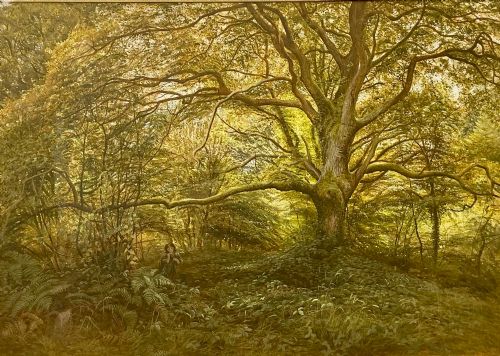


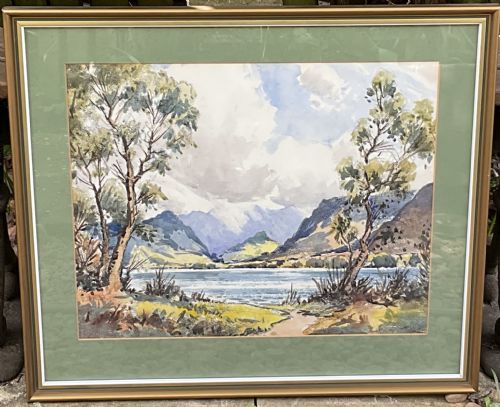
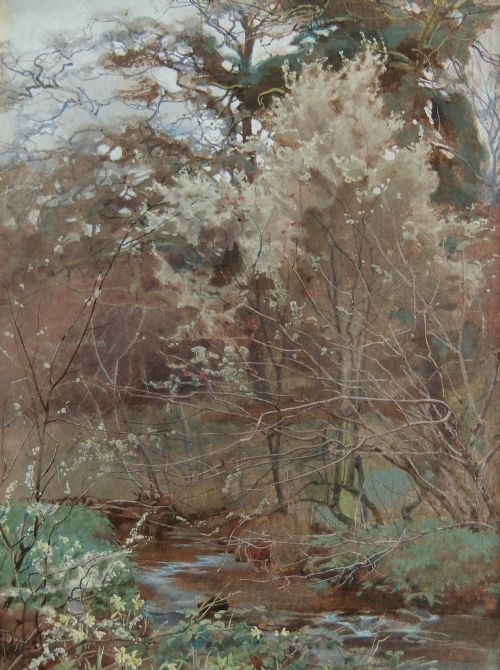

Antique Nature Watercolour
These antique nature watercolour pieces capture botanical and landscape subjects on paper through the nineteenth and twentieth centuries.
Antique Nature Watercolour
An antique nature watercolour brings natural history, botanical studies, and rural landscapes directly onto paper through nineteenth and twentieth century traditions. When exploring antique nature watercolour options, collectors typically encounter framed works executed in watercolour pigment, gouache, and ink.
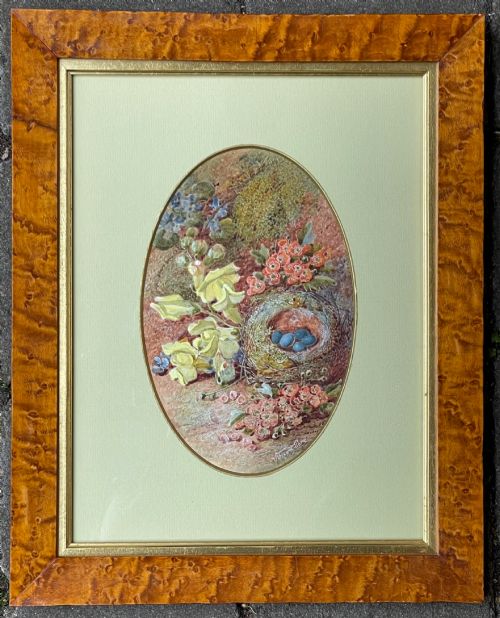
The selections span Victorian naturalism, Edwardian rural scenes, and early twentieth century fine art interpretations. Pieces range from detailed studies of birds' nests and blossoms to expansive Scottish and Welsh landscapes.
Assessing Quality and Execution
Quality rests upon the precision of the draughtsmanship and the artist's handling of light and atmospheric depth within the natural setting. Superior works demonstrate careful observation in botanical details, such as feathers or petals, rather than generalized rendering.
The integration of the medium with the paper support and the preservation of pigment vibrancy distinguish finer examples from standard decorative pieces.
Listings incorporate works spanning from the mid-nineteenth century through the mid-twentieth century, utilising paper, gouache, and gold leaf.
George Fotherly Hargitt·William Henry Earp·William Joseph Boyes·Vincent Clare·Bonomi Edward Warren·William Hoggatt·George Arthur Fripp·Eloise Harriet Stannard·Rowland Henry Hill·William Stephen Coleman·Alfred W Parsons·AJ Thornton·Charles Branwhite·John Sherrin·James Kinnear·Fred Lawson·Archibald Thorburn
The Antique Nature Watercolour Glossary
- Watercolour pigment
- Finely ground colour particles suspended in a water-soluble binder. This medium allows for transparent washes and delicate layering on paper.
- Gouache
- An opaque watercolour paint containing pigment mixed with a binding agent and white filler. It provides solid areas of colour and distinct highlights.
- Victorian Naturalism
- An artistic movement focusing on detailed and accurate representations of the natural world. Artists working in this style emphasised observation of flora and fauna.
- Impressionism
- A style characterised by relatively small, thin, yet visible brush strokes and open composition. It emphasises accurate depiction of light in its changing qualities.
Antique Nature Watercolour: Frequently Asked Questions
How should I hang an antique watercolour?
Display these works away from direct sunlight to prevent the watercolour pigments and paper from fading over time.
Ensure rooms maintain stable humidity levels to protect both the paper and the wooden frames.
What subjects are common in these paintings?
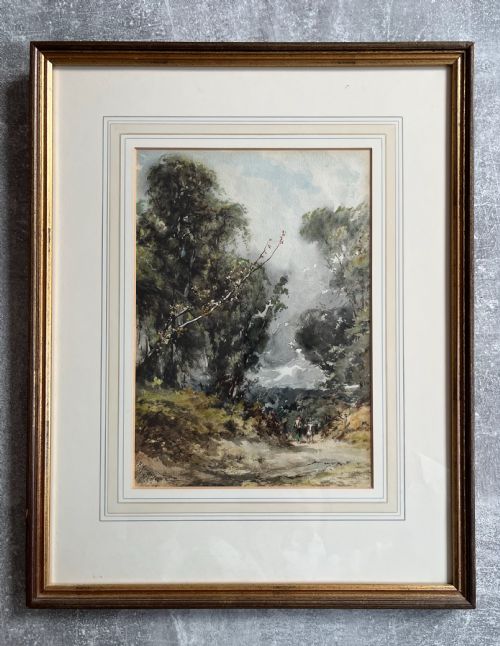
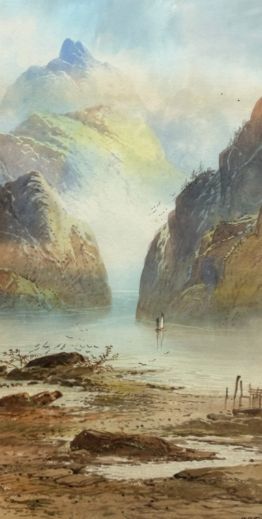
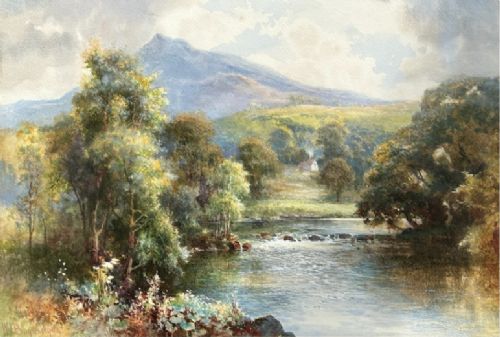
Common subjects include woodland paths, Scottish lochs, Welsh rivers, and detailed studies of birds' nests, blossoms, and primroses.
Artists focused heavily on rural scenery and botanical observations throughout the nineteenth and twentieth centuries.
Are these works signed by the artists?
Many examples feature artist signatures, monograms, or period inscriptions either directly on the front or recorded within archival records.
Some pieces are attributed to followers or presented in the manner of established painters of the era.
What framing is typical for these pieces?
Most works are preserved behind glass within period wooden frames that complement the aesthetic of the artwork.
The framing often includes mounts or slips that separate the delicate paper surface from the glass.