








Edwardian Floral Landscape
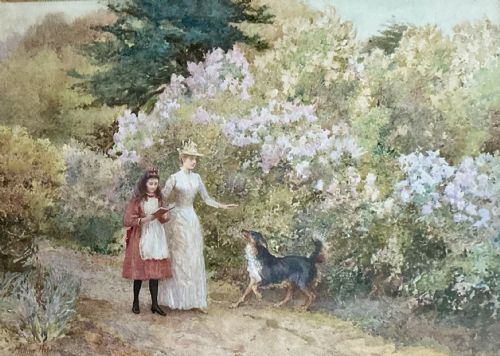
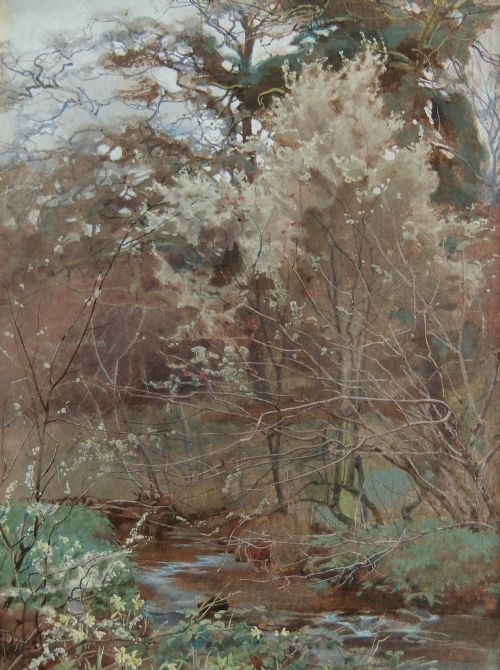
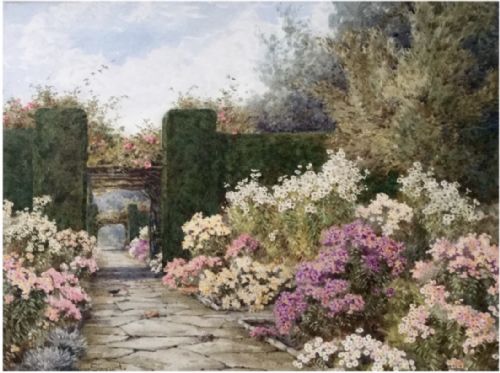
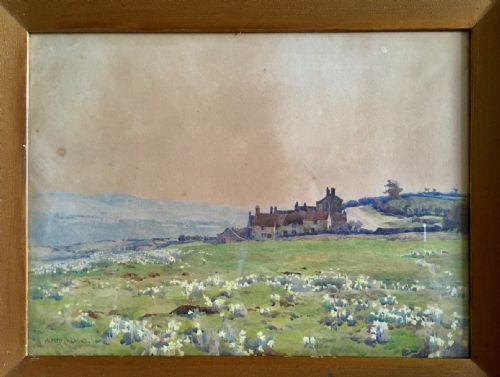
These pieces captured under the edwardian floral landscape designation show gardens, woodlands, and park views through British Impressionism and Edwardian styles.
Edwardian Floral Landscape
Buyers seeking an edwardian floral landscape examine watercolours and oil paintings depicting cottage gardens, country houses, and park scenes. The watercolours and oil paintings on this page originate from periods including the late Victorian era, the nineteen-tens, and the nineteen-twenties.
The subjects focus on domestic nature, showing walled gardens, blossoming trees, and woodland paths. Works by artists such as Lilian Stannard, Beatrice Parsons, and Alfred Parsons form the core of what collectors find under this heading.
Materials and Technique
Artists executed these works using watercolour pigment or oil paint applied to paper, canvas, or wood panels. The combination of watercolour wash and oil medium dictated the texture and luminosity of each garden scene.
Watercolour paintings rely on the white of the paper to bring light through pigments, whereas oil paintings employ build-up of paint on canvas or wood to capture the atmosphere of summer and spring days.
Listings feature watercolours and oil paintings on paper, canvas, and wood, spanning periods from eighteen-eighty to nineteen-thirty.
Evaluating Quality
Quality rests in the handling of light and the specific botanical detail within the garden or landscape. Works that convey the atmosphere of a walled garden or woodland with precise brushwork stand apart from simpler decorative sketches.
The reputation of the painter and the complexity of the composition influence the distinction between standard works and those by established exponents of British Impressionism and the British School.
Thomas Bromley Blacklock·Arthur Hopkins·Theresa Stannard·Ernest Higgins Rigg·Lilian Stannard·Alfred W. Parsons·David Woodlock·Beatrice Parsons·George Frederick Nicholls·Fred Merriman·Minnie Smythe
The Edwardian Floral Landscape Glossary
- Watercolour
- A paint consisting of pigment suspended in a water-soluble vehicle, typically applied to paper in transparent washes.
- Oil paint
- A slow-drying paint made by combining pigments with drying oils such as linseed, suited to canvas and wood supports.
- British Impressionism
- A painting style developed in Britain focusing on natural light, outdoor subjects, and loose brushwork.
- Edwardian
- Pertaining to the reign of King Edward VII and the broader aesthetic period spanning the early twentieth century.
Edwardian Floral Landscape: Frequently Asked Questions
What periods do these paintings represent?
The works span from the late Victorian period through the Edwardian era into the nineteen-twenties and nineteen-thirties.
Most pieces date between eighteen-eighty and nineteen-thirty, reflecting the styles of British Impressionism and the British School.
What surfaces were used for these artworks?
Artists used paper for watercolour paintings and canvas or wood for oil paintings.
The choice of support matched the medium, giving each landscape its specific surface texture.
How do I display watercolours safely?
Watercolour paintings require framing behind glass with acid-free mounts to protect the paper and pigments.
Keep them away from direct sunlight to prevent the watercolour washes from fading over time.
What subjects appear in these landscapes?
Common subjects include cottage gardens, walled gardens in summer, country houses, and London parks in spring.
Woodlands and floral arrangements also feature prominently across the watercolours and oils.