


Children in Landscape Painting
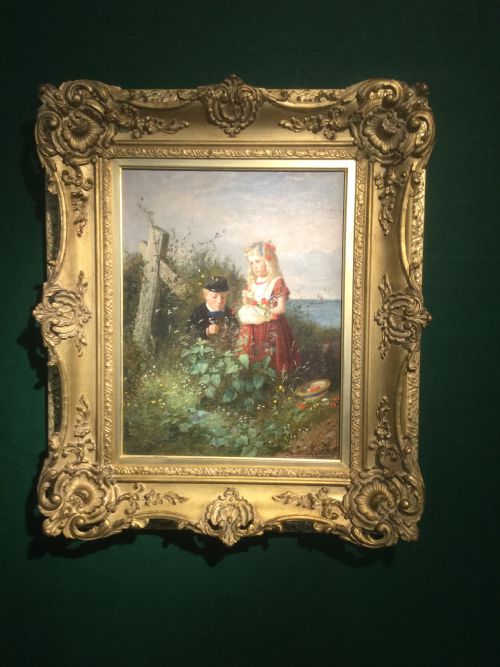
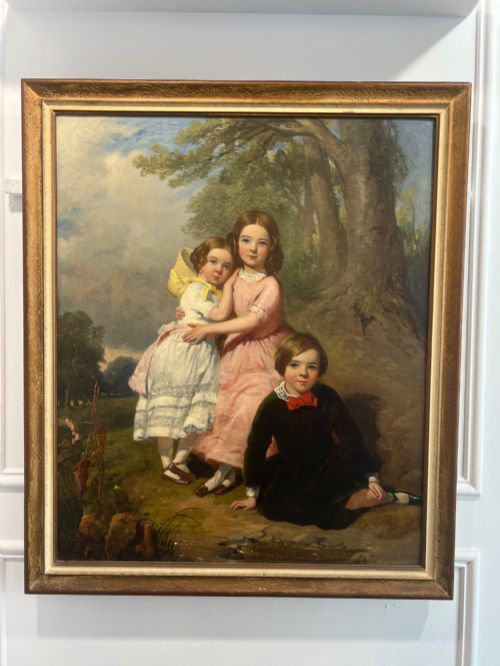
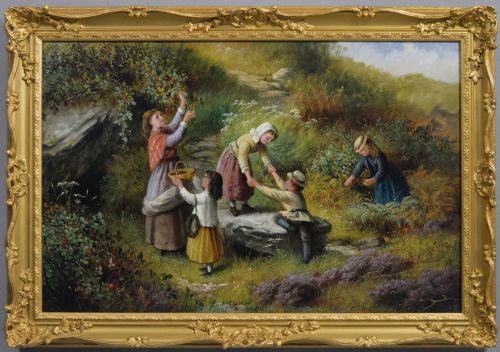
These children in landscape painting works capture figures within pastoral and woodland settings, offering a glimpse into Victorian and Edwardian rural life.
Children in Landscape Painting
When you examine children in landscape painting, you encounter scenes where figures engage in outdoor pursuits like fishing, gathering firewood or playing near rivers and cottages. These works predominantly date from the nineteenth century through the early twentieth century, spanning Victorian, Edwardian and British Impressionism movements.
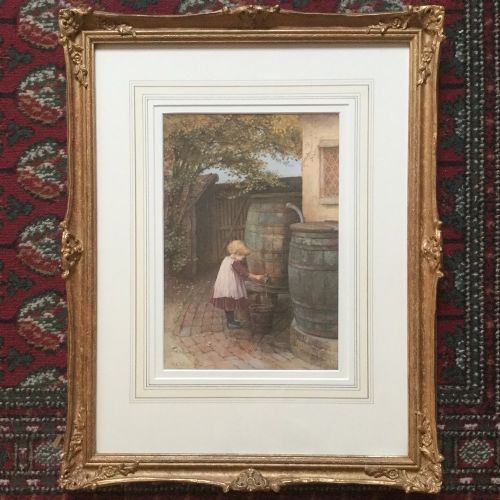
The compositions range from detailed oil on canvas and wood panel works to delicate watercolour paintings on paper. Subjects frequently include young figures alongside domestic animals, ponies or dogs situated within woodland clearings, coastal shores and English pastoral landscapes.
What Varies in Quality
The success of a piece depends largely upon the handling of light and atmosphere within the natural setting, alongside the naturalism in the portrayal of the figures. Stronger works integrate the children harmoniously into the surrounding woods, rivers or cottages rather than placing them as flat additions to the background.
Brushwork precision and pigment preservation also differentiate examples. Works showing careful detail in facial expressions, clothing and foliage typically command greater interest than more hurried or formulaic compositions.
Listings feature paper, canvas, wood and gesso materials across Victorian and Edwardian periods.
Charles Hunt·Charles Edward Wilson·Thomas Bromley Blacklock·James Mallard Bromley·Rowland Henry Hill·Helena Maguire·Linnie Watt·Kershaw Schofield·John Alfred Wheeler·John Henry Dell·William Manners·William Stephen Coleman·Jane Maria Bowkett·James George Bingley·Alfred Banner·Henry Sykes·William Lucas·Thomas Hollingsworth·Arthur Claude Strachan·Henry John Sylvester Stannard·Albert de Belleroche·Eveline Lance·Ralph Hedley·John Pedder·Charles Lewis
The Children in Landscape Painting Glossary
- Watercolour
- A paint consisting of water-soluble pigment that is applied to paper to produce transparent washes of colour. It requires swift, confident execution since mistakes cannot easily be painted over.
- Oil on Canvas
- A painting technique using pigments bound in a drying oil, applied to a woven cloth surface stretched over a wooden frame. This method allows for rich blending and textured impasto application.
- Genre Painting
- The pictorial representation of scenes from everyday life, typically involving ordinary people engaged in common activities. These works provide social history alongside artistic merit.
- Gesso
- A plaster mixture used as a smooth base for painting or applied to wooden frames for decorative moulding. It provides a stable, uniform surface for gilding and ornamentation.
- Naive Art
- Visual art created by a person without formal artistic training, often characterised by a childlike simplicity in perspective and proportion. These pieces possess an unpretentious charm.
Children in Landscape Painting: Frequently Asked Questions
What periods do these paintings date from?
The majority of these works date from the nineteenth century through the early twentieth century, encompassing Victorian and Edwardian periods. Artists during this era frequently depicted rural childhood and pastoral scenes.
Examples also stretch into the interwar years of the nineteen thirties, reflecting changing artistic approaches to landscape and genre painting over time.
How were these landscape artworks displayed?
These paintings were typically housed in decorative wood and gesso frames designed to complement the domestic interiors of Victorian and Edwardian homes. Gilded mouldings added a sense of finish and protected the edges of the canvas or paper.
Many retain their original period frames, which provide important contextual clues regarding the piece's age and historical presentation.
What subjects appear alongside the children?
Figures are frequently shown interacting with domestic animals, including dogs, ponies, donkeys and pet kids. Natural elements such as woodland paths, riversides, orchards and coastal beaches also feature prominently.
Common narrative activities include gathering firewood, picking berries, fishing, sailing toy boats and exploring fairy woods or country gardens.
How do you distinguish oil from watercolour examples?
Oil paintings utilise heavy pigments bound in oil applied to canvas or wood panels, resulting in textured surfaces and deep colour saturation. Watercolours employ translucent pigments on paper, creating lighter, more luminous atmospheric effects.
Under close inspection, oil works display visible brush strokes and impasto, while watercolours show the pale texture of the underlying paper through thin washes.