





Antique Natural History Cloche
An antique natural history cloche brings preserved specimens and botanical material indoors beneath clear glass, offering a Victorian view of the natural world.
Antique Natural History Cloche
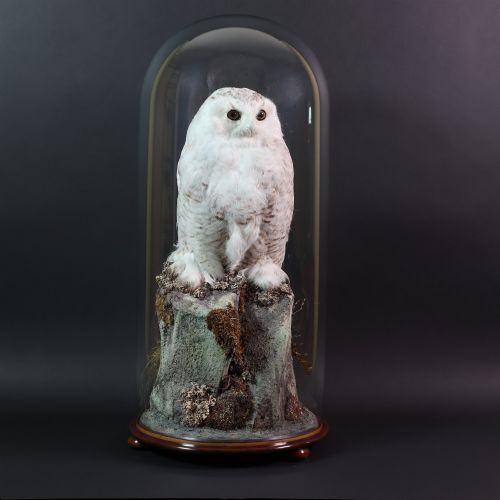
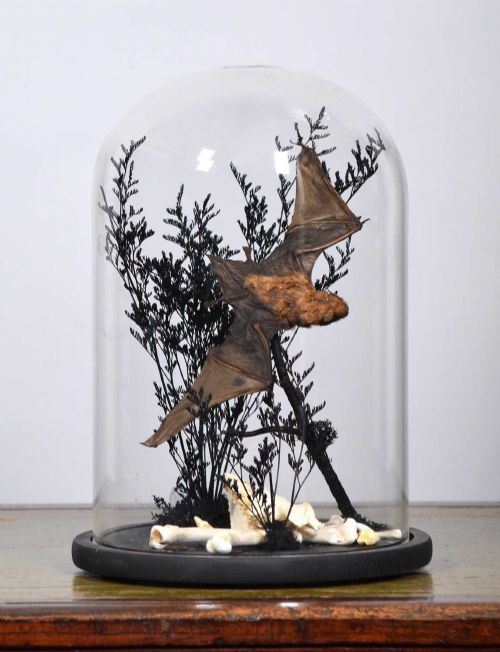
An antique natural history cloche combines glass display covers with preserved specimens, creating enclosed dioramas of birds, bats, and natural vegetation. The examples available here span the Victorian and Edwardian eras, predominantly featuring glass domes paired with timber bases.
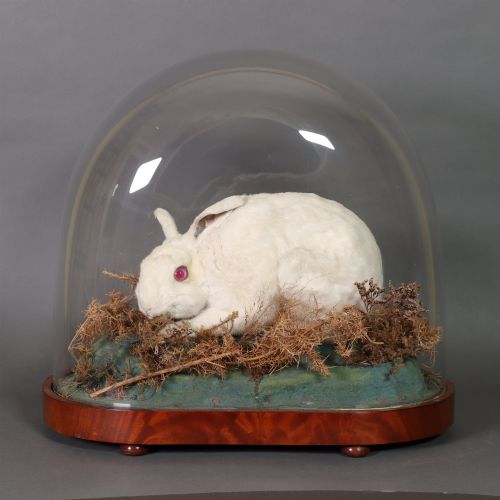
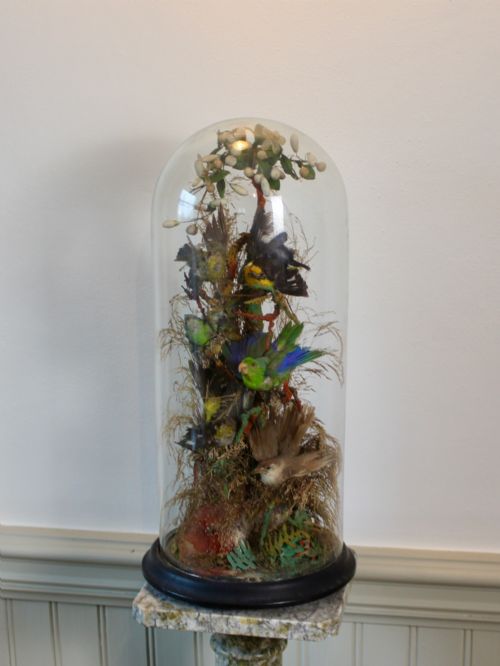
The forms range from flat-sided domes housing pairs of snow buntings to tall display showcases and professor's specimen domes. Makers encased single specimens such as bats and rabbits alongside complex compositions of colourful birds.
Originating in English workshops during the nineteenth century, these objects served both scientific study and domestic display. A buyer encounters pieces featuring birds of paradise, snow buntings, and botanical compositions under blown glass covers.
Materials and construction
Maker construction relies heavily on blown glass domes seated upon wooden bases, often utilising ebonised timber or standard timber for the mounts. Inside these glass enclosures, taxidermy specimens of birds, bats, and rabbits are arranged alongside natural vegetation, fur, and feathers.
Taxidermists secured specimens to internal frameworks within the glass domes, creating stable compositions that protect delicate feathers and fur from dust. The glass itself was formed to create clear, tall coverings designed to showcase complex taxidermy specimens from multiple angles.
Antique Natural History Cloche Retail Price Guide 2026
Typical asking prices for natural history cloche among the pieces listed under this phrase on Sellingantiques today, from the lower quarter to the upper quarter. They describe what is for sale here now, not the wider market.
A Pipistrellus pipistrellus bat hangs quietly in the collection alongside snow buntings and birds of paradise.
Distinctions in quality
Quality in an antique natural history cloche rests upon the complexity and condition of the taxidermy composition contained within the glass. Single specimens differ from elaborate multi-bird arrangements attributed to known practitioners.
The integrity of the glass dome and the execution of the wooden base contribute to the overall character of the piece. Tall proportions and specialised flat-sided glass enclosures demonstrate greater ambition in Victorian and Edwardian manufacturing.
James Gardner·Henry Ward·A Pollard
The Antique Natural History Cloche Glossary
- Cloche
- A bell-shaped glass cover used to protect and display delicate objects or plants. In this context, it refers to the glass domes housing taxidermy specimens.
- Taxidermy
- The art of preparing, stuffing, and mounting the skins of animals for display. Victorian practitioners arranged these specimens inside glass domes alongside natural vegetation.
- Ebonised wood
- Timber treated to resemble ebony, providing a dark, polished base for display domes. This material frequently appears on Victorian taxidermy mounts.
- Flat-sided dome
- A glass display cover with flattened vertical sides rather than a standard circular profile. This specialist shape accommodated specific horizontal compositions like pairs of birds.
- Specimen dome
- A glass enclosure utilised by naturalists and academics to protect individual subjects of study. These tall configurations focus attention on a single preserved animal or bird.
Antique Natural History Cloche: Frequently Asked Questions
Where should I place a dome?
Position your display on a stable surface away from direct sunlight, which can fade feathers and natural vegetation over time.
Keep the piece away from high-moisture areas such as kitchens or bathrooms to preserve the historical wood and taxidermy specimens.
Are the domes fixed to their bases?
Many Victorian and Edwardian glass domes lift away from their timber bases, though some historical examples remain secured with old seals.
Exercise caution when handling the glass cover, supporting the wooden base simultaneously if you need to move the complete object.
How do I date these pieces?
Examine the style of the wooden base, the thickness and clarity of the glass, and any attribution labels or signatures present on the work.
Victorian pieces often feature ebonised timber mounts and complex multi-bird compositions, while Edwardian examples show subtle variations in scale and materials.