


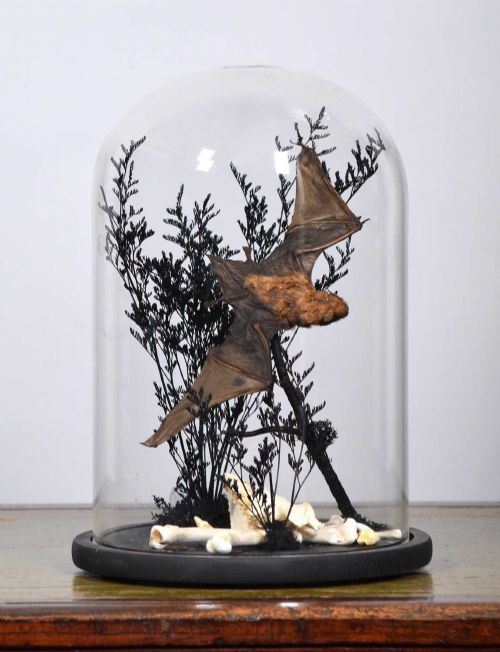


Ebonised Wood Dome
An ebonised wood dome is a dark-finished display case that protects delicate specimens and curiosities under clear glass, bringing a sharp, architectural focus to any Victorian interior.
Ebonised Wood Dome
When you search for an ebonised wood dome, you are looking at nineteenth-century and early twentieth-century display enclosures designed to protect and exhibit taxidermy, botanical specimens, and household ornaments. These vessels combine a dark, heavily treated wooden base with a blown glass cover, creating a distinct silhouette that was particularly popular during the Victorian and Edwardian periods.
The versions you are most likely to meet on this page include tall display domes, wide taxidermy showcases, and oval collector cases resting on ebonised timber plinths. Originating largely from English workshops, these pieces often feature interior details such as fabric, felt, or bone mounts to support the specimens within.
How they were made
The construction relies on two primary materials: blown glass and timber treated with an ebonising process to simulate expensive ebony. Craftsmen shaped the wooden bases from timber, applying dark finishes to create a uniform, matte or polished surface that would not distract from the contents inside.
Blown glass bell jars or oval covers were carefully formed to fit snugly into grooves within the wooden plinths. Interior elements often incorporated fabric, felt, or timber mounts, providing a stable platform for taxidermy specimens and botanical displays.
Ebonised Wood Dome Retail Price Guide 2026
Typical asking prices for ebonised wood dome among the pieces listed under this phrase on Sellingantiques today, from the lower quarter to the upper quarter. They describe what is for sale here now, not the wider market.
Some Victorian specimens managed to outlive the empires that named them, quietly staring out from beneath their glass hats for well over a century.
What varies in quality
The quality of an ebonised wood dome depends on the clarity and thickness of the blown glass cover, as older glass often exhibits natural bubbles, waviness, and subtle distortions that distinguish it from later machine-made panes. A well-preserved piece retains an even, deep finish on the wooden base without excessive chipping or flaking of the dark coating.
Proportion and scale also separate standard utility cases from finer collector pieces, particularly where the turned wooden moulding of the base complements the height of the glass dome. The integrity of internal fittings, such as original felt or fabric linings, adds to the overall cohesiveness of the object.
James Gardner
The Ebonised Wood Dome Glossary
- Ebonised wood
- Timber treated with stain, dye, or varnish to imitate ebony. This dark finish became common in nineteenth-century furniture and display bases for its clean, formal appearance.
- Glass dome
- A blown glass cover, also known as a bell jar, used to protect delicate items from dust and moisture. These covers rest upon matching wooden or fabric-lined bases.
- Taxidermy showcase
- A specialised display enclosure designed to house preserved animal specimens. These cases often include internal wooden or bone mounts to keep the subjects secure.
- Collector's dome
- A display case intended for botanical, ornithological, or geological specimens. They frequently feature oval or circular wooden plinths tailored for specific scientific displays.
Ebonised Wood Dome: Frequently Asked Questions
How do I clean the glass dome?
Lift the glass cover carefully from its wooden base using both hands, ensuring you are on a stable, flat surface away from the display area.
Wash the glass with warm water and a mild detergent, then dry it thoroughly with a lint-free cloth before placing it back over the ebonised wood plinth.
Can I remove the taxidermy inside?
The specimens and their internal mounts are typically secured directly to the wooden or fabric-lined base to prevent shifting during handling.
Attempting to detach the contents risks damaging both the delicate taxidermy and the original interior structure of the showcase.
What periods do these domes cover?
The pieces listed span the Victorian and Edwardian eras, encompassing late nineteenth-century examples and items dated around eighteen-eighty.
Construction styles and timber treatments shifted slightly between these decades, moving from heavier Victorian mounts toward lighter Edwardian proportions.
Where were these glass domes made?
The majority of these display enclosures originate from English workshops and London firms active during the Victorian period.
Makers utilised local timber for the ebonised bases alongside mouth-blown glass covers to supply domestic collectors and naturalists.