



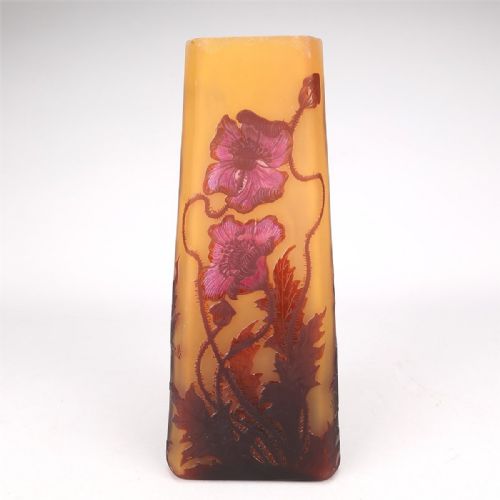


Antique Nancy Glass Vase
An antique nancy glass vase brings French studio craft into a room, offering layered cameo motifs and rich colour from the late nineteenth and early twentieth centuries.

Antique Nancy Glass Vase
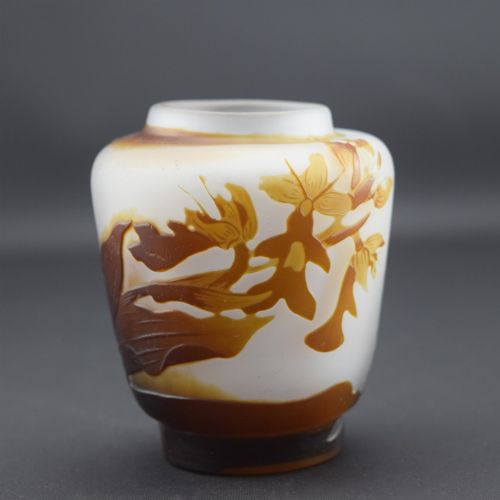
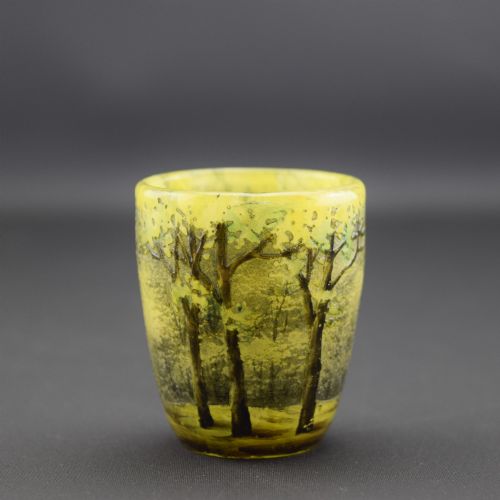
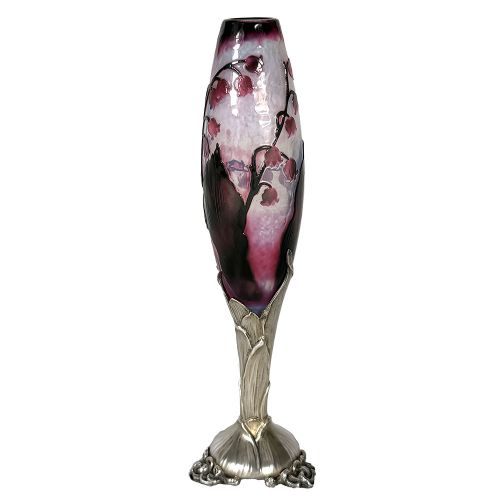
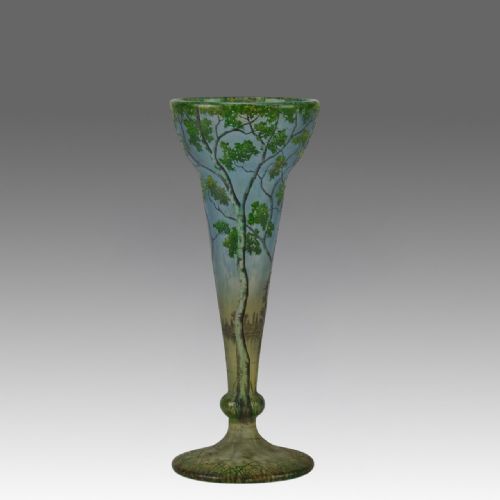
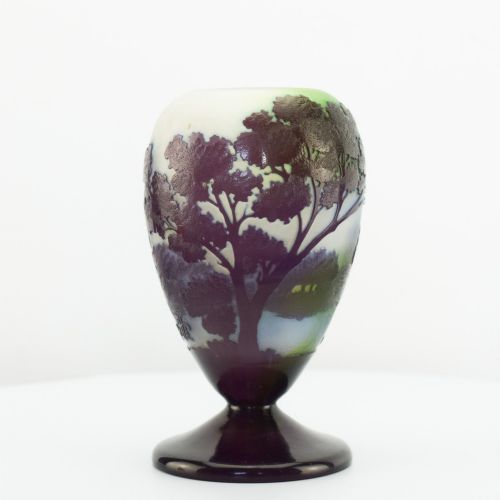
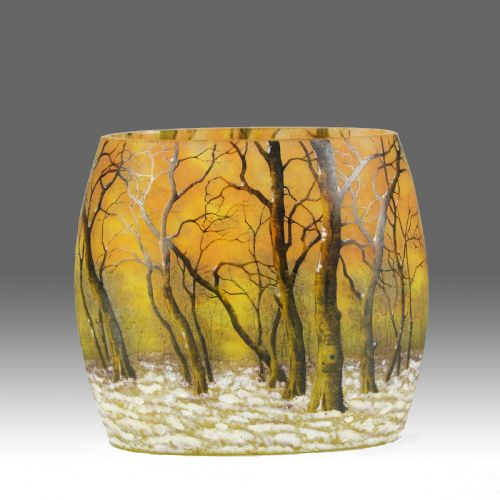
An antique nancy glass vase represents the pinnacle of French art glass production, originating from the artistic hub of Nancy during the Art Nouveau and Art Deco movements. Buyers search for these pieces to acquire sculptural vessels that showcase organic plant life, winter scenes, and luminous aquatic motifs.
The pieces on this page span the 1890s through the 1920s, featuring iconic vessel forms created by prominent regional makers. Most examples follow naturalistic design principles, translating botanical studies and French landscapes directly into glass.
How they were made
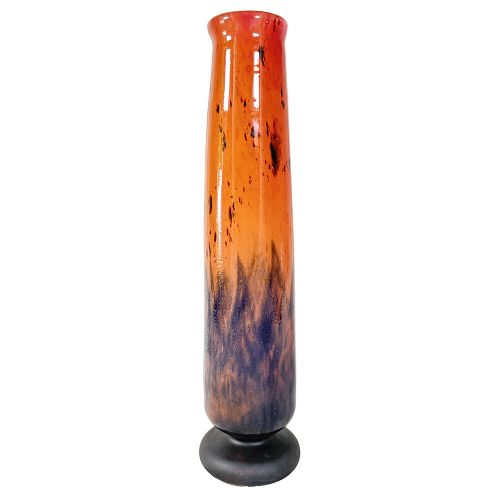
Maker workshops utilised multi-layered blown glass combined with acid-etching to carve away surface layers and reveal intricate contrasting colours. Artisans frequently applied enamel details and powdered glass to build up rich textures across the body of the vessel.
Techniques such as pate de verre involved packing ground glass into moulds and firing until fused, creating dense, translucent objects with tactile surfaces. Acid-etching allowed workshops to achieve precise gradation of tone, particularly in cameo landscapes and floral studies.
One notably heavy crystal piece tips the scales at over twelve kilograms, proving these floral studies had serious physical presence.
What varies in quality
Quality depends on the depth and complexity of the cameo carving, where multiple acid-etched layers create a more convincing sense of space and atmosphere. Pieces demonstrating subtle shading and meticulous hand-finishing stand apart from simpler commercial outputs.
The distinction also rests on the integration of form and decoration, where the silhouette of the glass complements the botanical or landscape subject. Signature clarity and the harmonious balance of applied enamel or powdered glass elevate the artistic standing of individual vessels.
Daum·Henry Bergé·Amalric Walter·Daum Frères·Emile Galle·Paul Nicolas
The Antique Nancy Glass Vase Glossary
- Cameo Glass
- Glass formed with multiple distinct coloured layers that are carved or acid-etched away to create a raised design. This technique requires exceptional control to expose underlying hues without piercing the background.
- Pate de Verre
- Glass paste moulded and kiln-fired to produce granular objects with a distinctive sugary texture. It yields rich, saturated colour throughout the body of the vessel.
- Acid-Etched Glass
- Glass treated with hydrofluoric acid to eat away exposed areas and create matte surface patterns or depth. Workshops utilised resists to protect specific zones during the biting process.
- Enamel
- Opaque or translucent glass paint applied to the vessel surface and refired to fuse permanently. This adds fine linear detail and localized colour highlights to blown forms.
Antique Nancy Glass Vase: Frequently Asked Questions
What is an antique nancy glass vase?
These vessels are decorative glass pieces produced in the French city of Nancy during the late nineteenth and early twentieth centuries. They are celebrated for their sophisticated application of cameo carving, enamelling, and pioneering furnace techniques.
Craftsmen drew inspiration from local flora, fauna, and regional landscapes, translating these subjects into highly tactile objects of art. They remain central pieces for collectors of late nineteenth and early twentieth-century decorative arts.
How do I identify Art Nouveau versus Art Deco styles?
Art Nouveau pieces, produced around nineteen hundred, feature fluid, asymmetric lines and direct references to plants, insects, and natural landscapes. The decoration emphasises curving stems, blossoms, and atmospheric winter or summer scenes.
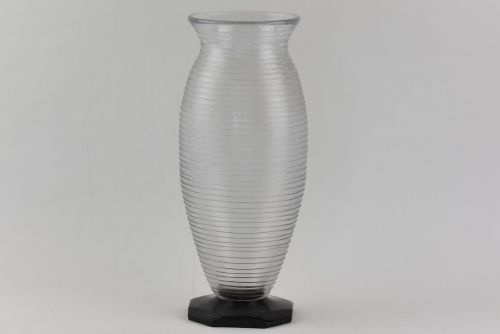
Art Deco examples, emerging into the nineteen twenties, favour more geometric structures, stylised motifs, and heavy crystalline forms. The decoration becomes more streamlined and abstract, reflecting the shifting tastes of the interwar period.
How were cameo glass vases created?
Makers blew vessels using multiple layers of different coloured glass to build up a thick wall. Artisans then applied acid-resistant varnishes and submerged the glass repeatedly in acid baths to eat away the background and reveal the design.
Final details were often hand-carved with wheels or engraved to refine the relief and add subtle tonal gradation. Enamel paints or powdered glass were sometimes fused to the surface during supplementary firings.
How do I display these vases at home?
These sculptural objects require placement where directional light can pass through the translucent glass layers. Positioning them near windows or on lit shelving allows the cameo relief and internal colours to read clearly.
Because many examples feature delicate acid-etched surfaces or heavy crystal weights, stable flat surfaces away from high-traffic zones are essential. Allowing adequate space around each piece highlights its individual silhouette and decorative subject.