


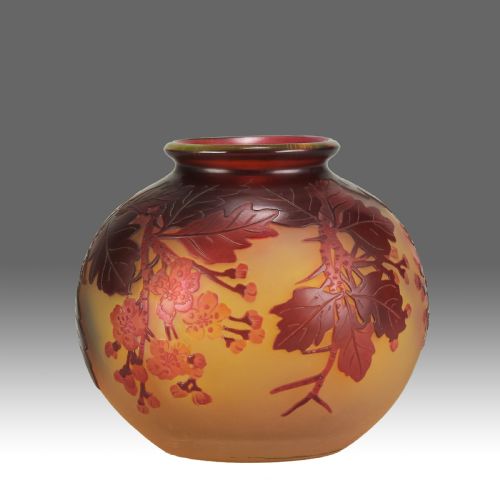


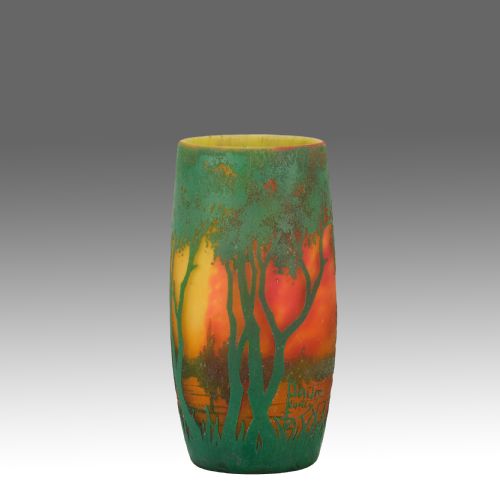


Overlay Glass Decorative Vase
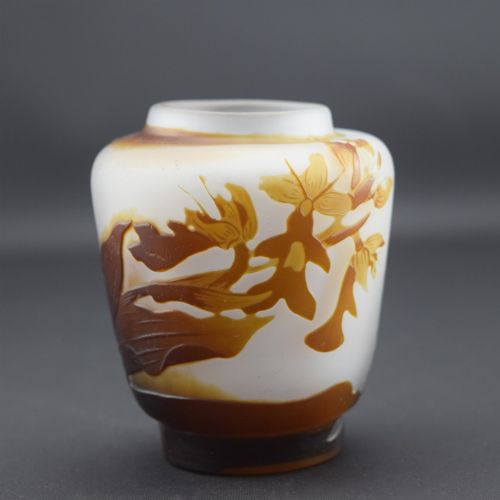
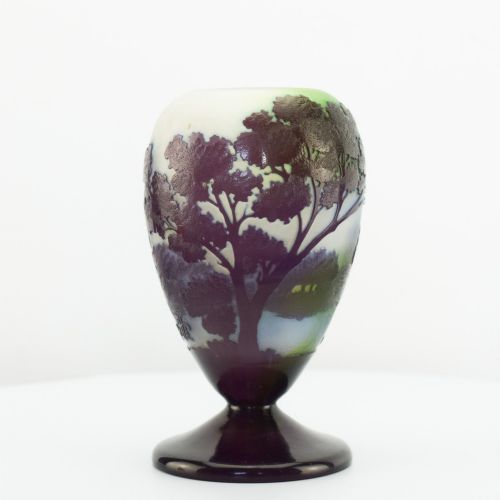
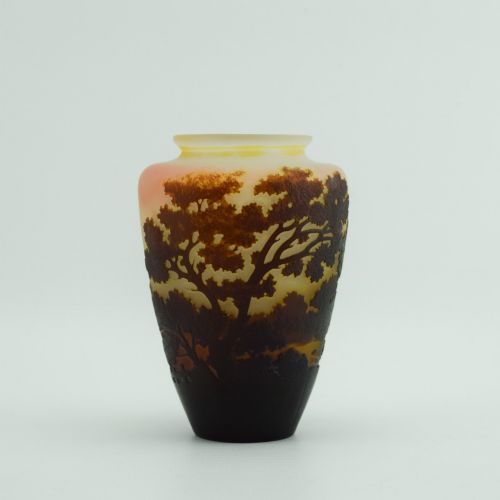
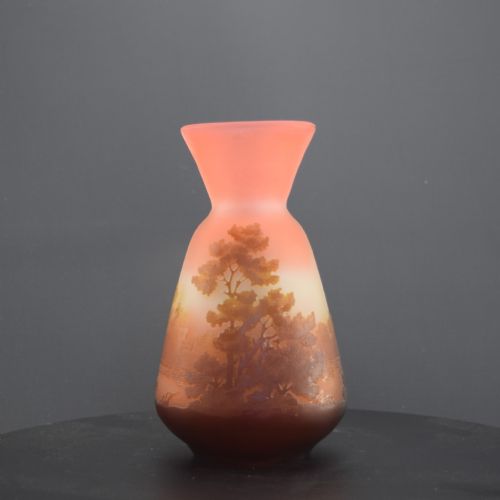
These overlay glass decorative vase examples combine rich colours and layered carving, making them striking focal points for any cabinet.

Overlay Glass Decorative Vase
An overlay glass decorative vase brings together complex layered forms across the 1890, Victorian, 1900, 1910, and 1920 periods. The selection spans distinct aesthetic movements, featuring both Art Nouveau and Art Deco designs that capture natural motifs and botanical themes.
Most pieces you encounter take the form of traditional vessels, including landscape designs, floral patterns with cornflowers or poppies, and abstract sunset scenes. These items originate from notable European makers working in cameo, frosted, and iridescent glass.
Makers enhance these vessels with external mounts and details such as sterling silver, pewter, and gold leaf. The combination of coloured glass bodies and contrasting overlays defines the core character of these objects.
How they were made
Artisans built these pieces using cameo glass and acid-etched glass techniques to create depth by cutting through contrasting layers of coloured glass. This process revealed intricate background scenes, plant stems, and floral motifs in relief against the body.
Makers integrated metallic elements directly into the structure by mounting vessels in sterling silver and pewter overlays, or by applying gold leaf and cabochons. These metal components were shaped to wrap around the glass contours, often following organic Art Nouveau lines.
The selection spans pieces from the 1890, Victorian, 1900, 1910, and 1920 periods, categorised under Art Nouveau and Art Deco styles.
What varies in quality
The precision of the carving determines how sharply the overlay stands out from the background glass, distinguishing master workshop output from simpler production. Depth of tone in cameo layers and the crispness of acid-etched details reveal the skill involved in the initial glassblowing and reduction stages.
The weight and integration of metal mounts, such as solid sterling silver or detailed pewter overlays, influence the overall presence of the piece. Superior examples show seamless adaptation between the metalwork and the underlying glass form without obscuring the core design.
Gallé·Thomas Webb and Sons·Baccarat·Daum Frères·Paul Nicholas for D'Argental·Ferdinand von Poschinger·Loetz
The Overlay Glass Decorative Vase Glossary
- Cameo glass
- A form of glassware produced by fusing layers of different coloured glass together and carving or acid-etching the exterior layer to create a raised design. This technique requires immense precision to avoid cutting through the thin background layer.
- Acid-etched glass
- Glass decorated by exposing unprotected areas to acid, which eats away at the surface to create textured patterns or recessed designs. It is often used to achieve frosted finishes and subtle background shading.
- Iridescent glass
- Glass treated with metallic salts while hot to produce a shimmering, rainbow-like surface effect. This finish catches the light from various angles, enhancing the organic forms popular in the period.
- Overlay
- A secondary layer of material applied over a primary glass body, which can consist of contrasting glass colours or worked metal such as silver and pewter. It adds structural weight and visual contrast to the vessel.
- Cabochon
- A polished, convex gemstone or piece of glass without facets, frequently set into metal mounts on decorative vases. They provide focal points within the surrounding metalwork.
Overlay Glass Decorative Vase: Frequently Asked Questions
How do I identify a Galle vase?
Authentic pieces typically feature an etched or cameo signature incorporated directly into the glass design of the body or base. The motifs usually focus on natural subjects like landscapes, oak leaves, and floral studies.
The carving exhibits distinct depth and shading transitions, characteristic of the output associated with the workshop.
What is metal overlay on glass?
Metal overlay involves working silver, pewter, or gold leaf onto the exterior of a completed glass vessel. This technique wraps the glass body in decorative metal framework, often shaped into winding plant stems or geometric patterns.
The metal is secured directly to the surface, combining two distinct material crafts into a single object.
Are these vases from the Art Nouveau period?
Many of these vessels belong to the Art Nouveau and Art Deco movements, spanning the late Victorian era through the early twentieth century. Makers drew heavily on organic shapes, botanical forms, and flowing lines during this time.
The styles reflect the design priorities of European glasshouses operating around nineteen hundred and the subsequent decades.
How should I clean my glass vase?
Clean these vessels gently using a soft, dry cloth to remove dust from the carved relief and metal mounts. Avoid harsh chemical cleaners that might damage delicate acid-etched surfaces or vintage metal components.
For internal cleaning, use lukewarm water without submerging mounted metalwork for extended periods.