


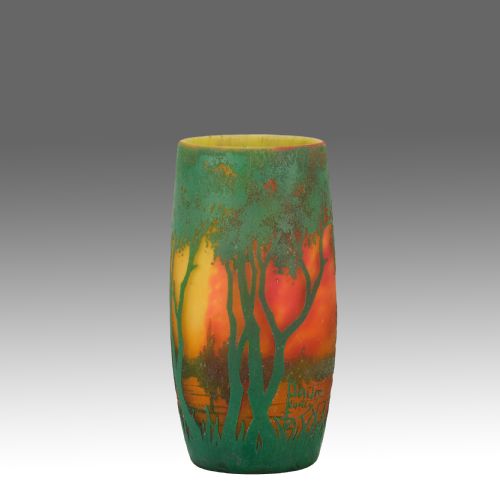


Landscape Glass Vase
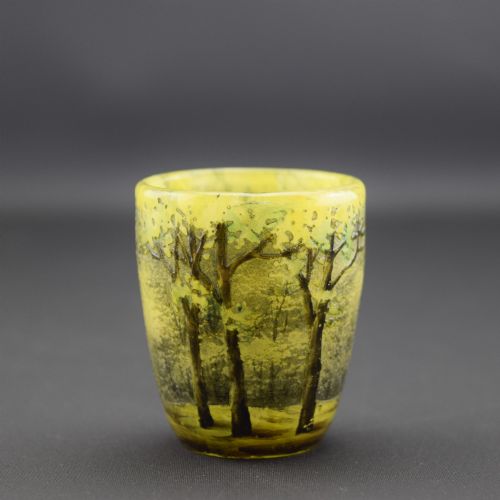
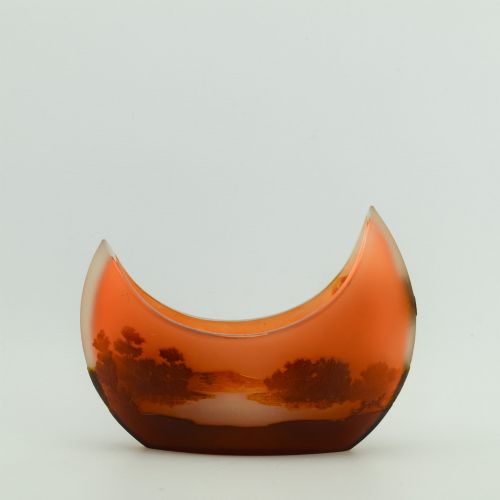
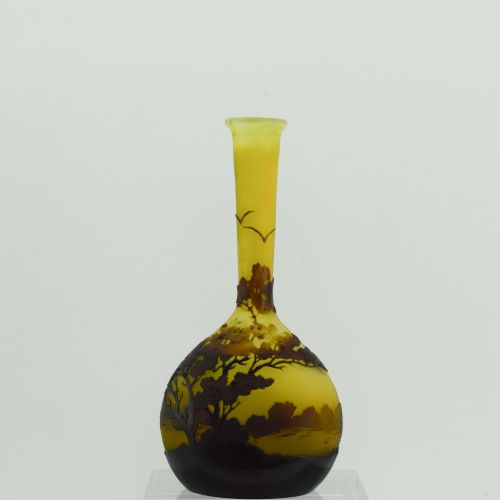
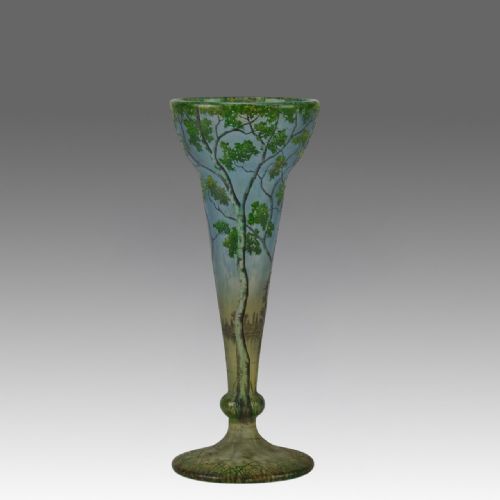
These landscape glass vase examples bring natural scenery indoors through layered cameo work and delicate enamel.
Landscape Glass Vase
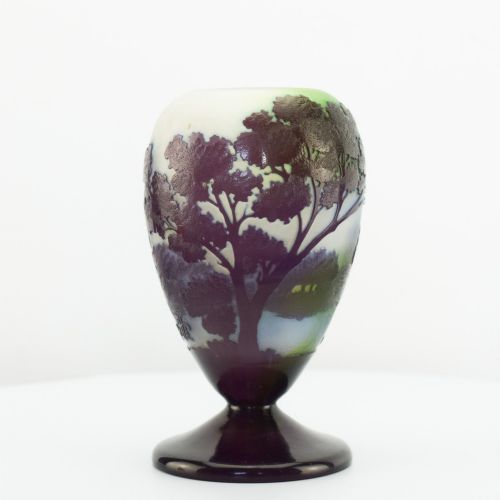
A landscape glass vase is an artistic vessel designed to depict natural scenery, woods, or water upon its surface. When you search for this phrase, you find early twentieth century works originating from notable French glasshouses.
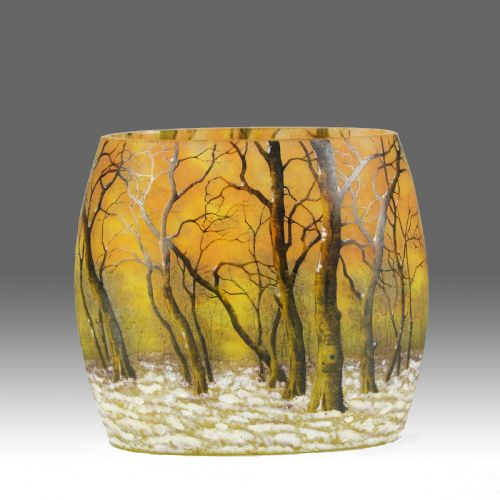
The versions you are most likely to meet on this page belong to the Art Nouveau period, spanning the years from nineteen hundred to nineteen twenty. These pieces take various forms, including crescent shapes, banjo silhouettes, footed vessels, and large oviform bodies.
How they were made
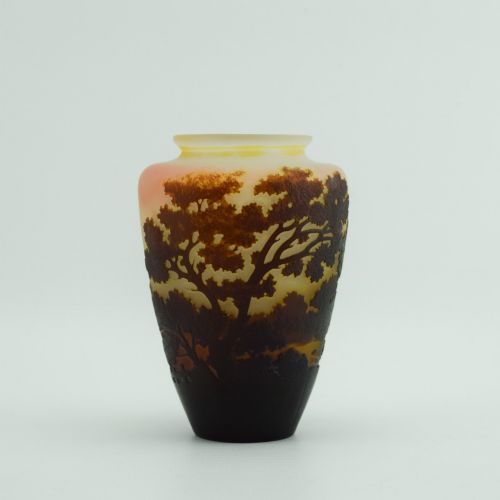
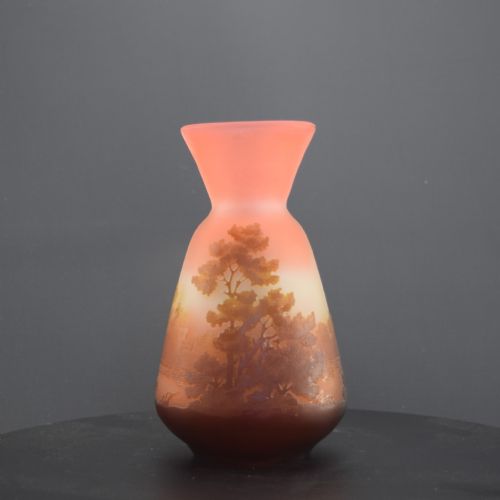
These works utilise cameo glass and acid-etched glass techniques to create depth and texture across the vessel wall. Artisans carve away successive layers of coloured glass to reveal contrasting shades underneath, producing woodland and sunset vistas.
Enamel decoration is also applied to enhance specific details within the landscape scenes, adding finer pigments to the glass surface. This combination of acid-etching and enamelling gives the scenery its characteristic painterly quality.
Listings span the early twentieth century from nineteen hundred to nineteen twenty, featuring cameo glass, acid-etched glass, and enamel materials.
What varies in quality
The distinction between standard examples and the finest works rests upon the subtlety of the cameo carving and the complexity of the landscape design. Superior pieces demonstrate precise depth control, allowing light to pass through the coloured layers in a way that illuminates the scenery.
The harmony of the colour palette, whether showing brown and peach tones or a red sunset, determines the visual impact of the vessel. Greater artistic ambition appears in the detailed rendering of specific settings like the Vosges landscape or winter scenes.
Daum Frères·Galle·Legras
The Landscape Glass Vase Glossary
- Cameo glass
- A form of glass created by fusing layers of different colours together and then carving or etching away parts of the outer layer to form designs. This technique demands immense precision from the artisan.
- Acid-etched glass
- Glass treated with acid to eat away the surface and create frosted or recessed design elements. It provides a tactile finish that mimics natural weathering.
- Enamel
- Opaque or transparent glass fused to the surface of a vessel to add colour and painted detail. It allows for intricate scenery work.
- Art Nouveau
- An international style of art and architecture that flourished around nineteen hundred, characterised by organic forms and natural motifs. This aesthetic heavily influences the depicted landscapes.
Landscape Glass Vase: Frequently Asked Questions
What is a landscape glass vase?
It is an artistic glass vessel created during the early twentieth century to depict natural scenery, trees, and bodies of water upon its surface.
These pieces utilise techniques like cameo carving and acid-etching to bring the surrounding environment onto the curves of the glass.
How were landscape glass vases used?
They served primarily as decorative objects within homes of the early twentieth century, displayed on mantelpieces, side tables, or cabinets.
Because of their detailed artistic scenes, they were collected as fine examples of glass craftsmanship rather than utilised for holding heavy floral arrangements.
How do I live with one?
Place your piece where natural light can pass through the body of the glass, as illumination reveals the layered cameo details and colours.
Keep them away from direct edges where they might be knocked, and clean them gently with a soft dry cloth to preserve the delicate surfaces.
How do I tell periods apart?
Examine the stylistic markers and forms present in the piece, noting whether the design leans towards classic Art Nouveau curves or specific seasonal themes.
Look for maker signatures and the complexity of the acid-etched landscape, which often evolved through the nineteen hundreds up to nineteen twenty.