
Antique Music Stand with Drawer
An antique music stand with drawer provides a practical shelf for scores and folios while bringing period timber to a room.
Antique Music Stand with Drawer
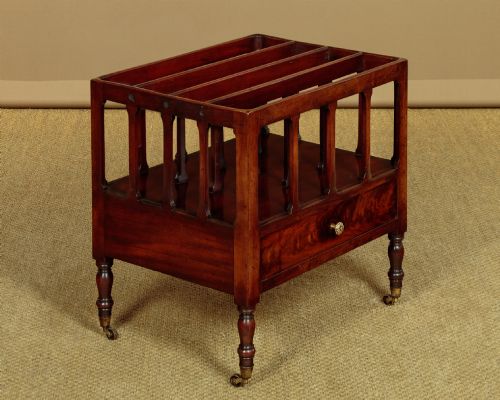
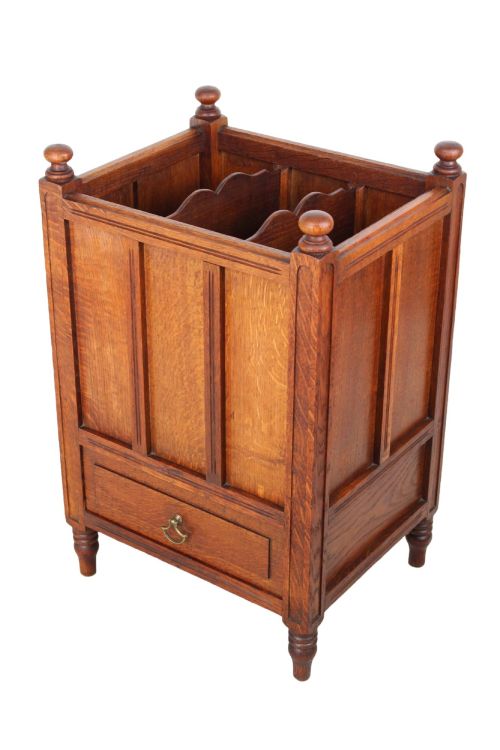
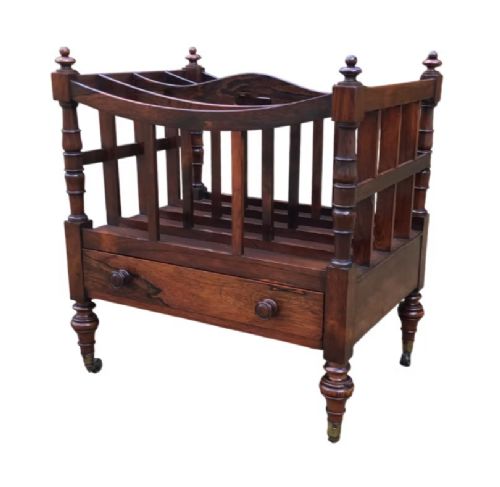
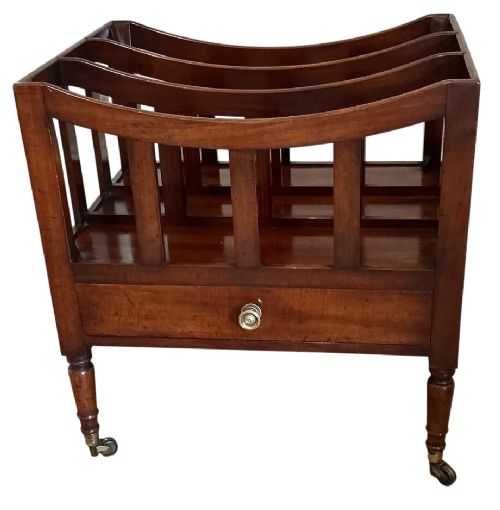
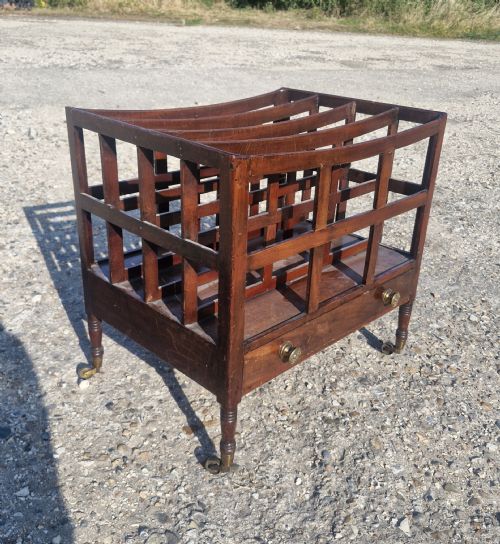
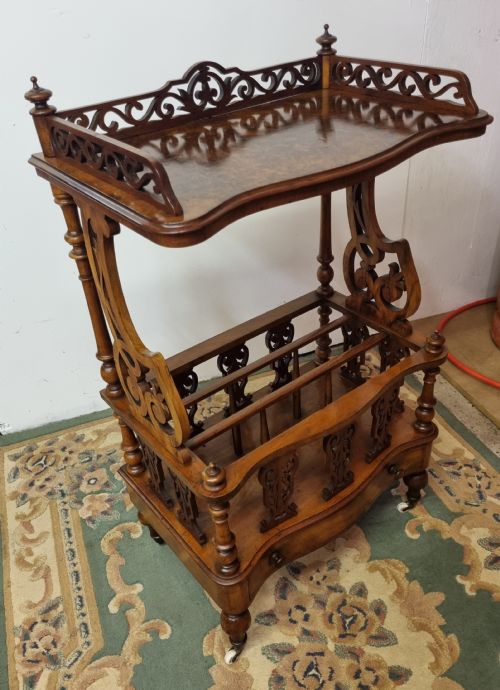
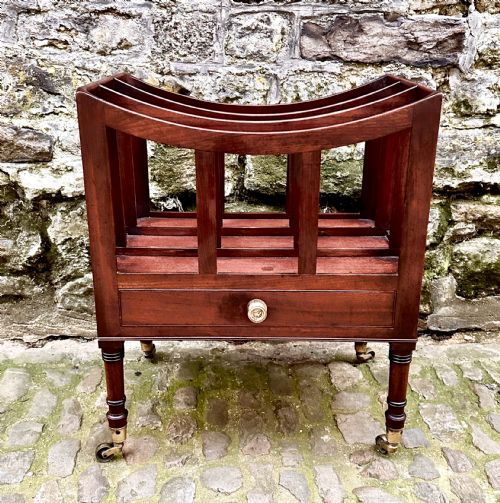
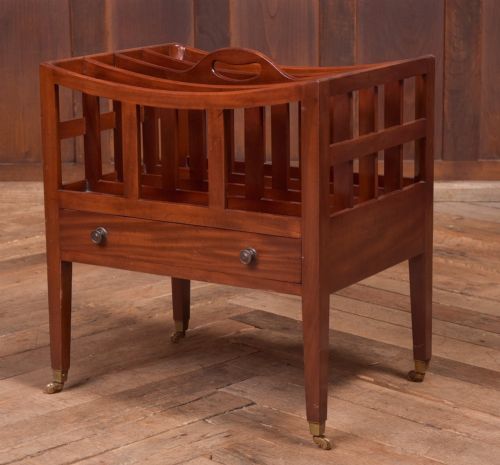
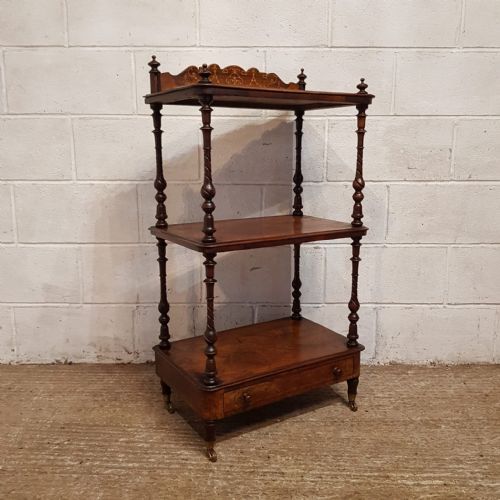
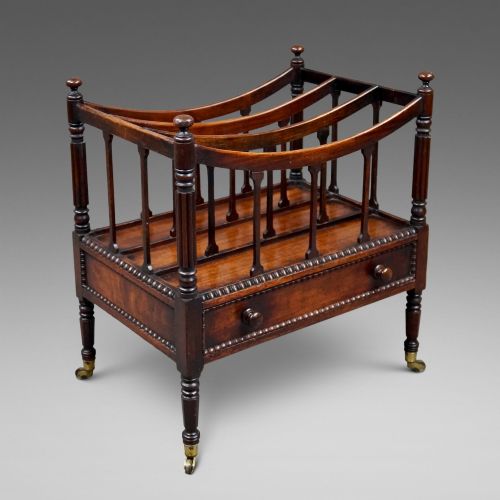
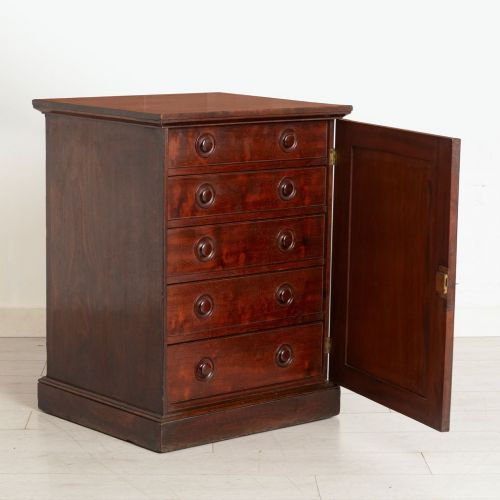
An antique music stand with drawer unites open vertical storage for folios with a closed compartment below. These items appear across the Georgian, Regency, William IV, Victorian and Edwardian eras, taking the form of canuterburys, sheet music cabinets and whatnots.
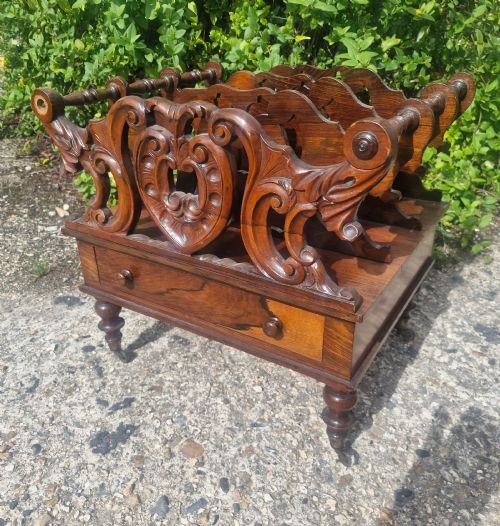
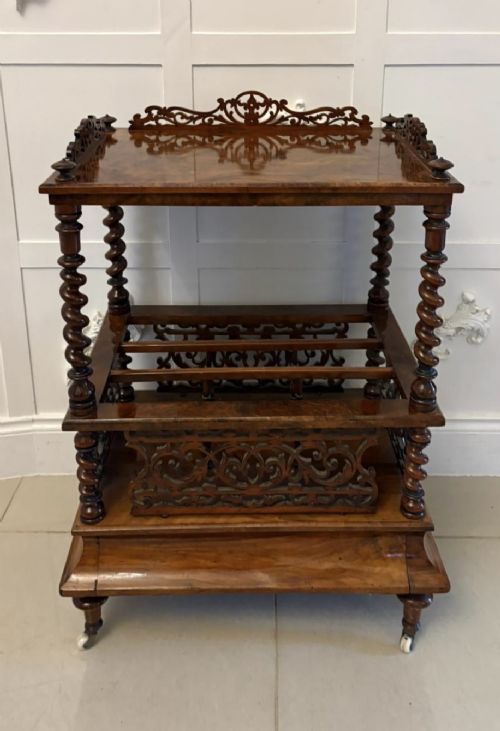
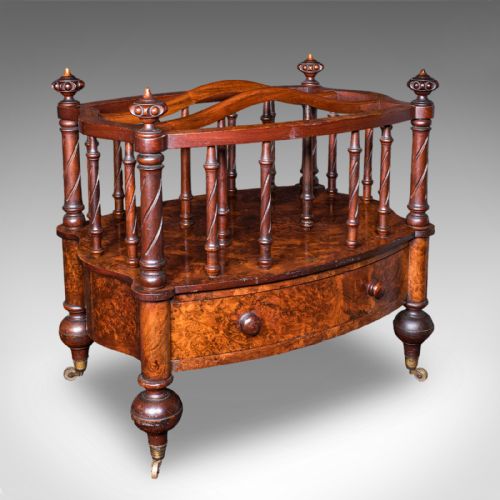
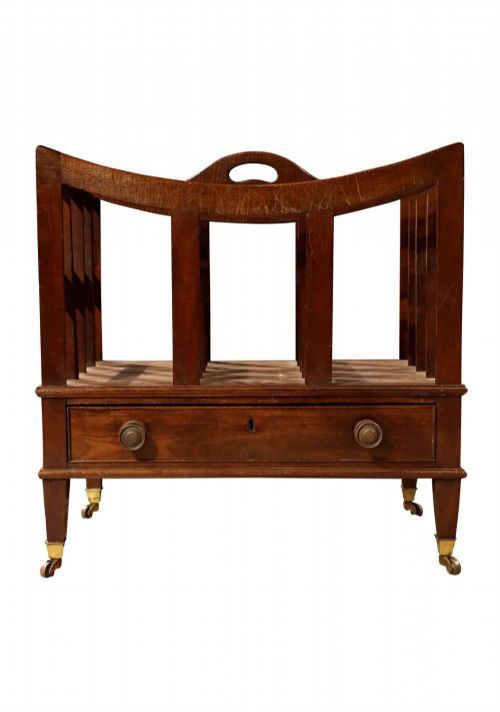
The most frequent version on this page is the Canterbury, featuring slatted or pierced divisions for journals and sheets above a single drawer. Makers during the nineteenth century also produced boat-shaped designs and multi-tier models incorporating brass castors and turned supports.
Materials and Construction
Cabinet makers utilised dense native and imported timbers, notably mahogany, rosewood, walnut and burr walnut, alongside satinwood for decorative inlay. These woods were chosen for their strength and grain, allowing upright slats and slender legs to hold weight without bulk.
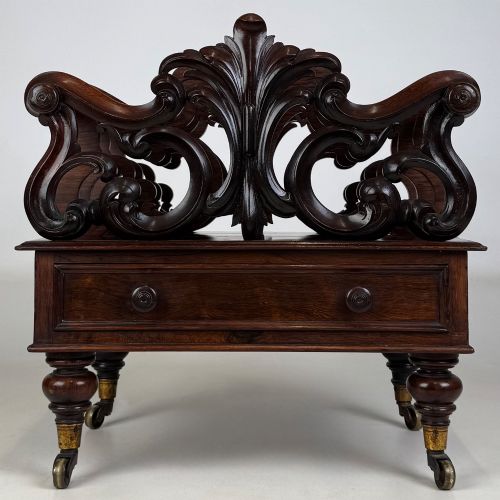
Construction methods rely on traditional joinery for the framework and drawer boxes, often augmented by brass fittings and ceramic castors. Pierced fretwork and carved details appear on divisions and panels, particularly in Victorian and Regency examples.
Listings span the Georgian, Regency, Victorian and Edwardian periods, featuring mahogany, rosewood, walnut and satinwood.
Distinctions in Execution
Quality rests in the crispness of the joinery and the selection of timber veneers, such as figured mahogany or rich burr walnut. Finer pieces demonstrate careful attention to internal drawer construction and the integration of delicate fretwork divisions.
The treatment of decorative elements, including satinwood inlay, carved scrollwork and turned legs, separates standard workshop production from exceptional cabinet work. Proportion and balance in the division design dictate the visual weight of the stand.
Edwards and Roberts·Howard and Sons
The Antique Music Stand with Drawer Glossary
- Canterbury
- A low stand with divisions for holding sheet music, newspapers or magazines, typically fitted with a drawer at the base. The form originated in the late eighteenth century and persisted through the Edwardian period.
- Whatnot
- A piece of open shelving standing on legs, sometimes incorporating a drawer and used for displaying or storing books and music. Victorian examples often combine tiers with music compartments.
- Satinwood inlay
- Ornamental work formed by fitting contrasting pieces of pale satinwood into the surface of a darker primary timber. This technique adds linear or geometric patterns to Edwardian and Victorian surfaces.
- Boat-shaped
- A specific Regency chassis curve where the ends of the rack sweep upward like the prow of a vessel. It gives a distinct horizontal balance to the piece.
- Pierced fretwork
- Ornamental woodwork cut through with a saw to create decorative patterns or open grilles. It frequently appears on the upright divisions of nineteenth-century stands.
Antique Music Stand with Drawer: Frequently Asked Questions
What is an antique music stand with drawer used for?
These stands were originally designed to hold sheet music, scores and periodicals near a piano or in a drawing room. Today they function equally well for organising current journals or vinyl records beside a seating area.
The lower drawer provides a discreet space for smaller accessories, keeping surfaces tidy while maintaining the piece's decorative utility.
How do I date an antique music stand?
Dating relies on timber choice, construction methods and stylistic markers characteristic of specific reigns. Regency and George III examples often feature sweeping boat shapes or fine turned spindles, while Victorian pieces lean toward burr walnut and pierced fretwork.
Edwardian items frequently display lighter satinwood inlay and simpler cabinet proportions compared to earlier heavy rosewood versions.
Are these stands sturdy enough for daily use?
Most pieces were built by skilled cabinet makers using dense hardwoods like mahogany and rosewood, ensuring robust structural integrity. Their frame construction handles the weight of paper and magazines comfortably.
Care should be taken when moving them, particularly models with castors, to protect the original leg joints and timber feet.
Where should I place a music stand in a room?
Their freestanding nature allows them to sit beside armchairs, near a desk or alongside a fireplace as an accent piece. Because many are finished on all sides, they look appropriate placed away from walls.
Keeping them out of direct sunlight preserves the rich tones of rosewood, walnut and mahogany veneers.