
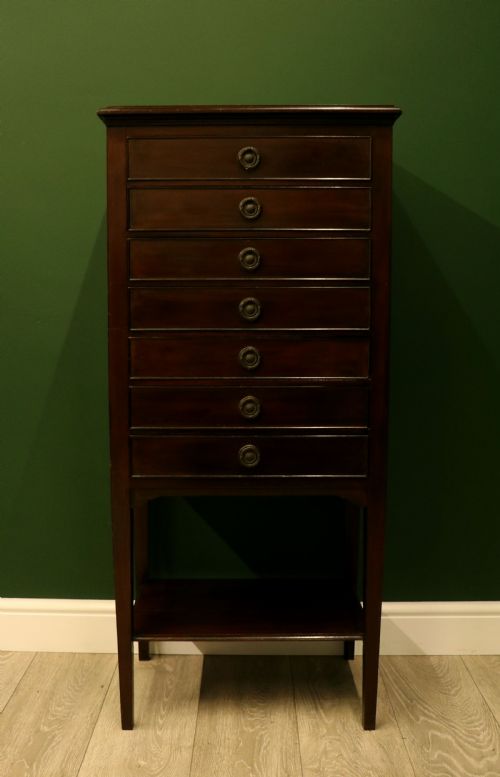


Antique Music Cabinet Drawers
Antique music cabinet drawers organise sheet music and manuscripts while anchoring a room with period timber.
Antique Music Cabinet Drawers
Antique music cabinet drawers are specialised storage furniture designed to hold sheet music, manuscripts, and folios within domestic interiors. When searching for antique music cabinet drawers, buyers encounter pieces primarily originating from the Victorian and Edwardian eras, alongside earlier Regency and William IV examples.
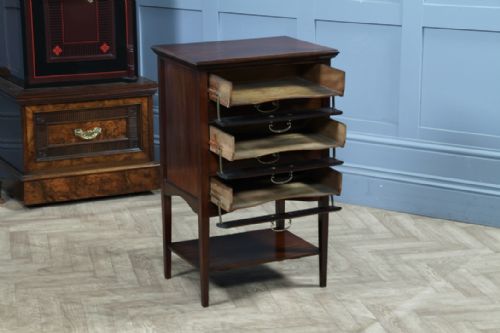
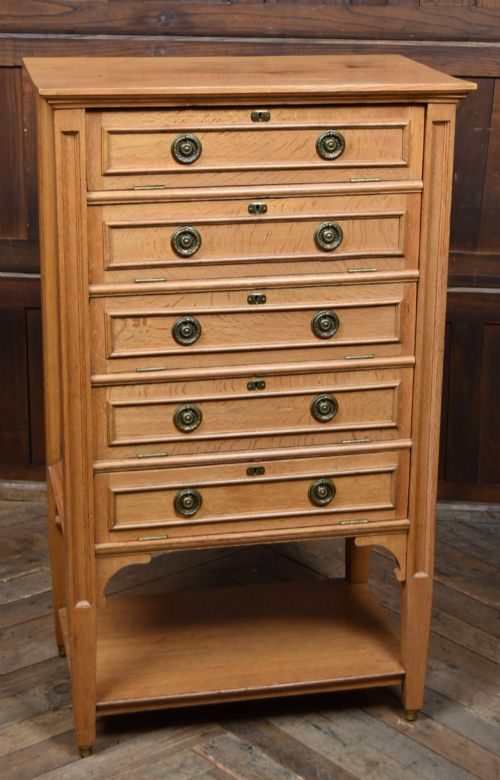
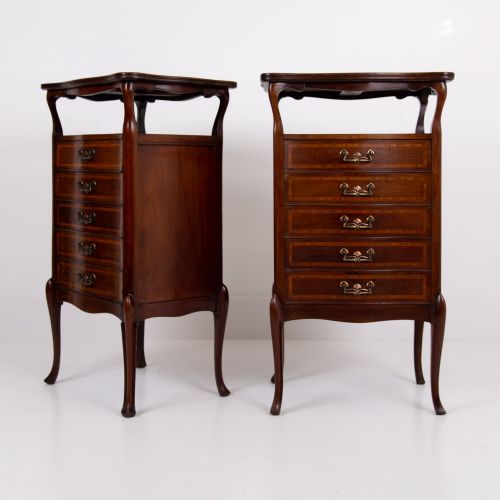
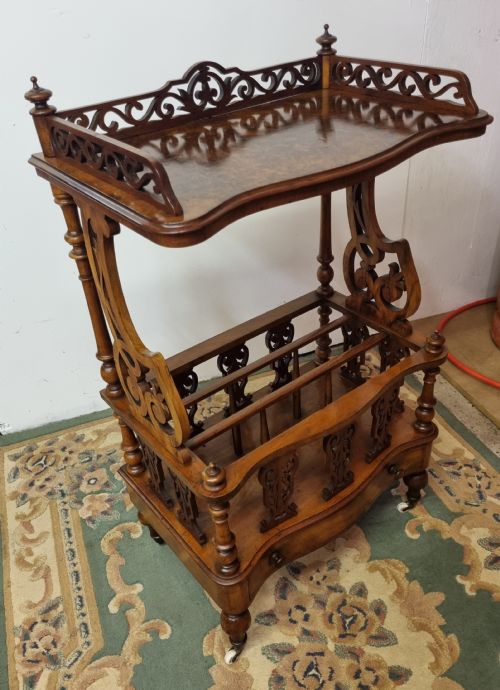
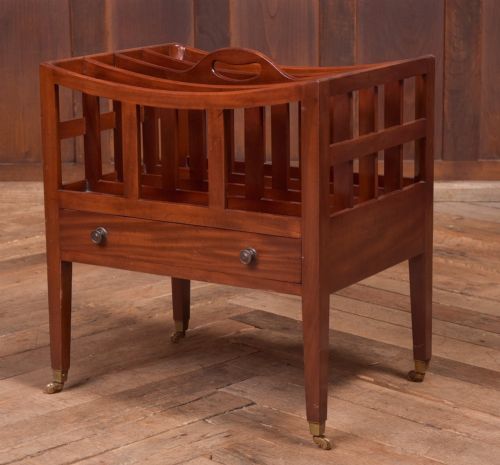
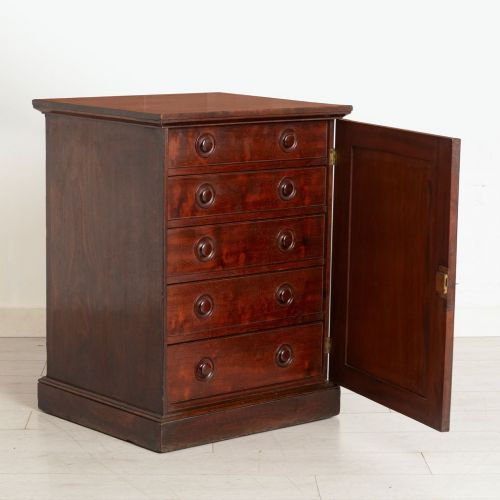
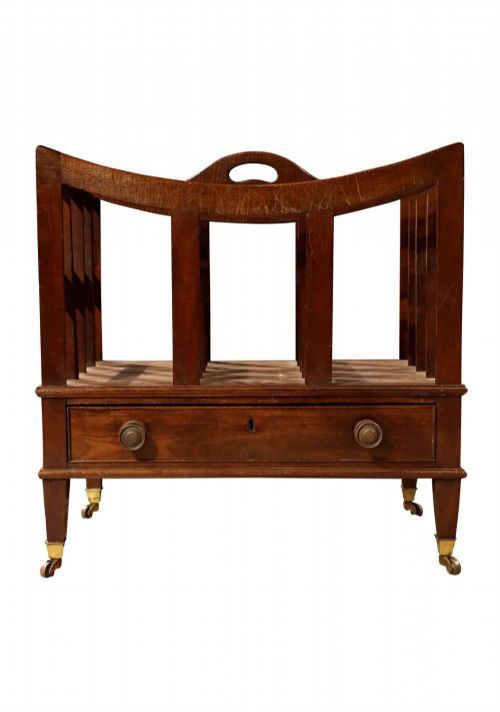
The selection on this page centres on purpose-built music cabinets, canterburys, and filing pieces equipped with fitted drawers or drop-front compartments. Mahogany and burr walnut dominate the forms, frequently enriched with satinwood inlay or brass hardware.
Makers designed these items to sit neatly in parlours and drawing rooms, housing paper scores upright or flat depending on the internal configuration. The surviving items range from compact Edwardian chests to elaborate Victorian canterburys with integrated display shelves.
How they were made
Cabinetmakers constructed these pieces using solid timbers like mahogany, walnut, and rosewood, often applying veneers of burr walnut or satinwood to visible surfaces. Joinery relied on traditional dovetailed drawer construction and mortise and tenon frames to support heavy paper contents.
Decoration involved intricate stringing, marquetry inlay, and carved wood details that reflected prevailing styles such as Art Nouveau, Arts and Crafts, and Regency. Hardware typically consisted of cast brass drop handles, label holders, and subtle hinges suited to fall-front or drawer actions.
Some nineteenth-century canterburys feature tiny wooden caster wheels so musicians could roll their sheet music collection closer to the piano.
What varies in quality
Quality in these pieces depends on the selection of timber veneers and the precision of the cabinet joinery, particularly in the movement of the drawers. Superior examples display balanced grain matching across drop fronts and refined inlay work rather than painted imitation decoration.
The integrity of internal divisions, original brass fittings, and structural stability separate standard production items from finer workshop pieces. Pieces retaining functional fall-front mechanisms and unmarked internal partitions demonstrate higher original execution.
The Antique Music Cabinet Drawers Glossary
- Canterbury
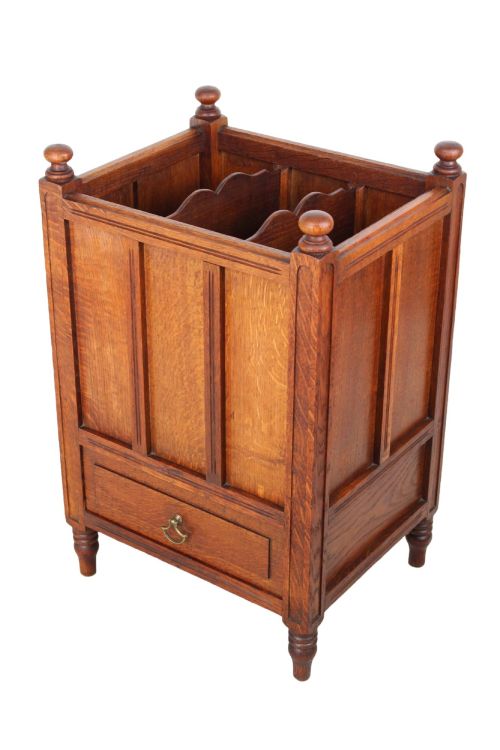
- A low, open-framed stand fitted with vertical partitions for holding sheet music, magazines, or newspapers, often featuring a single lower drawer. The form originated in the late eighteenth century and evolved through the Regency and Victorian periods.
- Drop-front
- A hinged panel that folds outward to provide access to internal shelves or shallow filing drawers within a cabinet. This mechanism protects sheet music edges while keeping titles visible.
- Burr walnut
- A highly figured wood veneer harvested from walnut tree growths, valued for its swirling grain patterns. Cabinetmakers applied it selectively to drawer fronts and top panels on high-status Victorian pieces.
- Inlay
- A decorative technique where contrasting woods, metals, or shells are inserted into recesses carved into the primary wood surface. Edwardian makers utilised satinwood stringing to frame mahogany panels.
- Whatnot
- A piece of freestanding furniture consisting of multiple open shelves supported by slender pillars, sometimes incorporating a cabinet base with drawers. Victorian examples combined display space with music storage.
Antique Music Cabinet Drawers: Frequently Asked Questions
How do I use an antique music cabinet today?
These cabinets serve effectively as bedside tables, hallway organisers, or specialist storage for modern documents, art supplies, and stationery.
The shallow proportions of the drawers accommodate loose papers, photographs, and flat items without cluttering a contemporary room.
How do I distinguish Edwardian music cabinets from Victorian ones?
Victorian examples tend to use darker timbers like rosewood and burr walnut with heavier carved details or elaborate inlay. They reflect mid-to-late nineteenth-century tastes for rich, imposing wood grain.
Edwardian pieces lean towards lighter mahogany with delicate satinwood stringing and simpler lines, frequently incorporating Art Nouveau or Arts and Crafts stylistic influences.
Do antique music cabinets hold standard modern paper?
Most Edwardian and Victorian music cabinet drawers were manufactured to fit standard nineteenth-century sheet music folios, which often measure slightly larger than modern A4 paper.
Standard documents and modern sheet music fit comfortably inside the drawers, though oversized contemporary binders may exceed the depth of fall-front compartments.