




Antique Mortar and Pestle
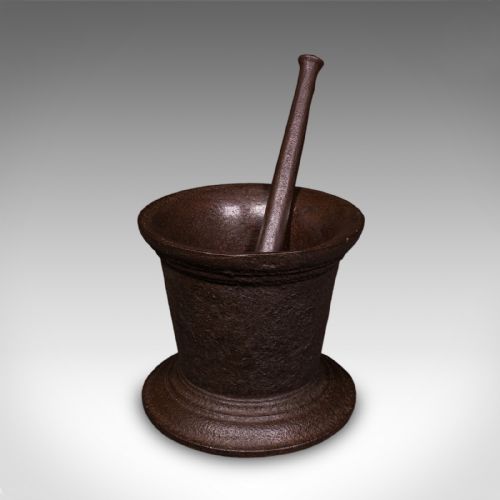
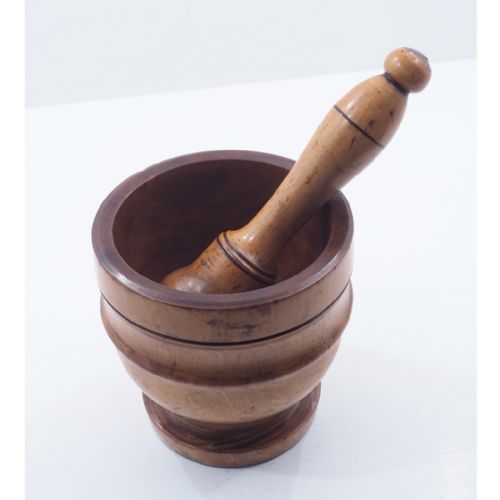
An antique mortar and pestle brings centuries of heavy metal and dense wood into focus as tactile kitchen and apothecary tools.
Antique Mortar and Pestle
When you search for an antique mortar and pestle, you encounter heavy functional vessels designed for crushing and grinding substances in domestic kitchens, apothecaries, and trade workshops. The versions most commonly met on this page span the seventeenth through the nineteenth centuries, formed from cast metal or turned timber.
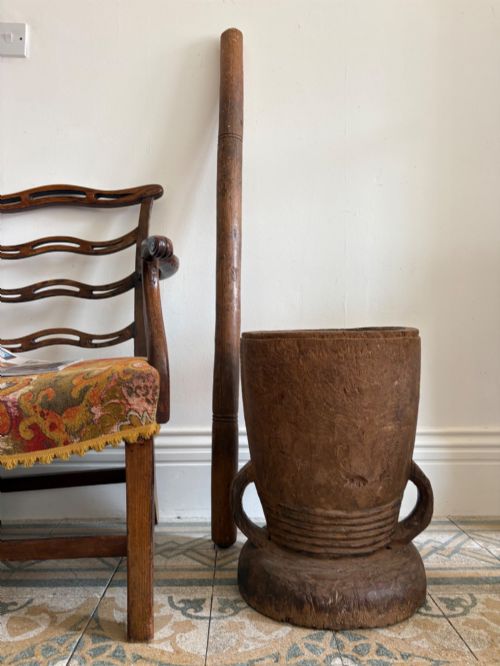
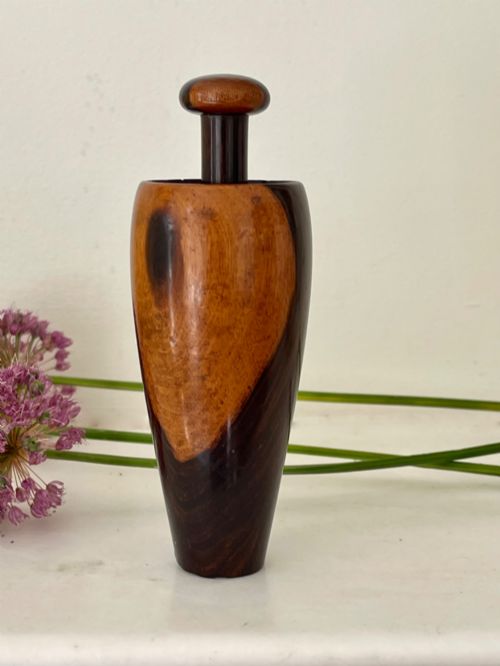
Forms range from small domestic treen snuff grinders and Victorian chemist aids to massive industrial dye maker basins and heavy bronze apothecary sets. Stylistic influences on these pieces extend across Georgian, Victorian, Spanish Baroque, and Gothic Revival traditions.
The objects serve as tangible links to historical domestic labour, chemical preparation, and apothecary practice. Buyers look for authentic period wear that confirms actual historical usage rather than modern decorative replication.
Materials and construction methods
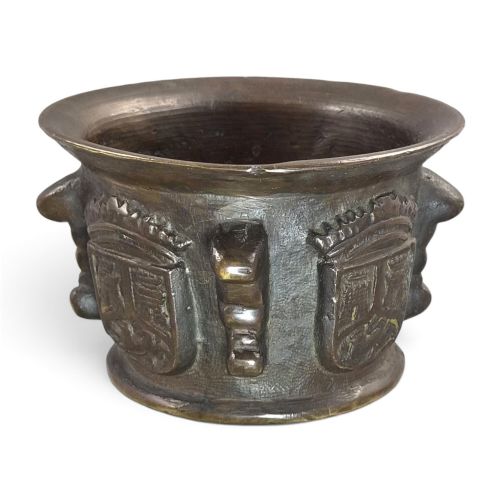
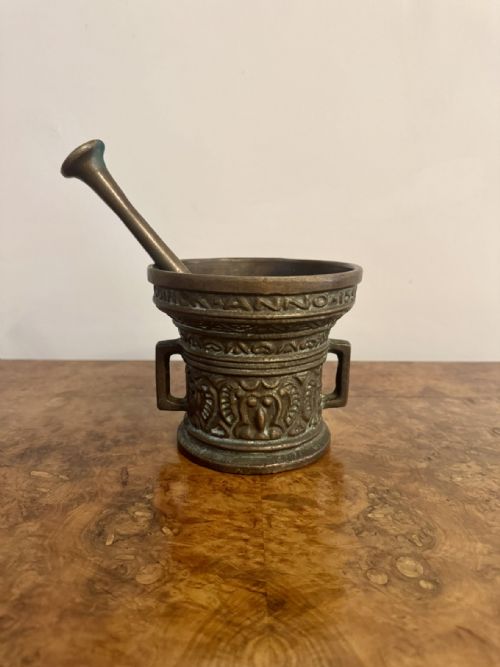
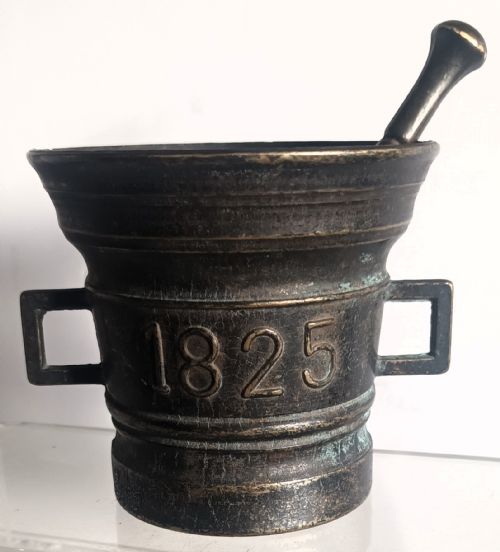
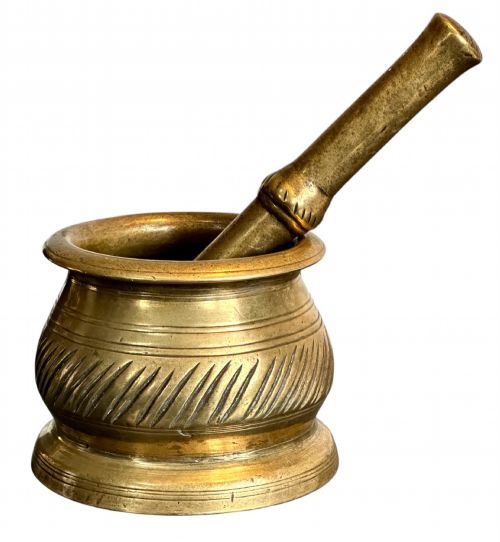
Metal examples rely on foundry casting, utilising bronze and brass poured into moulds to create thick, rigid walls capable of withstanding heavy impact and downward pressure. Many cast bronze pieces display decorative moulded ribs, heraldic coats of arms, or Tudor rose motifs applied directly during the casting process.
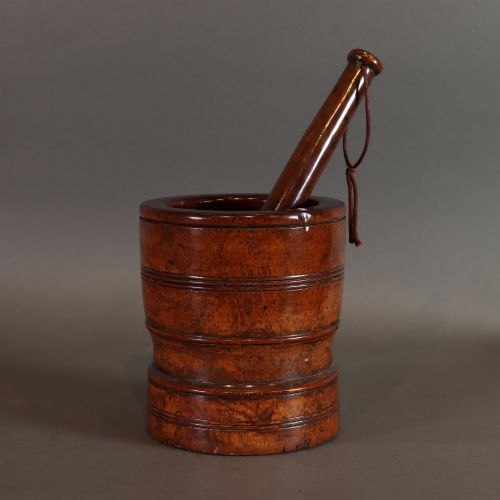
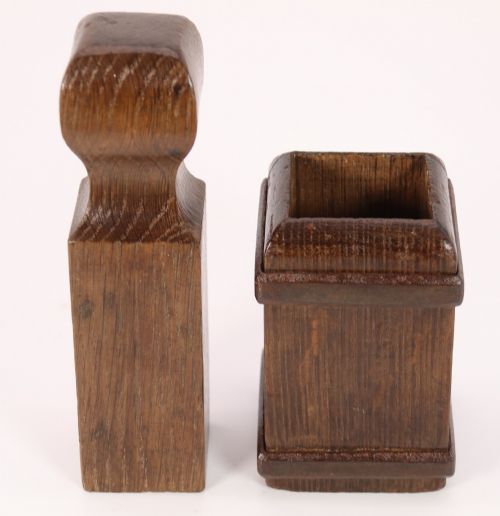
Wooden items, often grouped under treen, utilise dense timbers such as lignum vitae, walnut, oak, beech, and fruitwood shaped on a lathe. These wooden vessels sometimes incorporate wrought iron mounts or iron reinforcing bands to prevent splitting during rigorous crushing tasks.
Distinctions in craftsmanship and wear
Quality in these vessels rests on the crispness of the cast ornamentation, the density and stability of the material, and the retention of the matching pestle. Superior cast bronze pieces exhibit sharp relief on moulded bands and coats of arms, whereas lower-quality or later reproductions often display softened details and uneven pitting.
For wooden treen versions, the integrity of the lathe turning and the natural grain figure define the standard of the piece. Surviving examples that retain their original working pestle and show honest internal percussion wear command greater interest than mismatched sets or purely decorative items.
The Antique Mortar and Pestle Glossary
- Pestle
- The heavy club-shaped tool used with a mortar to pound, crush, and mix materials. Finding a pestle that matches the wear and material of the mortar is a significant bonus for collectors.
- Treen
- Small handmade wooden domestic objects produced by turning on a lathe. Items in this category include snuff mortars and fruitwood grinders.
- Apothecary
- Pertaining to the preparation and sale of medicines and drugs. Many surviving metal mortars originate from apothecary and chemist shops.
- Lignum Vitae
- An extremely dense and heavy hardwood historically utilised for turned objects that required high impact resistance. It frequently appears in seventeenth-century snuff mortars.
Antique Mortar and Pestle: Frequently Asked Questions
What were antique mortars used for?
These vessels served a vital role in domestic kitchens, apothecary shops, and industrial workshops for grinding herbs, spices, chemicals, and dry pigments.
Operators used the heavy pestle to reduce substances into fine powders or pastes for culinary, medicinal, or trade purposes.
How do I date an old mortar?
Dating relies on material choices, casting techniques, decorative styles, and tool marks left during manufacture.
Seventeenth-century examples often display distinct bronze casting characteristics and Tudor motifs, whereas nineteenth-century pieces show different standardisation and wider use of brass and turned wood.
Are wooden and metal mortars from the same period?
Both materials span the seventeenth, eighteenth, and nineteenth centuries, though they served slightly different domestic and trade functions.
Dense hardwoods like lignum vitae and walnut were often preferred for snuff and smaller dry goods, while cast bronze and brass handled heavier chemical and culinary work.
How should I display a heavy bronze mortar?
Because of their substantial weight, these metal vessels require sturdy shelving or tabletop placement away from high-traffic edges.
Keeping the mortar and pestle paired together on display highlights their historical function as a unified tool.