


Metal Apothecary Grinder
These heavy metal apothecary grinder pieces are utilitarian instruments of the chemist and kitchen, forged to reduce herbs and resins into powders.
Metal Apothecary Grinder
A metal apothecary grinder is a vessel designed for pounding dry ingredients and pharmaceutical substances using a matching pestle. When searching for this form, buyers encounter stout, flared vessels shaped for manual pharmacy and kitchen work.
The selections span centuries of metalwork, appearing from the seventeenth century through to the Victorian era. English and continental workshops produced these objects for everyday compounding.
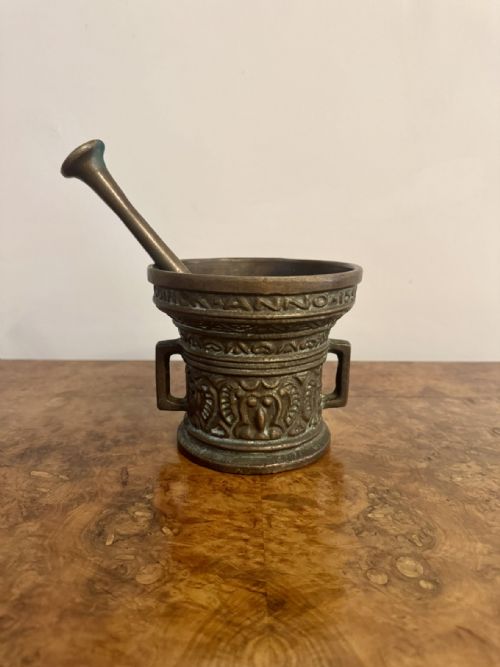
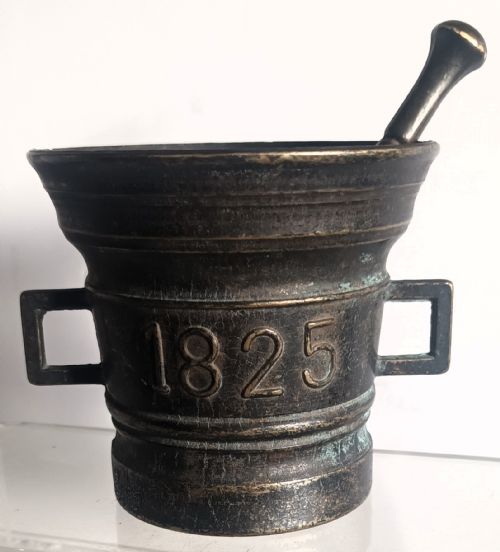
Most examples present as mortar and pestle sets cast in heavy alloys, often bearing decorative bands, ribbing or Tudor rose motifs.
How they were made
Foundries manufactured these vessels through sand casting or lost-wax techniques, pouring molten metal into moulds to achieve thick walls capable of withstanding heavy impacts. Metalworkers then turned the outer surfaces on lathes for smoothness.
The primary alloys recorded are bronze, bell metal and brass, chosen for their density, durability and resistance to wear during the grinding process. These metals acquire deep patinas over centuries of handling.
Current listings span the seventeenth, eighteenth and nineteenth centuries, featuring bronze, brass, bell metal and cast variations.
What varies in quality
Quality rests in the casting thickness, the crispness of decorative mouldings and whether the pestle survives alongside the mortar as an original pair. Thicker walls and heavy proportions indicate superior utility.
The presence of crisp cast detail, such as heraldic motifs or banded turnings, elevates an example above plain utilitarian vessels. Complete sets retain greater historical integrity.
The Metal Apothecary Grinder Glossary
- Pestle
- The club-shaped tool used for pounding and grinding inside the mortar. Its weight and handle shape dictate the efficiency of the grinding action.
- Bell Metal
- A hard alloy of copper and tin traditionally used for bells, noted for its resonant acoustic properties and strength. It forms sturdy mortar walls.
- Tudor Rose
- A traditional floral badge of England often cast as decoration on seventeenth-century metalware. It provides a useful stylistic indicator for dating.
- Patina
- The surface sheen and colour acquired by metal through age, handling and oxidation. This natural skin confirms the historic character of the alloy.
Metal Apothecary Grinder: Frequently Asked Questions
How do I date a bronze mortar?
Dating relies upon examining the cast decoration, rim profile and alloy composition against known stylistic periods. Seventeenth-century examples often display distinct mouldings and Tudor rose motifs.
Later Victorian pieces tend toward smoother brass surfaces or Gothic revival ornamentation, reflecting the revival tastes of the nineteenth century.
Are pestles usually original to the mortars?
Many surviving sets unite mortars with replacement pestles gathered over time. Collectors look closely at the wear patterns and metal match to determine if the pair belongs together.
Original matched sets display consistent alloy oxidation and proportionate scale between the striking end and the mortar interior.
What metals were used for grinders?
Foundries cast these instruments primarily in bronze, bell metal and brass. Bronze and bell metal offered superior strength and weight for heavy pharmaceutical work.
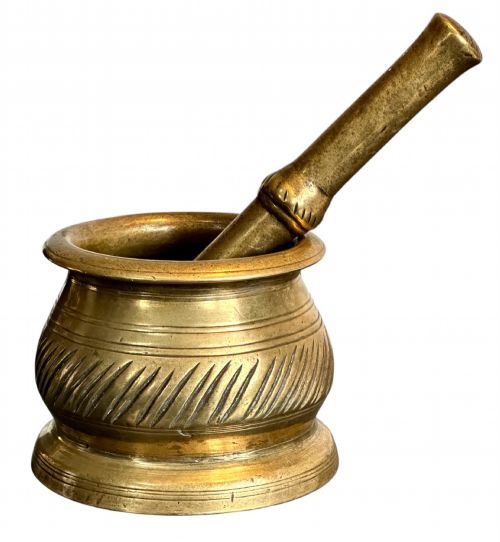
Later nineteenth-century production frequently utilised bright brass, shifting slightly from utilitarian apothecary origins toward domestic decorative display.
How do I clean an antique mortar?
Preserving the historic surface requires avoiding harsh metal polishes that strip away centuries of accumulated patina. Gentle dusting and occasional waxing maintain the stability of the alloy.
Allowing the natural dark tones of the bronze or brass to remain ensures the object retains its authentic visual depth.