


Brass Apothecary Bowl
These brass apothecary bowl pieces are heavy metal vessels used for grinding, and every serious kitchen or medicine cabinet needs one.
Brass Apothecary Bowl
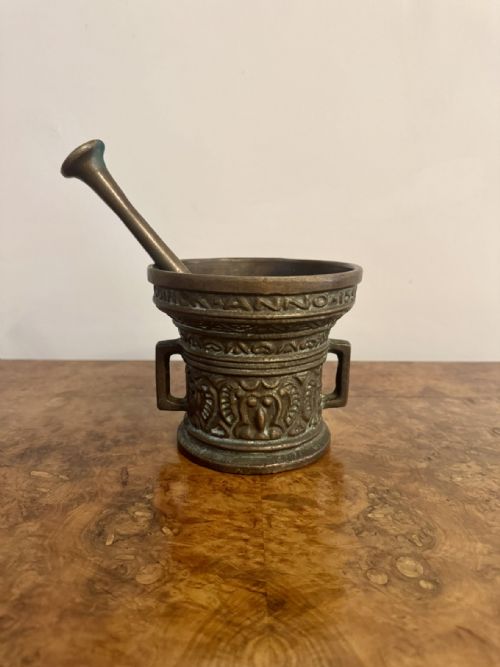
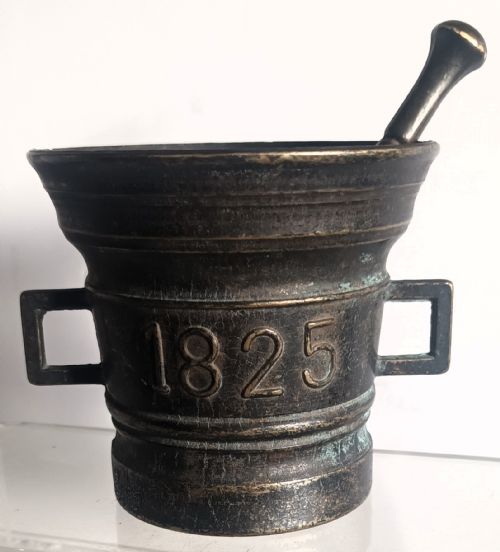
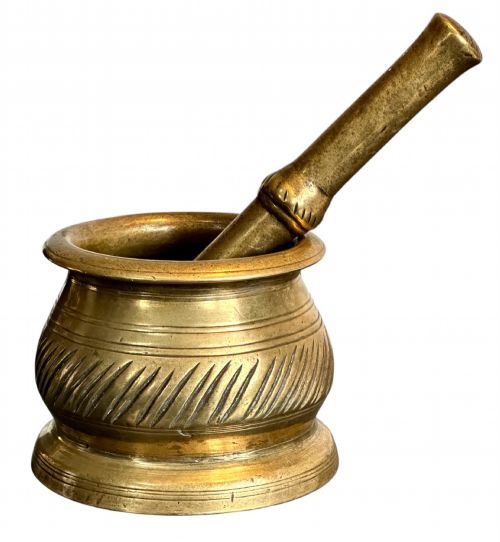
A brass apothecary bowl search uncovers robust grinding vessels, commonly listed as mortars accompanied by their matching pestles. These metalware items span several distinct historical eras, including the seventeenth century, eighteenth century, and nineteenth century.
The objects appearing on this page take the form of heavy metal vessels, often decorated with motifs such as the Tudor rose. English examples dominate the selection, alongside items reflecting Gothic revival, Renaissance revival, and Indo-Persian styles.
Buyers will encounter objects dating from around sixteen-fifty through to eighteen-sixty. The primary forms function practically as kitchen or chemist equipment, though some pieces also serve alternative decorative purposes like jardiniere displays.
Materials and construction methods
The construction of these items relies on durable copper alloys, primarily cast bronze, bell metal, and brass. Makers utilised traditional metal casting techniques to produce thick, substantial walls capable of withstanding heavy impact.
Surface treatment involves careful finishing of the cast metal, sometimes incorporating decorative relief patterns or moulded Tudor rose insignia. Pestles are shaped to match the interior contour of the mortar for efficient grinding.
Some heavy metal mortars double convincingly as miniature garden planters when retired from chemistry.
Assessing quality and character
The distinction between standard examples and superior pieces rests on the crispness of the casting and the presence of decorative enrichment. Better items display sharply defined relief ornament rather than soft or worn surface details.
Weight and metal composition dictate the tactile presence of the vessel, with heavier bronze and bell metal variants commanding greater appreciation. The preservation of the original matching pestle elevates the completeness of the set.
The Brass Apothecary Bowl Glossary
- Mortar
- A heavy bowl used with a pestle for grinding and crushing substances. These metal vessels form the primary items in this collection.
- Pestle
- A heavy tool with a rounded end used for pounding and grinding materials within a mortar. Matching pestles complete the functional set.
- Bell Metal
- A hard alloy used for making bells and mortars, consisting of copper and tin. This dense material produces a resonant tone when struck.
- Tudor Rose
- The traditional floral heraldic badge of England, frequently utilised as a decorative motif on seventeenth century metalware. This symbol appears in relief on specific mortar castings.
- Metalware
- Utilitarian and decorative objects fashioned from metals such as brass, bronze, and copper. These pieces represent centuries of metalworking traditions.
Brass Apothecary Bowl: Frequently Asked Questions
What were these bowls actually used for?
These vessels served pharmacists, chemists, and domestic cooks for crushing herbs, spices, and medical ingredients. The heavy metal construction provided a stable base for manual grinding with a pestle.
Over the centuries, they moved from working apothecaries and kitchens into domestic display spaces. Their robust design meant they survived heavy daily use without fracturing.
How do I tell seventeenth century pieces apart from later ones?
Seventeenth century examples often feature distinct cast decorations like the Tudor rose and heavier bell metal walls. Their forms tend to reflect earlier utilitarian metalworking traditions.
Later nineteenth century pieces frequently show revival styles, such as Gothic or Renaissance influences, rendered through different casting techniques. Examining the surface wear and alloy composition helps clarify the age.
Should the pestle always match the mortar?
Finding a mortar paired with its original pestle is a significant advantage for collectors. Many surviving sets were reunited later in their history due to the heavy use of both components.
When the metal patination and alloy match between both pieces, it suggests they belong together. A matched set represents a complete functional unit from the period.
How do I care for antique brass and bronze?
These metal surfaces benefit from minimal intervention to preserve their natural historic patination. Dusting with a dry cloth prevents the accumulation of grime without stripping the aged finish.
Harsh chemical polishes should be avoided because they remove the subtle dark tones developed over centuries. Allowing the metal to age naturally maintains its historical character.