


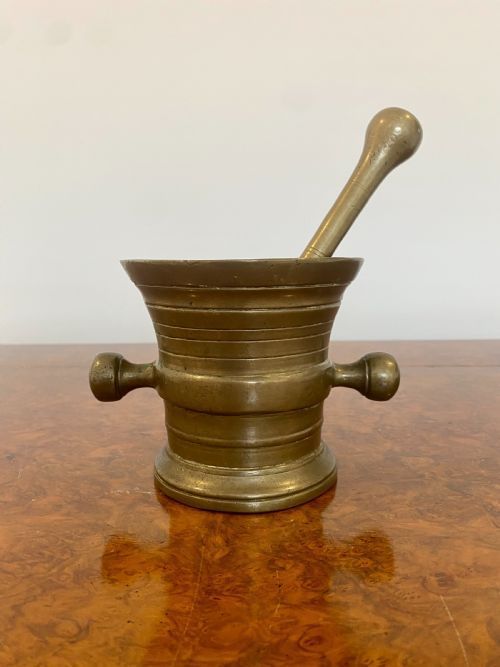
Vintage Metal Mortar Pestle
These vintage metal mortar pestle sets are heavy utilitarian instruments of kitchen and apothecary, forged to grind herbs, spices and compounds.
Vintage Metal Mortar Pestle
A vintage metal mortar pestle is a heavy grinding bowl paired with a matching club, designed for kitchen work, apothecary dispensaries and dye preparation. When you search for a vintage metal mortar pestle, you encounter substantial vessels built for mechanical force rather than simple display.
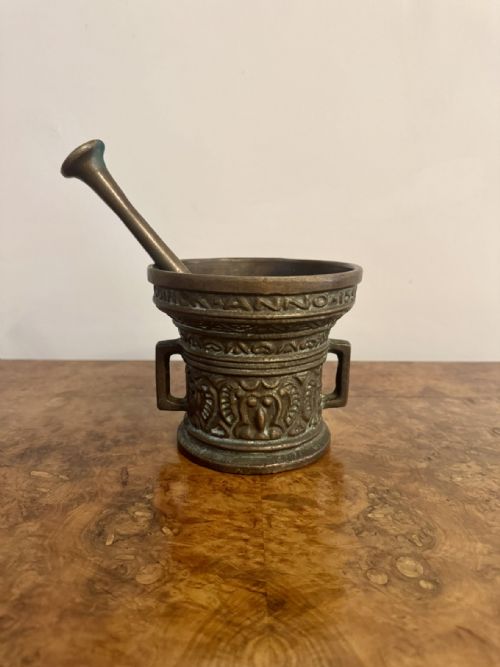
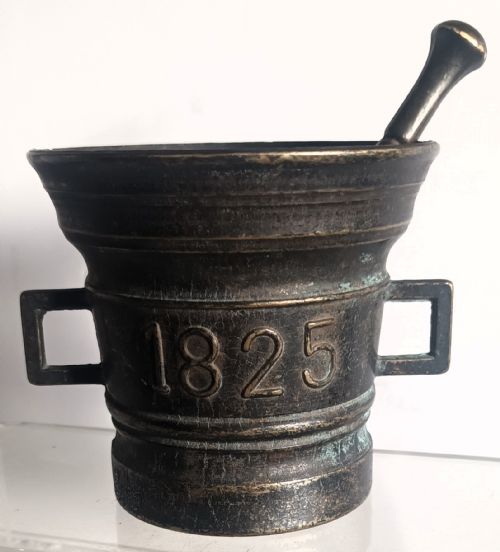
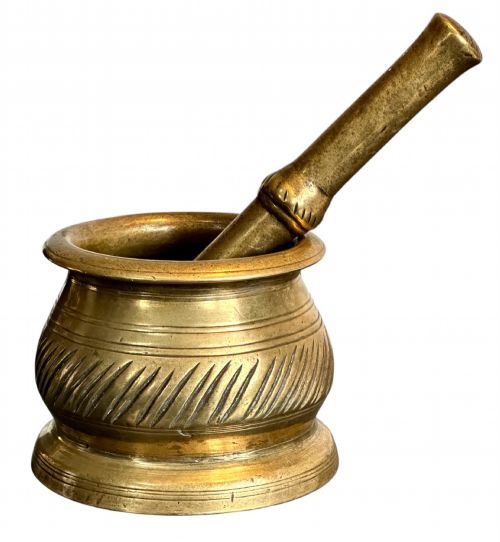
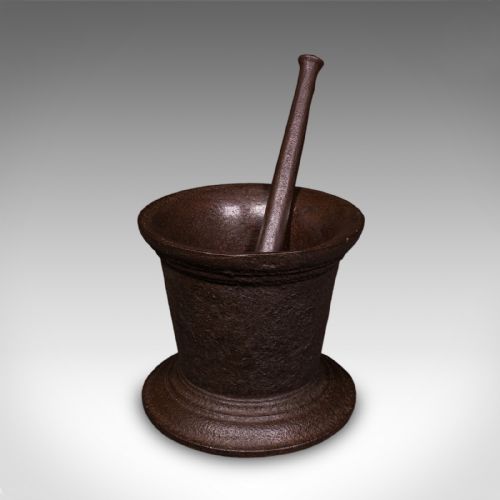
The examples gathered here span several centuries, reaching back to the seventeenth century through the Georgian and Victorian eras. Bronze and brass dominate the selections, alongside heavy cast iron and specialist dye maker pieces.
Domestic kitchen examples sit alongside apothecary and chemist tools, reflecting centuries of household and professional preparation. Collectors find everything from modest domestic grinders to monumental industrial workshop instruments.
How they were made
Foundry workers poured molten bronze, brass or cast iron into sand moulds to create the thick walls required for heavy grinding work. Metalcasters utilised bell metal and cast bronze alloys to achieve the dense, resonant structure necessary to withstand centuries of downward impact.
Makers finished the exterior surfaces by hand, sometimes turning them on lathes to smooth the profile or decorating them with gothic revival motifs, ribs and flared rims. The matching pestles were cast separately as solid metal rods, shaped with striking heads designed to fit the internal curvature of the bowl.
One industrial giant tips the scales at a staggering one hundred and forty pounds, built to grind dye for textile production.
What varies in quality
Quality rests in the proportional thickness of the metal walls and the integrity of the casting surface without excessive pitting. Heavy, thick-walled bronze examples command attention because their mass absorbs the shock of grinding without cracking.
Design sophistication separates standard kitchen workhorses from exceptional decorative pieces. Well-defined mouldings, harmonious proportions and original matching pestles elevate a piece above utilitarian duplicates.
The Vintage Metal Mortar Pestle Glossary
- Mortar
- The heavy bowl in which substances are crushed or ground with a pestle. These vessels possess thick walls and flat bases to remain stable during energetic use.
- Pestle
- The heavy, club-like handheld tool used for pounding and grinding materials inside the mortar. Matching period pestles complete the functional set.
- Bell metal
- A hard alloy of copper and tin traditionally used for casting bells, prized for its density and resonant strength in heavy mortars. It produces a distinct clear tone when struck.
- Apothecary
- A historical practitioner who prepared and sold medicines and drugs, utilising bronze and brass mortars for compounding powders and mixtures. Apothecary sets often display simple, utilitarian lines.
- Gothic revival
- An architectural and decorative style drawing inspiration from medieval design, visible on nineteenth-century mortars through pointed arches and ecclesiastical motifs.
Vintage Metal Mortar Pestle: Frequently Asked Questions
What were metal mortars used for?
These vessels served kitchens, pharmacies and dye workshops for grinding dry spices, medical herbs and raw pigments into fine powders.
The heavy metal construction provided the necessary resistance to pulverise tough botanical materials and mineral compounds through repeated manual striking.
How do I clean a bronze mortar?
Maintenance requires only dry dusting or gentle wiping with a soft cloth to preserve the accumulated surface patina built up over generations of handling.
Harsh metal polishes and chemical cleaners strip away the aged oxidation that collectors value on seventeenth and eighteenth-century metalware.
Are the pestles original to the mortars?
Matching a pestle to its mortar depends on consistent metal alloy matching, wear patterns inside the bowl and proportional sizing.
Many surviving sets retain their original paired pestle, though centuries of use meant replacements occurred frequently in busy kitchens and dispensaries.
How do I date a brass mortar?
Dating relies on observing rim profiles, exterior decorative motifs, wall thickness and casting methods recorded across different stylistic eras.
Plain flared rims often point to earlier Georgian and seventeenth-century forms, while ornate gothic revival or Victorian chemist pieces show distinct nineteenth-century manufacturing traits.