
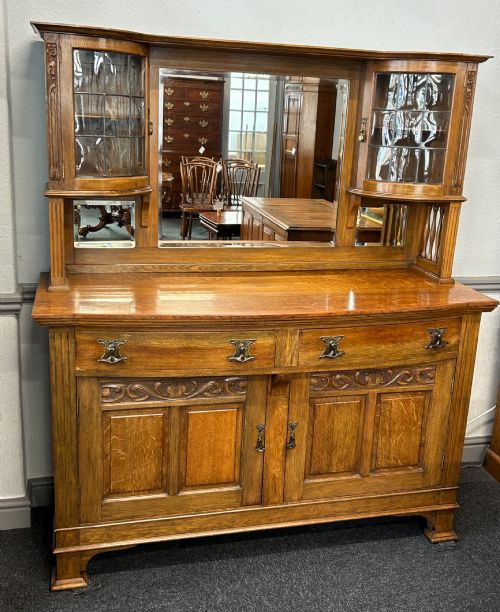
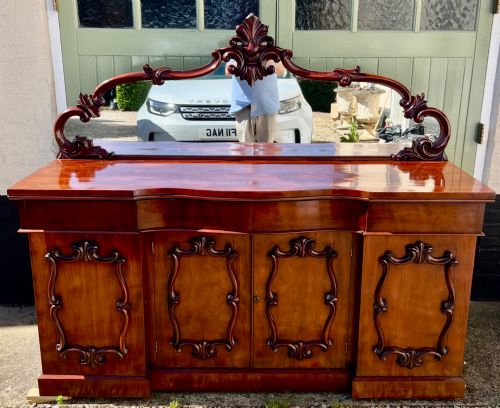
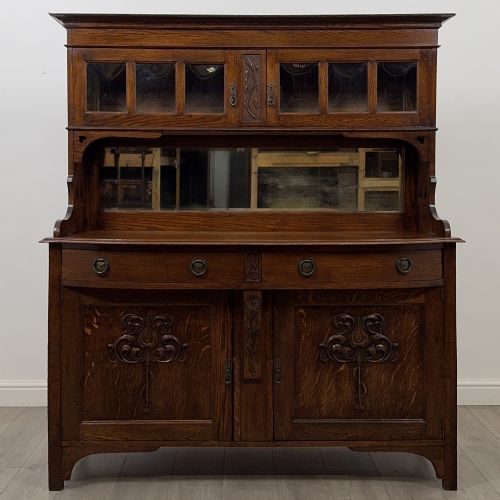

Antique Mirrored Buffet Cabinet
An antique mirrored buffet cabinet brings deep wood tones and reflecting glass together, offering functional storage with historic British character.
Antique Mirrored Buffet Cabinet
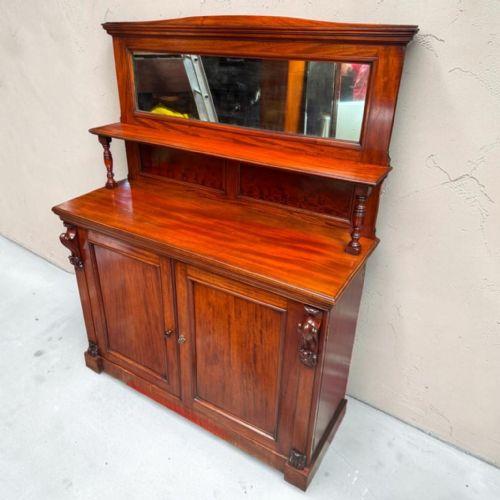
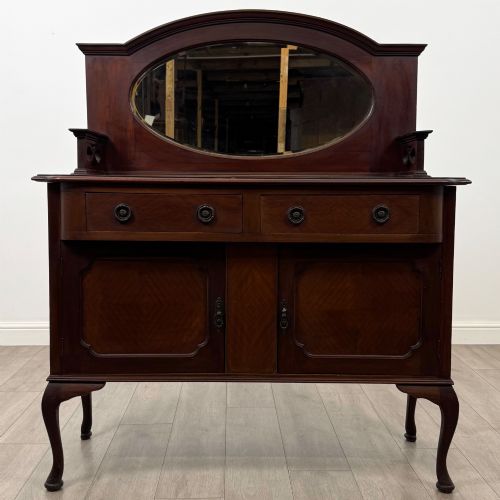
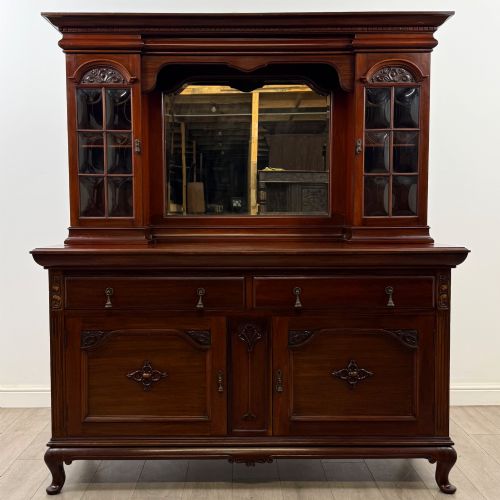
An antique mirrored buffet cabinet combines timber storage with an integrated mirror, appearing across Victorian, Edwardian, and nineteenth-century periods. These pieces serve dining rooms and drawing rooms as sideboards, credenzas, and chiffoniers.
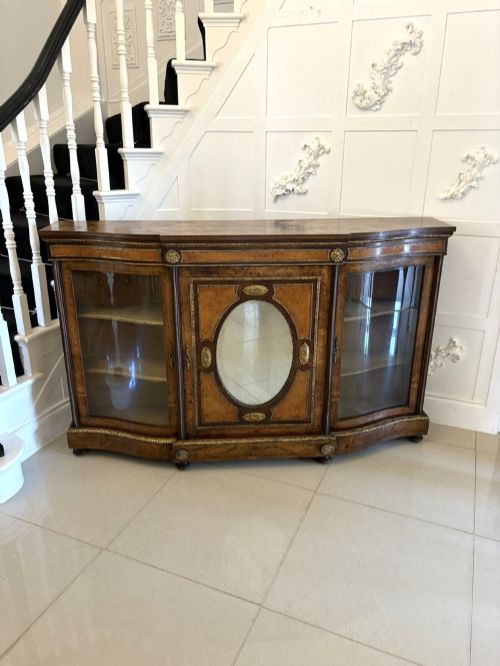
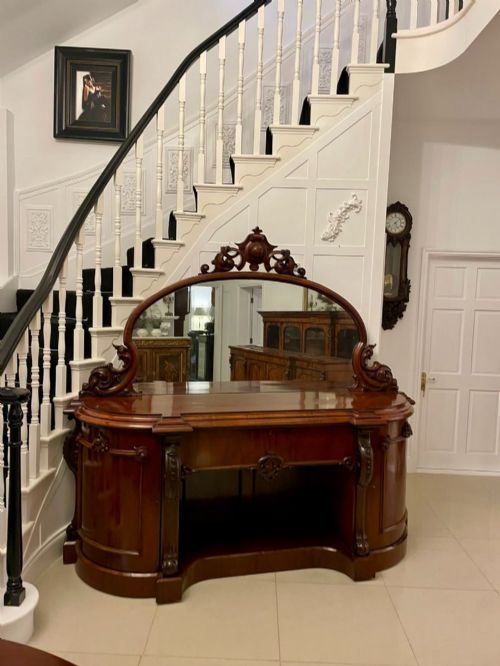
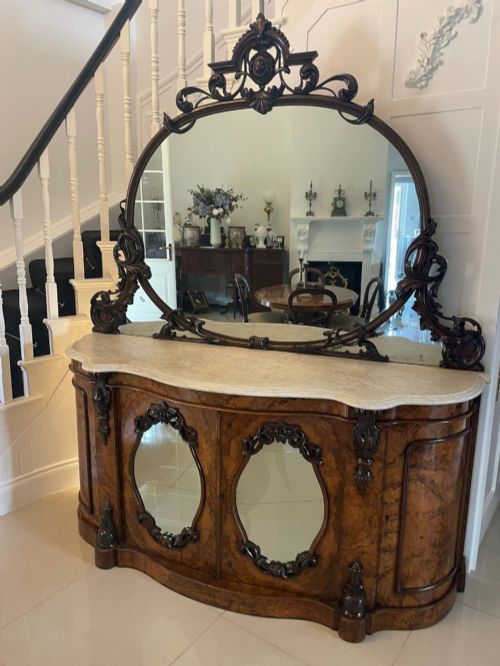
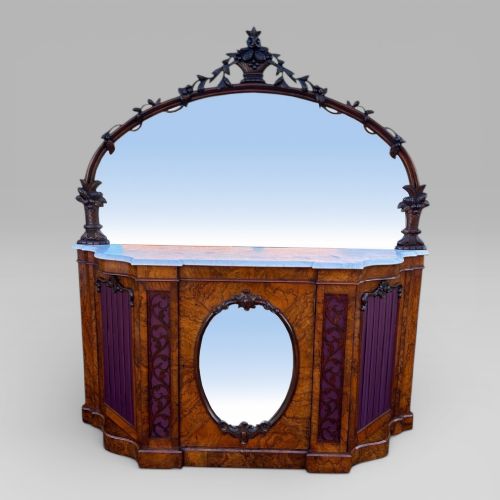
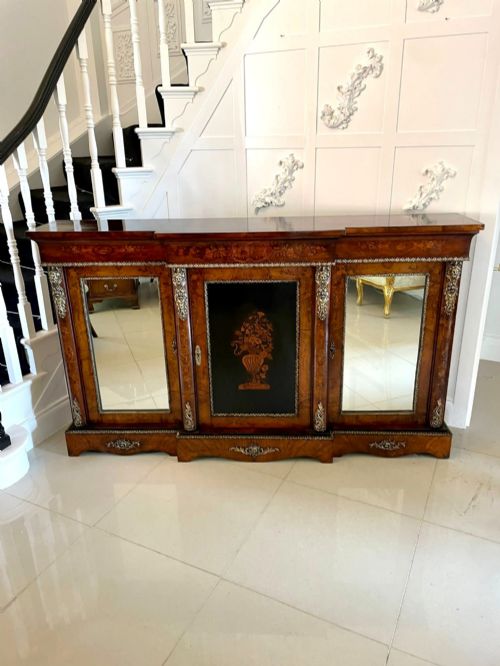
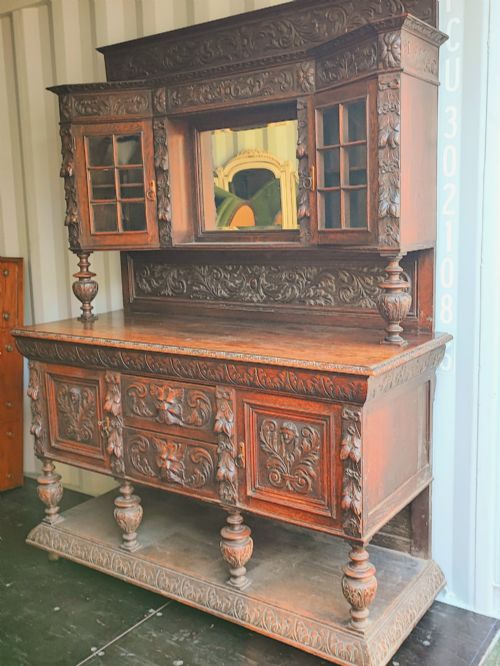
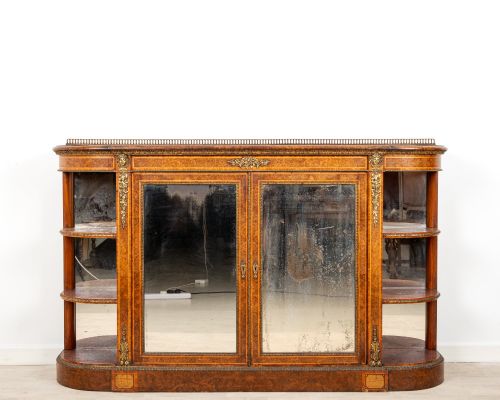
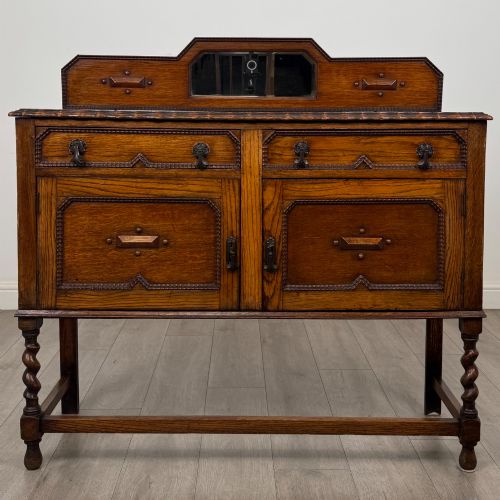
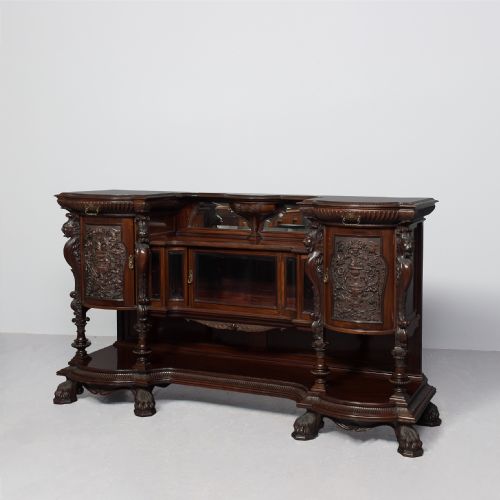
The most common examples on this page are Victorian mirror-back sideboards and credenzas constructed from burr walnut, mahogany, and oak. They display carved details, marble tops, and glazed or mirrored doors designed to reflect light in period interiors.
How they were made
Cabinetmakers constructed these pieces using solid timbers such as oak, mahogany, and rosewood, often applying burr walnut and pollard oak veneers to prominent surfaces. Brass mounts, ormolu details, and marble tops added weight and polish to the design.
Mirrored glass panels were fitted into wooden frames or cabinet doors, sometimes paired with leaded glass or marquetry inlay. Carving was executed by hand on structural elements like pediments, columns, and cupboard doors.
Listings feature pieces from the Victorian and Edwardian eras, utilising oak, mahogany, burr walnut, and rosewood with glass and marble elements.
What varies in quality
The selection of timber veneers and the depth of hand carving set apart the finer examples. Burr walnut and figured mahogany display lively grain patterns that indicate careful material selection by the maker.
Integration of the mirror back and the precision of marquetry inlay determine the refinement of the piece. Superior construction maintains structural integrity in large heavy sideboards and credenzas.
Gillows
The Antique Mirrored Buffet Cabinet Glossary
- Credenza
- A dining room or drawing room cabinet designed for storage and display. It frequently incorporates mirrored doors and ormolu mounts in Victorian iterations.
- Marquetry
- The art of applying decorative pieces of veneer to a structure to form intricate patterns. It appears frequently on burr walnut cabinet doors.
- Ormolu
- Gilded bronze applied as a decorative mount to furniture. It highlights the corners and panels of high-status Victorian credenzas.
- Chiffonier
- A low sideboard or cabinet with a raised back, popular during the nineteenth century. These pieces offer compact storage compared to large buffet sideboards.
Antique Mirrored Buffet Cabinet: Frequently Asked Questions
What is an antique mirrored buffet cabinet used for?
These cabinets serve as dining room sideboards or living room storage units. They provide surface space for serving food and enclosed cupboards for tableware.
The integrated mirror reflects natural light and displays decorative objects placed upon the top surface or marble slab.
How do I date an antique mirrored buffet cabinet?
Dating relies on identifying stylistic periods such as Victorian, Edwardian, or Regency through wood selection and decorative motifs. Victorian pieces often use burr walnut and heavy carving, while Edwardian examples favour lighter oak.
Construction methods and hardware types also offer clues to the decade of manufacture, aligning with the mid to late nineteenth century.
Where should I place a mirrored sideboard?
A mirrored sideboard suits a dining room, hallway, or large sitting room where the timber tones complement existing period furniture. Positioning it opposite a window maximises the light-reflecting properties of the glass.
Ensure the floor is level, as these large mahogany and oak pieces carry substantial weight from marble tops and glass panels.
What woods were used in these cabinets?
Cabinetmakers utilised native and exotic timbers including mahogany, oak, pollard oak, rosewood, and burr walnut. Veneers were carefully chosen for their grain pattern and visual impact.
Secondary woods such as pine or mahogany appear inside drawers and carcases, reflecting the standard manufacturing practices of the period.