

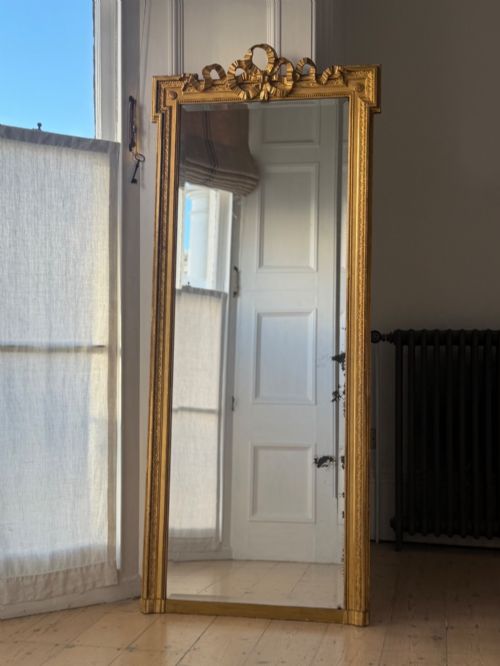
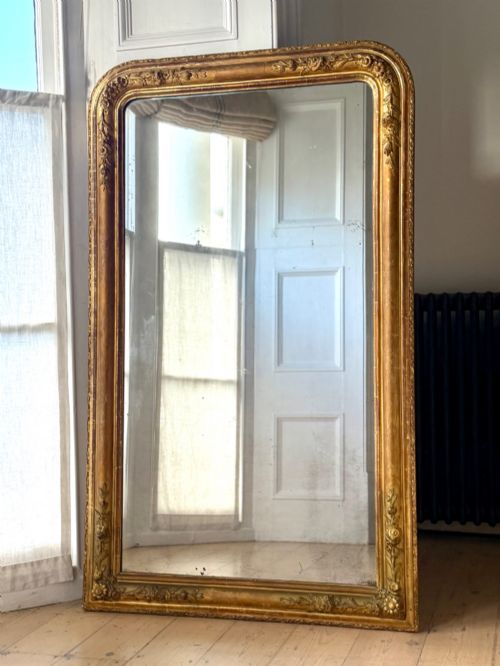
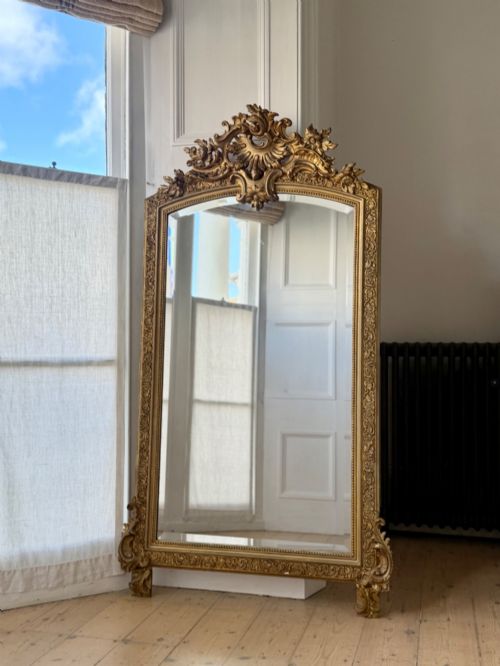
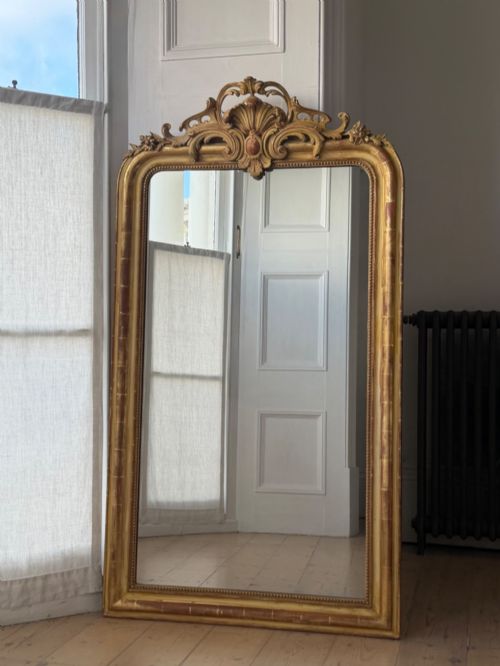
Antique Mirror with Gold Leaf
Gold leaf mirrors bring warmth and reflective depth to a room, spanning grand overmantel proportions and slender pier glasses from the eighteenth, nineteenth, and early twentieth centuries.
Antique Mirror with Gold Leaf
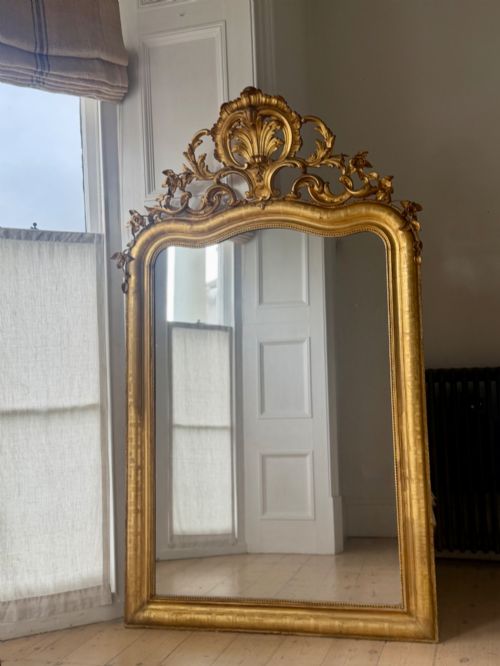
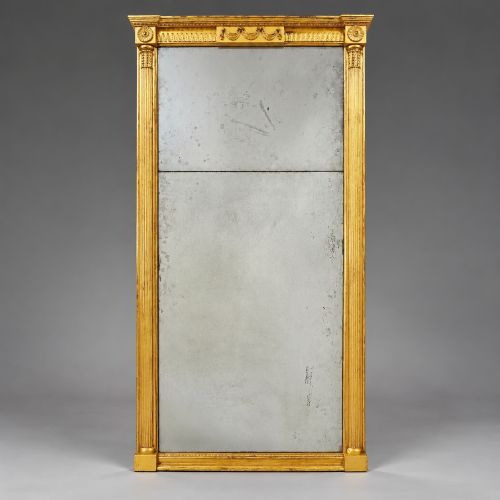
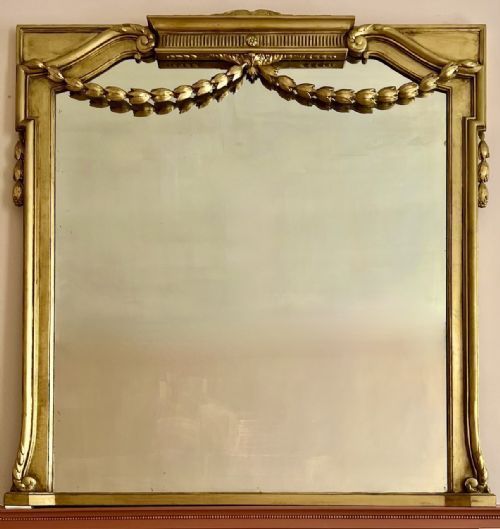
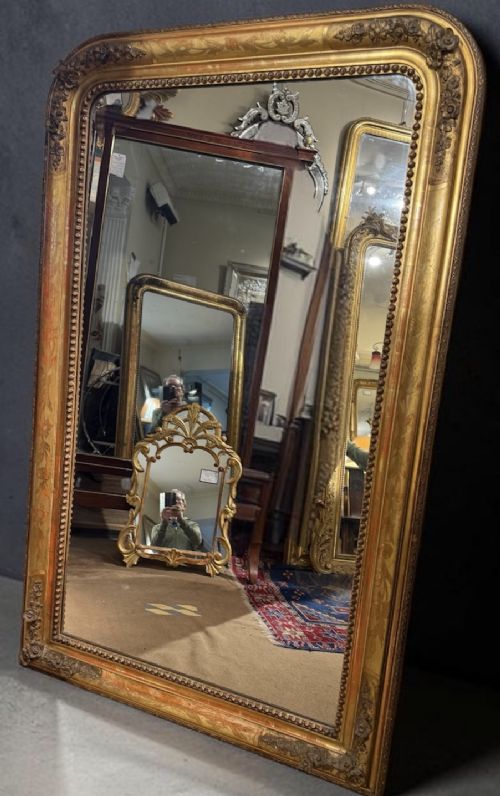
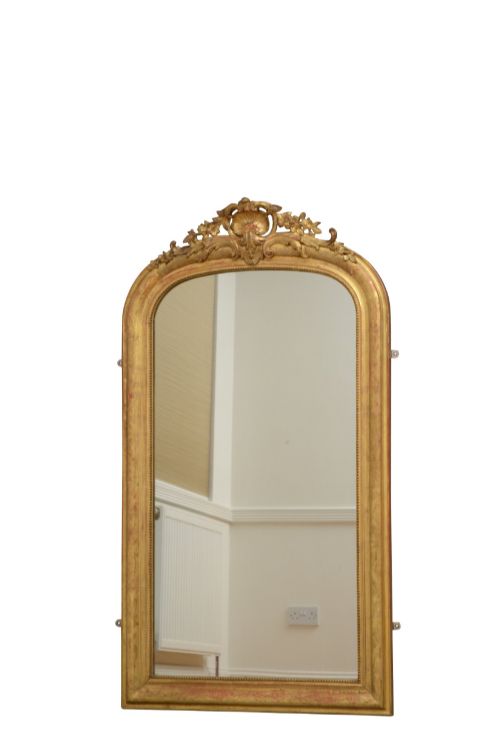
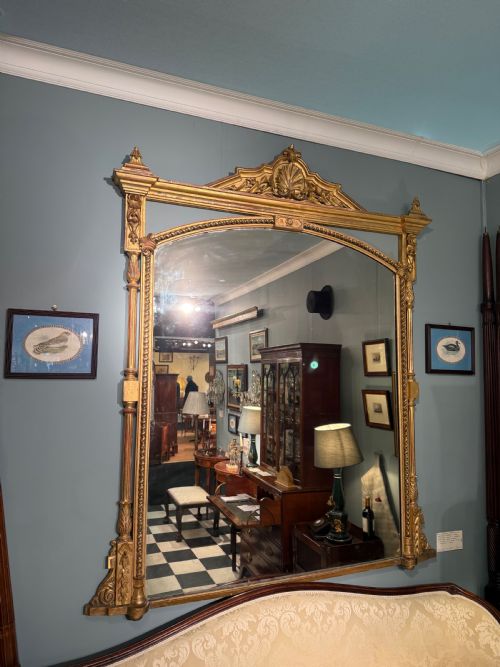
An antique mirror with gold leaf is typically encountered as a large nineteenth-century overmantel piece, a Regency pier glass, or an eighteenth-century carved giltwood frame. These pieces reflect the prevailing decorative shifts of their eras, moving from restrained Georgian lines to ornate Rococo Revival crests and neoclassical friezes. Originating predominantly from English and French workshops, they served to bounce natural light around high-ceilinged period reception rooms and formal drawing spaces.
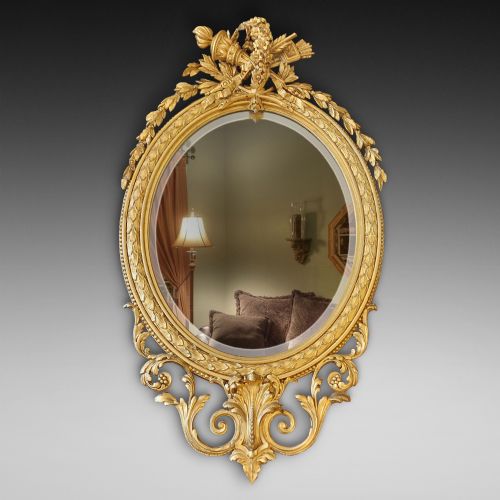
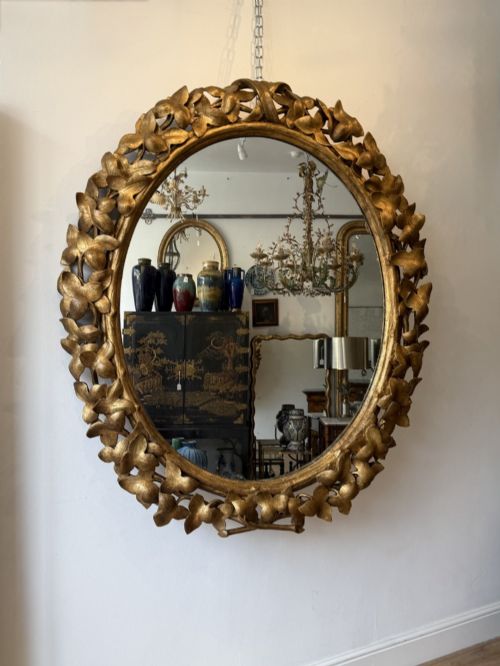
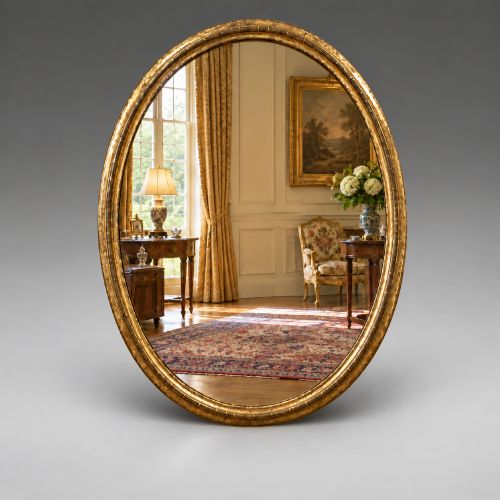
The selection ranges from tall console table and mirror sets to compact oval wall mirrors and dramatic triptych overmantels adorned with birds, squirrels, or floral motifs. Many retain their original mercury or foxed glass plates, which display the characteristic soft, mottled oxidation of age. Buyers will also find distinct regional variants, including Irish frames with elaborate carvings and Italian pieces employing dual silver and gold leaf surfaces.
Materials and construction methods
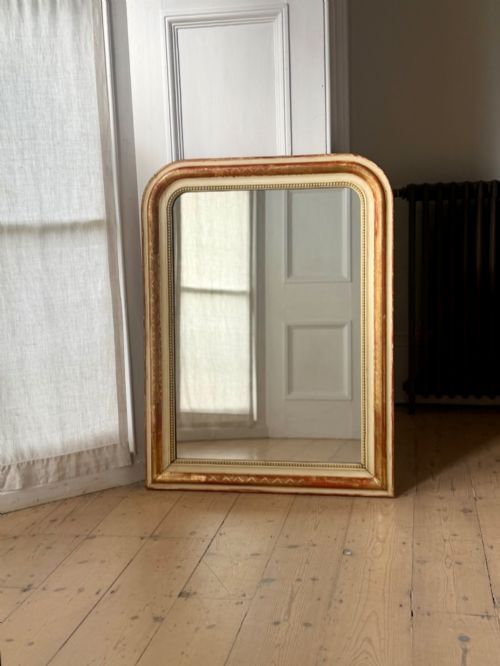
Makers constructed these frames from carved wood, typically pine or oak, or built up relief ornament using gesso and composition mouldings over a wooden carcass. Artisans applied thin sheets of gold leaf by hand over a preparatory bole, often red or yellow, which shows through as the metal surface thins with age and cleaning.
Glass production involved blowing or cylinder methods before the widespread adoption of float glass, resulting in varying plate thickness and subtle distortions. Early examples utilised mercury silvering behind the glass, while later nineteenth-century pieces incorporated bevelled edges and modern plate replacements.
Antique Mirror with Gold Leaf Retail Price Guide 2026
Typical asking prices for mirror with gold leaf among the pieces listed under this phrase on Sellingantiques today, from the lower quarter to the upper quarter. They describe what is for sale here now, not the wider market.
Several nineteenth-century overmantel frames preserve whimsical hand-carved details, including miniature squirrels and perched Ho Ho birds tucked into the foliage.
Evaluating craftsmanship and condition
Quality rests in the crispness of the hand-carved wooden ornament and the depth of the gilding, where layered gold leaf over coloured bole surpasses flat, uniform modern paint applications. Superior frames exhibit deeply undercut foliage, scrollwork, and moulded details rather than purely cast composition ornaments stuck to a plain backing.
The integrity of the mirror plate contributes significantly to the piece, with original mercury or heavily foxed glass holding greater historical value than pristine modern replacements. A well-preserved original backboard and undisturbed frame construction indicate that a piece retains its structural honesty from the period of origin.
The Antique Mirror with Gold Leaf Glossary
- Giltwood
- Wood that has been coated with gold leaf over a prepared ground layer. This material defines the primary finish of formal antique mirrors from the eighteenth and nineteenth centuries.
- Gesso
- A plaster-like mixture applied to a wooden frame and carved or moulded into decorative relief before gilding. It provides the smooth, sharp base required for intricate surface ornament.
- Pier glass
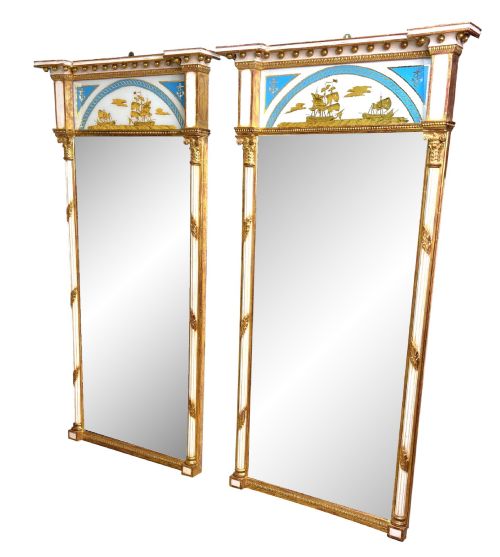
- A tall, narrow mirror specifically designed to hang on the wall space between two windows. These pieces often sat above matching console tables.
- Verre eglomise
- A technique of cold painting and gilding on the reverse side of glass. It appears in decorative panels on Regency pier glasses.
- Foxed glass
- Mirror plate displaying spots, speckles, and dark patches caused by the degradation of the reflective backing over time. This ageing process is valued for its atmospheric appearance.
- Triptych mirror
- A three-section mirror frame divided by columns or mouldings. They frequently appeared as grand overmantels during the nineteenth century.
Antique Mirror with Gold Leaf: Frequently Asked Questions
How do I hang a heavy antique overmantel mirror?
These large frames require secure fixing directly into structural wall studs or masonry using heavy-duty brackets designed to support substantial weight.
Professional installation is strongly advised to ensure the substantial load of the wooden frame and thick glass plate is safely distributed.
What is the difference between gesso and carved wood?
Carved wood involves shaping the actual frame timber into decorative motifs like acanthus leaves and scrolls, while gesso involves building up a modelled paste over a simpler wooden base to create ornament.
Examining the underside or unexposed edges often reveals the underlying timber beneath the layered gesso and gilding.
Why do some mirror plates look spotty or dark?
The spots and dark patches, known as foxing, occur when atmospheric moisture reacts with the silver or mercury backing behind the glass over many decades.
This natural ageing process creates a soft, hazy reflection that collectors seek as proof of genuine antique status.
How should I clean an antique gold leaf frame?
Dust the gilded surface very gently with a soft, dry artist's brush or an ostrich feather duster to remove loose particles without disturbing the delicate metal leaf.
Water and chemical cleaning products must be avoided entirely, as moisture strips the historical gold leaf and softens the underlying gesso.