




Antique Metal Teapot
An antique metal teapot brings substance and warmth to the hearth, offering tangible history through hammered copper, polished brass and heavy bronze.
Antique Metal Teapot
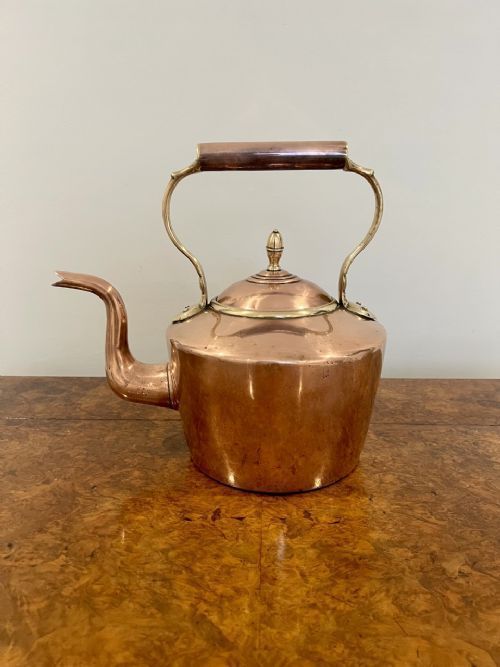
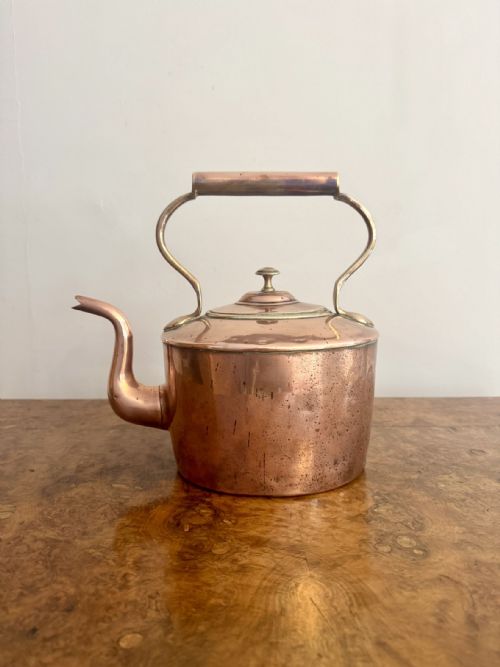
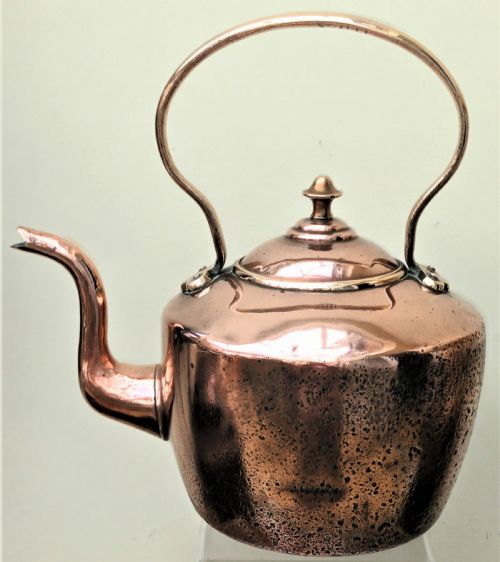
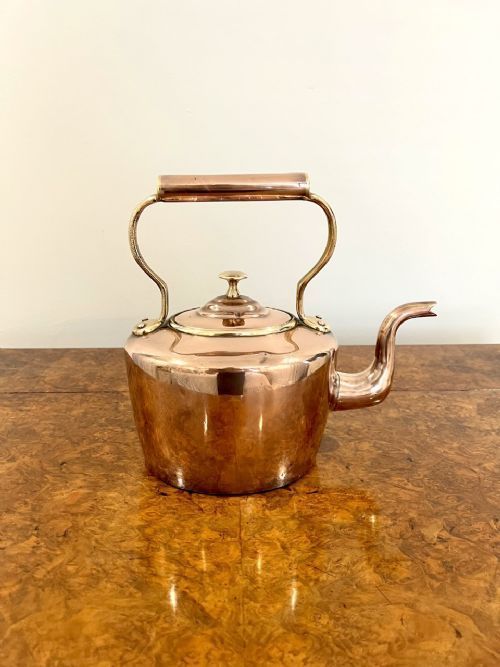
When you search for an antique metal teapot, you encounter utilitarian kitchen vessels, ceremonial ewers and formal service pieces spanning the George III era through the late Victorian period. The most common forms on this page are domestic copper kettles and tea services designed for daily use or fireside display.
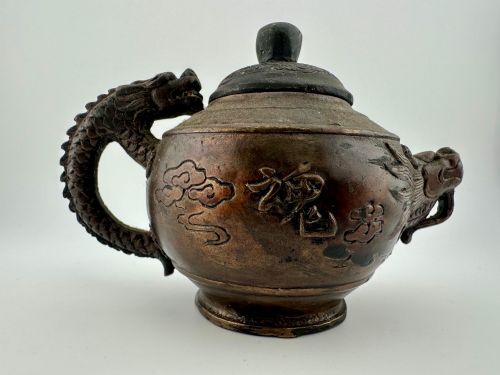
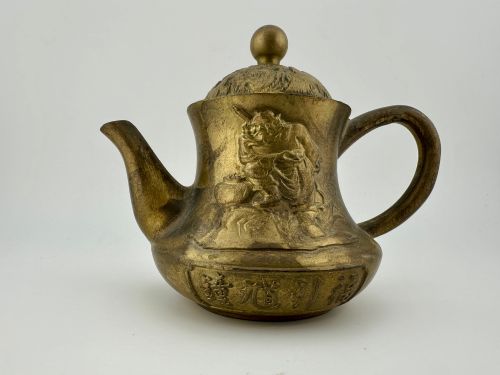
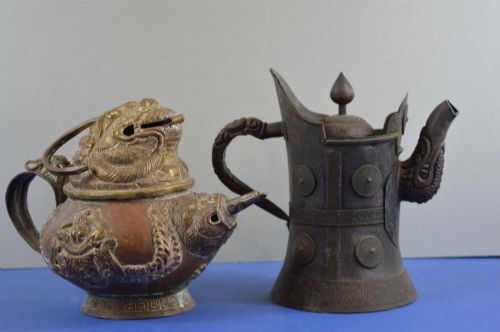
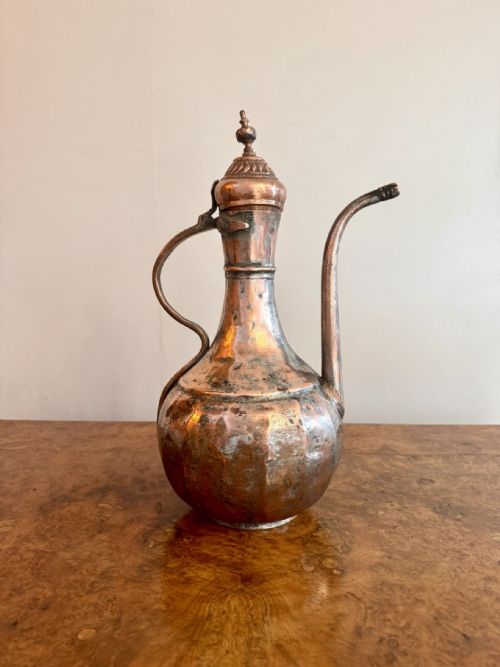
The selection ranges widely in geographical origin, including English brass and copper pieces, Chinese bronze ewers, Tibetan butter tea pots and Japanese tetsubin kettles. These objects reflect the specific social rituals and heating methods of their respective cultures.
Beyond standard teapots, the category encompasses spirit kettles mounted on stands, trivets and matching four-piece tea sets. Each variant demonstrates how metalwork adapted to changing domestic habits over the nineteenth century.
Materials and construction
Makers utilised heavy gauge copper, cast iron, brass and bronze, often combining metals to strengthen handles, spouts and lids. Riveting, hand-beating and casting determined the structural integrity of these vessels before industrial stamping became widespread.
Surfaces frequently incorporated applied decoration such as cloisonne enamel, engraved dragon motifs, or ebonised wood handles designed to insulate against heat. Old Sheffield plate and silver plating provided a bright finish for formal dining tables.
Regional origins span English domestic workshops, Tibetan monasteries, Chinese dynasties, and Japanese metalworking centres.
Markers of distinction
Superior weight and gauge of metal dictate the baseline quality of these pieces, separating sturdy hearth equipment from lighter decorative items. Thicker copper and solid bronze retain heat more effectively and endure decades of hard use.
The refinement of hand-chased ornamentation, the snugness of lid fits and the integrity of internal seams distinguish master metalwork from standard workshop production. Maker marks, such as those from documented firms, elevate the historical interest of a piece.
Kibundo·Walker and Hall·William Soutter and Sons
The Antique Metal Teapot Glossary
- Tetsubin
- A Japanese cast iron kettle used for boiling water, known for its textured surface and heat retention.
- Spirit kettle
- A water vessel suspended above a small burner or spirit lamp, used to keep water hot at the tea table.
- Old Sheffield plate
- A composite material made by fusing a thin sheet of silver to a thicker copper base.
- Ewer
- A large jug with a shaped spout, often used in ceremonial contexts rather than daily tea service.
- Cloisonne
- Enamelling technique where thin metal wires form cellular compartments filled with coloured paste.
Antique Metal Teapot: Frequently Asked Questions
How do I clean an antique copper kettle?
Remove dust with a soft cloth and mild soapy water, avoiding harsh modern abrasives that strip the historic surface.
Allow the natural patina to remain, as collectors value the aged tone built up over generations of care.
Were these metal teapots used on open fires?
Many George III and Victorian copper kettles sat directly on coal fires or trivets to boil water for tea.
Heavier cast iron tetsubins were designed specifically for hearth hooks or charcoal braziers in traditional settings.
How do I date an antique metal teapot?
Examine the construction methods, such as hand-beaten seams, riveted handles and mounting styles, which changed significantly between the Georgian and Edwardian eras.
Maker marks, registration stamps and distinct regional decorative motifs also help narrow down the period of production.
What is the difference between a kettle and a teapot?
A kettle is built strictly for boiling water over a heat source, featuring a sturdy fixed handle and heavy gauge walls.
A teapot is designed solely for steeping and serving brewed tea, often forming part of a matching tea set.