


Antique Metal Tea Kettle
An antique metal tea kettle brings weight, warmth, and genuine history to a room.
Antique Metal Tea Kettle
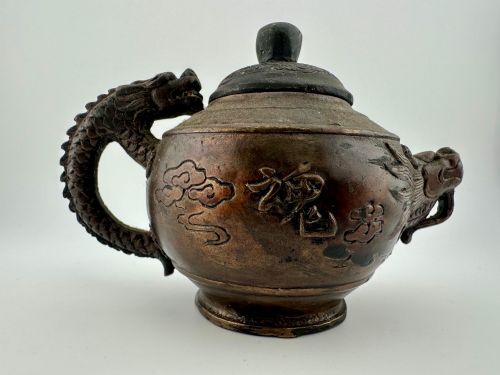
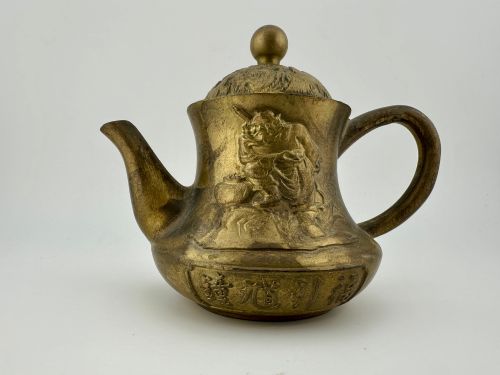
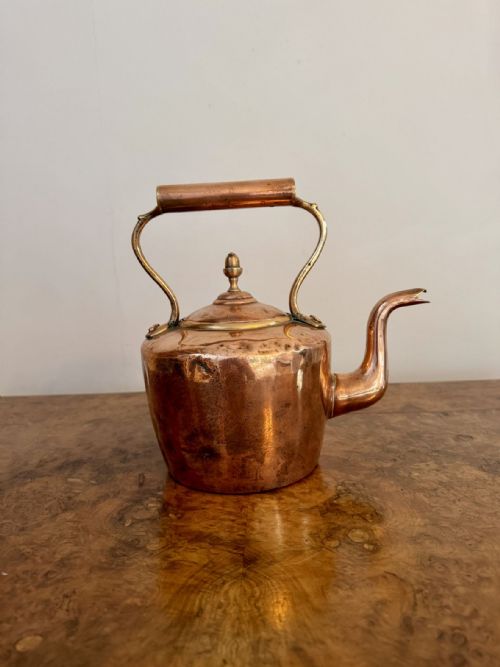
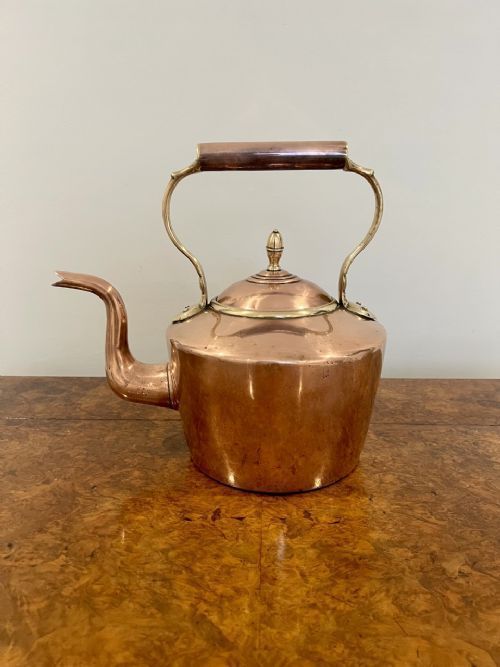
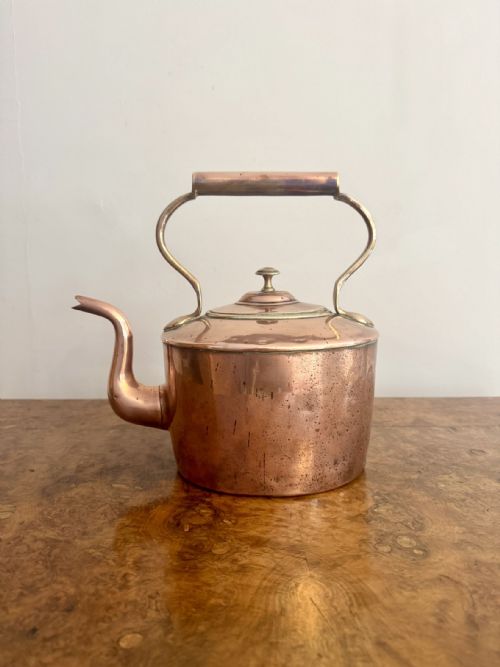
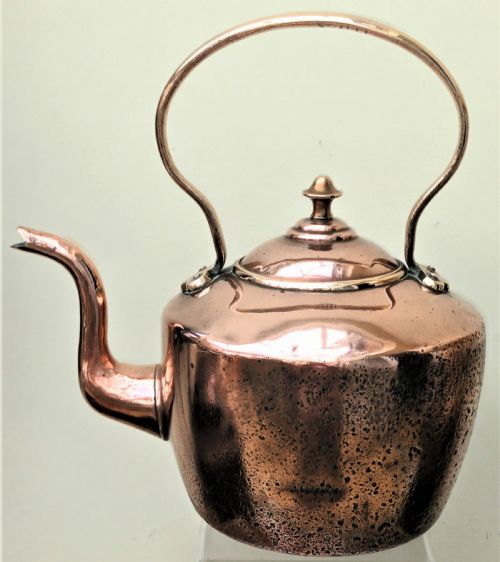
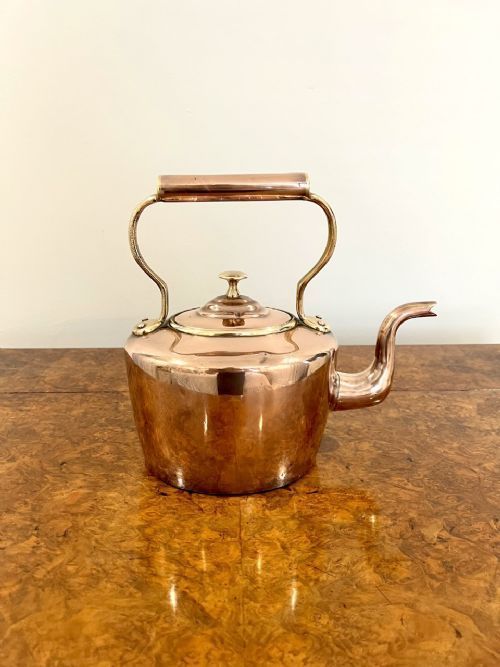
An antique metal tea kettle is a utilitarian vessel designed for heating water, appearing here primarily in copper, brass, and bronze forms. These pieces span periods from the Georgian and Regency eras through the Victorian and Edwardian decades, alongside Japanese iron and cloisonne examples.
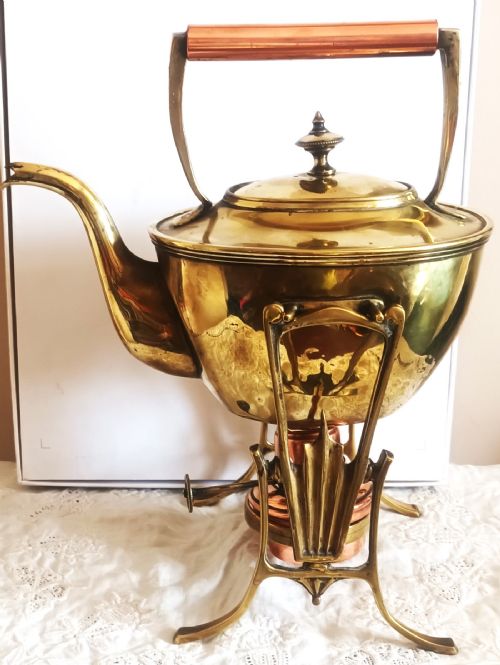
Buyers will most frequently encounter George III copper kettles and Victorian spirit kettles fitted with stands and burners. Larger samovars and tea urns with taps also populate the selection, offering substantial display presence for a hearth or sideboard.
The assortment reaches across domestic English metalwork to include continental European and East Asian pieces, such as Edo period sake kettles and Meiji period tetsubin. Each object reflects the tea-drinking rituals and metalworking traditions of its specific origin and decade.
How they were made
Coppersmiths hammered sheet copper and brass into shape, frequently joining seams with dovetailing and brazing to withstand boiling water over an open fire. Handles incorporate turned wood, bone, or ebonised wood to insulate the user's hand from conductive metal.
Cast iron and bronze components provided durability for heavy bases and stands, whilst silver plating added formal elegance to Sheffield plate tea urns. Details like brass spigots, swing handles, and cloisonne lids demonstrate specialised foundry and decorative techniques.
Some kettles arrived with tiny matching spoons tucked into their stands for the spirit burner.
What varies in quality
The calibre of a piece rests upon the weight of the metal, the crispness of the hand-beated contours, and the integrity of the original joints and handles. Heavier gauge copper and well-balanced stands signify superior workshop production.
Refined craftsmanship appears in the detailing of turned insulators, the snug fit of fitted lids, and the decorative execution of associated spirit burners and taps. Pieces retaining their matching stands and original surface patination command greater appreciation.
William Soutter And Sons·Walker And Hall·Kibundo
The Antique Metal Tea Kettle Glossary
- Spirit kettle
- A portable metal kettle mounted on a metal stand above a small spirit burner, used for heating water at the tea table.
- Samovar
- A large heated metal urn traditionally used to boil and heat water for tea, typically featuring a central internal chimney and a spigot tap.
- Tetsubin
- A traditional Japanese cast-iron kettle designed for boiling water, prized for its textured exterior and durability.
- Old Sheffield Plate
- A composite material made by fusing a thin sheet of silver to a thicker copper base, common in early nineteenth-century tea wares.
- Ebonised wood
- Timber treated with a dark finish to imitate expensive ebony, frequently utilised for kettle handles and knobs.
Antique Metal Tea Kettle: Frequently Asked Questions
Can I still use an antique metal tea kettle?
Most antique kettles are best appreciated as decorative objects or fireplace ornaments rather than daily kitchen appliances.
Over the centuries, internal linings can wear thin or solder joints may weaken with modern heat sources.
What is a spirit kettle?
A spirit kettle is a vessel suspended over a small burner fuelled by methylated spirit or alcohol.
This allowed Victorians to keep water hot at the tea table without returning to the kitchen stove.
How do I clean an old copper kettle?
Gentle washing with warm soapy water preserves the aged surface and natural dark patination preferred by collectors.
Aggressive metal polishes strip away centuries of character and reduce the historic value of the piece.
How do I date a Georgian copper kettle?
Georgian kettles typically display hand-hammered body construction with dovetailed seams and heavy cast-brass mountings.
They lack the machine-rolled uniformity found in later Victorian and Edwardian production.