






Antique Metal Relief Portrait
An antique metal relief portrait captures likeness in cast and hammered bronze, copper, and brass, offering a tangible link to historical figures and notable personalities.
Antique Metal Relief Portrait
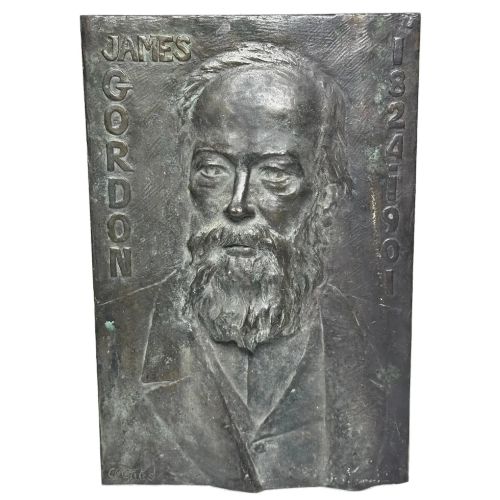
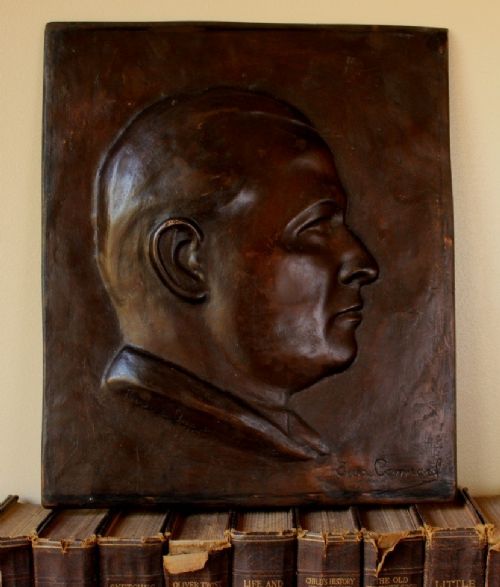
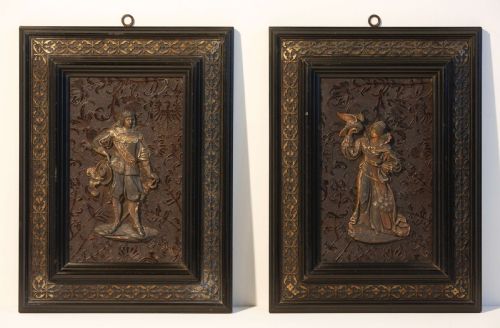
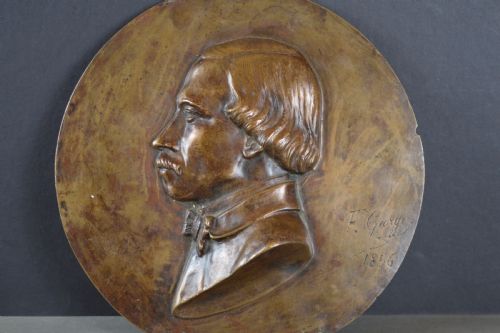
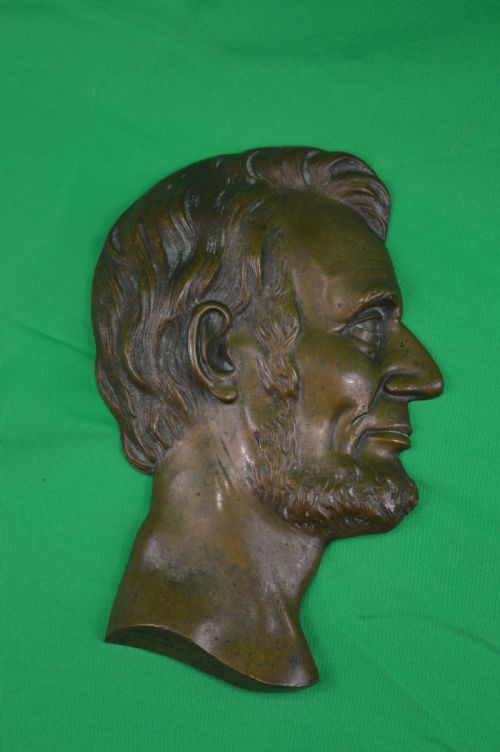
An antique metal relief portrait typically takes the form of a wall plaque, roundel, or commemorative plate designed to hang in a domestic interior or study. These pieces present the likenesses of historical figures, literary icons, and monarchs rendered in three dimensions against a flat ground.
The selection on this page draws from the nineteenth century, the Edwardian era, and the art deco period, alongside earlier eighteenth-century examples. Common formats include circular brass frames, mahogany surrounds, and heavy cast metal panels depicting subjects from Abraham Lincoln to Queen Marie de Médicis.
Distinctions in standard and execution
The integration of the portrait with its housing, such as a matched mahogany frame or a heavy brass mount, contributes to the overall cohesion of the piece. Attribution to a named sculptor or identifiable foundry elevates the standing of an individual wall plaque.
Prime Minister Benjamin Disraeli rubs shoulders with Shakespeare in this cast metal gathering of historic heavyweights.
Eugene Canneel·Gustav Grohe·J Lavergne·Mainfroy
The Antique Metal Relief Portrait Glossary
- Relief plaque
- A flat panel bearing a design that projects from the background. These pieces are intended for wall mounting.
- Roundel
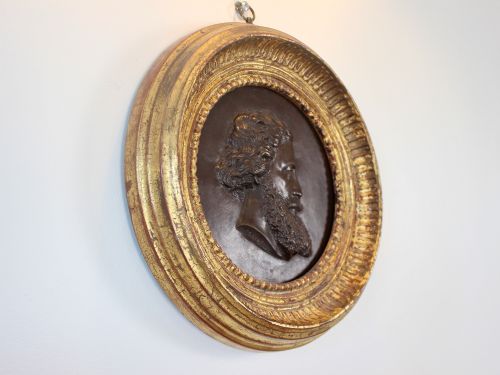
- A circular panel or plaque used in architecture and decorative arts. Many portrait reliefs take this round format.
- Gilt bronze
- Metal cast and treated with a layer of gold or gold-coloured wash. This finish adds lustre and prevents tarnishing.
- Wall charger
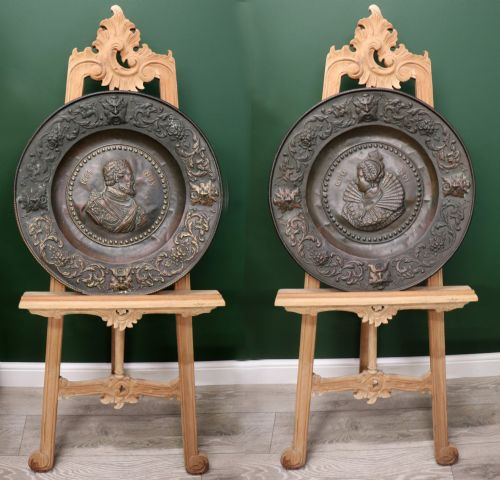
- A large decorative plate designed to hang on a wall rather than sit on a table. Several examples depict historical monarchs.
Antique Metal Relief Portrait: Frequently Asked Questions
How do I hang a heavy metal plaque?
Heavy bronze and iron wall plaques require secure fixings anchored directly into wall studs or solid masonry. Use appropriate wall plugs and screws rated for the total weight of the metal and its frame.
Ensure the hanging wire or integrated loop at the back is structurally sound before mounting the piece at eye level.
How should I clean antique bronze portraits?
Dust the surface gently with a soft, dry brush to remove accumulated dirt from the recesses of the relief work. Avoid commercial metal polishes or abrasive cloths that can strip historical patina and original finishes.
Consult a professional conservator if the metal requires deeper cleaning or stabilization against corrosion.
What periods do these portraits cover?
The pieces span from the eighteenth century through the Victorian and Edwardian eras into the nineteen-twenties. Styles range from classical and baroque revivals to art deco designs.
Subjects include nineteenth-century statesmen, literary figures, and royal personages from British and continental European history.
Are these portraits signed by artists?
Certain examples bear the signature of the sculptor or the stamp of the foundry cast into the metal surface. Signatures provide a direct link to the maker and help establish attribution.
Unsigned pieces remain common, often representing the work of English and continental schools from the nineteenth century.