




Antique Menu Clips
Antique menu clips are charming table accessories that hold dinner menus or place cards, bringing personality and historical detail to a dining setting.
Antique Menu Clips
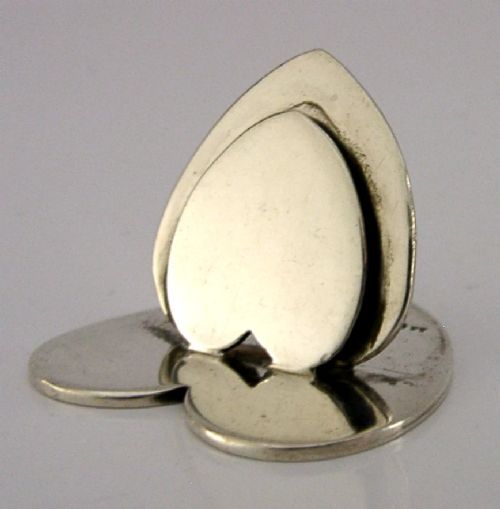
When you search for antique menu clips, you are looking at small decorative tableware accessories designed to hold dinner menus and place cards upright on a dining table. The pieces found here span from the 19th century through the Edwardian period, 1910, 1920, 1930, and up to 1950.
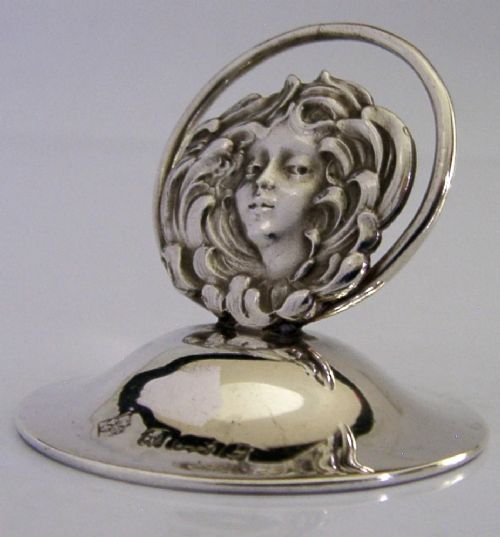
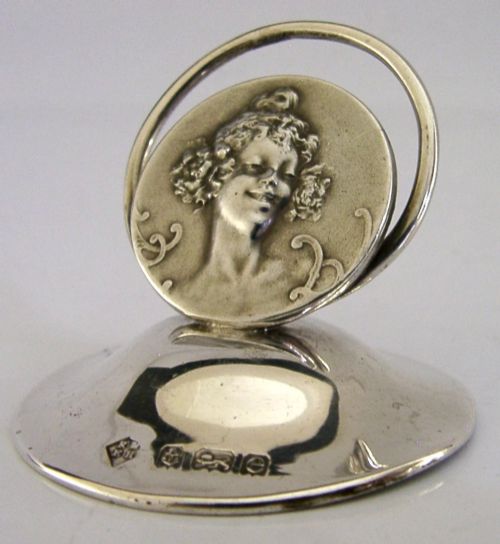
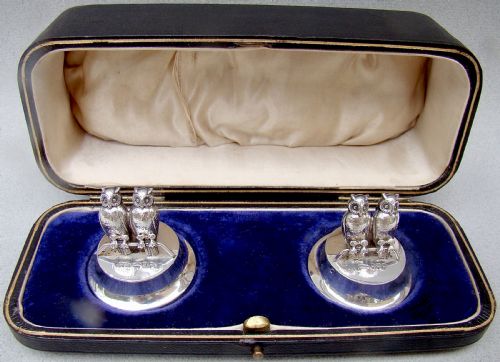
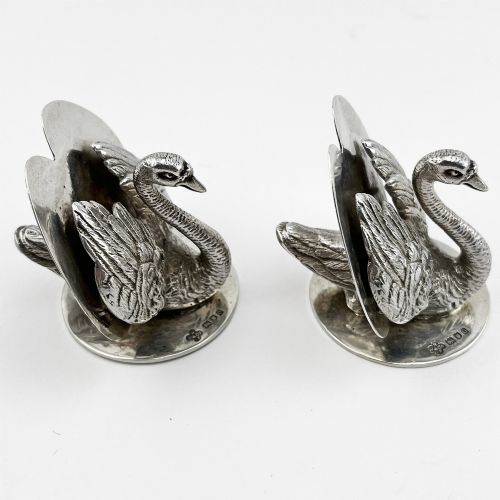
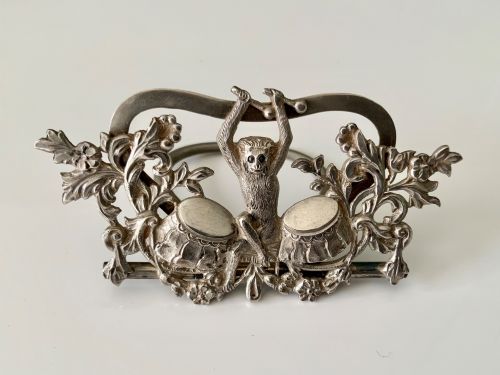
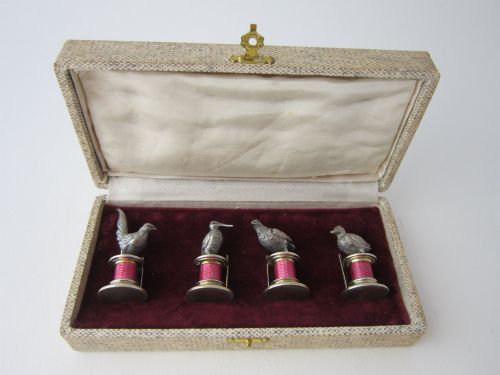
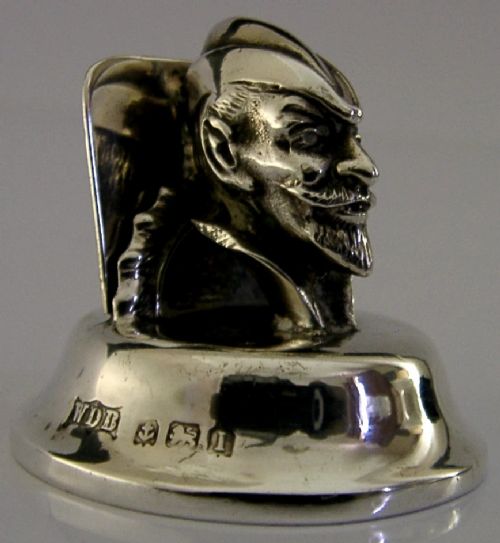
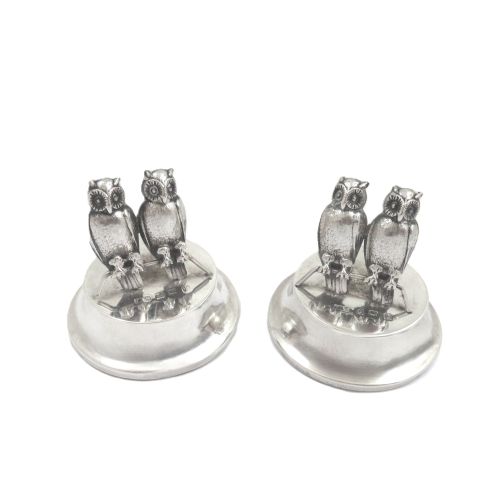
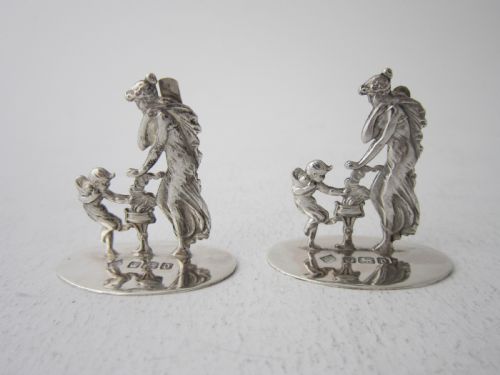
You will most commonly meet Edwardian silver examples, often cast as animals, birds, or figurative subjects like owls, swans, and characters from Alice in Wonderland. Makers and retailers such as Levi & Salaman, Sampson Mordan, Asprey, and Grey & Co produced these tabletop items during periods spanning Art Nouveau, Art Deco, Victorian, and Mid-Century Modern styles.
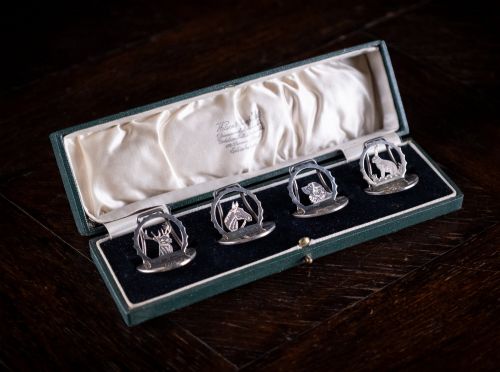
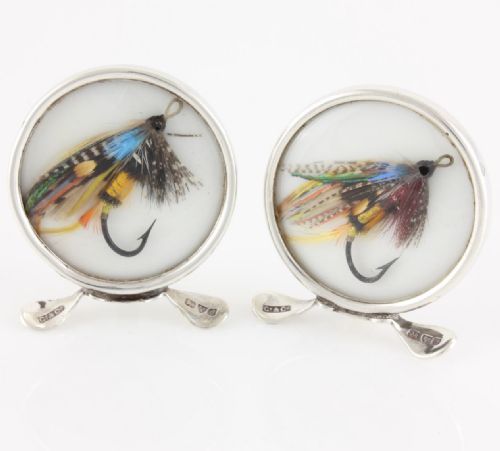
The selection ranges from single holders to cased pairs and larger sets intended for formal dining tables or military messes. Alongside standard silver clips, variations incorporate materials such as enamel, leather, silk, velvet, glass, and feathers.
How they were made
Makers utilised sterling silver and silver plating as the primary structural material for these table accessories, shaping them through casting, stamping, and detailed hand-chasing. Silversmiths often mounted the figurative or abstract clips onto weighted bases to ensure the holder remained stable when supporting card menus.
Enamel work frequently appears to add colour and detail to subjects like flags, military insignia, and decorative motifs on the silver surface. Other variants integrate textiles including silk, velvet, and leather within backing panels or display cases, alongside glass components and feather elements.
Listings feature items spanning the Edwardian period, 1900, 1910, 1920, 1930, 1950, and the 19th century, incorporating sterling silver, enamel, leather, and feathers.
What varies in quality
Completeness also dictates standing, as matched pairs or boxed sets retain higher uniformity and original presentation than assembled groups. The presence of clear hallmarks indicating maker marks, assay offices, and date letters confirms the provenance and standard of the silver used.
Levi & Salaman·A. Wilcox·Sampson Mordan·Grey & Co·Asprey
The Antique Menu Clips Glossary
- Assay office
- An official body that tested and marked the purity of precious metals. British offices include Chester, Birmingham, and London.
- Sterling silver
- An alloy of silver containing 92.5 percent by mass of silver and 7.5 percent by mass of other metals, usually copper.
- Place card holder
- A miniature table accessory designed specifically to display a guest's name card rather than a dinner menu.
- Hallmark
- A series of official marks stamped on items made of precious metals, showing the maker, standard, assay office, and date letter.
Antique Menu Clips: Frequently Asked Questions
How were antique menu clips used?
These clips sat on dining tables during formal meals to hold printed menus or cards bearing guests' names. They helped diners see the upcoming courses and guided seating arrangements.
Hosts utilised matched sets or themed groups to complement the table decoration and the menu subject matter.
How do I care for silver menu clips?
Silver pieces benefit from regular, gentle dusting with a soft microfibre cloth to prevent tarnish accumulation. Avoid harsh chemical dips that can strip away the dark oxidation highlighting chased details.
Store them in dry conditions, and if cased, keep them protected within their original presentation boxes.
What periods do these clips come from?
The pieces seen here range from the 19th century through the Edwardian era, 1910, 1920, 1930, and into the mid-20th century. Edwardian and 1930s examples form a large portion of the available designs.
Styles shift from ornate Art Nouveau and Victorian forms to geometric Art Deco and military themed designs.
Can I use them for modern dinner parties?
They function just as effectively today for holding place cards or small menus at dinner parties as they did over a century ago. Their small scale makes them practical additions to modern table settings.
Figurative designs also serve as interesting conversation pieces when placed around the dining room.