




Table Name Card Holders
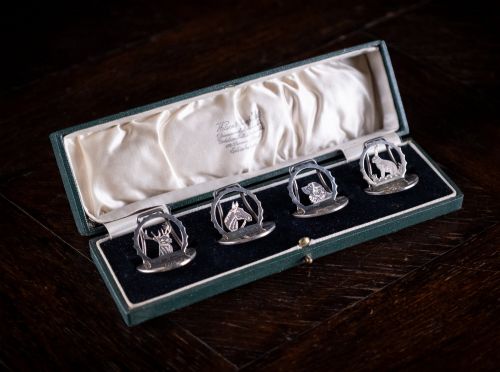
Table name card holders organise dining tables, bringing miniature sculpture and bright silver to formal meals.
Table Name Card Holders
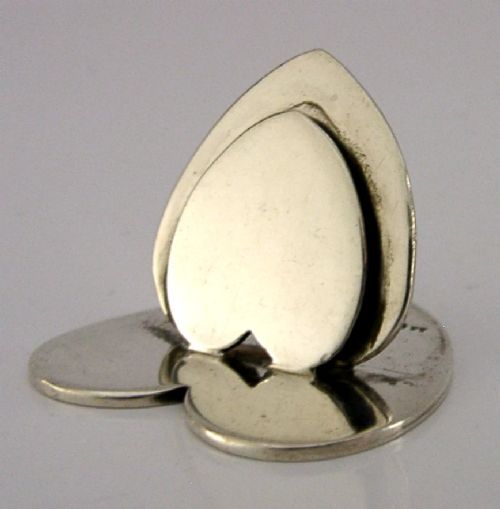
Table name card holders serve the practical purpose of identifying guest seating at dinner parties while acting as miniature decorative objects. When you search for table name card holders, you encounter small stands designed to grip paper cards, appearing alongside menu holders.
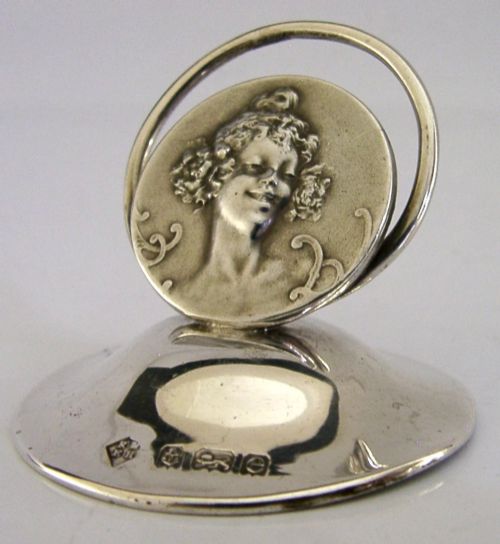
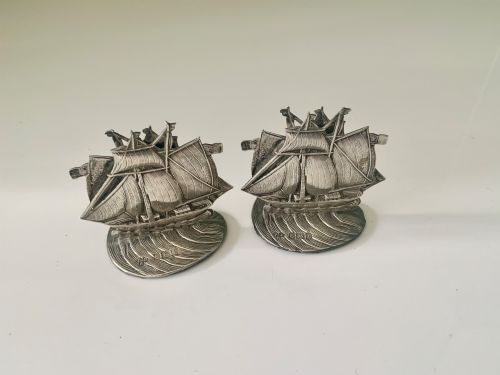
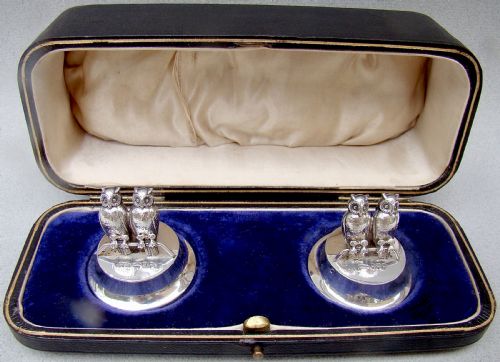
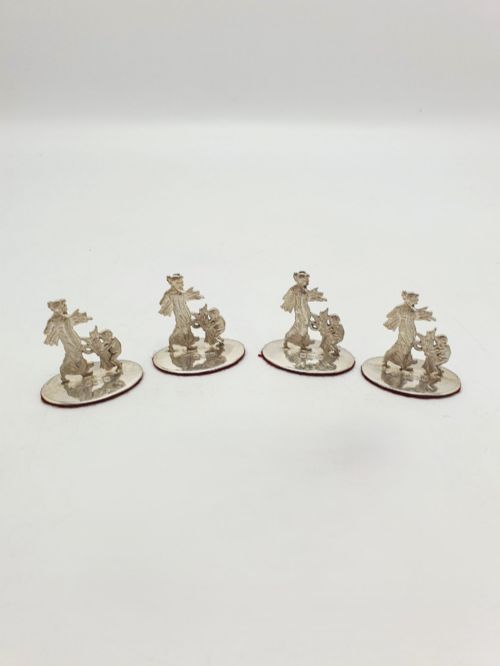
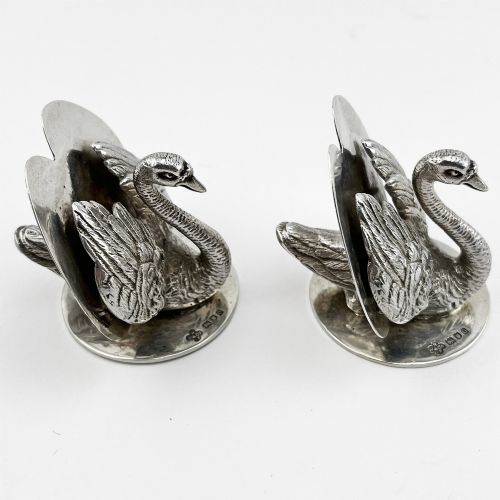
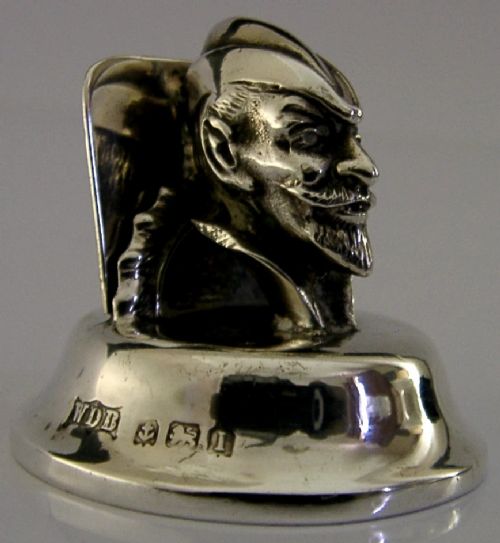
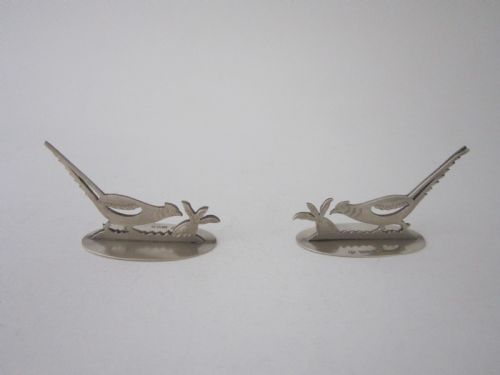
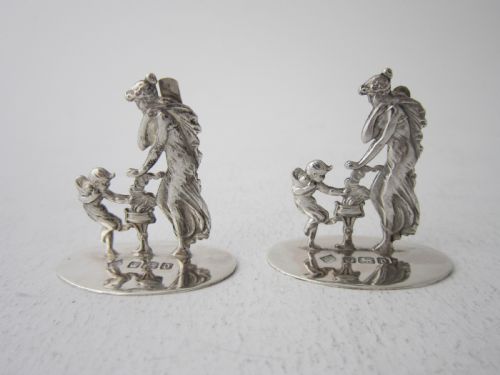
The pieces on this page span the Edwardian period, 1900, 1910, 1920, 1930, 1950, and the nineteenth century. You are most likely to meet sterling silver examples shaped as animals, birds, ships, and figural subjects.
Styles range from Victorian and Edwardian to Art Nouveau, Art Deco, George V, George VI, and British Military. Anglo-Indian design also appears among the silver work.
Materials and Techniques
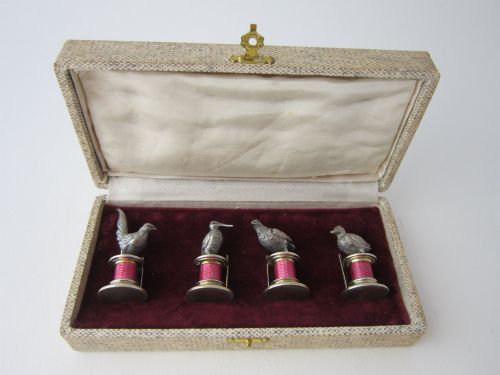
Silversmiths constructed the primary body of these items using sterling silver and silver plate. Many pieces incorporate enamel, guilloche enamel, velvet, silk, and leather components.
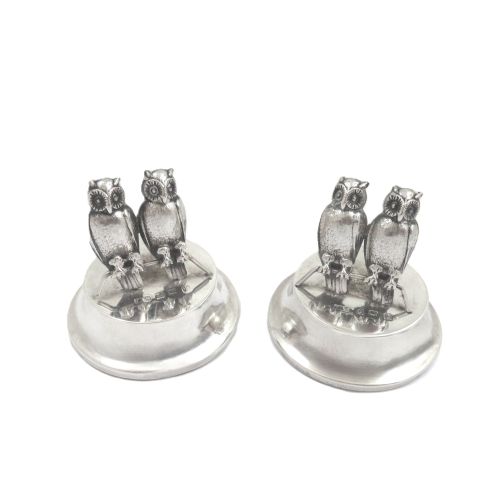
Manufacturing methods rely on casting, hammering, and detailed hand-chasing to create figural subjects such as owls, foxes, horses' heads, and galleons. Enamel work provides colour through applied vitreous layers fused to the metal surface.
Listings feature sterling silver and silver plate items, alongside velvet, silk, enamel, and guilloche enamel across Edwardian, Victorian, and Art Deco styles.
Factors of Quality
The presence of undamaged enamel and intact fitted boxes elevates certain sets. Matching sets of four, six, twelve, or twenty-four hold greater consistency than assembled groups.
Levi & Salaman·A. Wilcox·Sampson Mordan·Asprey·Liberty
The Table Name Card Holders Glossary
- Sterling silver
- A silver alloy containing 92.5 percent pure silver and 7.5 percent other metals, usually copper. This standard composition forms the bulk of the metalwork seen here.
- Guilloche enamel
- A decorative technique where the metal surface receives a precise mechanical pattern under a transparent enamel layer. This adds depth and colour to the design.
- Hallmark
- An official stamp applied by an assay office indicating the purity of the metal, the maker, and the year of production. British silver often bears these stamped guarantees.
- Menu holder
- A small desk-like or upright frame designed to display the courses of a meal to diners. These share forms with place card holders.
- Chasing
- A metalsmithing technique where a hammer and punches push metal from the front to raise low relief details. This creates texture on animal and figural forms.
Table Name Card Holders: Frequently Asked Questions
How were table name card holders used?
Hosts placed them beside each guest's plate with a small card bearing the diner's name. They ensured smooth seating arrangements at large dinner parties.
They also held printed menus detailing the evening's courses for the guests to read.
What materials make up these items?
Most examples use sterling silver or silver plate as the primary structural metal. Some designs incorporate enamel, guilloche enamel, leather, velvet, and silk.
Enamel adds bright colour to miniature figures and geometric motifs.
How do I care for silver holders?
Store them away from damp environments and handle them carefully to preserve delicate projections and enamel surfaces. Avoid harsh chemical dips that strip away natural patination.
Soft microfiber cloths maintain the shine without scratching detailed chasing.
Can I use them as modern place card holders?
They function just as well today for wedding breakfasts, dinner parties, and festive gatherings. Modern cards cut to a similar thickness fit securely into the original slots.
They provide a distinct conversation piece for contemporary tables.
How do I identify the period?
Hallmarks stamped onto the silver provide the exact year of assay and the city where testing occurred. Stylistic clues such as Art Nouveau curves or Art Deco geometry also point to specific decades.
Edwardian pieces often feature naturalistic animals and floral motifs.