



Antique Matching Wall Mirrors
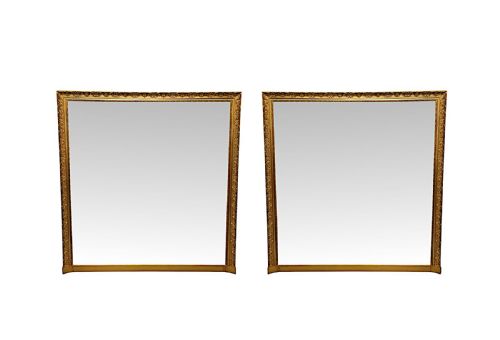
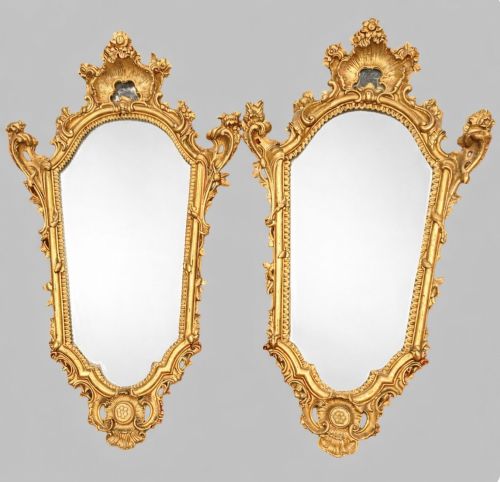
Antique matching wall mirrors bring symmetry and reflected light to a room, appearing frequently in pairs across the Victorian, Edwardian, and Art Deco periods.
Antique Matching Wall Mirrors
When searching for antique matching wall mirrors, buyers encounter pairs created to hang in symmetry across a room, often originating from the nineteenth and early twentieth centuries. These pieces encompass both simple overmantel designs and decorative oval or round formats suited to period interiors.
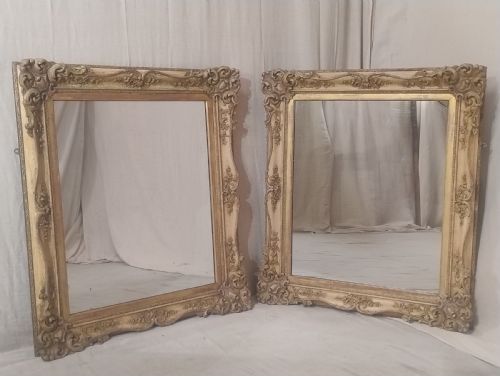
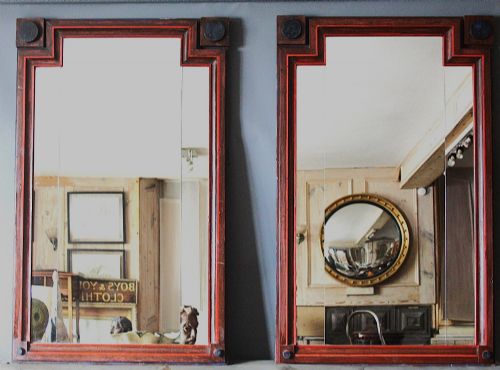
The selection includes distinct matched sets, such as twin giltwood frames from the Victorian era and pairs integrated with console tables or side cabinets. Materials range from carved wood and gesso to rosewood, walnut, and plaster, reflecting the diverse stylistic demands of past domestic settings.
How they were made
Frames are constructed from woods such as rosewood, walnut, and mahogany, sometimes featuring inlaid details or simulated wood finishes. Carved elements and applied mouldings shape the profiles, utilising plaster and gesso to build up intricate surface ornamentation.
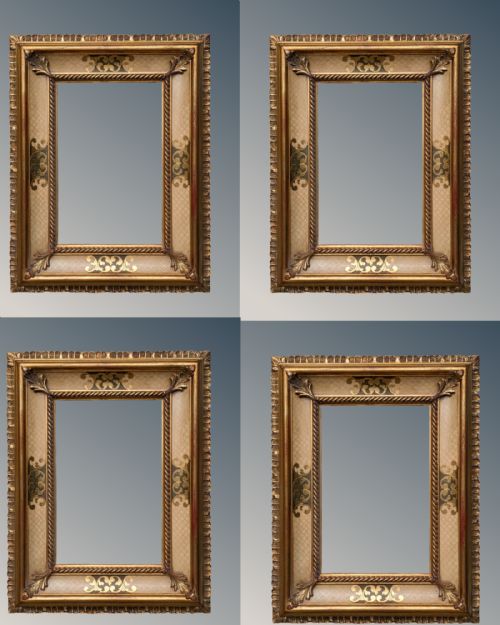
Gilding techniques involve applying gold leaf or parcel gilt highlights over prepared grounds, while other examples employ painted carved wood or plain glass surfaces. Console table and mirror combinations incorporate marble tops alongside timber construction.
Listings feature frames finished in giltwood, gesso, rosewood, walnut, and marble across periods spanning the nineteenth and early twentieth centuries.
What varies in quality
The quality of these mirrors is evident in the crispness of the carved detail and the depth of the gilding applied to the gesso and wood frames. Superior examples display careful hand-finishing on mouldings and well-preserved original surfaces across both pieces in a pair.
Integration between paired items also dictates standard, particularly in sets that combine wall mirrors with console tables or side cabinets where timber matching and proportions align precisely. Finer execution shows in balanced proportions and harmonious ageing on both matched frames.
The Antique Matching Wall Mirrors Glossary
- Giltwood
- Timber that has been gilded with gold leaf or metal leaf applied over a prepared gesso base. This finish appears frequently on nineteenth-century frames.
- Gesso
- A plaster-like mixture applied to wood frames to create a smooth surface for carving or gilding. It allows for intricate moulded decoration.
- Overmantel mirror
- A large mirror designed specifically to hang above a fireplace mantelpiece. These often feature simple or elaborate giltwood designs.
- Trumeau mirror
- A decorative wall mirror that incorporates a painted panel or artwork above the glass plate. They frequently appear paired with matching console tables.
- Parcel gilt
- A decoration method where only specific parts of an object are gilded while the remaining surface shows the natural wood finish.
Antique Matching Wall Mirrors: Frequently Asked Questions
Where should matching wall mirrors be hung?
These pairs are traditionally hung symmetrically on opposite sides of a fireplace, above matching console tables, or flanking a large architectural opening to create balanced reflected light in a room.
Placing them at correct eye level ensures proper proportion, particularly with larger overmantel designs or taller pier mirrors.
How do I identify Victorian wall mirrors?
Victorian mirrors often display heavier giltwood frames, ornate plaster mouldings, and specific revival styles such as Rococo or French Louis XV influences. Examining the backboards and glass silvering provides further clues to the manufacturing period.
Construction methods and timber choices, including rosewood and walnut, also help distinguish mid and late nineteenth-century examples from later twentieth-century reproductions.
Can I separate a console table and mirror set?
Console tables and matching wall mirrors are historically designed as unified decorative schemes, sharing timber types like mahogany or rosewood alongside matching marble tops. Separating them disrupts the intended visual balance of the pairing.
Keeping the set together preserves the complete aesthetic established by the maker, whether in an Egyptian revival or early twentieth-century interior.
What styles are common in antique pairs?
Common styles include Victorian, Edwardian, Art Deco, and French Chateau, alongside specific revivals like Italian Renaissance and Egyptian Revival. These reflect the prevailing architectural tastes when the pieces were originally constructed.
Simpler designs from the early twentieth century contrast with the highly decorative giltwood and gesso frames of the preceding decades.