




Antique Marquetry Workbox
An antique marquetry workbox is a fitted container for needlework and small treasures, combining intricate wood inlay with practical Victorian craftsmanship.
Antique Marquetry Workbox
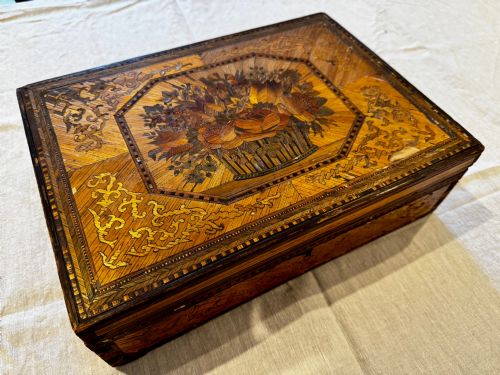
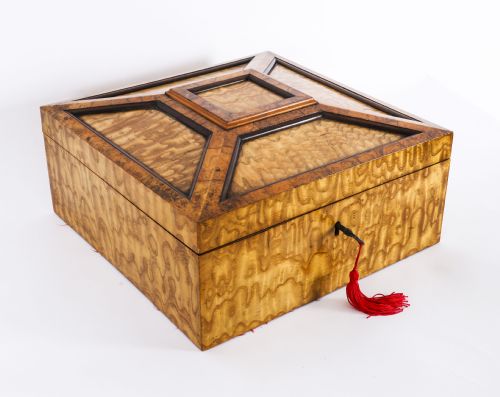
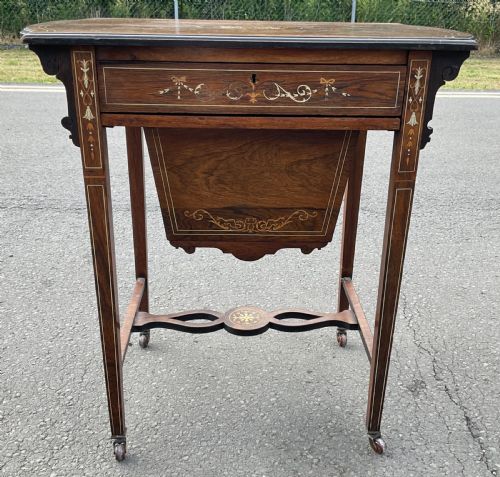
An antique marquetry workbox represents a specialised category of personal storage, often designed for sewing, needlework, and correspondence. These pieces take the form of tabletop caskets, fitted boxes, and freestanding tables with internal compartments.
The selection here draws primarily from the Victorian and Edwardian eras, spanning walnut, rosewood, and mahogany foundations. Alongside portable caskets, buyers will find occasional sewing tables and trumpet workboxes featuring hinged lids.
Origins range across English workshops, French ateliers, and specialist centres such as Tunbridge Wells and Sorrento. Each variant offers a glimpse into nineteenth-century domestic life and craftsmanship.
How they were made
Cabinet makers utilised dense timber foundations such as burr walnut, rosewood, and mahogany, applying contrasting veneers of boxwood and satinwood to create detailed geometric and floral patterns. Marquetry inlay relies on assembling precision-cut wood veneers into paper-thin pictorial designs before gluing them to the carcase.
Specialist techniques like Tunbridge Ware involved bundling thousands of micro-mosaic wood rods into complex pictorial motifs, which were then sliced and applied to the exterior. French polishing finished the surfaces to a warm gloss, protecting the delicate grain and inlay work.
What varies in quality
Quality rests primarily in the precision of the marquetry and the choice of primary timbers, where richly figured burr walnut or rosewood elevates a piece above plain mahogany carcases. The complexity and tightness of the wood inlay, especially in micro-mosaic or floral panels, mark the hand of a more accomplished maker.
Internal fitting also dictates standing, with original silk-lined trays, compartmentalised lift-out sections, and functioning brass locks outranking later replacements. The crispness of the exterior mouldings and the structural integrity of the timber joints complete the assessment.
The Antique Marquetry Workbox Glossary
- Marquetry inlay
- The decorative technique of applying thin slices of wood veneer to a structural carcase to form geometric or pictorial patterns. This method defines the decorative appeal of nineteenth-century caskets and tables.
- Burr walnut
- A highly prized timber grain obtained from the growths on walnut trees, characterised by swirling, mottled patterns. It was frequently selected for the lid panels of Victorian workboxes.
- Tunbridge Ware
- A distinct form of British woodwork originating in Kent, featuring tiny mosaic tiles assembled from different coloured woods to create pictorial scenes. These panels cover the exterior of specialist ladies boxes.
- Trumpet workbox
- A nineteenth-century sewing table with an octagonal, flared body resembling a musical instrument, standing on a slender pedestal base. It opens to reveal internal storage compartments.
- Sorrento ware
- Italian wood mosaic and marquetry work, often incorporating olive wood and depicting classical scenes or rustic views. These caskets emerged from nineteenth-century workshops in southern Italy.
Antique Marquetry Workbox: Frequently Asked Questions
What is an antique marquetry workbox used for?
These boxes served nineteenth-century women as portable containers for sewing supplies, threads, needles, and small personal valuables. Interiors typically featured lift-out trays and compartmentalised sections to organise various implements.
Today, they function as decorative storage on dressing tables or sideboards, holding modern jewellery, letters, or keepsakes while retaining their traditional charm.
How do I date a Victorian workbox?
Dating relies on examining the primary timber, interior construction methods, and hardware styles such as brass escutcheons and lock mechanisms. Earlier pieces from the mid-nineteenth century often display heavier rosewood or burr walnut construction with elaborate Tunbridge Ware.
Later Edwardian examples tend to feature lighter mahogany carcases with simpler shell inlay or satinwood banding. Maker's stamps or retailer paper labels inside the lid can also pinpoint the decade.
What is the difference between a workbox and a sewing table?
A workbox is a portable casket designed to sit on a table, chest, or lap, equipped with a carrying handle or simple flush sides. A sewing table is a freestanding piece of furniture incorporating legs, a pedestal, and a fixed internal compartment.
Both serve the same domestic purpose of storing needlework, but tables offer a permanent furniture presence in a room layout.
Are the interiors usually original?
Interiors frequently underwent restoration or re-lining during the twentieth century due to the fragile nature of original silks, velvets, and paper linings. Surviving original compartments and paper-covered partitions are noted when present.
Buyers should expect some degree of textile wear or replacement within the fitted trays while appreciating the solid wood structure underneath.