




Walnut Jewellery Table
These walnut jewellery table pieces combine storage and display, offering fitted interiors and glass-topped cabinets for precious items.
Walnut Jewellery Table
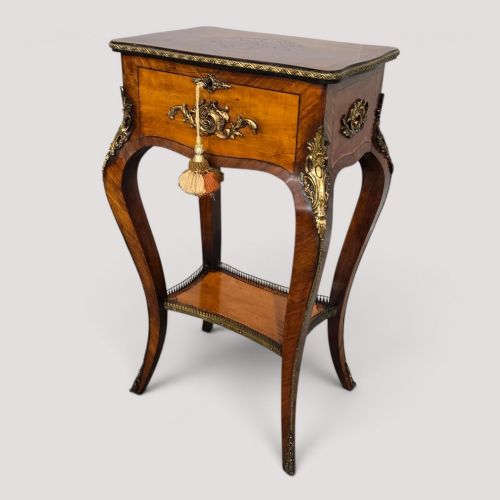
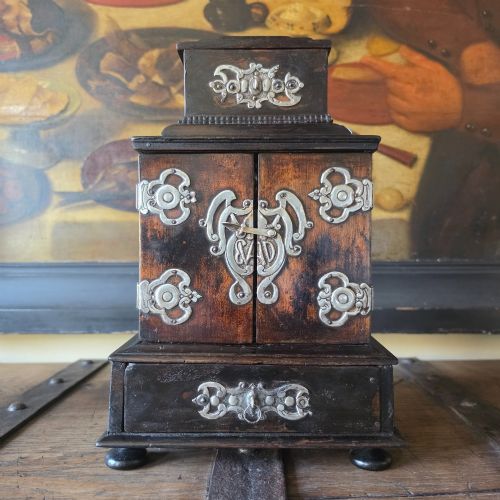
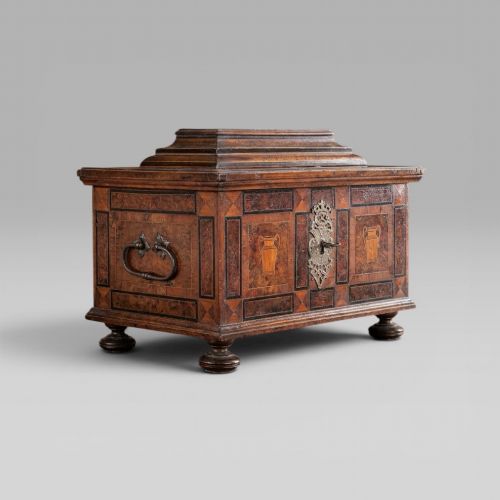
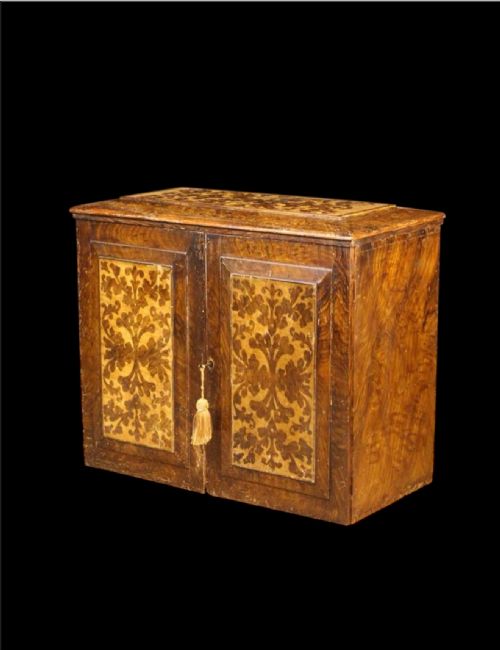
A walnut jewellery table serves to store and display precious items upon a surface or tabletop. These pieces range from compact boxes and caskets to larger occasional display cabinets and bijouterie tables.
Victorian examples dominate the selection alongside pieces from the seventeenth and eighteenth centuries. Formats vary from fitted dressing boxes with mirrors to glass-fronted vitrines and miniature chests of drawers.
How walnut jewellery table items were made
Craftsmen utilised solid walnut and burr walnut veneers over secondary timbers, often selecting figured timber for prominent surfaces. Structural and decorative details frequently incorporate brass mounts, velvet linings and glass panels.
Inlaid decoration employs materials such as satinwood, mother-of-pearl, ebony, fruitwood and bone. Certain pieces feature carved wooden elements or specialised campaign-style brass banding.
Listings feature periods spanning from the seventeenth century through the Victorian era up to the twentieth century, utilising materials like glass, brass and velvet.
What varies in quality
The choice of timber grain determines visual depth, particularly where burr walnut veneer shows complex figuring. Finer examples display meticulous matching of wood veneers across all visible surfaces.
Interior execution separates standard boxes from superior pieces, demonstrated by carefully fitted compartments, original velvet linings, functional mirrors and robust brass hardware.
The Walnut Jewellery Table Glossary
- Bijouterie table
- A glass-topped display table designed specifically for showcasing small ornaments and jewellery. These tables often feature hinged lids or glazed sides.
- Burr walnut
- Timber taken from a tree growth or knot, yielding intricate swirling grain patterns. Cabinet makers prized this wood for decorative veneering.
- Vitrine
- A glass display cabinet used to protect and exhibit collectibles. The term covers both floor-standing models and tabletop versions.
- Campaign style
- Furniture built with portability in mind, featuring recessed brass handles and corner brackets. Pieces designed in this manner offer robust construction.
Walnut Jewellery Table: Frequently Asked Questions
Where should I place a walnut jewellery table?
Position these pieces away from direct sunlight and heat sources to protect the wood and interior fabrics. A stable surface in a dressing room or drawing room allows safe access to fitted compartments.
Glass-topped display versions benefit from ambient room light that illuminates items stored inside without fading the timber.
How do I clean the wooden surfaces?
Dust the exterior regularly with a soft, dry cloth to prevent particle buildup on the walnut grain. Avoid modern chemical sprays and silicones that damage antique finishes.
Apply a microcrystalline wax occasionally if the wood appears dry, buffing gently to maintain the natural sheen.
What interior features are typical?
Many examples include compartmentalised trays, ring slots and velvet or satin linings for delicate items. Dressing boxes often incorporate fitted mirrors and small lidded sections beneath the main lid.
Drop-front doors and drawer arrangements provide additional access to lower storage areas.
How are different periods identified?
Seventeenth and eighteenth-century pieces often display heavier proportions and distinct joinery, while Victorian examples frequently utilise burr walnut veneers and brass mounts. Stylistic revivals incorporate specific decorative motifs characteristic of French Rococo or Renaissance designs.
Hardware styles, locking mechanisms and interior layouts offer further clues to the date of manufacture.