


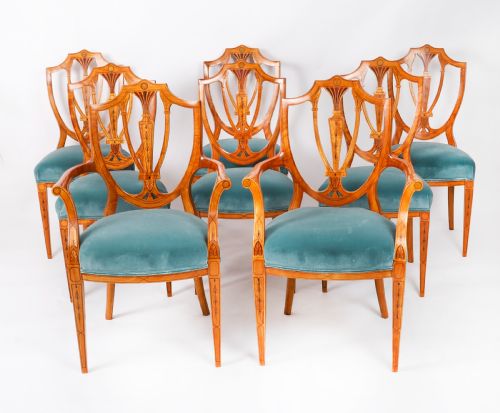

Antique Marquetry Chairs
Antique marquetry chairs bring together meticulous wood inlay and functional seating, offering historical charm and decorative presence to a room.
Antique Marquetry Chairs
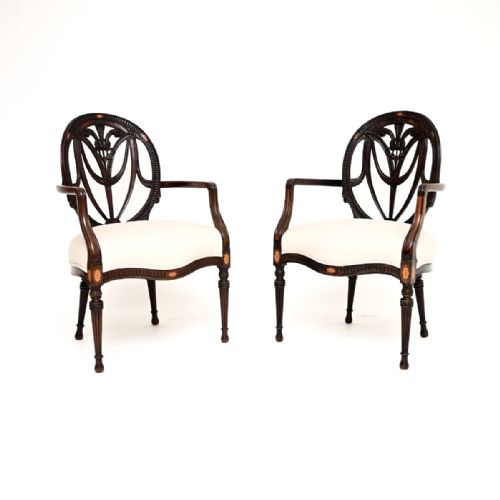
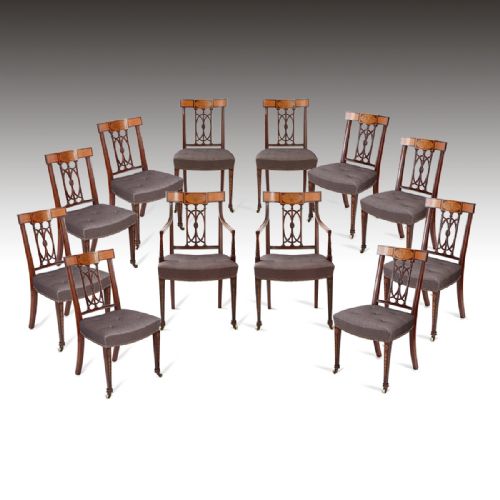
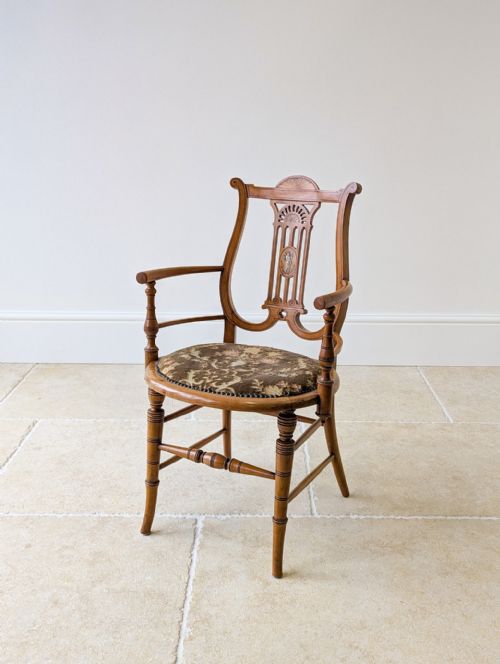
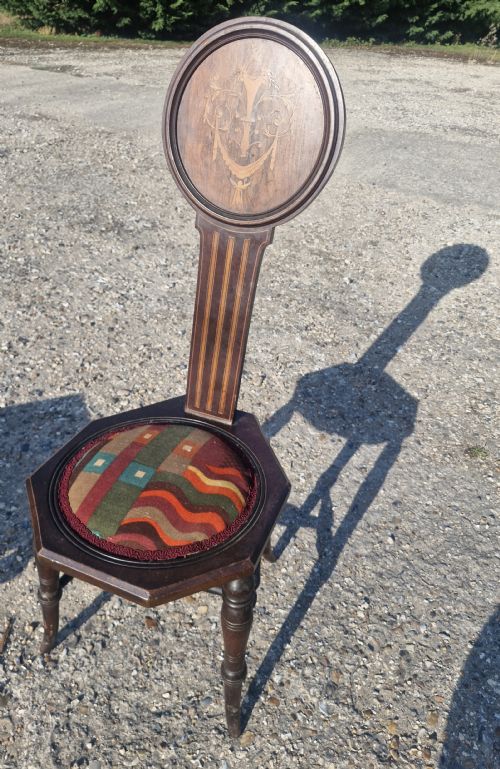
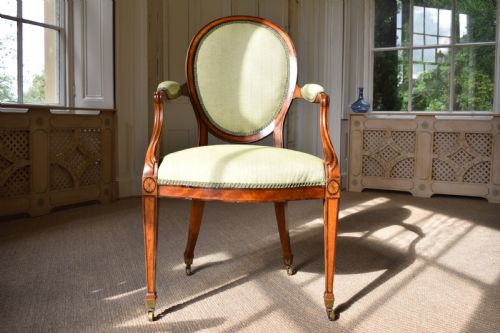
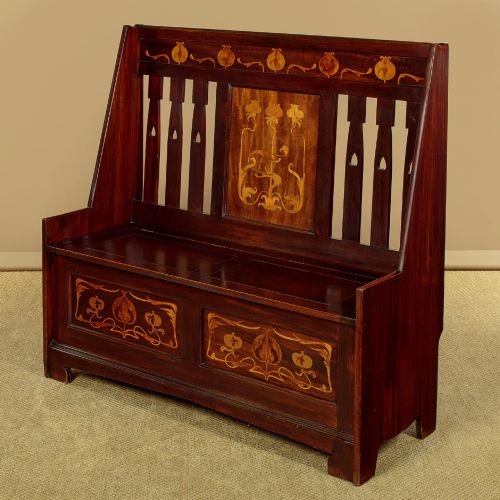
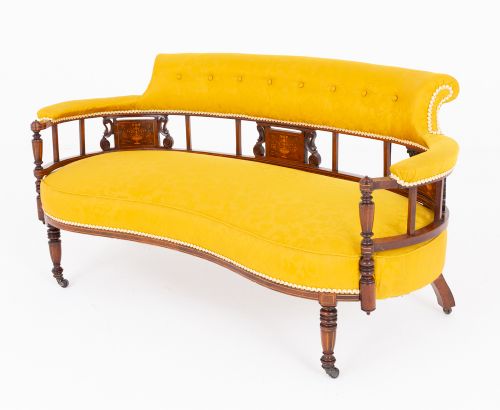
When you search for antique marquetry chairs, you encounter seating featuring detailed pictorial or geometric wood veneers set into the primary timber structure. The selection spans dining chairs, salon chairs, and desk chairs from the eighteenth, nineteenth, and early twentieth centuries.
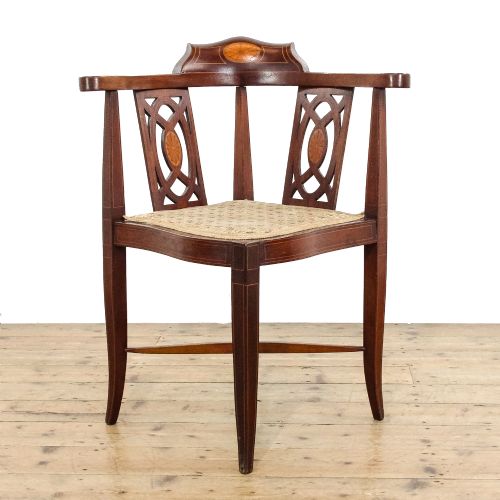
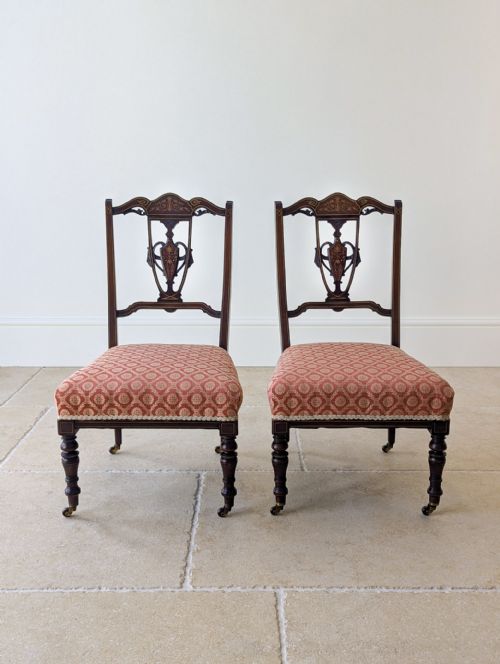
Edwardian mahogany examples and Victorian walnut sets appear frequently alongside earlier Georgian and Dutch specimens. These pieces function as both practical seating and decorative focal points within traditional interiors.
How they were made
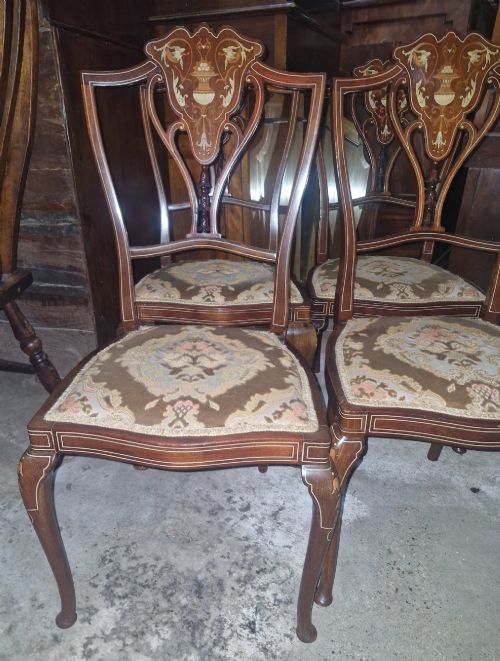
Cabinetmakers constructed the frames using solid timbers such as mahogany, walnut, and rosewood, often incorporating contrasting woods like satinwood for the decorative elements. Artisans then meticulously cut and fitted thin veneers of various coloured woods to create intricate floral, scroll, or pictorial motifs.
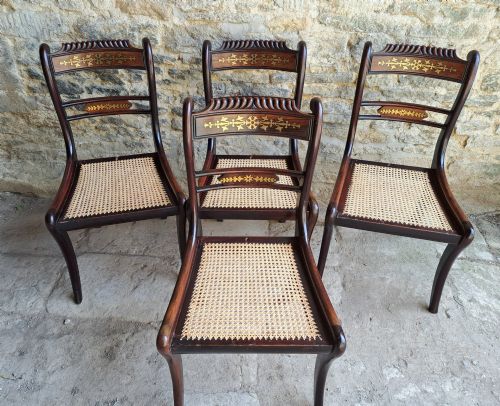
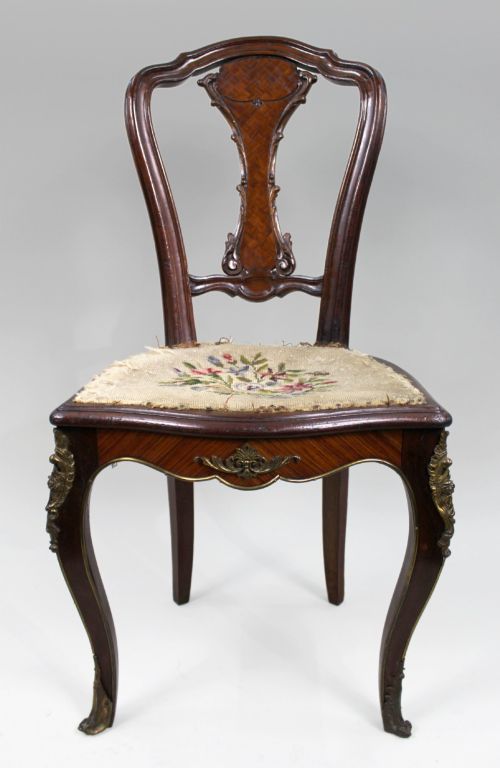
Brass inlays and ormolu mounts occasionally supplement the wooden decoration, particularly on Regency and French pieces. Upholstered variants include coverings of velvet and woven fabric secured over traditional padding.
Antique Marquetry Chairs Retail Price Guide 2026
Typical asking prices for marquetry chairs among the pieces listed under this phrase on Sellingantiques today, from the lower quarter to the upper quarter. They describe what is for sale here now, not the wider market.
Listings include nineteenth-century Dutch walnut examples alongside Edwardian satinwood-inlaid mahogany parlor suites.
What varies in quality
The sophistication and precision of the veneer work separate standard examples from exceptional ones, with finer pieces displaying complex pictorial scenes rather than simple repeating geometric patterns. The choice of underlying cabinet timber also dictates grade, with figured walnut and dense mahogany commanding higher regard.
Originality of the surface finish and the integrity of the joinery influence the standing of any given piece. Sets maintaining matching grain and uniform inlay across every chair hold greater cohesion than assembled groups.
James Shoolbred & Co·Cowtan & Sons
The Antique Marquetry Chairs Glossary
- Marquetry
- Decorative veneer applied to furniture in patterns or pictures using different woods and materials. This technique differs from simpler inlay by covering the entire surface of the ground timber.
- Satinwood
- A durable, lustrous yellow timber frequently utilised for banding and contrasting details in Georgian and Edwardian furniture. Its pale tone provides striking visual contrast against darker mahogany.
- Carver
- An armchair designed to match a set of dining chairs, typically positioned at the head of a table. These pieces feature supportive armrests integrated into the main frame.
- Ormolu
- Gilded bronze mounts applied for decorative effect on nineteenth-century furniture. This ornamentation appears on French and high-status British pieces.
- Parquetry
- Geometric wood inlay forming regular patterns such as cubes, triangles, or chequers. It offers a structured alternative to figurative marquetry designs.
Antique Marquetry Chairs: Frequently Asked Questions
How do I care for antique marquetry chairs?
Keep the wood conditioned with appropriate furniture wax and avoid placing the pieces in direct sunlight or near heat sources, which can cause the veneer to lift.
Regularly dust the carved and inlaid surfaces with a soft dry cloth to prevent dirt accumulation within the grain.
Can I use these chairs for daily dining?
Many dining chairs and carvers remain structurally sound for regular use, provided the frame joints and glue blocks have been properly maintained over time.
Lighter salon or occasional chairs suit decorative placement or light sitting better than heavy everyday dining.
How do I distinguish Dutch styles?
Dutch marquetry pieces often display exuberant floral and urn motifs executed in contrasting light and dark woods across high backs and solid seats.
These examples frequently date to the eighteenth or early nineteenth century and possess a distinct robust proportion compared to Edwardian parlor seating.