

Antique Maritime Decor
Antique maritime decor brings the history of the sea indoors through model boats, oil paintings, and brass instruments.
Antique Maritime Decor
When you search for antique maritime decor, you encounter a diverse range of objects connected to seafaring history and coastal life. These pieces span from the eighteenth century through to the interwar decades, capturing the evolution of naval architecture and marine art.
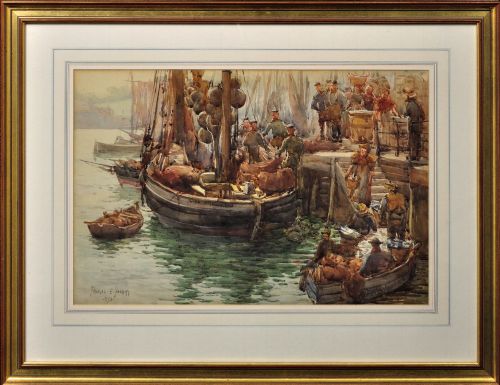
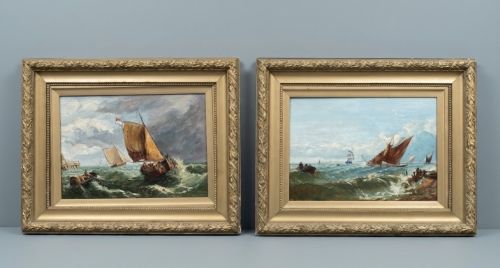
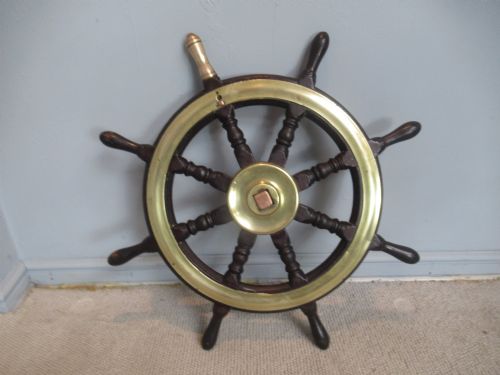
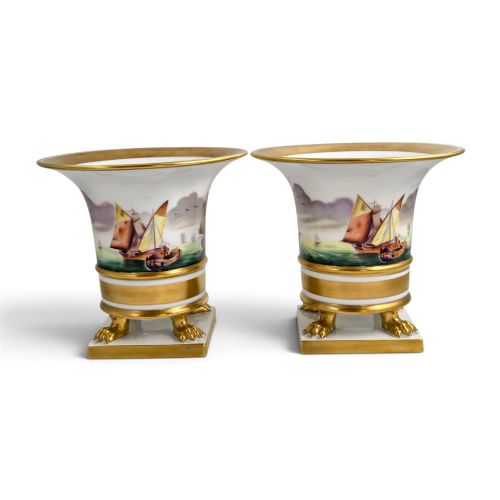
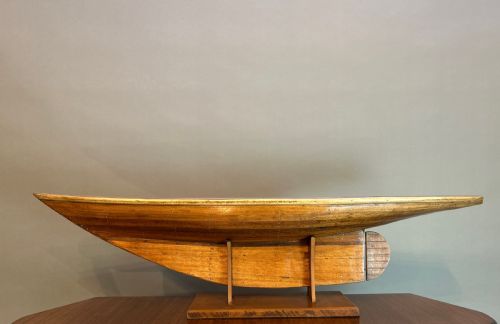
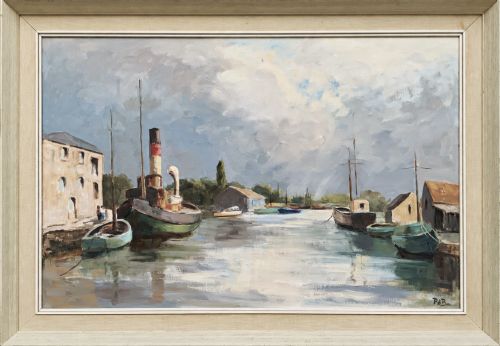
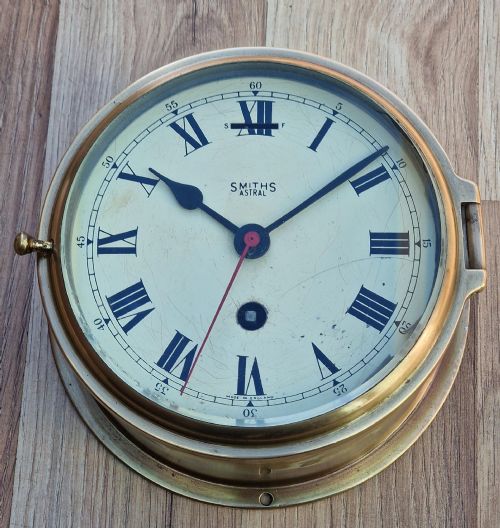
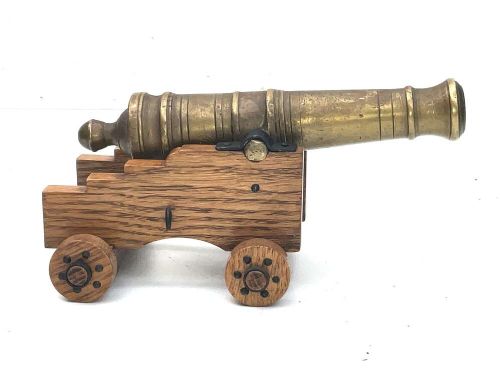
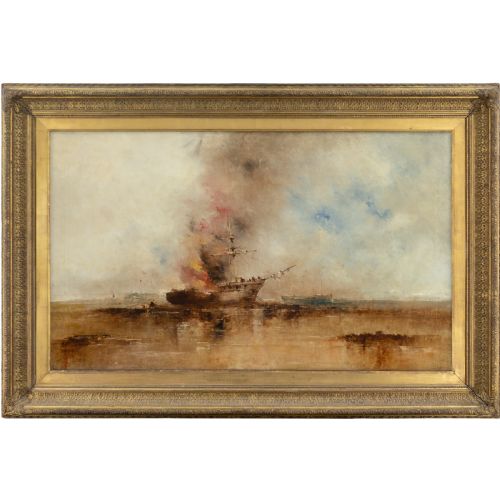
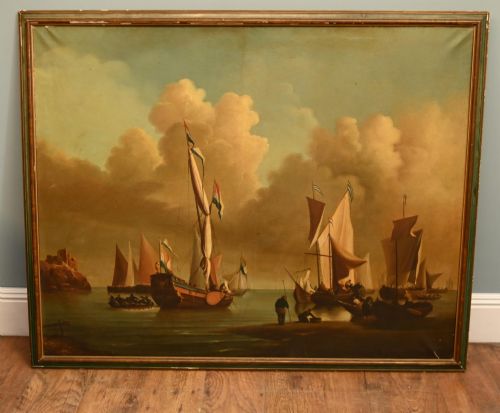
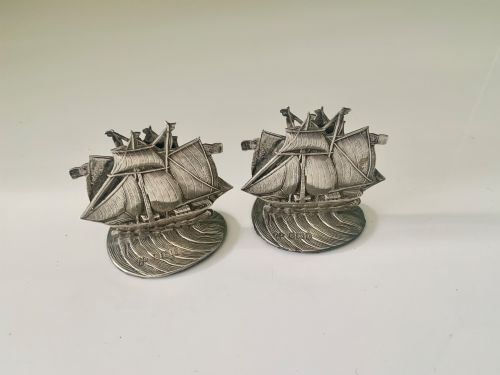
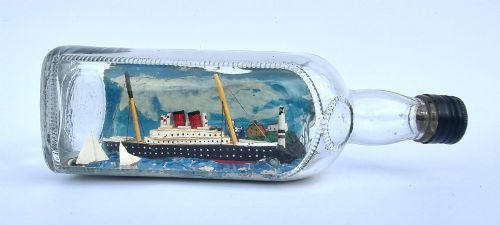
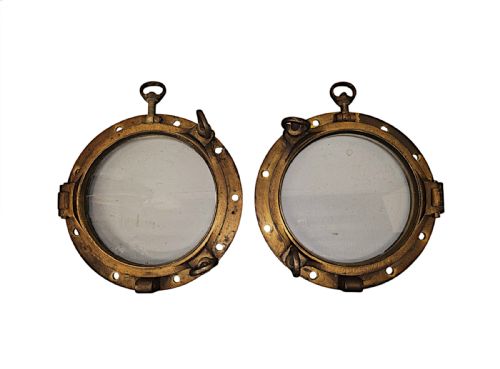
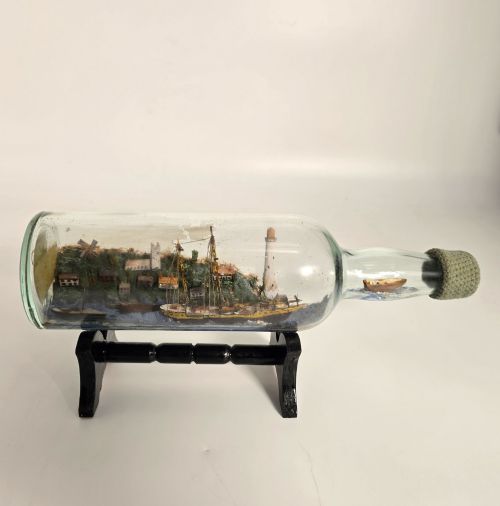
Model boats and pond yachts form a central part of this category, alongside detailed ship dioramas in bottles and canvas oil paintings. You also find practical items repurposed from vessels, such as brass port holes, pulleys, and signal cannons.
Victorian and Edwardian examples appear frequently on this page, reflecting the peak periods of maritime craftsmanship and coastal recreation. Whether through folk art dioramas or professional scale models, each item records a specific vessel or seafaring tradition.
Materials and construction methods
Wood serves as the primary medium for carved hull models, pond yachts, and pulley blocks, often shaped using traditional carvel planking techniques. Brass and bronze provide durable components for port holes, signal cannons, and ship badges, cast and polished to withstand marine environments.
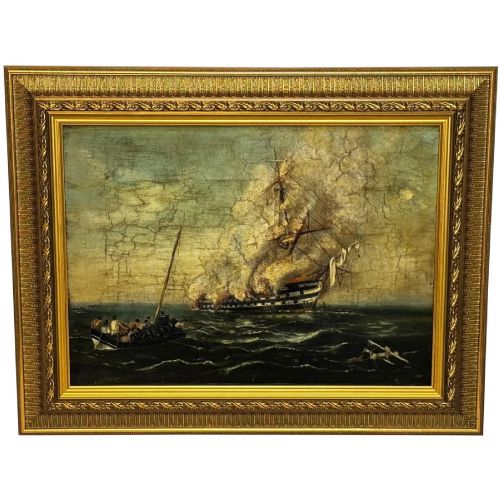
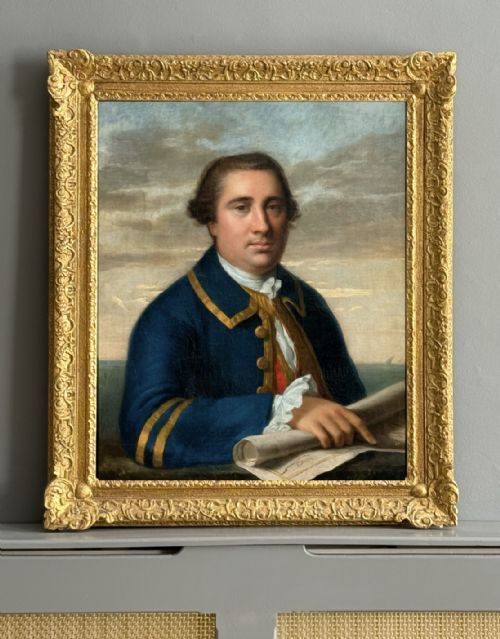
Painters utilised oil paint on canvas and wood panels to capture coastal scenes and naval portraits, employing fine brushwork for rigging and sea states. Glass houses delicate ship in a bottle dioramas, protecting intricate paper and thread rigging assembled through narrow bottle necks.
Antique Maritime Decor Retail Price Guide 2026
Typical asking prices for maritime decor among the pieces listed under this phrase on Sellingantiques today, from the lower quarter to the upper quarter. They describe what is for sale here now, not the wider market.
One remarkably large pond yacht stands nearly eight feet high on its display stand, ready for an indoor gale.
Evaluating quality and authenticity
The standard of antique maritime decor depends heavily on the precision of the scale work and the skill of the maker. Scratch-built model boats with accurate rigging and original wooden hulls demonstrate a higher level of craftsmanship than mass-produced decorative items.
In paintings, the depth of perspective, accurate depiction of ship architecture, and the condition of the oil paint and canvas determine the piece's standing. Original paint on folk art objects and untouched brass patination further distinguish superior examples from later reproductions.
James Hardy·William McAlpine·LEMUEL FRANCIS ABBOTT·Ulugary & Sons·W. Grey & Co·Edward Matthew Elliott
The Antique Maritime Decor Glossary
- Diorama
- A three-dimensional scene depicting ships or coastal views, often housed within a glass bottle or wooden frame. These constructions rely on minute paper, wood, and thread elements to recreate maritime life.
- Pond yacht
- A model sailing boat designed for recreational racing on park ponds. These vessels range from small Edwardian child's toys to large scale-built models with complex wooden hulls and canvas sails.
- Port hole
- A circular window used on ships to let light and fresh air into cabins. Antique examples are typically cast in heavy brass with hinged glass frames and securing bolts.
- Pulley block
- A wooden or metal casing containing one or more pulleys, used aboard ships to lift heavy rigging and sails. Elm and other hard woods were standard materials for their construction.
- Signal cannon
- A small brass or bronze cannon fired on ships to signal other vessels or mark navigational events. These pieces were scaled down from shipboard artillery.
Antique Maritime Decor: Frequently Asked Questions
What is a pond yacht?
A pond yacht is a traditionally constructed model sailing boat built for recreational use on open water. These watercraft feature carved wooden hulls and fabric sails designed to catch the wind.
Collectors prize large examples from the Victorian and Edwardian eras for their scale and craftsmanship. They serve as sculptural decorative objects in modern interiors.
How do you date a ship in a bottle?
Dating a ship in a bottle relies on the style of the vessel depicted and the materials used for the bottle and rigging. Makers often used contemporary materials like paper and cotton thread of a specific period.
Folk art examples sometimes include written labels or dates on the hull or base. Comparing the rigging to known historical ship designs helps narrow down the decade of creation.
Are brass port holes waterproof?
Antique brass port holes were originally designed to be watertight when bolted shut aboard a ship. They feature heavy brass frames, rubber or felt gaskets, and threaded screw dogs to secure the glass pane.
When utilised in modern interior design, they require proper mounting and sealing. Many retain their original marine hardware and functional hinges.
What subjects appear in maritime oil paintings?
Maritime oil paintings depict everything from naval warships engaged in battle to merchant vessels sailing off foreign coasts. Coastal scenes showing harbours at low tide also feature prominently in marine art.
Artists focused on accurate depictions of rigging, hull construction, and changing weather conditions at sea. These works provide a visual record of shipping history before the age of flight.