
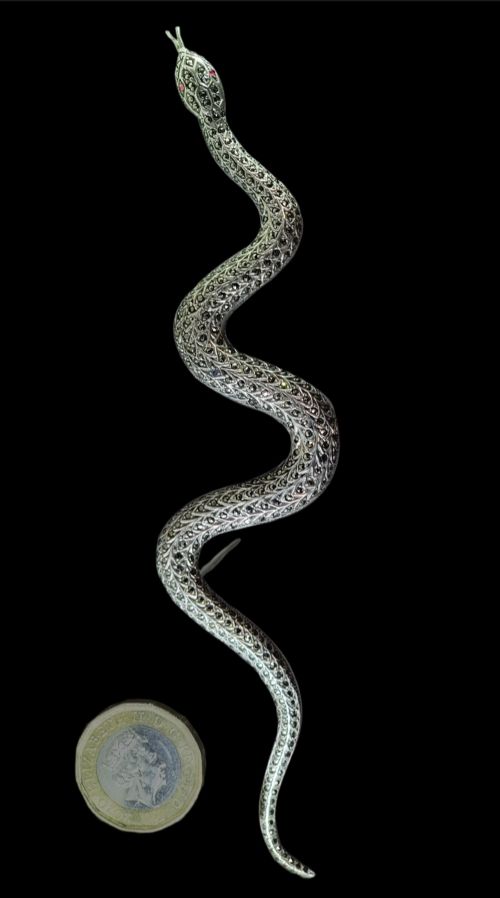


Antique Marcasite Jewellery
Antique marcasite jewellery brings together small faceted pyrite stones set in silver to catch the light.
Antique Marcasite Jewellery
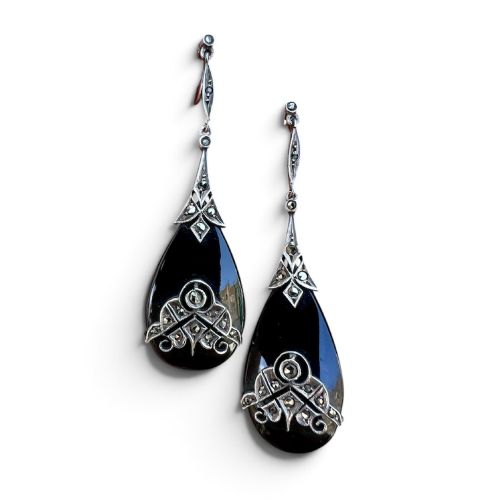
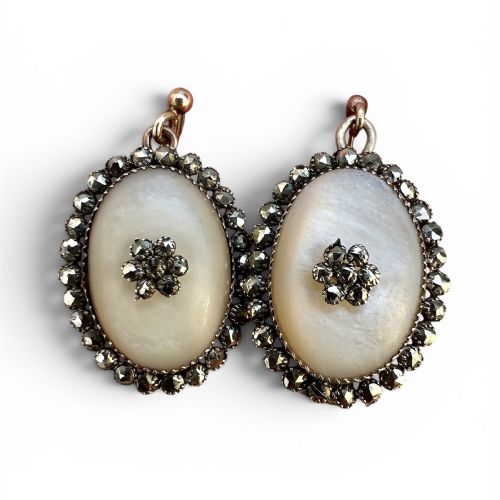
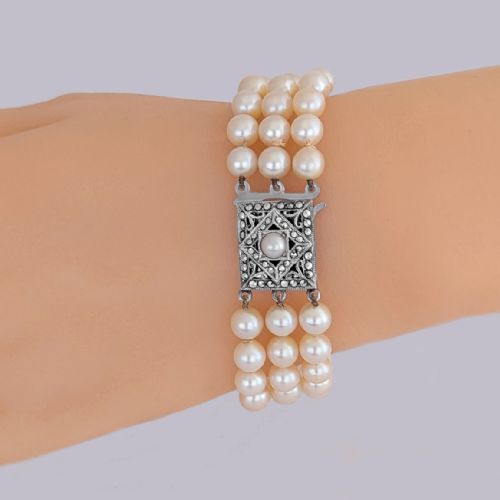
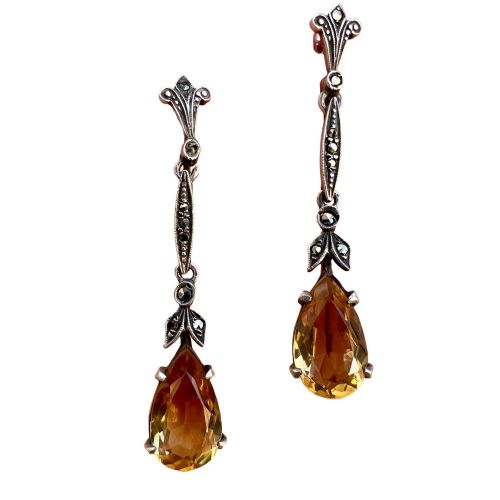
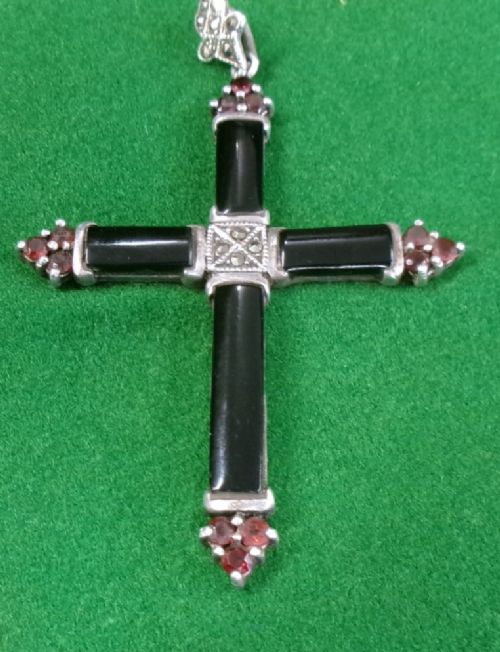
Antique marcasite jewellery consists of pieces created across the Georgian, Victorian, Edwardian, and Art Deco periods, featuring pyrite crystals cut and polished to resemble small diamonds. When searching for antique marcasite jewellery, buyers encounter a variety of forms including drop earrings, brooches, necklaces, pendants, bracelets, and lockets. The pieces on this page lean heavily towards the Art Deco period, showcasing geometric lines and stylised floral motifs.
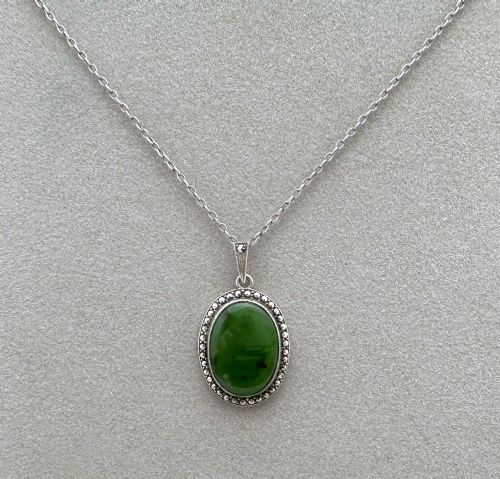
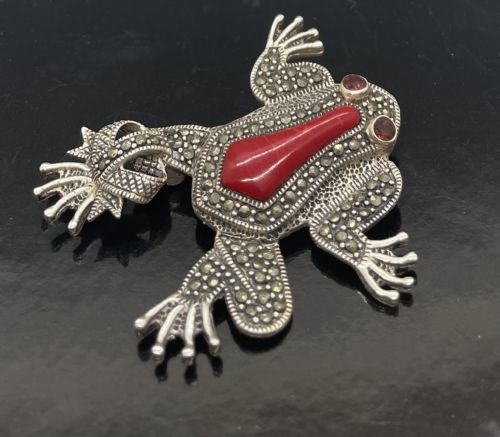
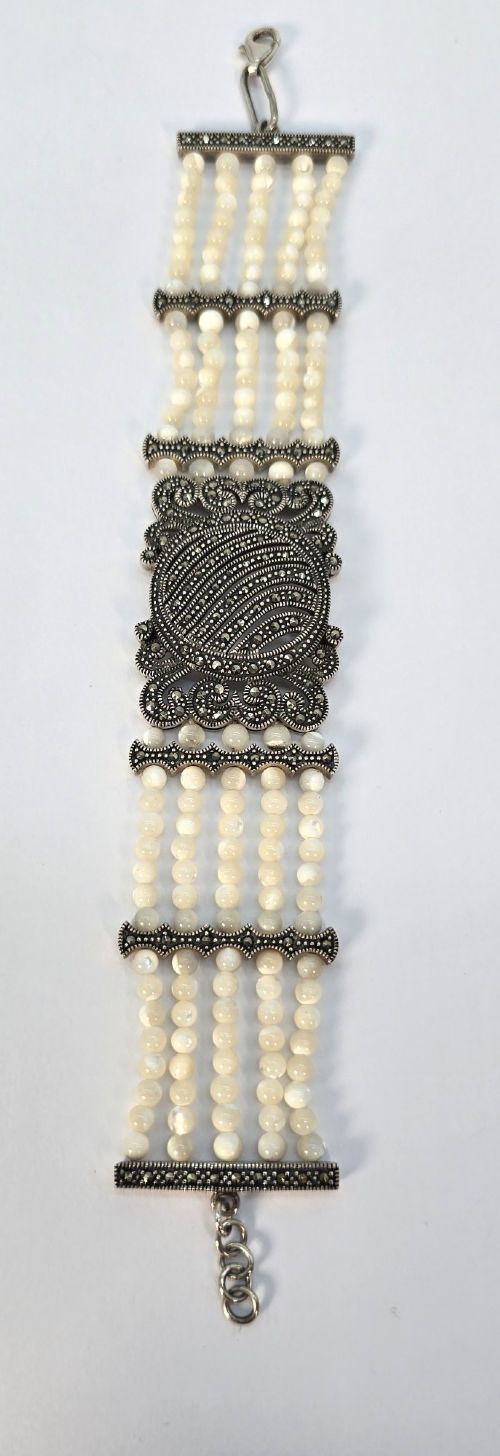
Earrings and pendants often incorporate coloured stones such as onyx, jade, chrysoprase, and chalcedony alongside the silver settings. Brooches take the form of snakes, double hearts, and enamelled pansies, while bracelets combine silver links with enamel and mother of pearl. These ornaments capture the aesthetic preferences of their respective eras, moving from the heavier Georgian drops to the crisp symmetry of the 1920s and 1930s.
How they were made
The construction relies on sterling silver or silver settings into which individual marcasite stones are painstakingly mounted, often using small claw or star settings. In many pieces from the Art Deco period, silver is paired with gold accents or combined with contrasting materials like mother of pearl, enamel, and carved hardstones.
Lapidary work defines the central elements, with stones such as citrine, amethyst, paste, and zircon cut into teardrops, intaglios, and faceted shapes. Enamelling techniques add vibrant colour to silver bases, particularly in floral and sentimental designs from the Edwardian and Victorian eras.
Listings for antique marcasite jewellery span the Georgian, Victorian, Edwardian, and Art Deco periods, executed primarily in silver alongside gold, enamel, and mother of pearl.
What varies in quality
Quality rests upon the precision of the stone setting and the intactness of the marcasite crystals, which should all be present and securely held by the metal. The crispness of the silver work and the depth of any accompanying enamel or hardstone carving distinguish finer items from simpler production.
The choice of secondary materials also alters the character of a piece, with combinations involving jade, chrysoprase, or mixed gold and silver settings indicating more ambitious design. Condition plays a role, particularly where delicate screwback mechanisms or intricate links are involved.
The Antique Marcasite Jewellery Glossary
- Marcasite
- Iron pyrite cut with multiple flat facets and set like diamonds to provide a dark, metallic sparkle in antique jewellery. It has been used for centuries to frame coloured gemstones and enamel work.
- Art Deco
- A design style dominant in the 1920s and 1930s characterised by clean geometric lines, stylised motifs, and symmetrical patterns. Pieces from this era often feature stark contrasts between silver and dark stones.
- Intaglio
- A design carved into the flat or curved surface of a gemstone so that the image sits below the outer plane. In these listings, intaglios appear on teardrop pendants.
- Paste
- Hand-cut glass used in historic jewellery to imitate diamonds or coloured gemstones. High quality paste exhibits careful faceting and secure collet settings.
- Screwback
- A type of earring fastening featuring a threaded post and a small screw nut used before the widespread adoption of modern clip-ons or pierced hooks.
Antique Marcasite Jewellery: Frequently Asked Questions
How do I clean antique marcasite jewellery?
Cleaning requires dry brushing with a soft toothbrush to remove dust from the settings without loosening the stones. Liquid cleaners should be avoided because moisture can seep behind the marcasite and cause the backing cement or foil to discolour.
Silver parts can be gently polished with a specialist cloth while taking care to avoid the polished pyrites. Professional ultrasonic cleaning is unsuitable for glued or set marcasite pieces.
Are missing stones common in marcasite pieces?
Losses can occur over decades of wear because the stones are held mechanically in small metal settings. Examining the piece under magnification helps determine whether all crystals match in cut and age.
Replacement stones can be sourced by specialists, though finding an exact match for the facet style of an older piece takes patience.
What is the difference between silver and marcasite?
Silver serves as the structural metal frame or base of the jewellery, providing durability and a contrasting white background. Marcasite refers strictly to the small pyritic stones embedded into that silver framework for decoration.
Many pieces use sterling silver mounts, occasionally combined with gold highlights, to hold the clusters of dark sparkling pyrites.
How can I date an Art Deco marcasite piece?
Dating relies on identifying characteristic motifs such as geometric symmetry, stylised florals, and the use of materials like green chalcedony or onyx. The mount construction and fastener types, including early screwbacks, also provide clues to the 1920s and 1930s timeline.
Comparing the piece with documented examples from the same period helps narrow down the decade of manufacture.