





Mother of Pearl Drops
Mother of pearl drops bring an iridescent shimmer to jewellery and timepieces, offering a tactile warmth that draws the eye across both Victorian drops and later designs.
Mother of Pearl Drops
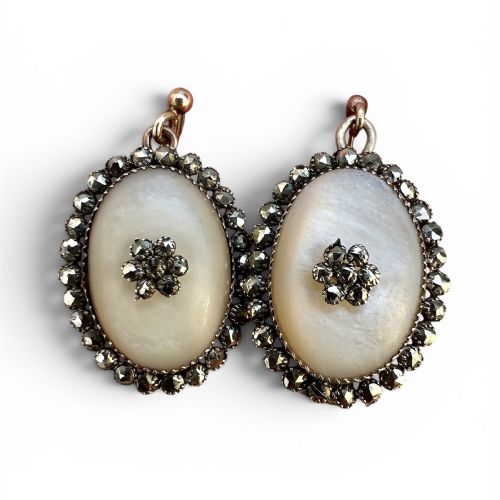
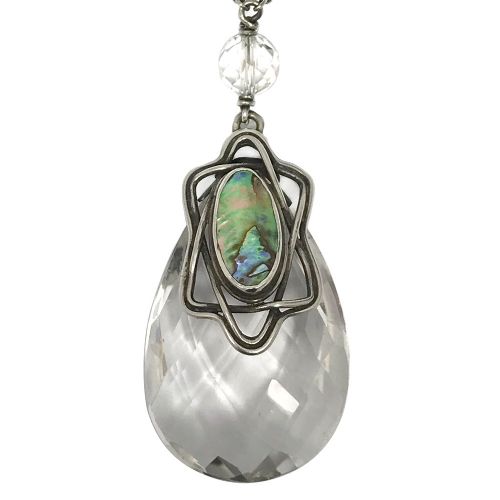
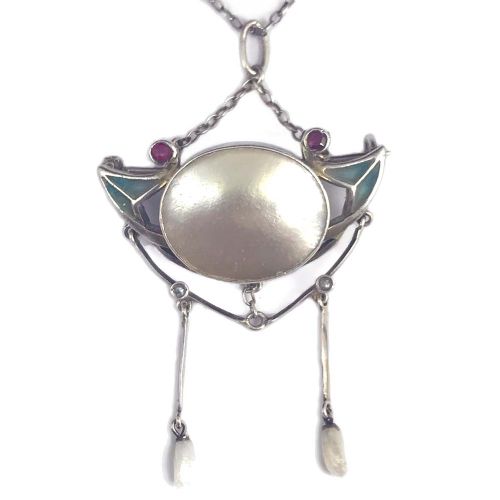
When you search for mother of pearl drops, you encounter two distinct forms: jewellery pieces such as earrings and pendants, and the substantial drop dial wall clocks spanning Georgian to Victorian periods. The earrings and pendants range from delicate screwback hoops to Celtic stud designs and silver pendant brooches.
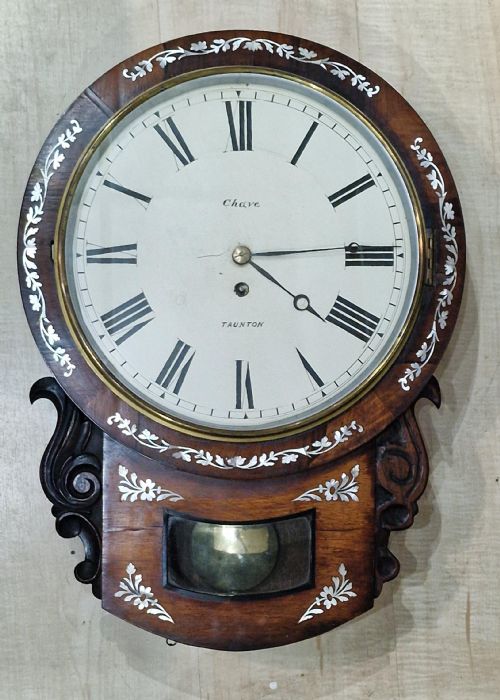
The timepieces listed under this term are predominantly fusee drop dial wall clocks housed in rosewood or ebonised cases, often featuring inlaid mother of pearl or brass wire detailing. These items draw collectors who appreciate both the decorative nacre of personal adornment and the mechanical precision of nineteenth-century horology.
How they were made
The construction of these pieces relies on combining organic nacre with precious metals, base metals, or rich hardwoods like rosewood. Artisans shaped mother of pearl and abalone into delicate drops or inlay plates, securing them into silver, nine-carat gold, brass wire, or dark wooden clock cases.
Clockmakers utilised reliable fusee movements housed within robust dial cases, while jewellers employed techniques ranging from simple stud settings to intricate plique-a-jour enamel and marcasite embellishments alongside the central pearl elements.
Several clocks bear the names of regional West Country makers inscribed directly on their painted dials.
What varies in quality
Quality in these items rests upon the crispness of the case inlay and the depth of orientation within the nacre itself. Finer examples show carefully matched mother of pearl segments that catch the light evenly without dull patches or clumsy adhesive repairs.
In horological pieces, the standard is set by the finish of the rosewood case and the legibility of the dial, whereas in jewellery, the finesse of the metalwork, such as gold screwbacks or silver wirework, dictates the overall execution.
Meyle & Meyer·James Bell Bath·Samuel Chave Taunton·Halliday & Rich Bridgwater
The Mother of Pearl Drops Glossary
- Fusee movement
- A mechanical clock movement driven by a spring and a conical drum that equalises the power as the spring unwinds. This mechanism ensures consistent timekeeping across the duration of the wind.
- Drop dial
- A clock case design featuring a circular dial at the top mounted over a lower elongated wooden trunk or drop. This form became a staple of British commercial and domestic interiors during the nineteenth century.
- Nacre
- The iridescent internal layer of mollusc shells commonly known as mother of pearl. It provides the shimmering surface texture found across these items.
- Plique-a-jour
- An enamelling technique where enamel is applied within a network of metal cells without a backing, creating a stained-glass effect. It appears in the finer decorative pendants.
- Marcasite
- Small faceted polished pyrites set into jewellery to simulate the sparkle of cut steel or diamonds. It frequently accompanies silver settings in period earrings.
Mother of Pearl Drops: Frequently Asked Questions
What is a drop dial wall clock?
A drop dial wall clock is a timepiece featuring a circular dial mounted above an extended wooden case, designed to be hung on a wall in domestic or public spaces.
These clocks often utilise rosewood or ebonised wood and depend on a fusee movement to maintain accurate time.
How do I care for mother of pearl?
Mother of pearl is an organic material that benefits from gentle cleaning with a soft, dry cloth to preserve its natural lustre.
Avoid exposing these pieces to harsh chemicals, perfumes, or prolonged moisture, which can dull the delicate nacre surface over time.
Are these clock movements original?
Many nineteenth-century wall clocks retain their original fusee mechanisms, which were built for commercial reliability and domestic use.
Examining the internal components reveals the traditional brass framing and pendulum setup typical of the Victorian period.
What periods do these pieces span?
The selection covers a broad historical range from the Georgian and George IV eras through Victorian and Edwardian times, extending into Art Deco and mid-century designs.
Each period brings distinct stylistic traits, from heavy rosewood clock cases to lighter silver and gold jewellery.