


Antique Oval Drop Earrings
These antique oval drop earrings span centuries of design, offering a remarkable way to wear period silver and gold.
Antique Oval Drop Earrings
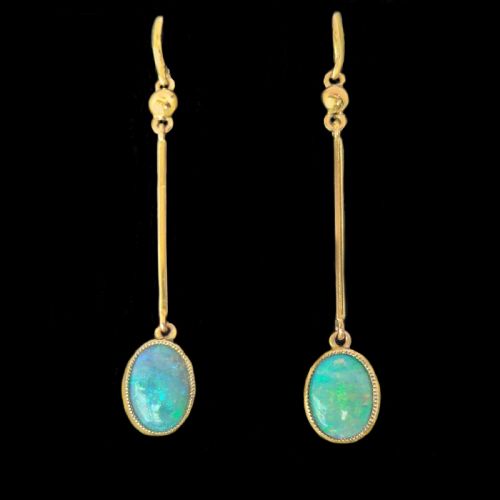
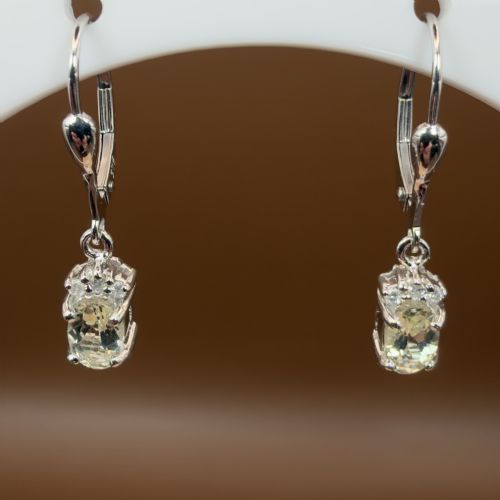
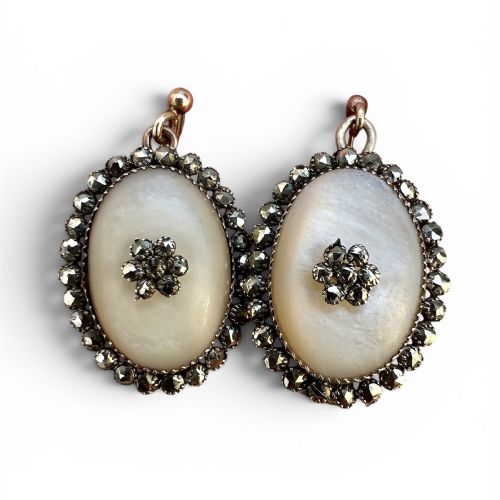
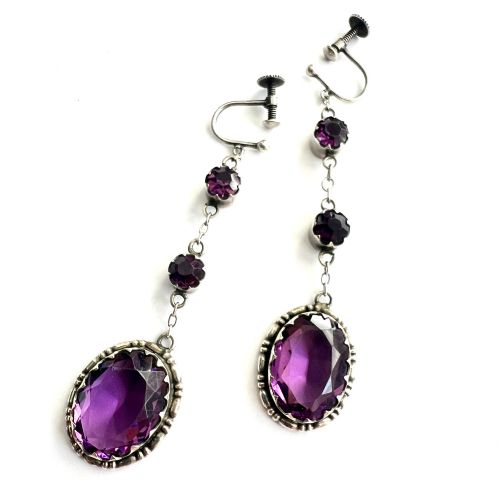
When you search for antique oval drop earrings, you are looking at pendant jewels shaped in soft curves that swing below the earlobe. The pieces gathered here draw from periods including the Georgian era, Victorian times, Edwardian years, and the Art Deco movement.
The most frequent examples you will meet on this page hail from the Victorian period and the mid-twentieth century, often rendered in silver or nine-carat gold. They combine classic shapes with distinct historical character, ranging from austere silver aesthetic designs to colourful gemstone clusters.
Makers and artisans across these eras utilised various drop configurations, sometimes suspending stones from rigid bars and other times attaching them to secure screwbacks. Each pair reflects the prevailing taste of its decade, balancing movement with balanced proportions.
How they were made
Metals form the structural backbone of these jewels, with silver, sterling silver, nine-carat gold, and eighteen-carat white or yellow gold providing durable settings for stones and carved panels. Goldsmiths and silversmiths shaped these metals by hand, casting or hammering the mounts to hold each element securely.
Natural and manufactured materials fill these settings, featuring amethysts, pink sapphires, peridots, aquramarines, amber, mother of pearl, marcasite, and carved Italian cameo shell alongside glass paste. Artisans set these materials into bezels and clusters, balancing weight and visual depth.
The documented periods stretch from Georgian and Victorian times through Edwardian and Art Deco eras up to nineteen-fifty.
What varies in quality
The distinction between ordinary and exceptional examples rests upon the harmony of the stones and the precision of the metalwork. Superior pieces display well-matched gems with lively colour saturation, whilst simpler items utilise more uniform or treated materials.
Execution of detail also separates the tiers, seen in the crispness of carved cameo motifs, the neatness of marcasite pavé work, and the structural integrity of the drop mechanism. Heavier gold gauges and thoughtful proportioning elevate a pair above standard production.
The Antique Oval Drop Earrings Glossary
- Screwback
- A type of earring closure featuring a threaded post and a small turning nut that adjusts to fit unpierced earlobes. This mechanical fitting appeared widely on vintage and antique pairs.
- Marcasite
- Small, faceted pyrite stones polished to a metallic sheen and set closely together in silver mounts. This material provides a dark, sparkling border around central gems.
- Aesthetic Movement
- A late nineteenth-century design style focusing on artistic value rather than narrative or moral themes. Jewels from this movement often feature stylised natural motifs and textured silver.
Antique Oval Drop Earrings: Frequently Asked Questions
Are these earrings for pierced ears?
Many pairs utilise standard posts or drop hooks designed for pierced lobes, whilst specific vintage examples employ screwbacks intended for unpierced ears.
Buyers should examine the fastener type in each listing to confirm compatibility with their own comfort and piercings.
How do I care for antique gold and silver?
Precious metals and softer organic stones require gentle cleaning with a soft cloth rather than harsh chemical dips. Storing each pair separately prevents scratching between delicate gems and metal surfaces.
Avoiding moisture and perfumes preserves the integrity of historic settings and natural materials like amber or mother of pearl.
What periods do these earrings represent?
The selection includes pieces from the Georgian era, the Victorian period, the Edwardian years, and the Art Deco twentieth century. Each era brings distinct metalworking techniques and gemstone preferences.
Victorian pieces often lean towards aesthetic silver work, whilst later decades favour clean geometric lines or vibrant coloured stones.
How do I identify Art Deco earrings?
Art Deco pieces typically display geometric symmetry, white gold or platinum-coloured settings, and structured gemstone arrangements. They frequently incorporate calibre-cut stones and stylised motifs that break from nineteenth-century organic curves.
The use of Amethyst alongside bright white metal settings is a strong indicator of this 1920s and 1930s aesthetic.