
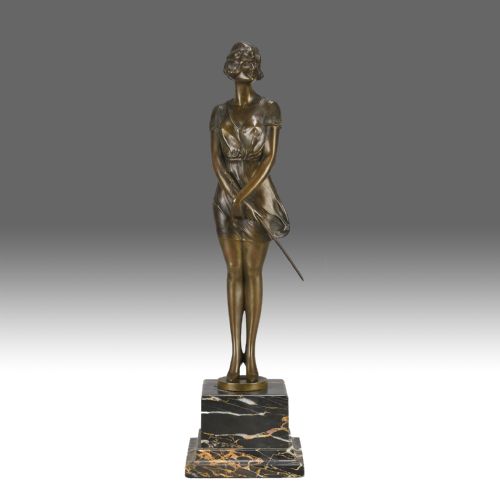
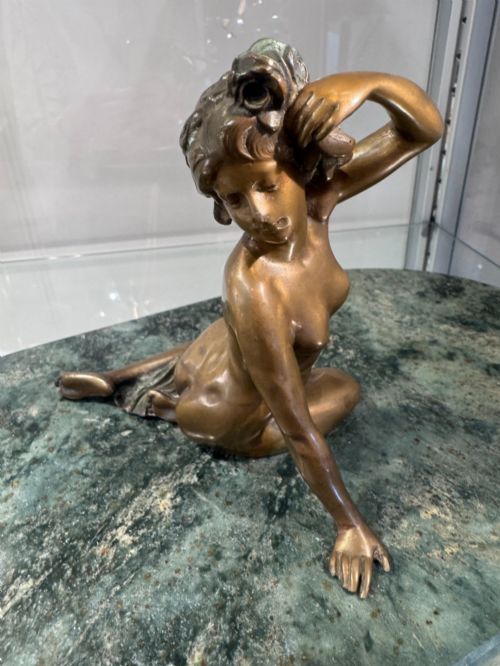
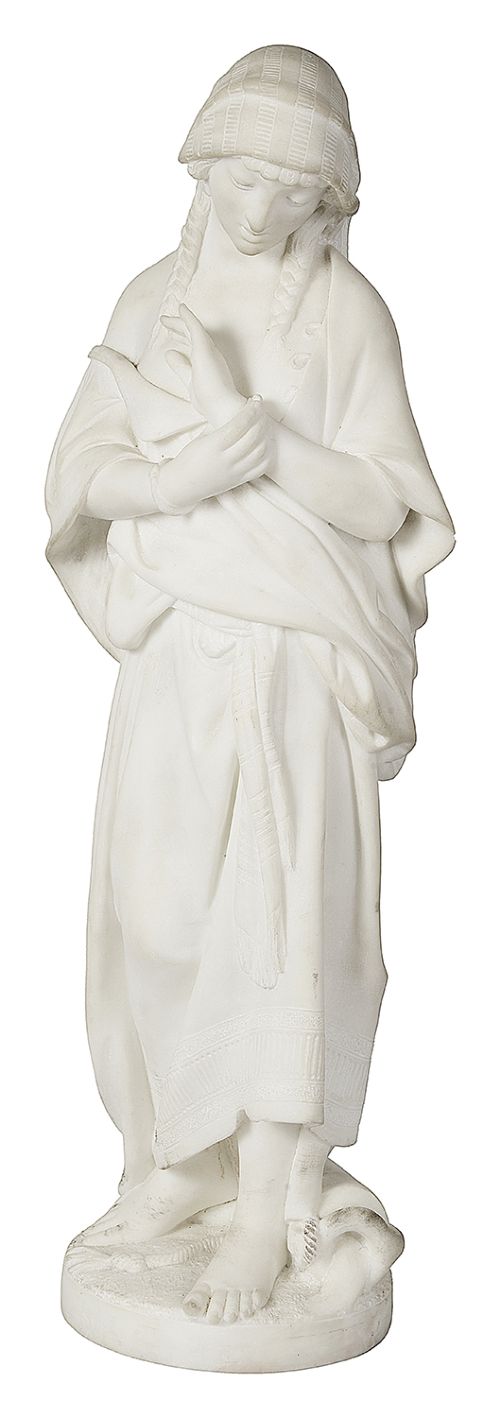
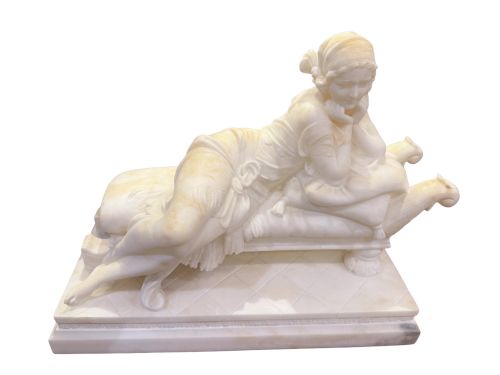
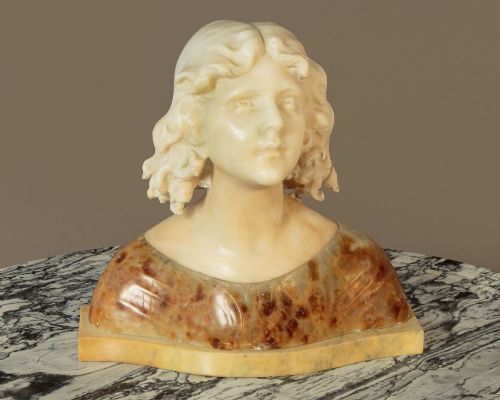


Antique Marble Maiden
These antique marble maiden figures capture classical grace in carved stone, offering collectors tactile depictions of mythological and historical figures.
Antique Marble Maiden
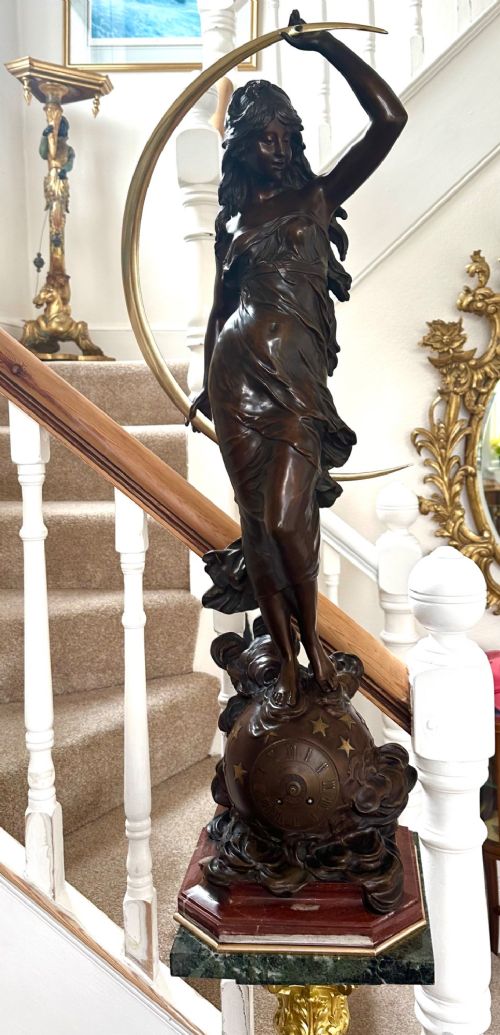
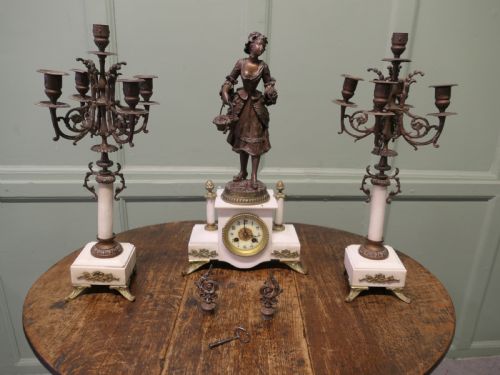
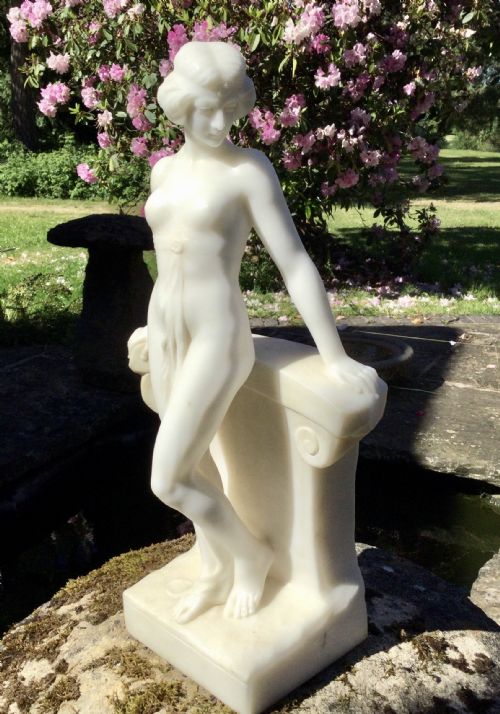
An antique marble maiden represents carved stone depictions of young women, taking forms from full-scale statues and reclining figures to portrait busts and clock garniture sets. These pieces emerge predominantly from nineteenth-century studios through to the Art Deco era, drawing heavily on Neoclassical, Art Nouveau, and Grand Tour traditions.
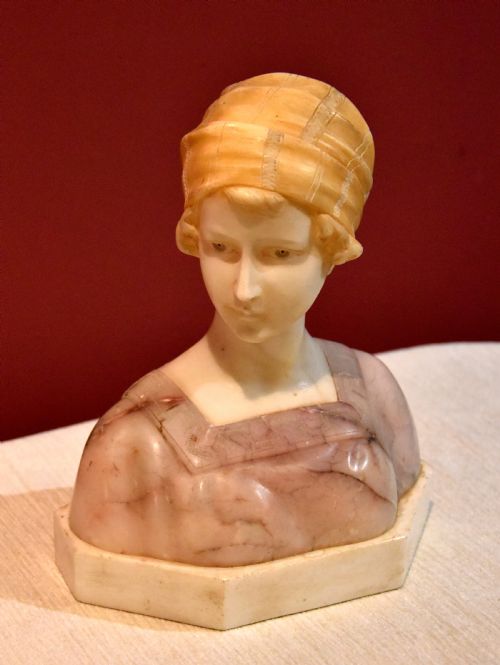
The version most commonly encountered on this page is the nineteenth-century Italian or French carved marble and alabaster bust or full figure. These range from classical maidens and veiled ladies to allegorical representations of youth and nature, frequently mounted upon contrasting green marble bases.
How they were made
Sculptors utilised white marble, fine Carrara marble, and softer alabaster, often pairing these stone mediums with cast bronze, gilt bronze, brass, or spelter elements. Figures were hand-carved using chisels and rasps to achieve detailed drapery, hair, and facial expressions, then polished to varying degrees of smoothness.
Many works combine mixed media, setting carved stone busts onto carved marble bases or integrating them into functional items such as mantle clocks, candelabras, and lamps.
Materials recorded across the inventory include Carrara marble, alabaster, bronze, gilt bronze, spelter, and brass.
What varies in quality
The choice and integration of materials also drive distinction, such as the use of fine Carrara marble paired with genuine cast bronze rather than spelter, alongside the harmonious pairing of multi-coloured marble bases like Vert de Mer.
Bruno Zach·Barranti·Auguste Moreau·Auguste Henri Carli·Zoldan Kovats·Eduardo Giolli·Ferdinand Preiss·C Neuhaus·Charlotte Monginot·Gugielmo Pugi
The Antique Marble Maiden Glossary
- Carrara marble
- A type of white or blue-grey marble quarried in the city of Carrara in Tuscany, widely favored by European sculptors for its fine and consistent grain.
- Alabaster
- A fine-grained mineral stone, softer than marble, often used for portrait busts and figures due to its translucent quality.
- Clock garniture
- A set consisting of a mantle clock accompanied by matching decorative side pieces such as urns, candelabras, or flanking figures.
- Grand Tour
- A traditional trip of Europe undertaken by upper-class European young men of the eighteenth and nineteenth centuries, resulting in the acquisition of classical art and small-scale sculptures.
- Chryselephantine
- A term describing statues made of a combination of bronze and ivory or alabaster, popular in Art Deco sculpture.
Antique Marble Maiden: Frequently Asked Questions
What is an antique marble maiden?
An antique marble maiden is a carved sculpture or bust depicting a young woman, created in Europe during the nineteenth and early twentieth centuries.
These pieces draw on classical, Neoclassical, and Art Nouveau aesthetics, serving as decorative art for the home.
How do I care for marble and alabaster?
Care requires dusting gently with a dry, soft cloth to prevent accumulation in the carved crevices of the stone.
Water and chemical cleaners must be avoided, particularly with softer alabaster which dissolves or stains easily with moisture.
How can I tell the period?
Dating relies on stylistic clues, such as the flowing organic lines of Art Nouveau or the geometric styling of Art Deco versus strict classical drapery.
Material choices, signatures, foundry marks, and mounting styles also help place a piece within the nineteenth or early twentieth century.
Were these made as functional items?
Many figures were created purely as standalone sculptures, busts, or figurines for display on pedestals and tabletops.
Others were incorporated into functional objects, appearing as part of clock garniture sets, lamp bases, and console table supports.