

Antique Marble Accent Table
An antique marble accent table brings a solid stone surface and varied timber or metal framing into a room.
Antique Marble Accent Table
When you search for an antique marble accent table, you encounter compact furniture designed to hold objects or sit beside seating. The selection ranges widely across the nineteenth century and the early decades of the twentieth century.
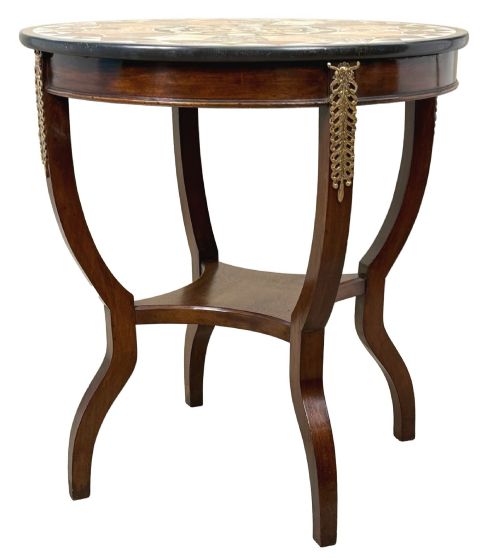
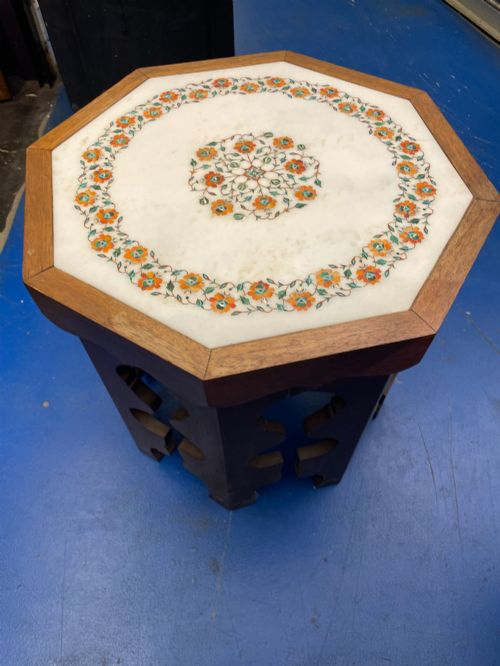
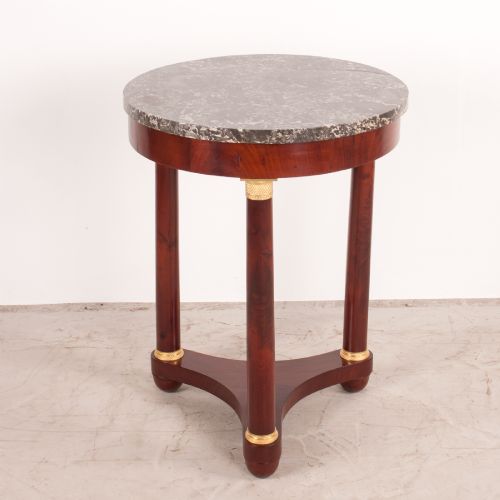
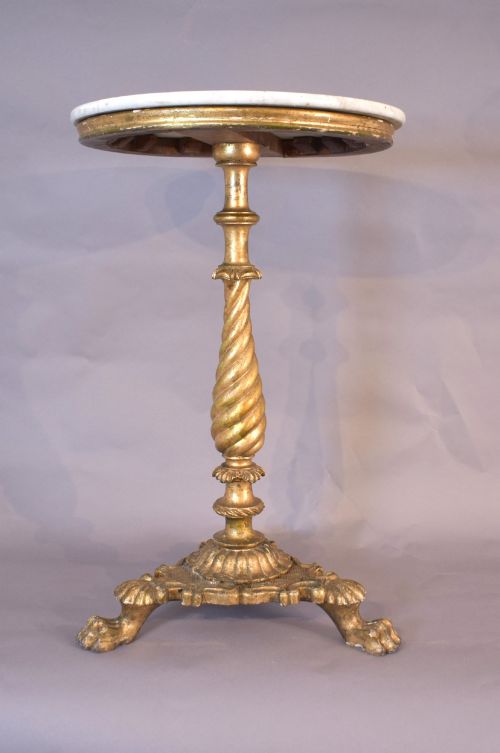
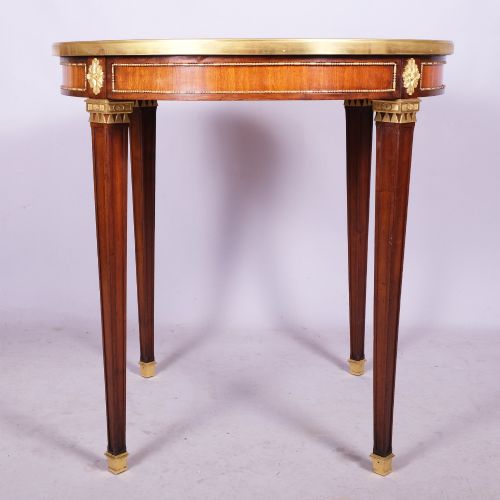
Occasional tables, side tables, and guéridons dominate the offerings, often featuring circular or shaped stone slabs fitted to timber frames. French and Italian workshops produced many of the surviving examples in styles spanning Louis XVI, Victorian, and Art Deco.
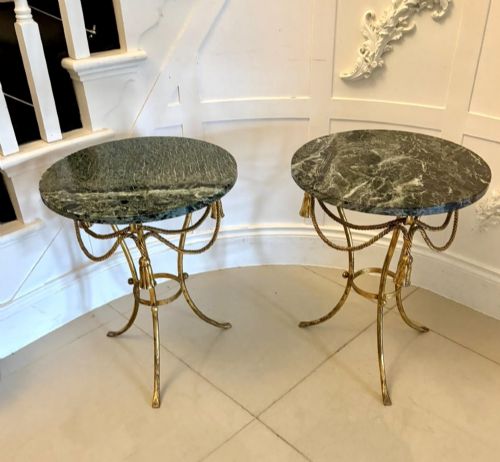
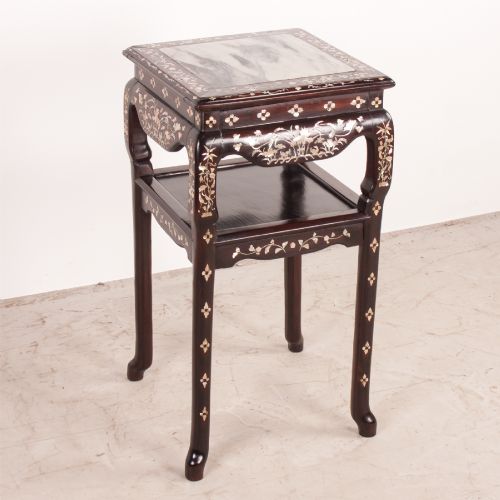
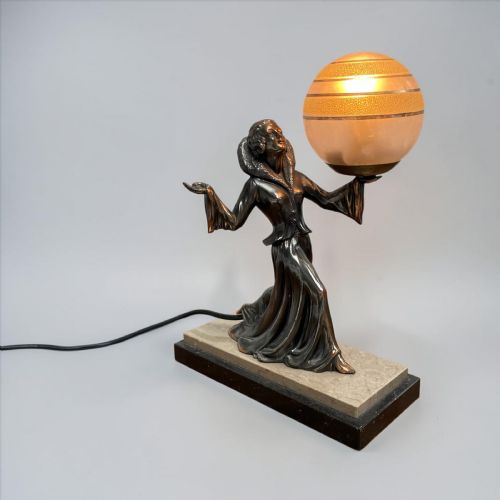
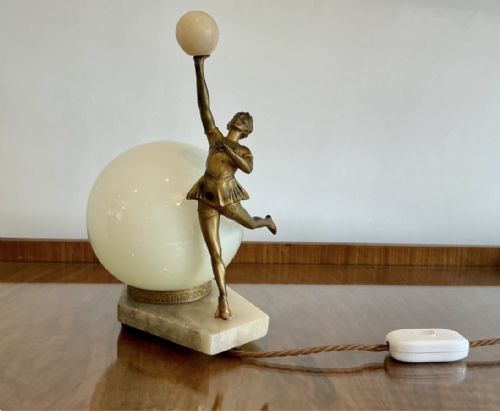
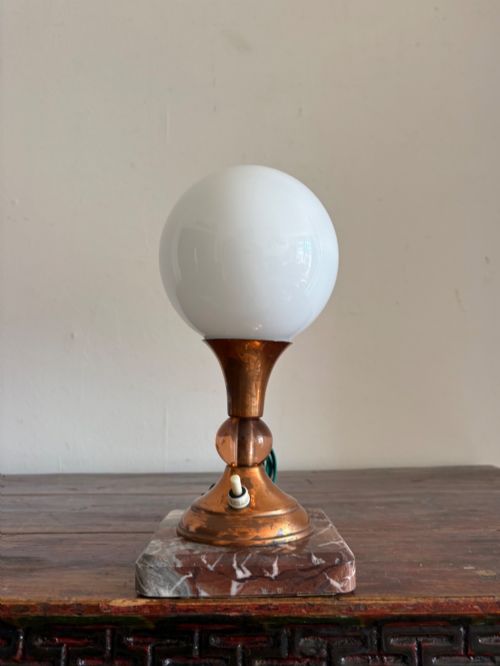
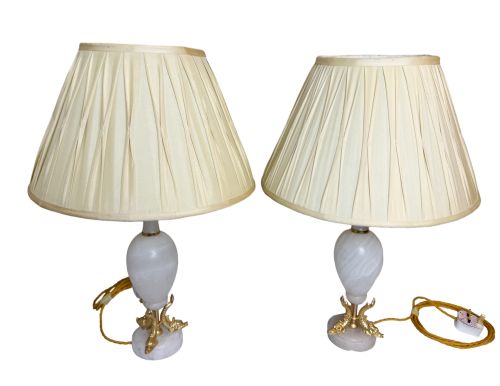
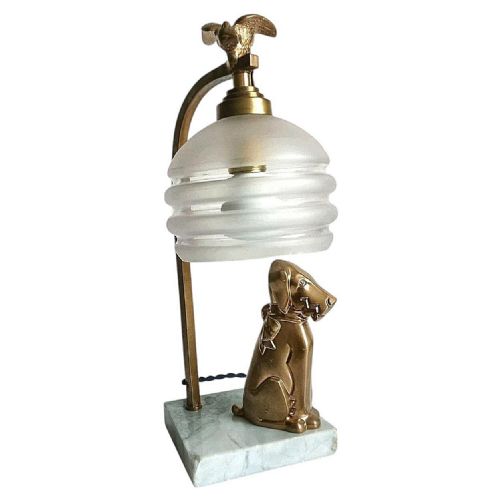
Smaller plant stands and lamp tables also appear, pairing stone tops with brass, giltwood, or mahogany structures. These pieces served functional roles in period parlours and drawing rooms, prioritising stable surfaces for lamps and ornaments.
Materials and construction methods
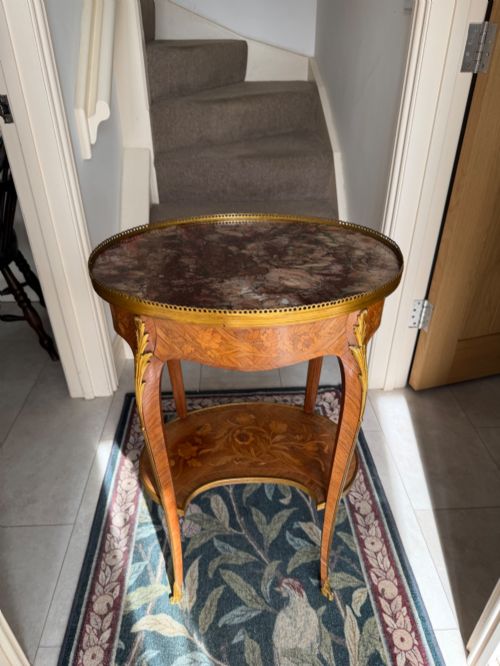
Makers combined natural stone with hardwoods such as mahogany, kingwood, and walnut, frequently mounting the marble tops onto sturdy timber frames. Gilt bronze, brass, and giltwood mounts added decorative borders and structural support to the apron and legs.
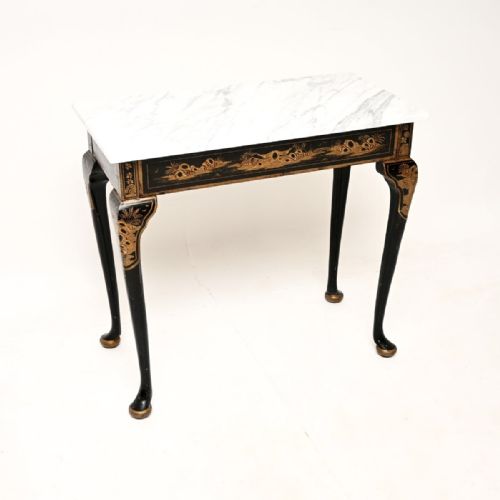
Stone cutting and polishing formed the primary surface work, utilising white Carrara, variegated specimen marbles, and rich green or black varieties. Cabinetmakers employed precision joinery for the chassis, securing the heavy stone inserts within rebated wooden rims.
Materials paired with the marble tops include mahogany, walnut, brass, giltwood, and inlaid mother-of-pearl.
Distinctions in quality and execution
Quality rests upon the selection of materials and the crispness of the secondary mounts. Finely figured marble slabs paired with dense timber and hand-chased gilt bronze elevate an occasional table above standard production pieces.
The precision of the stone inset and the stability of the frame dictate durability. Superior examples show seamless integration between the stone top and the wooden or metal base, whereas simpler iterations rely on straightforward turned legs and plain timber.
James Shoolbred·Maison Millet·François Linke
The Antique Marble Accent Table Glossary
- Guéridon
- A small French occasional table, typically round and supported by a central column or three legs. These tables often feature marble tops designed for display.
- Bouillotte table
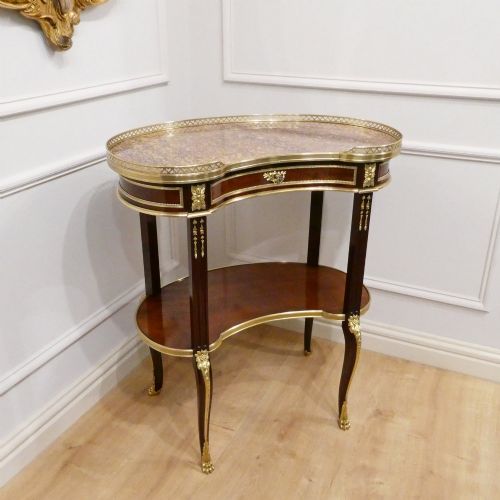
- A small French neoclassical side table with a raised gallery rim around the marble top. They traditionally served card players during the eighteenth and nineteenth centuries.
- Ormolu
- Gilt bronze mounts applied to furniture and lighting. Makers used these cast metal elements to adorn the legs and aprons of marble-topped tables.
- Specimen marble
- A tabletop composed of various coloured marbles arranged in geometric patterns or geometric mosaics. Italian workshops specialised in assembling these multicoloured stone surfaces.
- Vernis Martin
- A type of simulated Japanese lacquer developed in France. Furniture pieces utilised this glossy finish to decorate wooden frames beneath marble tops.
Antique Marble Accent Table: Frequently Asked Questions
How do I clean an antique marble top?
Wipe the surface gently with a soft cloth dampened in warm water. Avoid acidic cleaners or household detergents that etch the polished stone.
Dry the table thoroughly immediately afterwards to prevent water marks. Natural stone absorbs liquids if left sitting on the unsealed portions.
Can these tables hold heavy lamps?
Most antique marble tables were built to support heavy table lamps and decorative objects. The solid stone top handles weight securely while providing a stable base.
Verify that the underlying timber or metal frame remains rigid before placing exceptionally heavy items on the surface.
Are the marble tops fixed in place?
Many marble slabs rest unattached within the wooden frame, held entirely by their own substantial weight. This method allowed makers to lift the stone out during transport.
Exercise caution when moving the furniture by lifting from the base rather than sliding or tilting the assembly.
How do I identify a French period table?
French tables frequently incorporate gilt bronze mounts, kingwood veneers, and neoclassical styling such as fluted legs. Makers in Paris aligned their designs with prevailing royal or artistic tastes.
Examine the construction joints and timber types beneath the top for clues regarding continental manufacturing traditions.