


Antique Mantelpiece Garniture Set
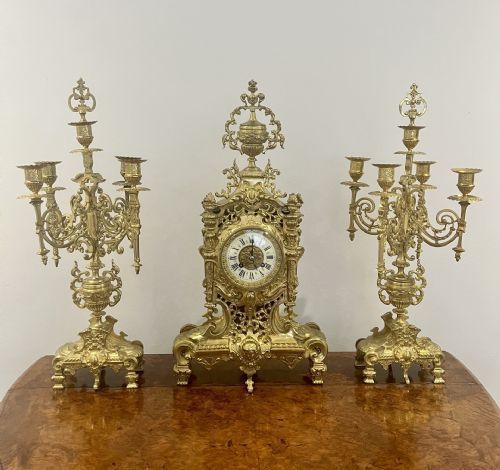
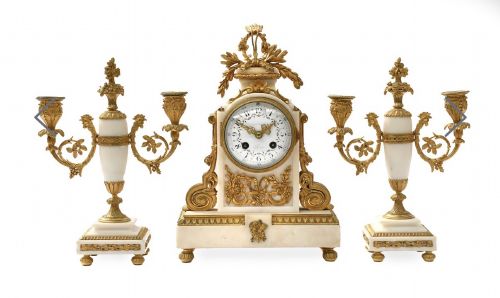
An antique mantelpiece garniture set brings balance and symmetry to a room, pairing a central clock with matching vases or candelabras.
How they were made
Makers utilised cast metals including ormolu, gilt bronze, and brass, often combining them with white, pink, green, or Sienna marble bases.
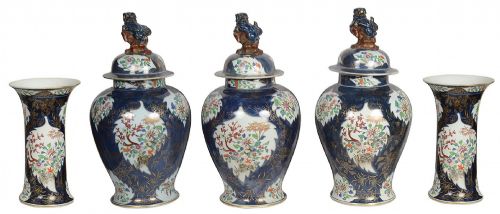
Ceramic elements feature painted porcelain from factories such as Sevres, Meissen, and Worcester, alongside cloisonne enamel and decorative toleware.
Metal components involve intricate casting and gilding, while porcelain elements display hand-painted floral or figural decoration.
What varies in quality
The crispness of the metal chasing and the depth of the gilding set superior ormolu and bronze castings apart from simpler brass work.
Hand-painted detail on porcelain vases and dial faces indicates the skill of the decorator and the standing of the pottery.
The integration of the set, where clock movements and side ornaments share matching materials and unified design motifs, determines the overall cohesion.
Flight Barr and Barr·Japy Freres·Thomas Steel·Finnigan Manchester
The Antique Mantelpiece Garniture Set Glossary
- Garniture
- A set of matching decorative objects designed to be displayed together on a mantelpiece or sideboard.
- Ormolu
- Gilded bronze produced by applying a mercury and gold amalgam to cast bronze, common in French decorative pieces.
- Portico clock
- A mantel clock housed within a architectural frame supported by columns, popular during the nineteenth century.
- Cloisonne
- Enamel work created by soldering wire compartments onto a metal base before filling them with coloured paste.
- Candelabra
- A branched candlestick designed to hold multiple taper candles, frequently forming the side pieces of a clock set.
Antique Mantelpiece Garniture Set: Frequently Asked Questions
What is included in a complete garniture set?
A complete set traditionally centres on a mantel clock flanked by two matching side pieces, which might be candelabras, urns, or vases.
These matching elements were designed to create a balanced display across a fireplace mantel.
How do I care for marble and ormolu?
Ormolu requires gentle dusting with a soft brush, avoiding chemical cleaners that can strip the gold leaf.
Marble surfaces benefit from occasional wiping with a damp cloth and immediate drying to protect the polished stone.
Where were most nineteenth-century sets made?
A significant proportion of these decorative sets originated in France, particularly in Paris workshops producing works in the Louis XVI and Rococo revival styles.
English manufacturers also contributed notable porcelain and bronze arrangements during the Regency and Victorian eras.
How do I identify the period of a clock set?
Stylistic clues such as the symmetry of Rococo revival or the architectural restraint of Neoclassical design help establish the era of manufacture.
Materials, dial inscriptions, and maker marks stamped on the clock movements provide further dating evidence.