




Antique Mantel Timekeeper
An antique mantel timekeeper sits quietly upon a shelf, marking the hours in brass, mahogany, and marble.
Antique Mantel Timekeeper
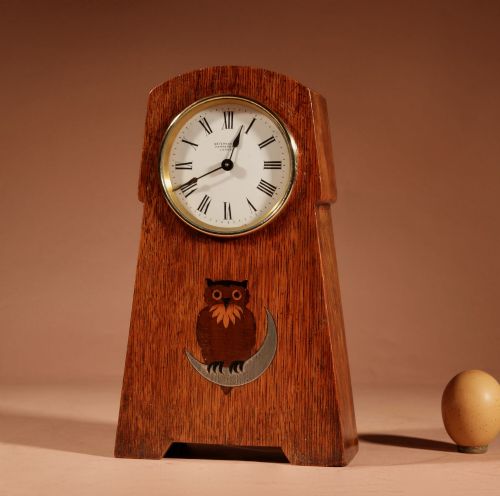
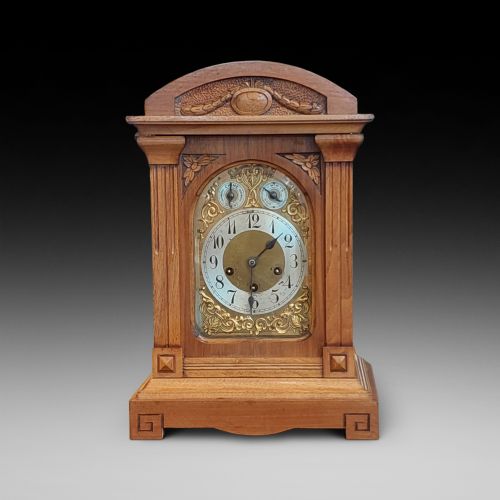
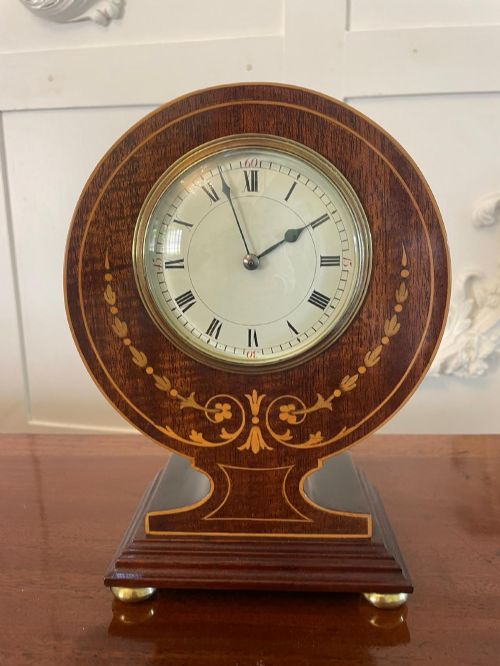
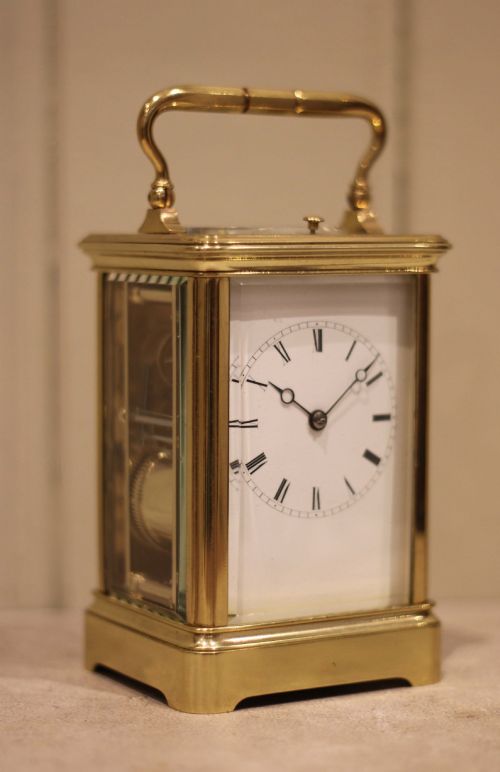
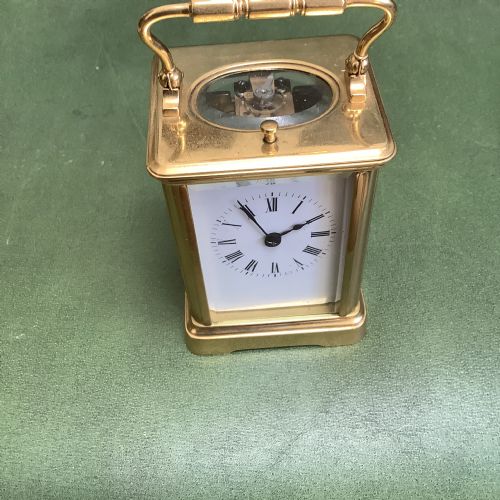
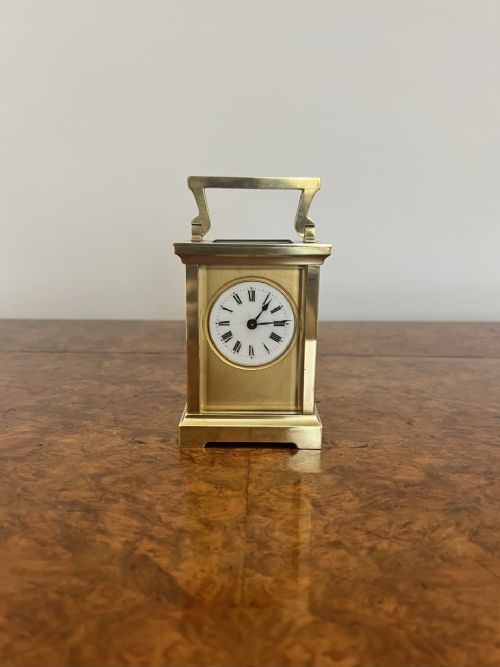
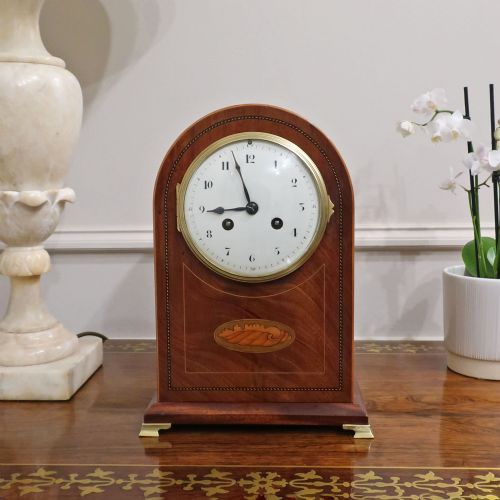
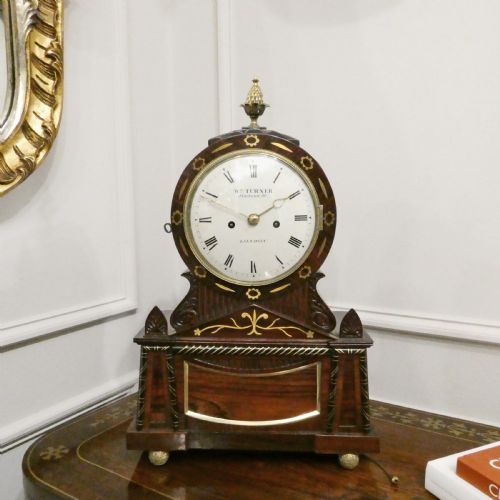
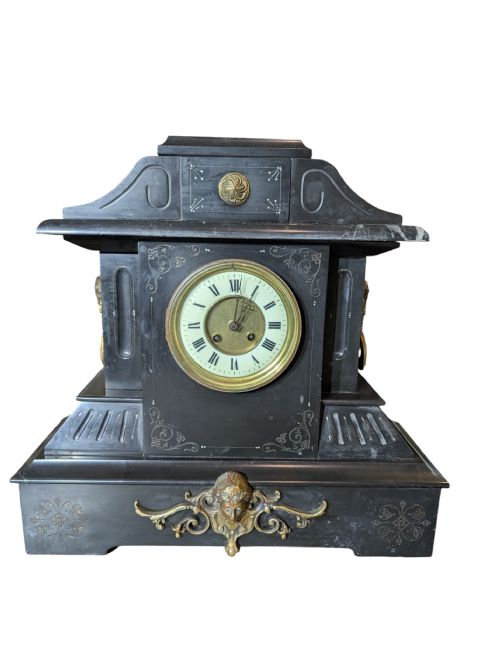
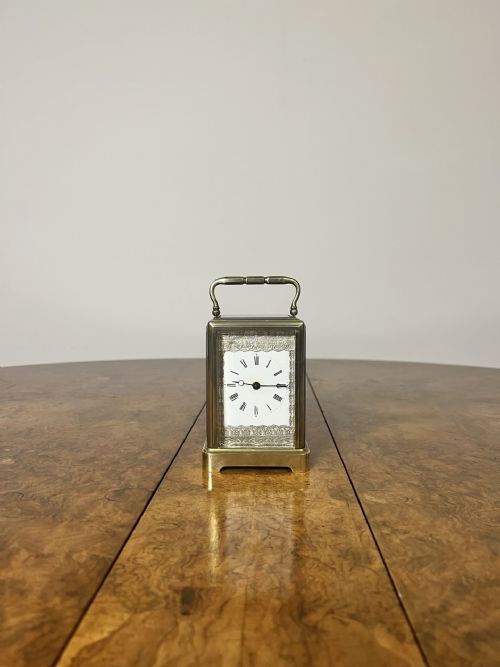
An antique mantel timekeeper groups together portable and shelf-bound horological objects designed for domestic rooms, most frequently encountered here as French carriage clocks in brass cases or Edwardian mahogany mantel clocks. These pieces span from the Regency era through to the early twentieth century, taking the form of bracket clocks, drumhead timepieces, and miniature carriage designs.
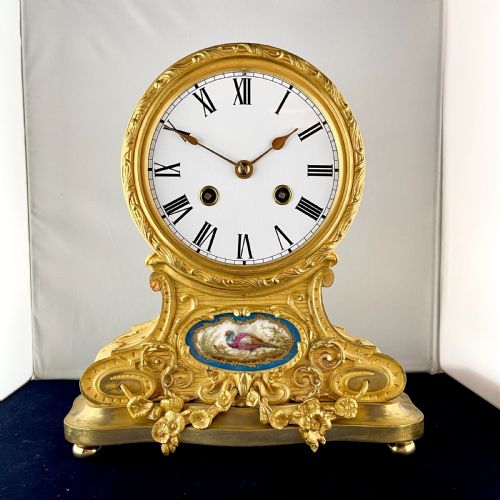
The domestic interior dictated their diverse construction, ranging from heavy marble and ormolu centrepieces intended for grand reception rooms to compact travel clocks and desk timepieces fitted with delicate enamel dials. Buyers encounter both English fusee movements housed in rich woods and intricate French platform-escapement mechanisms enclosed in polished glass and gilt metal.
Materials and Construction
Cabinetmakers utilised dense hardwoods such as mahogany, rosewood, and satinwood for British bracket and mantel cases, often adding delicate marquetry inlay and brass mounts. French workshops favoured cast brass, gilt bronze, and heavy polished marble, constructing robust metal frameworks designed to house complex striking and repeating gear trains.
Dial work combined hand-engraved gilt brass masks, silvered chapter rings, and white enamel plates marked with Roman numerals, protected beneath bevelled glass panels. Movements relied on steel pinions, brass wheels, and either spring-driven barrels or chain-driven fusee systems to maintain steady tension across the running period.
Antique Mantel Timekeeper Retail Price Guide 2026
Typical asking prices for mantel timekeeper among the pieces listed under this phrase on Sellingantiques today, from the lower quarter to the upper quarter. They describe what is for sale here now, not the wider market.
Several carriage clocks are described as giant, standing ready to command a very large mantelpiece.
Factors of Quality
Excellence in an antique mantel timekeeper rests upon the crispness of the movement engraving, the weight and thickness of the brass casework, and the reputation of the maker inscribed on the dial or backplate. Finer examples display signed plates from established London watchmakers or Parisian carriage clock specialists, accompanied by complex complications such as alarm or repeating mechanisms.
The harmony of the materials dictates visual merit, seen in the precise matching of mahogany flame veneers, the deep fire-gilding on ormolu mounts, and the crisp execution of hand-hammered silvered details. Heavy marble housings and four-glass panels demonstrate superior structural ambition, requiring exact alignment to display the swinging pendulum or balance wheel clearly.
Oetzmann and Co·Turner of London·Pickford of London·Drocourt Paris·Margaine Of France·Seller of Reading·Windmills and Bennet·J Batson and Son·W Burton·Piggin Norwich·Bishop Bournemouth·Samuel Marti·Dent of London
The Antique Mantel Timekeeper Glossary
- Carriage clock
- A portable spring-driven timepiece developed for travel, typically fitted with a carrying handle and glass panels on all sides.
- Fusee
- A conical pulley connected to the mainspring by a chain or cord, designed to equalise the torque as the spring unwinds.
- Escapement
- The mechanism that controls the release of power from the gear train to maintain the motion of the balance wheel or pendulum.
- Gorge case
- A stepped, pillared brass housing commonly found on high-grade French carriage clocks.
- Bracket clock
- A portable table clock, historically placed upon a matching wall bracket, frequently housed in an architectural wooden case.
Antique Mantel Timekeeper: Frequently Asked Questions
How do I wind my clock safely?
Insert the appropriate key into the winding square and turn it gently in the direction specified for that particular movement. Stop immediately when firm resistance is felt to avoid over-tensioning the mainspring.
Ensure you support the clock body with your free hand and avoid touching the delicate escapement parts visible through the glass or rear door.
Why does my carriage clock gain or lose time?
Changes in ambient temperature and the natural settling of the lubricating oils over time can alter the rate of the balance wheel. Most platform escapements feature a small regulation lever visible on top to adjust the speed.
Move this lever very slightly toward the fast or slow indicator and observe the timekeeper over the course of twenty-four hours.
Where should I place a mantel timekeeper?
Select a sturdy, level surface away from direct sunlight, draughts, and damp environments that could harm wooden veneers or oxidise brass components. Mantels and heavy sideboards provide stable support that prevents floor vibrations from interfering with the tick.
Ensure the piece sits squarely on its feet so the mechanical beat remains even and the pendulum or balance swings true.
How do I distinguish French from English clocks?
English mantel and bracket clocks from the nineteenth century frequently employ fusee movements housed in rich mahogany or rosewood cases with locking rear doors. French pieces often utilise platform escapements, exposed enamel dials, and heavy gilt brass or marble housings.
Signatures on the backplates provide further distinction, with Parisian makers favouring platform designs and London workshops adhering to chain-driven fusees.