
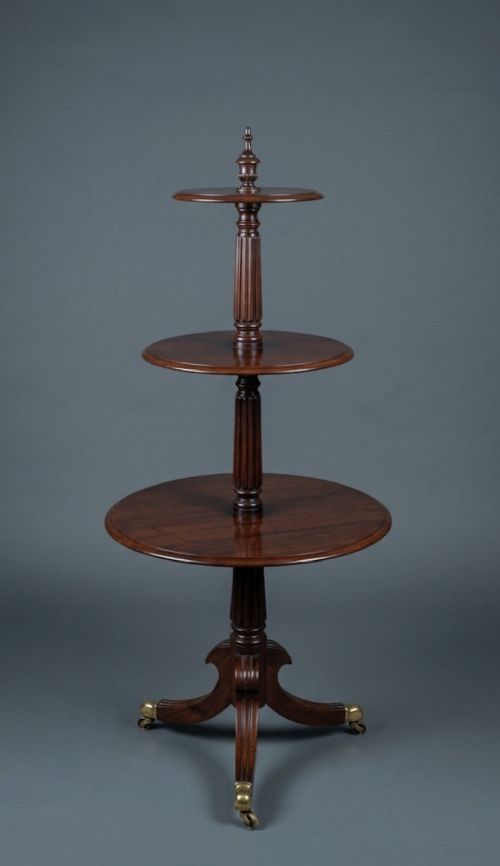
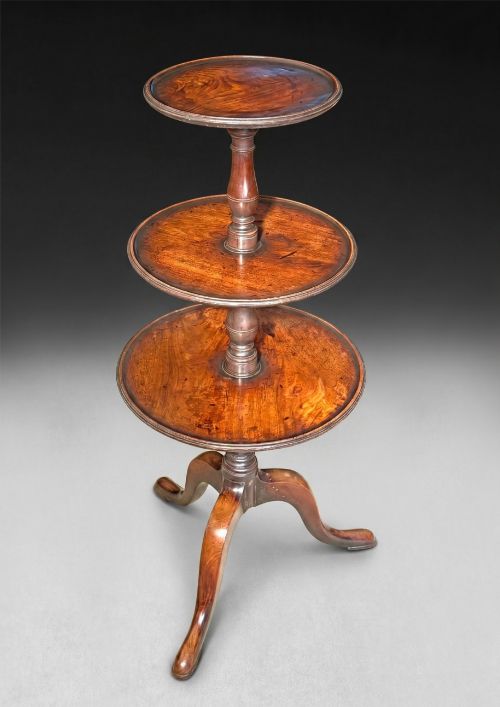


Antique Mahogany Dumb Waiter
An antique mahogany dumb waiter offers tiered or serving storage in rich timber, designed to hold courses and tableware beside the dining table.
What the pieces are
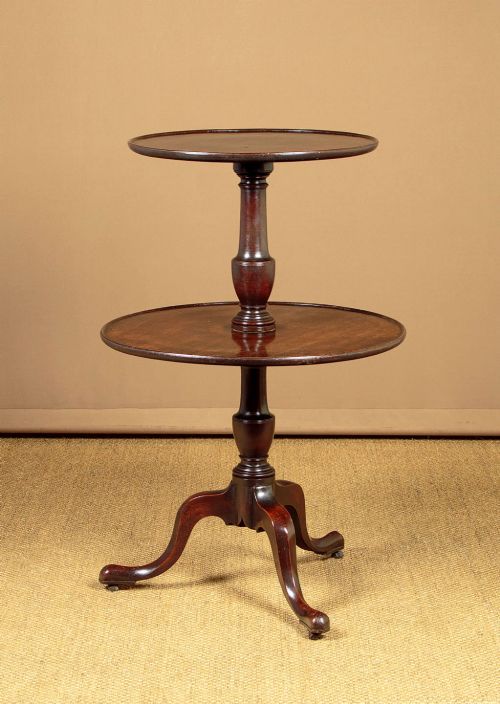
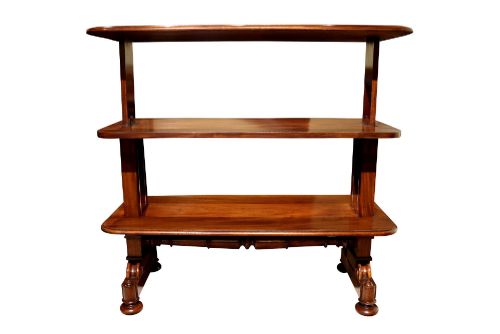
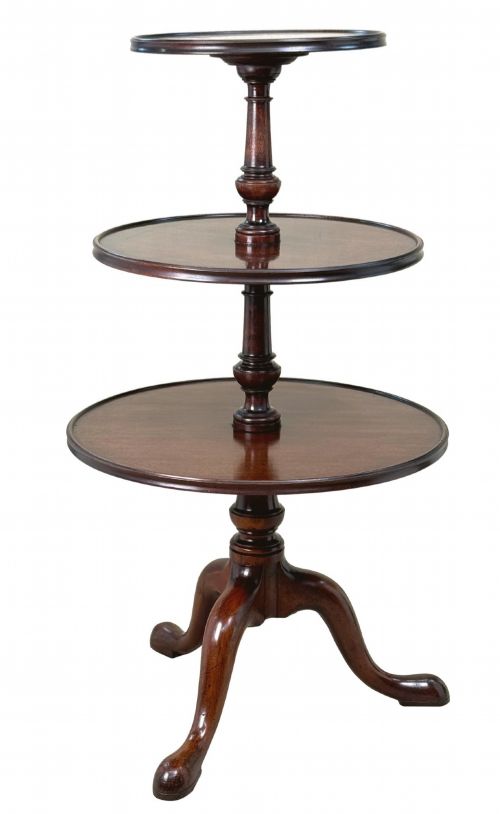
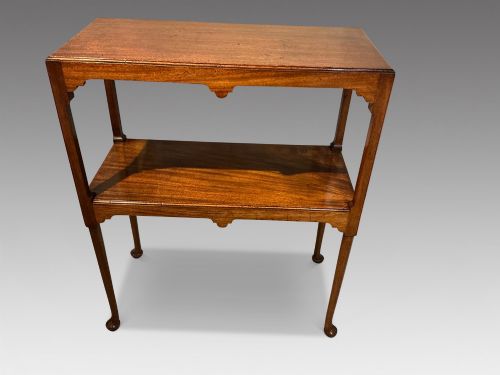
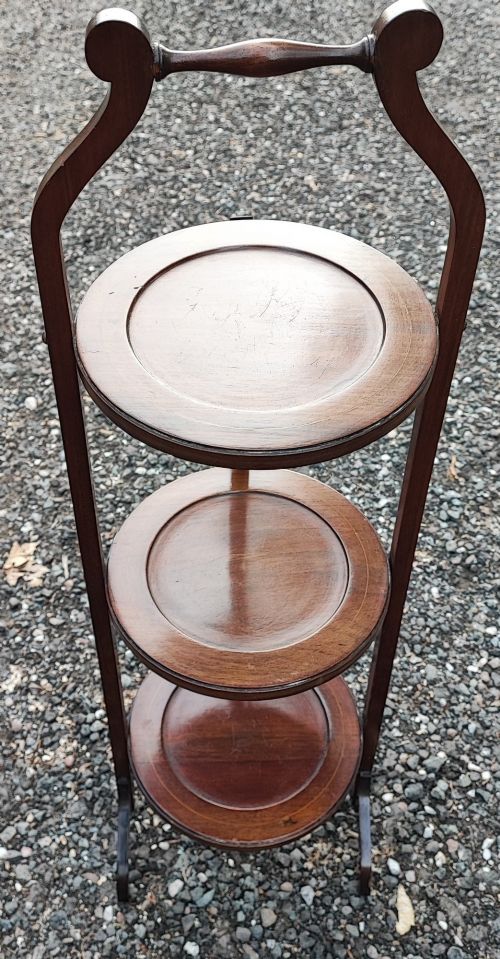
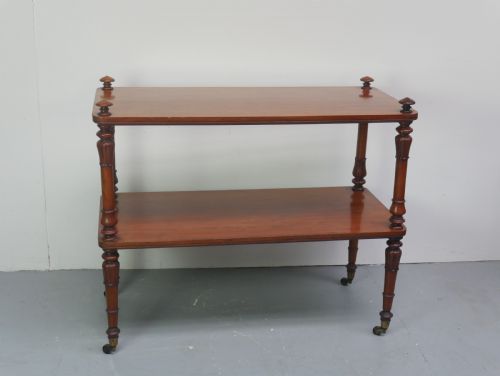
An antique mahogany dumb waiter stands as a practical piece of dining room furniture designed to hold plates, glasses and food without the constant presence of servants. These items appear across the Georgian, Regency, William IV and Victorian eras, taking forms from circular tiered tables to large buffet servers with gallery backs.
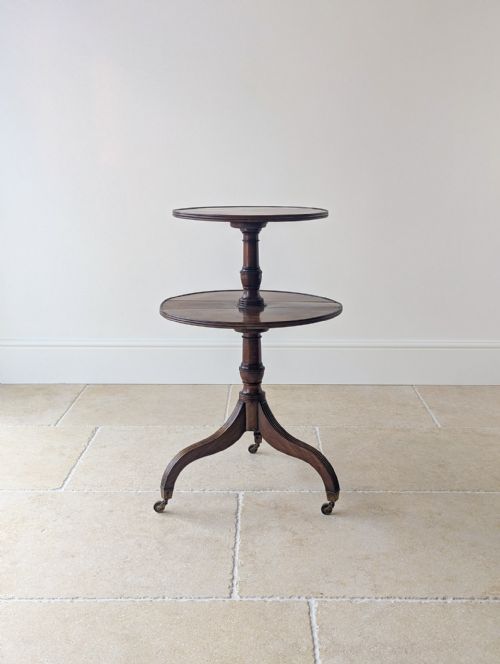
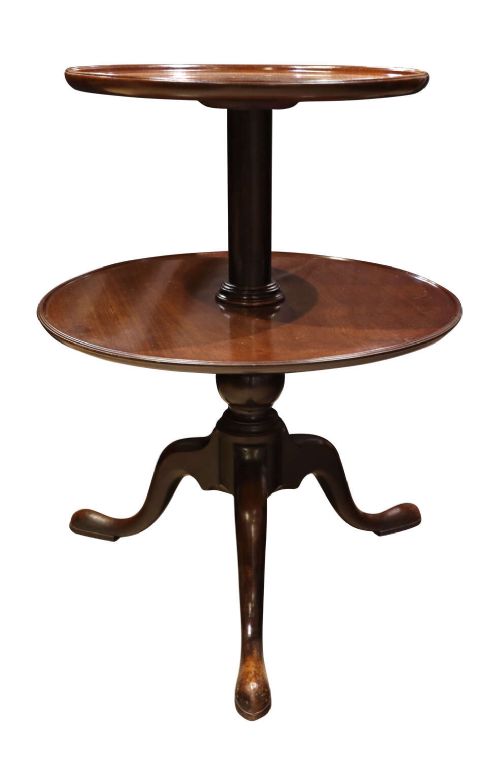
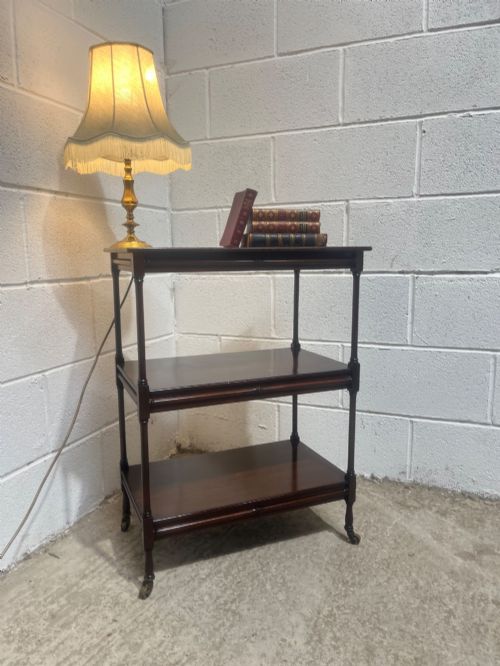
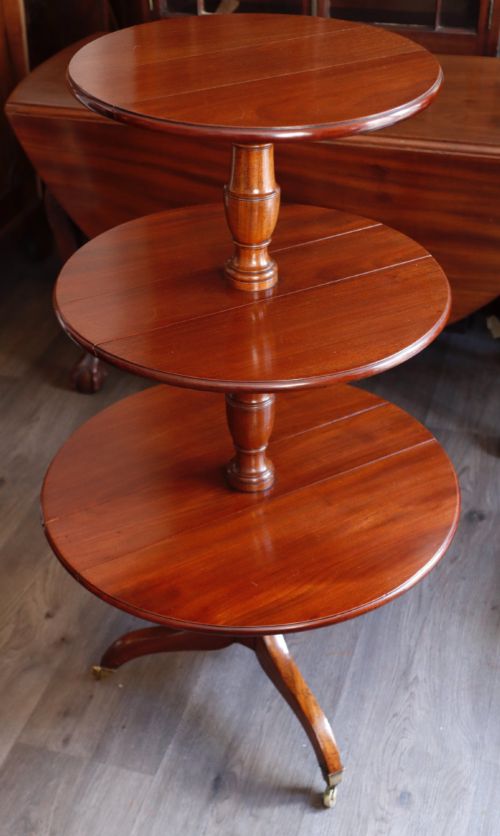
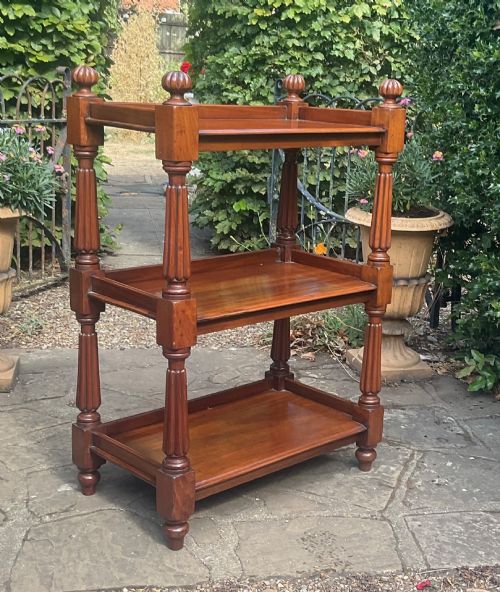
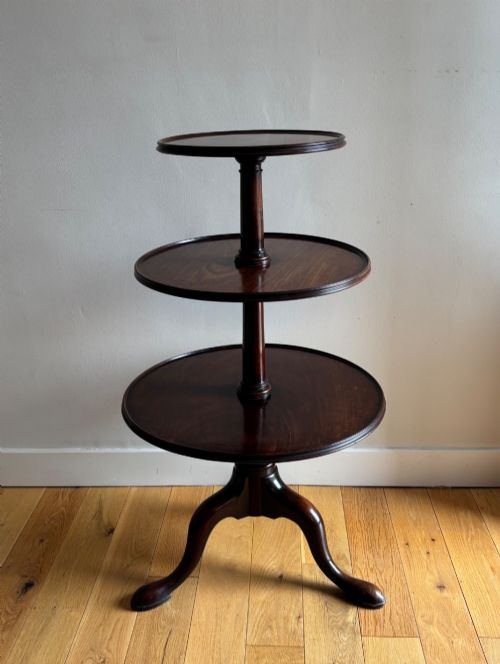
The pieces on this page divide into multi-tiered revolving dumb waiters with graduated circular trays and larger sideboard or buffet server styles. Georgian examples frequently feature two or three rotating tiers supported on turned columns and tripod legs, while Victorian iterations often incorporate shelves, galleries and cupboards.
Originating in English dining spaces, these objects reflect changing domestic habits and the need for flexible serving surfaces. Buyers meet everything from small circular tables to substantial hall dumb waiters and sideboards, all sharing the same fundamental timber.
How they were made
Makers constructed these pieces primarily from solid and veneered mahogany, selected for its rich grain, warmth and durability. Brass hardware appears frequently, providing structural support, castors for mobility and rotating mechanisms for tiered trays.
Cabinetmakers utilised traditional joinery techniques, turning central columns on lathes and shaping tripod legs with pad or claw feet. Multi-tiered examples required precise carpentry to ensure each rotating tray balanced evenly on its spindle.
Retail Price Guide 2026
Typical UK retail prices for mahogany dumb waiter, calculated from the Sellingantiques database of over a million retail prices indexed since 2003. This retail price guide relies exclusively on Sellingantiques data; no external sources or auction records are used, so the figures do not describe the wider market.
These silent wooden assistants held the dinner conversation private by letting guests pour their own wine.
What varies in quality
The quality of an antique mahogany dumb waiter rests upon the selection of timber and the crispness of its turned woodwork. Superior examples display dense, figured mahogany grain and finely carved tripod legs, whereas simpler pieces rely on plain timber and straightforward lathe work.
Mechanical execution also separates pieces, particularly in the smooth rotation of tiered trays and the original integration of brass castors. Proportion and balance dictate the success of the design, with the finest items maintaining structural harmony across multiple tiers.
Oetzmann & Co.
The Antique Mahogany Dumb Waiter Glossary
- Dumb waiter
- A piece of dining room furniture featuring multiple tiers or shelves designed to hold food and tableware. These items served dining rooms where diners preferred privacy without attendants.
- Tier
- An individual shelf or tray level on a multi-level table. Graduated tiers typically decrease in diameter from bottom to top.
- Gallery back
- A raised wooden or brass railing along the rear edge of a sideboard or buffet server. This feature prevented dishes and glassware from sliding off the surface.
- Tripod base
- A support structure consisting of three spreading legs radiating from a central column. This configuration offered stability on uneven dining room floors.
Frequently Asked Questions
How were dumb waiters used?
These pieces held extra dishes, wine bottles and tableware near the dining table. Diners accessed food independently during meals without servants in the room.
Over time, the form evolved from circular tiered serving stands into larger sideboard and buffet servers with integrated shelves.
How do I tell Georgian from Victorian pieces?
Georgian pieces generally feature circular rotating tiers supported by tripod legs and central columns. They rely on proportion and clean turned woodwork for their aesthetic.
Victorian items often include rectangular buffet servers, gallery backs and enclosed shelving. These later variants frequently incorporate more elaborate decoration and storage compartments.
Do the tiers rotate?
Many multi-tiered examples feature revolving trays mounted on a central spindle. This allowed diners to access different dishes easily from a seated position.
Not all forms rotate, as larger sideboard styles and buffet servers use fixed stationary shelves and surfaces.
Where should I place a dumb waiter?
These tables fit naturally in dining rooms, serving their original function alongside a main dining table. Their compact footprint also suits hallways and living spaces.
Tiered circular versions work well as corner or accent pieces, while buffet server styles anchor longer walls.