


Antique Mahogany Buffet Shelf
An antique mahogany buffet shelf is a tiered serving piece or side cabinet that brings rich timber grain and practical display space to a room.
Antique Mahogany Buffet Shelf
When you search for an antique mahogany buffet shelf, you encounter a variety of multi-tiered serving furniture, sideboards, and etageres designed for dining rooms and parlours. These items function as display surfaces, serving stations, and storage cabinets, originating across the eighteenth, nineteenth, and early twentieth centuries.
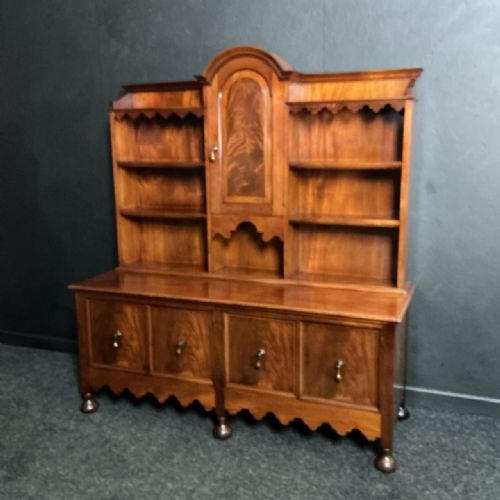
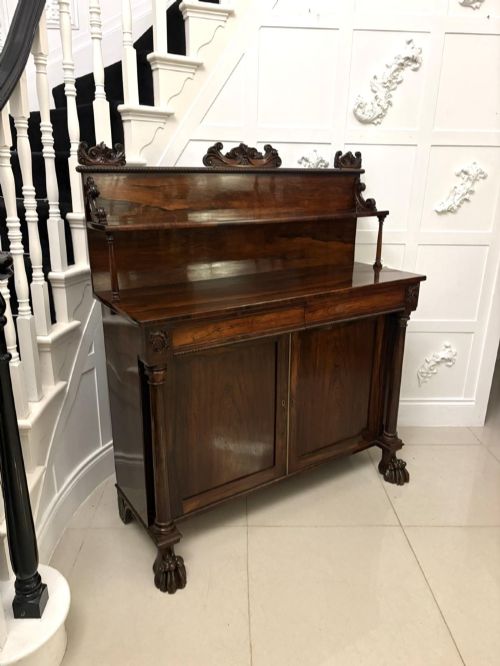
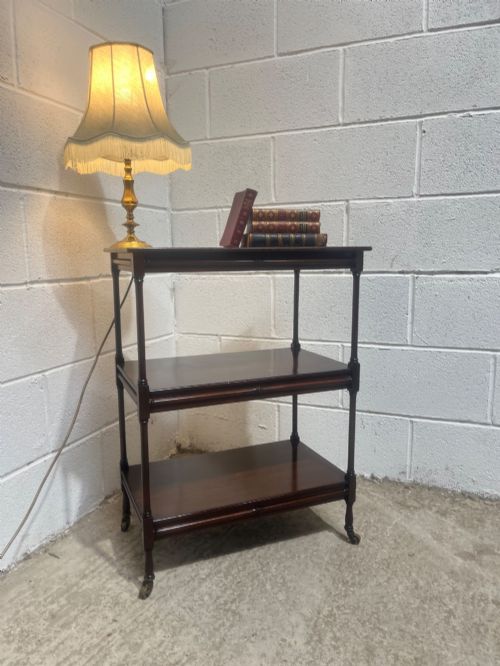
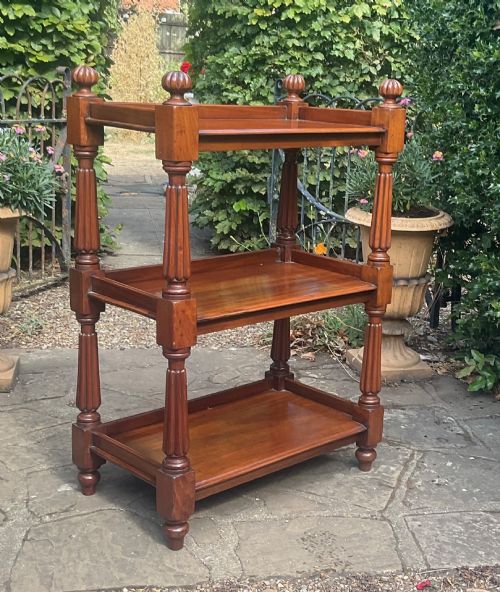
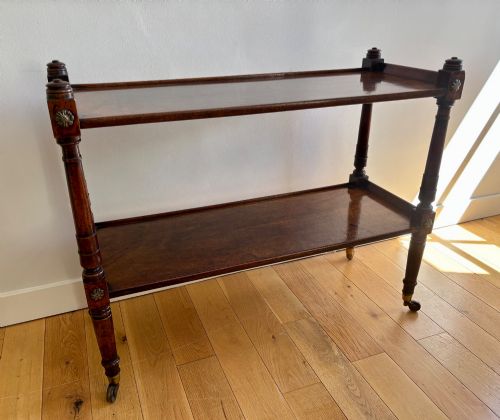
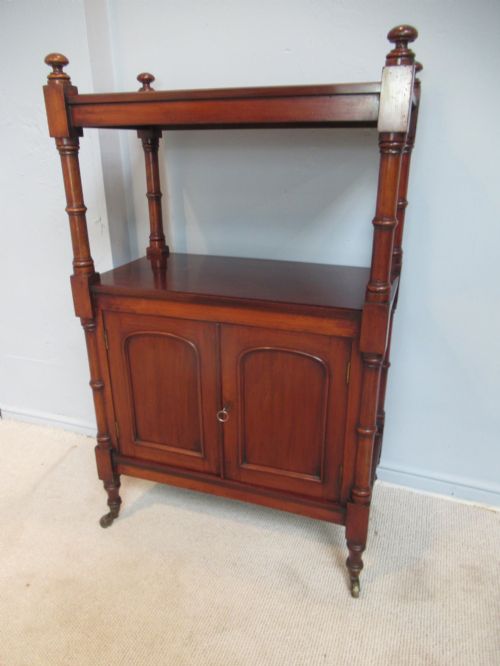
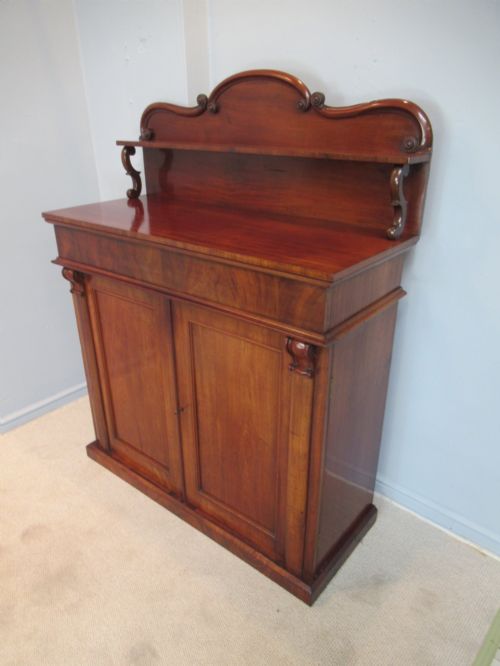
The most common forms on this page include Victorian three-tier buffets, Regency chiffoniers, and dumb waiters fitted with multiple shelves. Pieces range from slender folding stands to substantial side cabinets featuring enclosed storage below open shelving.
Originating primarily within British domestic interiors, these items span periods from George III through to Edwardian times. They reflect the shifting requirements of dining and entertaining, offering tiered platforms for silver, glass, and serving dishes.
How they were made
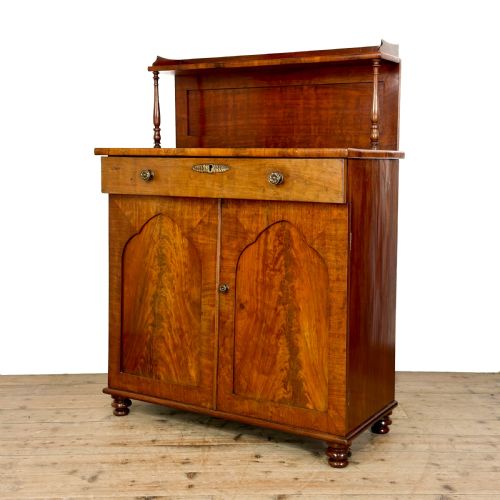
Cabinet makers utilised solid mahogany and flame mahogany veneer applied to supportive carcases of secondary timbers such as pine. The distinctive figured grain of flame mahogany provides a decorative focal point on door panels and drawer fronts.
Construction details often incorporate brass hardware, ceramic elements, and glass panels alongside turned or carved wooden supports. Many multi-tiered buffets and trolleys operate on original castors, allowing the heavy timber furniture to move smoothly across floor surfaces.
Listings span periods from the 18th century through the Victorian and Edwardian eras, featuring mahogany, flame mahogany veneer, brass, and glass.
What varies in quality
The distinction between standard and superior pieces rests on the choice of timber and the depth of figuring in the mahogany veneer. Selected cuts of flame mahogany display intense grain patterns that elevate the visual weight of a side cabinet or chiffonier.
Refinement in carving, the crispness of inlaid details, and the integrity of original brass fittings separate standard utility items from distinguished workshop productions. The retention of original castors and smooth operational mechanics on folding tiers also influence the standing of each piece.
James Shoolbred & Co
The Antique Mahogany Buffet Shelf Glossary
- Chiffonier
- A low sideboard or cabinet, typically featuring enclosed shelving below and sometimes a small shelf superstructure on top. This form evolved during the Regency and Victorian periods for dining room use.
- Etagere
- A piece of furniture consisting of a set of open shelves for displaying small objects or serving. These tiered stands appear frequently in nineteenth-century contexts.
- Dumb waiter
- A tiered serving trolley or stand with multiple circular or rectangular shelves used to hold food and utensils without servants present. They often feature pivoting or fixed trays supported on central turned pillars.
- Flame mahogany
- A veneer cut from the fork of the mahogany tree where the branch meets the trunk, creating a flamed or feather-like grain pattern. Cabinet makers prize this cut for its dramatic visual movement.
- Castor
- A small wheel mounted on a swivel assembly attached to the base of furniture legs. Original brass and ceramic castors allow heavy timber buffets to be repositioned easily.
Antique Mahogany Buffet Shelf: Frequently Asked Questions
How do I use a buffet shelf?
These tiered pieces serve as display surfaces for tableware, books, and decorative objects in a living room or dining space. Open shelves hold items for easy access while lower cabinets keep dining accessories enclosed.
Their sturdy timber construction accommodates everyday service needs while adding period character to an interior layout.
What is the difference between a chiffonier and a buffet?
A chiffonier generally combines a low enclosed cupboard base with a smaller shelf unit or backboard above. Buffets tend to focus on open tiers or serving surfaces designed for dining presentation.
Both forms utilise mahogany timber and emerged during the Regency and Victorian eras to assist with household hospitality.
Are these pieces suitable for small rooms?
Neat-sized Regency and Victorian chiffoniers or slim three-tier etageres fit efficiently into compact spaces. Their vertical arrangement provides multiple display levels without demanding excessive floor area.
Selecting a narrow model or a folding tiered stand allows you to incorporate antique timber storage into tighter residential layouts.
How do I identify a Victorian piece?
Victorian items often display heavier mahogany construction, darker polished finishes, and substantial turned supports or original castors. Many incorporate robust side cabinet designs with panelled doors and occasional marble tops.
Comparing these traits against earlier Regency lightness helps establish the nineteenth-century timeline of the furniture.