
Antique Mahogany Box Table
These pieces combine lidded storage and display with table support, turning a simple box table search into an encounter with clever Georgian, Regency, and Victorian craft.
Antique Mahogany Box Table
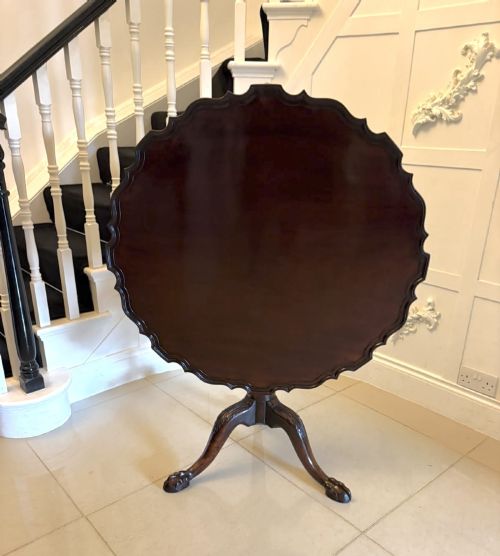
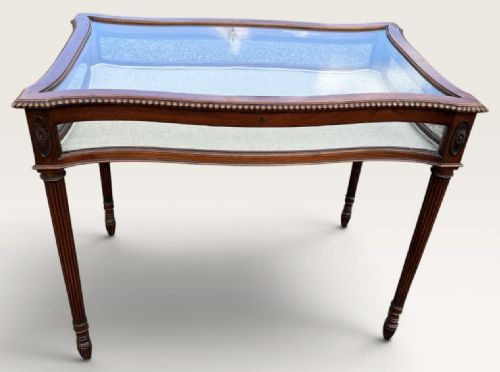
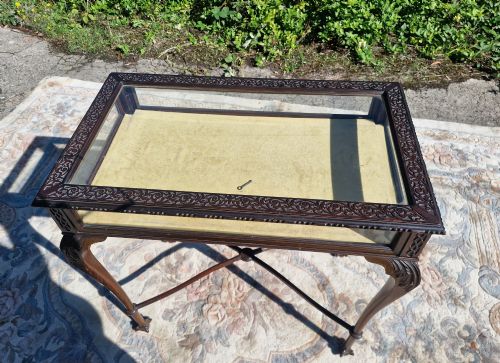
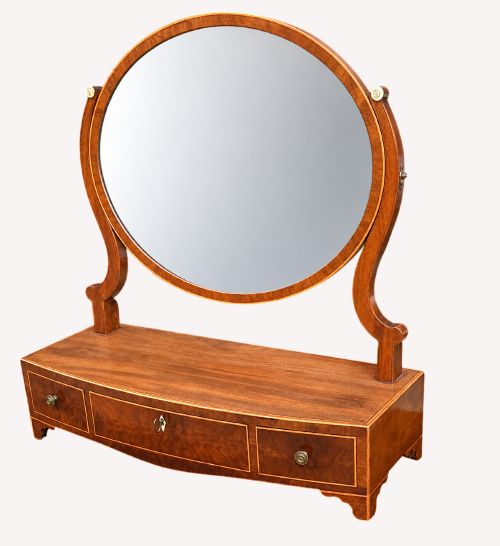
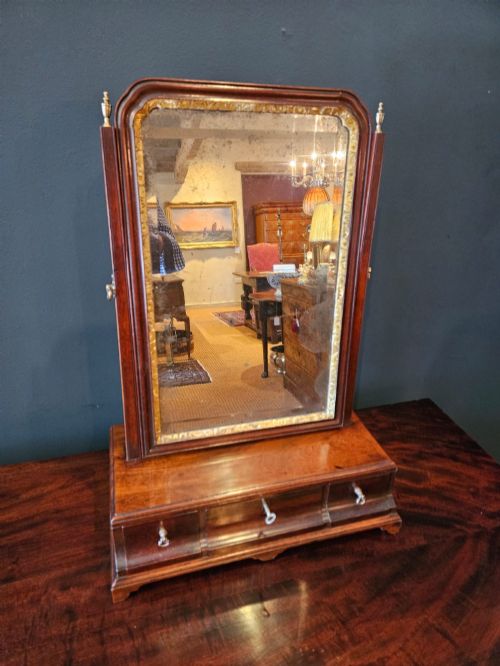
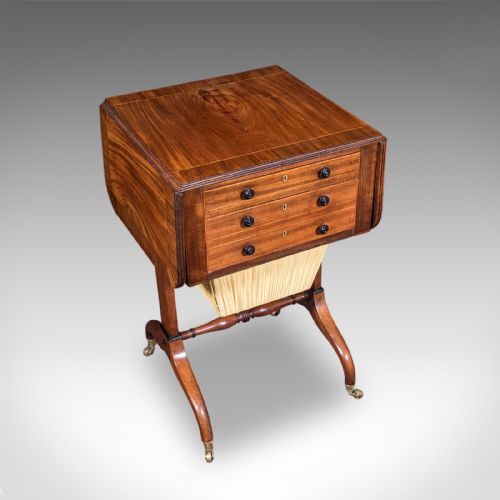
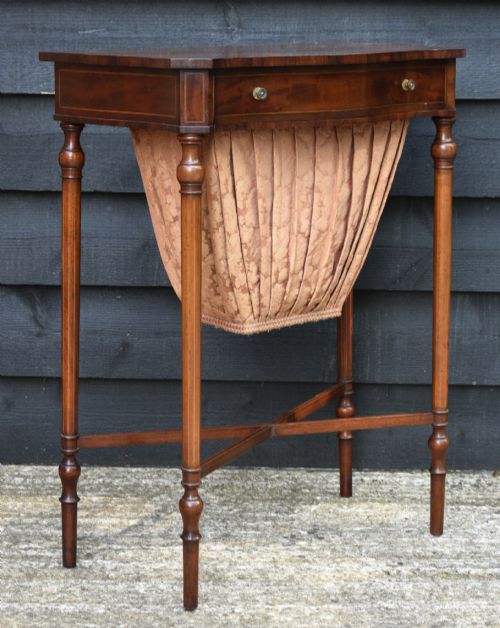
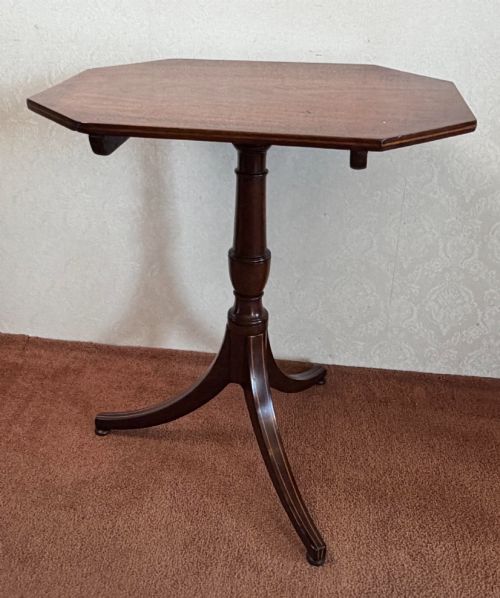
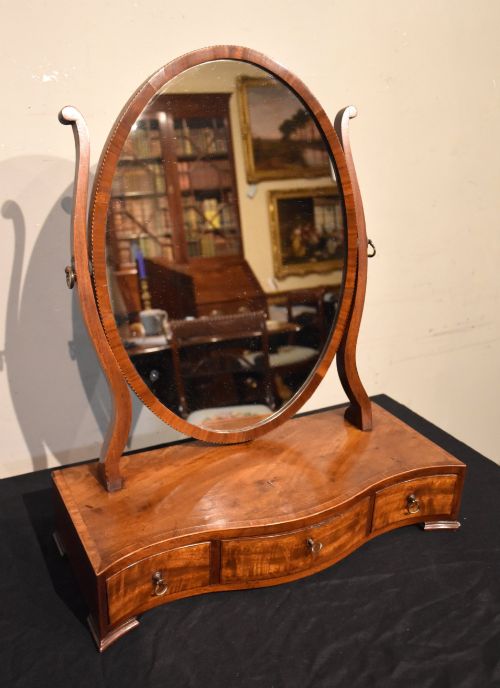
An antique mahogany box table brings together a lidded compartment or fitted interior and a standing table frame, serving purposes from sewing and needlework to toilet display and bijouterie. These forms span the eighteenth, nineteenth, and early twentieth centuries, encompassing Georgian dressing mirrors, Regency work tables, and Edwardian display cases.
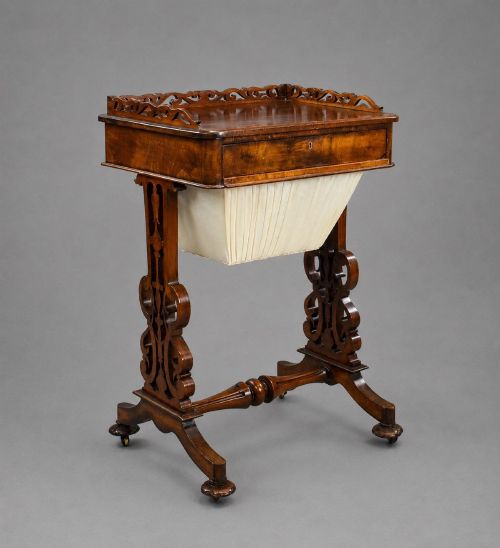
The version most frequently met on this page is the sewing or work table, often equipped with a drop leaf, hinged lid, and internal compartments or a hanging fabric basket. Alongside these, toilet mirrors with box bases and glazed bijouterie tables appear with notable regularity across the Georgian and Edwardian periods.
How they were made
Makers built these pieces primarily from solid and veneered mahogany, frequently employing flame mahogany or curl grain selections for visual depth on tops and drawer fronts. Cabinetmakers integrated secondary timbers like satinwood and boxwood for linear stringing, geometric crossbanding, and contrasting inlay details.
Structural hardware relied on brass for hinges, locks, castors, and campaign-style bound corners, while interior fittings incorporated silk fabric, glass, and bone components. Joinery techniques balanced the stability of framed panels with the precision required for small fitted compartments, sliding trays, and folding leaves.
Listings feature mahogany box tables spanning the eighteenth century through to the Edwardian era, incorporating glass, brass, and satinwood.
What varies in quality
The distinction between standard examples and the finest pieces rests on the selection of timber veneers, where highly figured flame mahogany and crisp, precise crossbanding elevate the visual presence. Finer construction shows in the restraint and execution of inlay work, such as delicate boxwood stringing and well-matched grain patterns across opening lids and drawers.
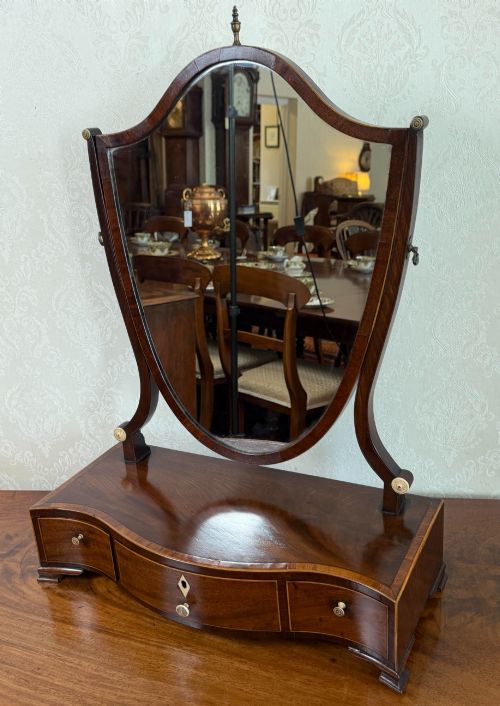
Internal sophistication also separates the ranges, distinguishing simple open wells from elaborately fitted interiors featuring lidded compartments, bone or ivory pulls, and original silk sewing baskets. The integration of design elements, such as lyre ends, serpentine fronts, and well-proportioned small scales, reflects the ambition of the original workshop.
C. Roberson & Co Ltd
The Antique Mahogany Box Table Glossary
- Teapoy
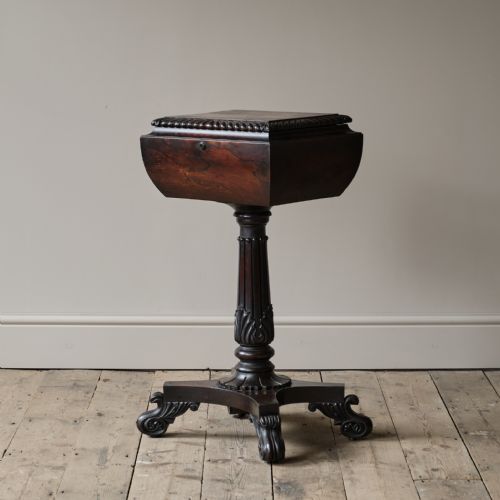
- A small stand or table featuring a lidded box on top, originally designed to hold containers of tea. These pieces often rest on a pillar and claw base or four slender legs.
- Crossbanding
- A strip of veneer applied around the border of a table top or drawer front with the grain running perpendicular to the main panel. This technique creates a distinct frame effect.
- Sarcophagus
- A box form with a rounded or domed lid, shaped like an ancient stone coffin. It appears frequently on nineteenth-century sewing boxes and work tables.
- Toilet mirror
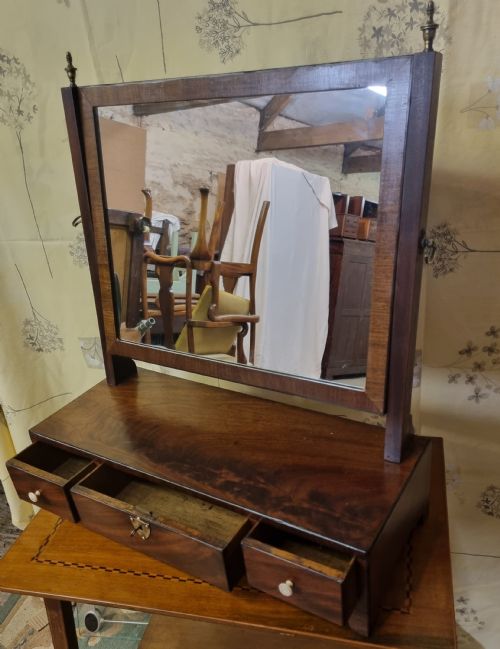
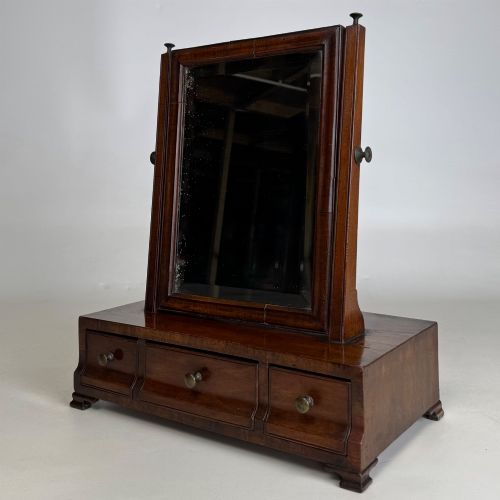
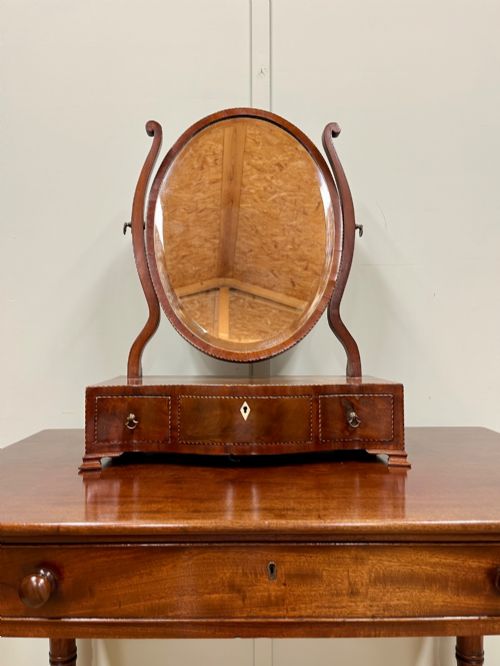
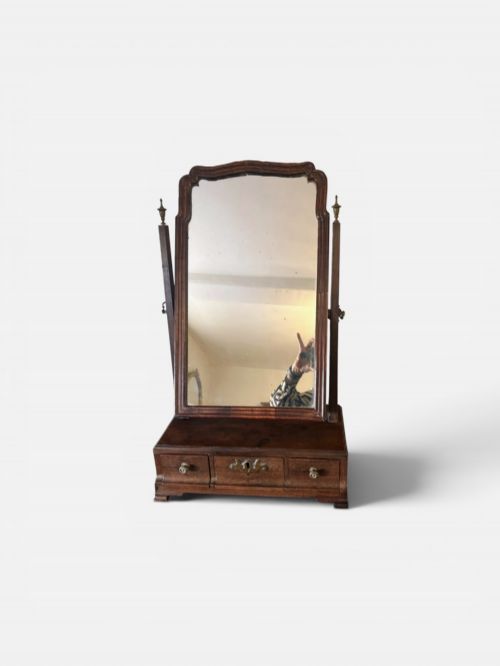
- A small looking glass mounted on a pivoting frame above a box base fitted with drawers. These items sat atop dressing chests or dedicated tables.
Antique Mahogany Box Table: Frequently Asked Questions
What is a work table used for?
A work table served as a multi-functional piece for ladies undertaking sewing, needlework, and writing tasks in the parlour. The lidded box and hanging basket kept threads, fabrics, and implements close to hand while maintaining a tidy surface.
Over time, these versatile tables adapted to changing domestic habits, functioning equally well for casual correspondence or storing small games and cards.
How do I tell a Regency table from a Victorian one?
Regency pieces often display classical restraint, clean architectural lines, and decorative elements inspired by ancient Greek and Roman forms. Mahogany from this period frequently exhibits rich natural figuring without heavy ornamentation.
Victorian examples tend to feature heavier proportions, darker finishes, and more robust carving. They frequently emphasise utilitarian comfort and elaborate internal fittings for specialised storage.
Are toilet mirrors and dressing mirrors the same thing?
Toilet mirrors specifically refer to smaller glass frames mounted upon a box base containing small drawers for cosmetics and personal items. They were designed to sit on top of an existing chest of drawers or table rather than standing independently.
Dressing mirrors can encompass these smaller tabletop versions as well as larger, full-length swinging glasses supported by their own floor-standing frames.
How do I care for antique mahogany furniture?
Keep mahogany pieces away from direct sunlight and strong heat sources to prevent the timber and veneers from drying out or fading. Gentle dusting with a dry, soft cloth maintains the surface without the buildup of modern silicone polishes.
Applying traditional beeswax occasionally helps nourish the grain and preserve the deep lustre developed over centuries of handling.